Native trees are teeming with life and are an ecosystem in themselves! You'll see birds, caterpillars, mosses, mushrooms, and much more. Nature guide and garden journalist Govert de Jong shares 10 beautiful native trees from the Netherlands and Belgium, perfect for gardens of all sizes.
Read more below the advertisement
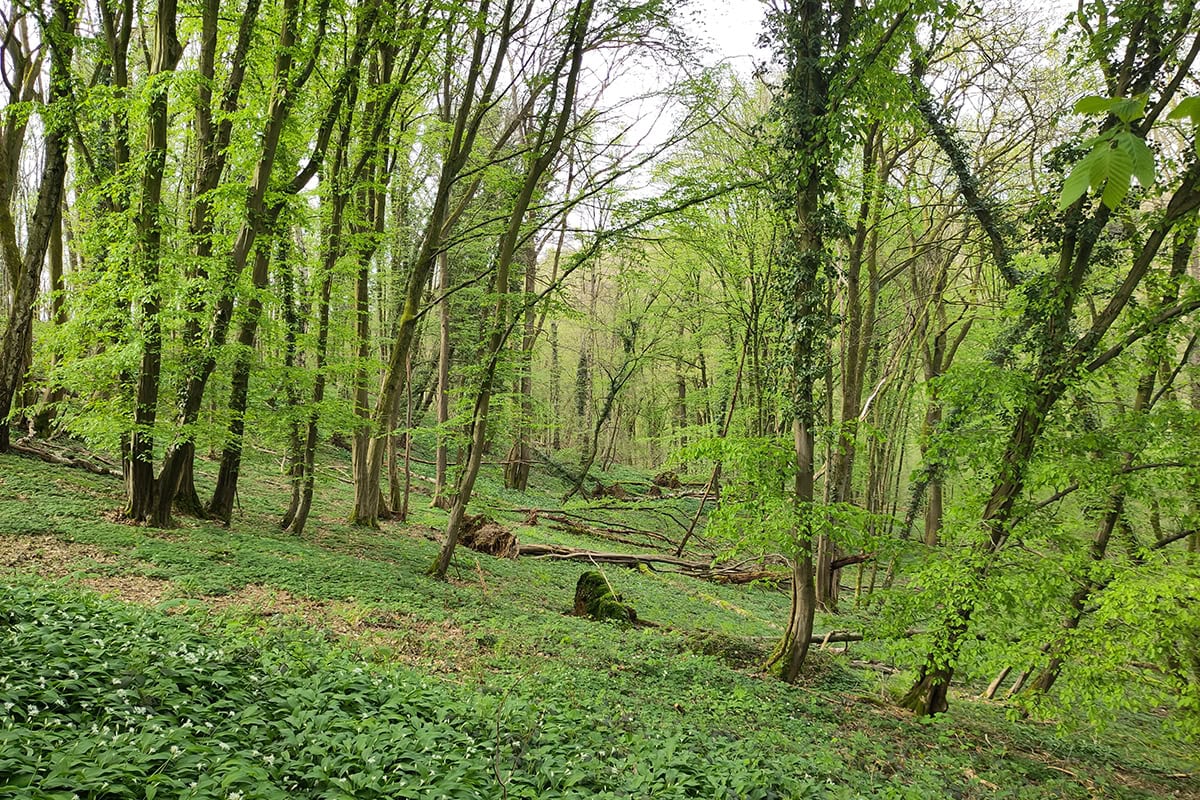
Sloping forests in South Limburg still contain some of the few truly native trees, including these hornbeams. Photo: Govert de Jong
Every garden has a tree, says Govert: "Even a small garden can easily accommodate a tree, and it often makes your garden seem even bigger. If you have the space, it's better to choose several varieties instead of multiple specimens of a single species." See Govert's 10 favorite native trees below.
Small trees and shrubs are sometimes placed very close together, says Govert: "With the small trees, I'm cheating a bit by also including some tree-like shrubs in this list. These species are well-suited for small gardens."
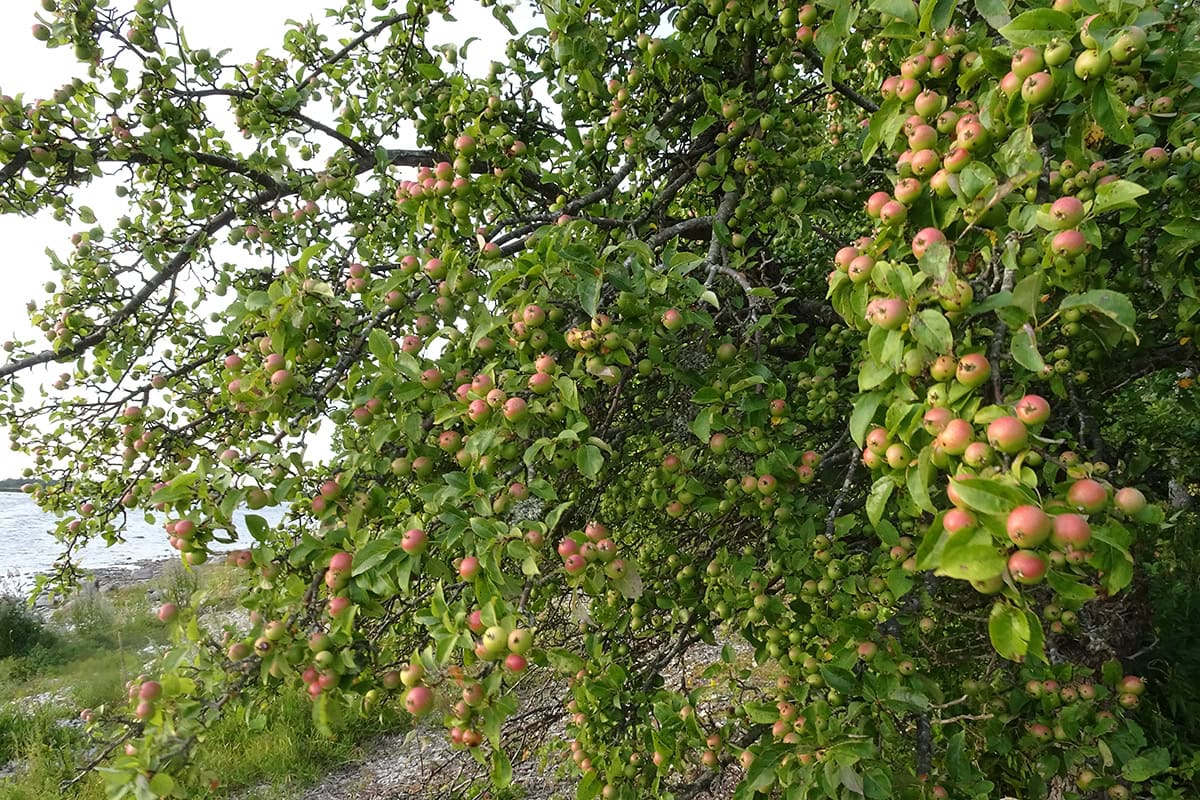
Wild apples are very rare in the Netherlands and Belgium.
Govert: "Our apple trees are cultivated from this wild variety, which is (still) very rare in our natural habitat. The apples are tart, but animals still thoroughly enjoy the blossoms in spring and the fruits in late summer. They grow best in moist, sandy or loamy soil."
Maximum height: 10 meters Flowering period: April – May
Want tips like this in your inbox every week? Sign up for our free newsletter now!
Unfortunately, your registration was unsuccessful. Please try again later.
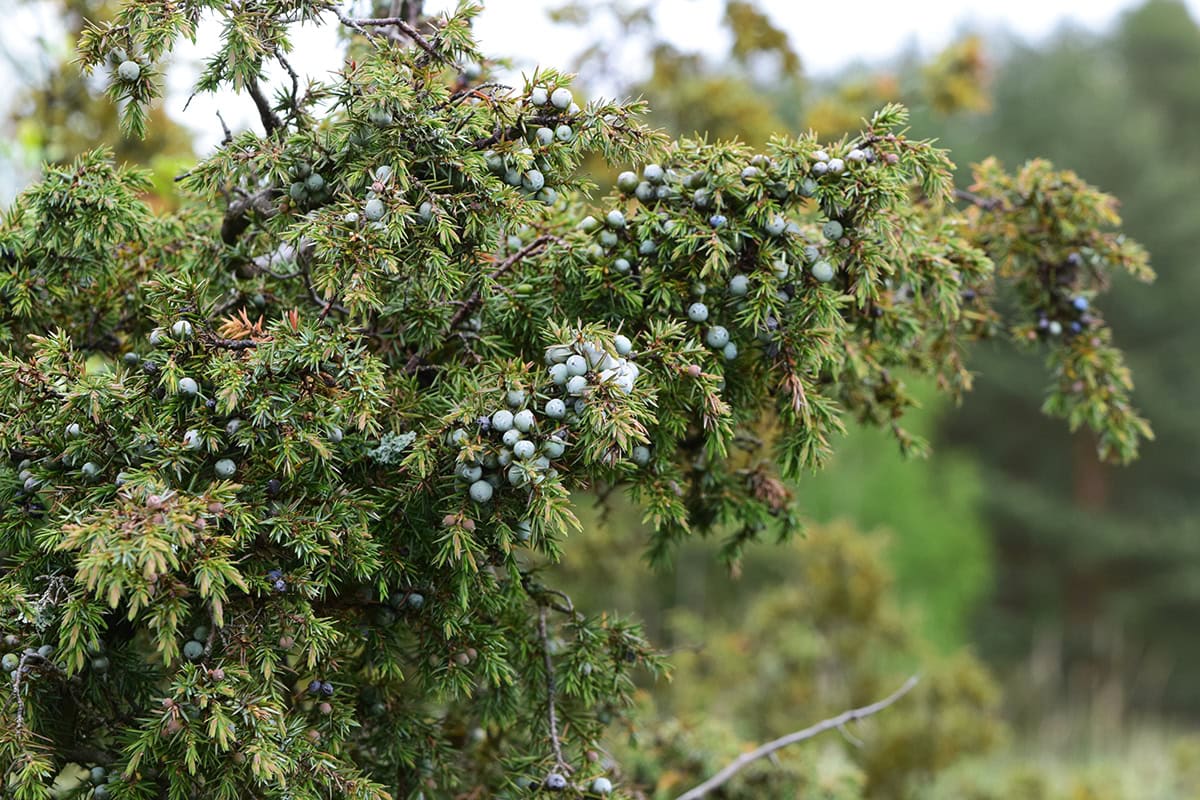
Juniper is a good evergreen plant. Photo: Krzyztof Ziamek / Wikimedia Commons / CC BY 4.0
Govert: "Juniper is used in all kinds of dishes and alcoholic beverages and has been here for about 11,000 years. This evergreen shrub or tree prefers nutrient-poor, sandy soil. Ideal if you have poor garden soil."
Maximum height: 10 meters Flowering period: April – May
Govert: "The name isn't a coincidence: garden birds like song thrushes and blackbirds love the berries of this small tree. In spring, the white flower clusters are frequented by wild bees, bumblebees, and flies. It grows well in average garden soil, but less so in clay or chalky soil."
Maximum height: 9 meters Flowering period: May – June
Read also
Alder buckthorn has red berries that turn purple. Photo: Sdjurovic / Wikimedia Commons / CC BY 4.0
Govert: "I've mentioned it before, but this really is a very good plant for all kinds of pollinators, such as wild bees . The small, inconspicuous flowers are present from May to September, while the berries are already forming, which birds love. It doesn't grow well in clay, but thrives in moist, slightly acidic, sandy soil."
Maximum height: 3 meters Flowering period: May – September
Read more
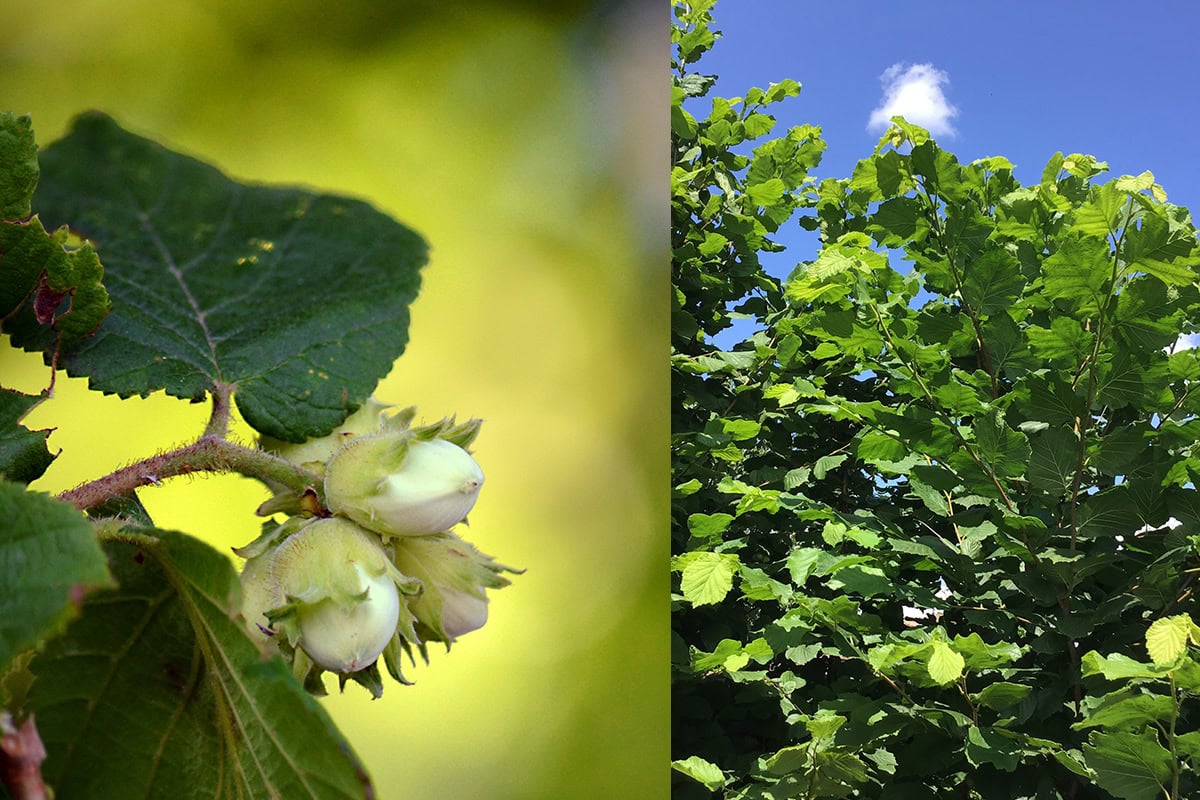
The hazel is a good shade plant, with delicious fruits. Photo left: Frauke Riether / Pixabay. Photo right: CZuser / Wikimedia Commons / CC BY-SA 4.0
Govert: "The hazel tree is one of my absolute favorites, not least because I see the great spotted woodpecker cracking hazelnuts every winter. Besides the delicious nuts, it provides pleasant shade and plenty of hiding places for garden animals. If you suffer from hay fever, it's best to avoid it. It grows almost everywhere."
Maximum height: 6 metres Flowering period: January – March (catkins and tiny red flowers)
How can you help nature and biodiversity with your garden? Discover it in this special edition!€12.99
"These large native trees are all beautiful to look at and great for stimulating life in the garden," says Govert. "Given their size, these species are especially suitable for larger gardens. Of course, you can prune the trees if necessary."
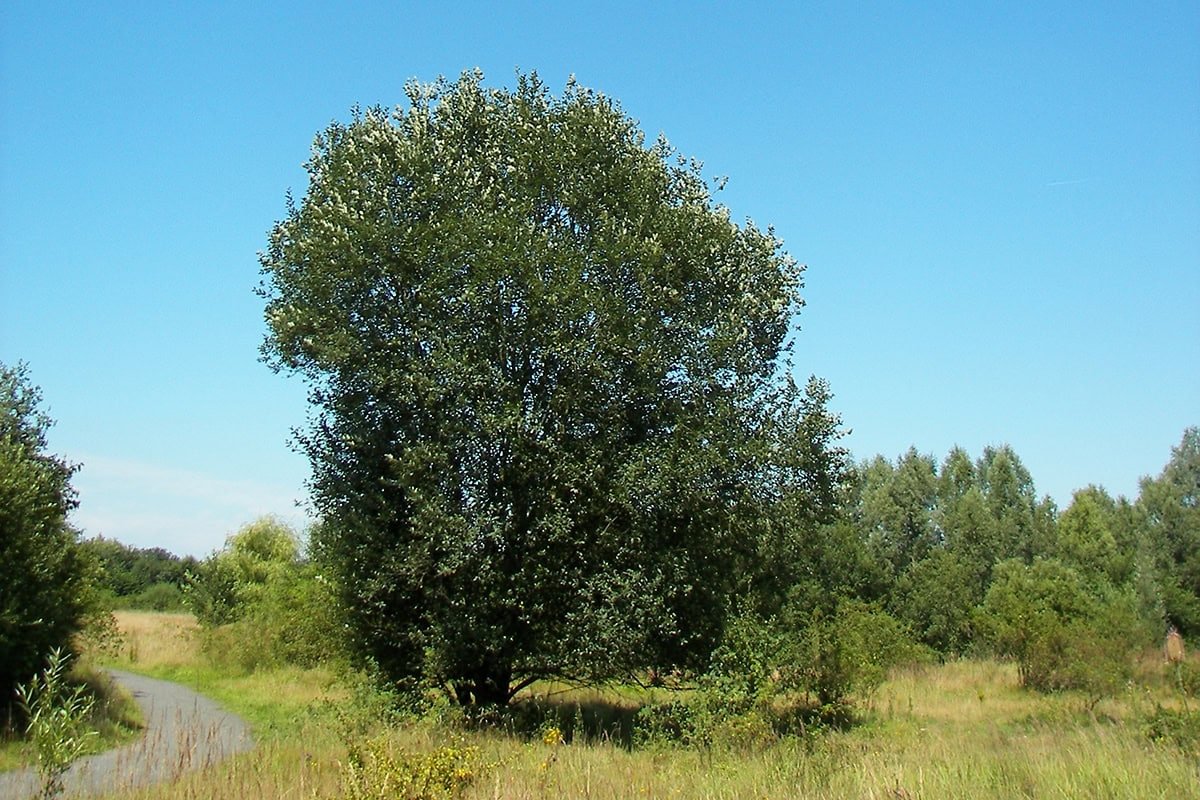
Female willow catkins of the forest willow ( Salix caprea ) Photo: Wikimedia Commons / Photo T. Kebert / CC BY-SA 4.0
Govert: "Willows are typical trees in generally wet landscapes. Hundreds of animal species live there, so they're excellent for biodiversity . A relatively small tree species is the pussy willow ( Salix caprea ). All willows are fast growers, so you get quick results."
You'll find them in many places, and this tree will also self-seed quite easily. This makes it easy to grow multiple trees, and willows are also very suitable for winter cuttings .
Maximum height: 9 meters Flowering period: March – April
Tip!
Sweet cherry blossoms with abundant white flowers and bears cherries from June onward. Photo: Govert de Jong (left) and Sarah Cuttle (right)
Govert: "The native cherry tree is a good pollinator in spring, and at the beginning of summer, you and the birds can enjoy the (slightly tart) fruits. It thrives in humus-rich, 'average' garden soil that's neither too wet nor too dry.
Maximum height: 20 meters Flowering period: April – May
Read also
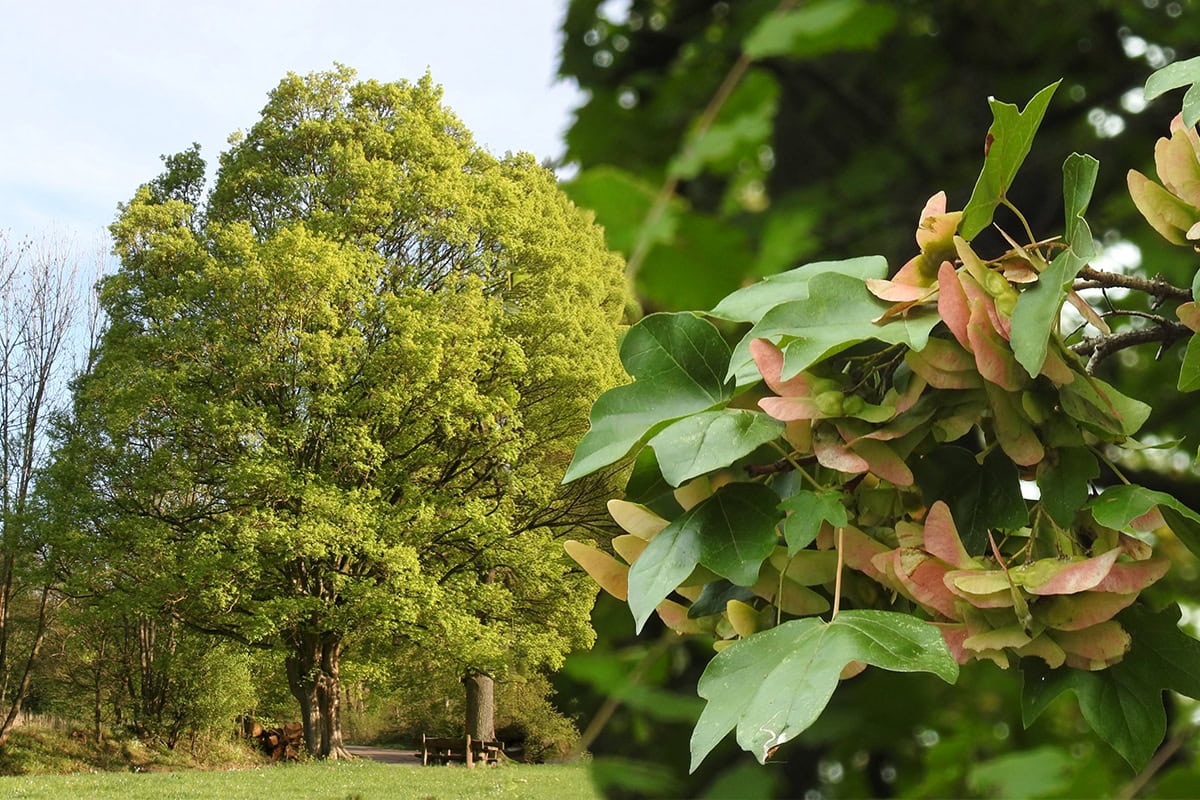
Spanish oak ( Acer campestre ) and the well-known "helicopters." Photo edited by merging / Wikimedia Commons
Photo left: Rosenzweig ( CC BY-SA 3.0 ). Photo right: Robert Flogaus-Faust ( CC BY 4.0 ).
Govert: "This is the only native maple species, but its Dutch name doesn't really help matters. It's also called the field maple. This tree is a slow grower, making it suitable for gardens. Its characteristic features are the seeds shaped like little helicopters, which you probably often stuck to your nose as a child."
Maximum height: 18 meters Flowering period: May – June
Read also
Pedunculate oak ( Quercus robur ). Photo: AnemoneProjector / Wikimedia Commons / CC BY-SA 2.0 .
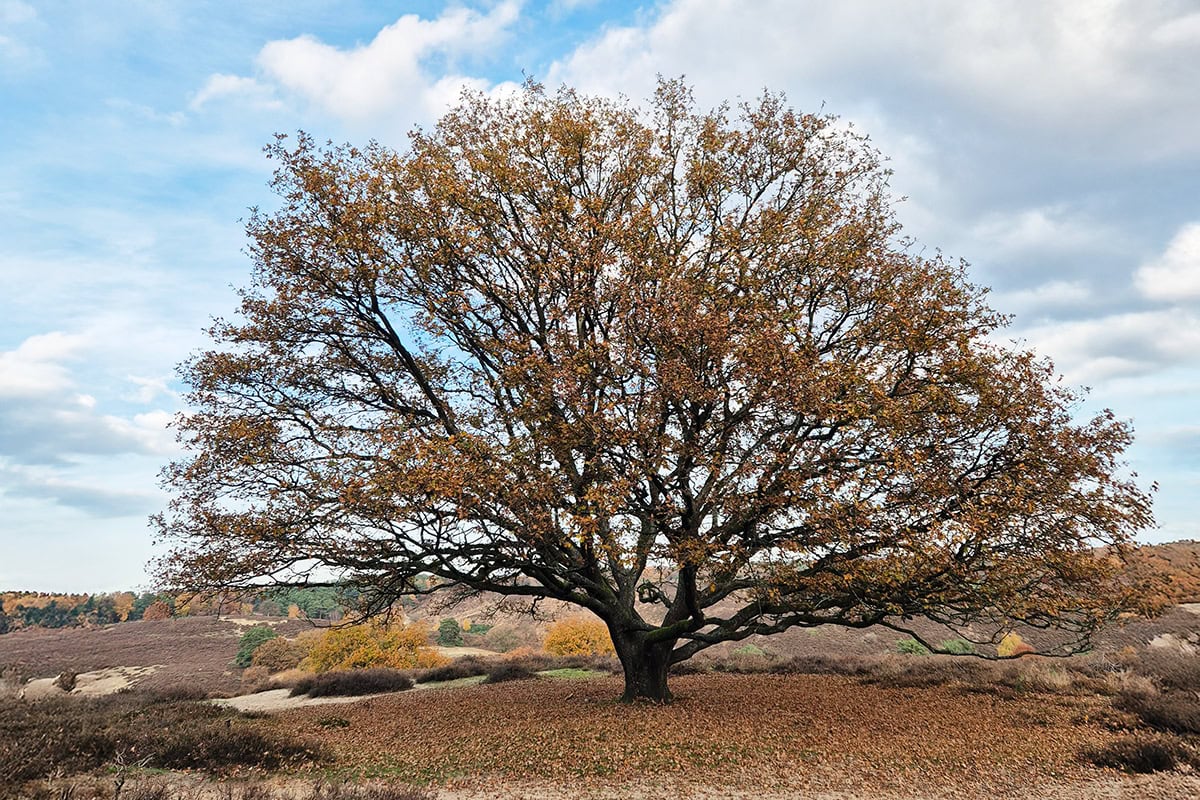
Govert: "Oaks are also called the kings of the forest and are very common, but that doesn't make them any less beautiful, iconic, and important. This tree species is also home to hundreds, if not thousands, of animal species. It thrives in soil that isn't too wet and is somewhat nutrient-rich, but is less successful in acidic soil." Oaks can grow quite large, so make sure you have enough space to plant this tree. Many fungi live in symbiosis with oaks.
Maximum height: 30 meters Flowering period: April – May
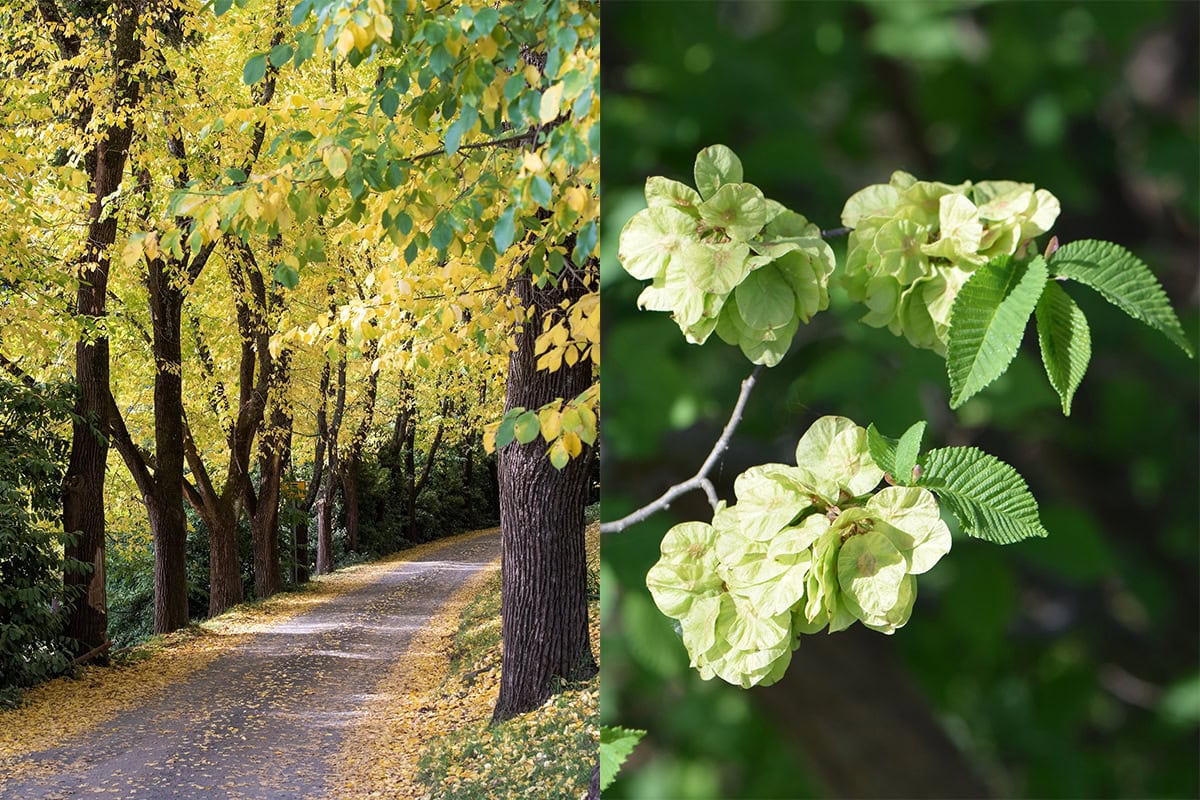
Dutch elms are used in avenues and are very closely related to smooth elms. The characteristic seeds are shown on the right. Photo left: Penny / Pixabay. Photo right: Krzysztof Ziarnek / Wikimedia Commons / CC BY-SA 4.0 .
Govert: "Just like summer oaks, elms, such as the smooth elm, can grow to be large trees and very old, up to 500 years old! They're easy to prune. They're good for biodiversity and grow rapidly in their younger years, up to about 40 years old. You can find beautiful galls (growths caused by insects) on them, such as the elm fire aphid."
Maximum height: 30 meters Flowering period: March – April
Read also
Solitary summer oak ( Quercus robur ) on the Veluwezoom. Photo: Govert de Jong
What constitutes native trees is still a matter of debate, but they generally arrived here of their own accord. Govert explains: "After the last ice age (approximately 12,700 years ago), more and more trees and shrubs appeared here, such as birch, willow, lime , oak, and pine. Of these native trees, only three percent remain native in the Netherlands. This means they contain genes that can be traced back to the 'first' trees that arrived in the Netherlands independently."
"The rest of the trees have been planted, crossbred, cultivated, allowed to run wild, or introduced over the centuries, and there are also a growing number of invasive exotic species , such as the Tree of Heaven ( Ailanthus altissima ) and the American bird cherry ( Prunus serotina )," says Govert. "Fortunately, more and more native, indigenous trees are being cultivated by sustainable growers , to strengthen the gene pool and ensure the tree population is as closely aligned as possible with our own and local nature."
Want tips like this in your inbox every week? Sign up for our free newsletter now!
Unfortunately, your registration was unsuccessful. Please try again later.
Want to enjoy not only your garden but also the animals and plants that thrive there? Editor Govert de Jong writes monthly articles about natural gardening in Gardeners' World magazine . You'll find in-depth information on a variety of topics and practical gardening tips. Read more about native trees in the November issue .
€7.99
Anne talks to tree growers Johan Smits and Albert Leemreize about the best trees per garden and season.
Editor Govert de Jong shows beautiful, native trees and explains what they mean for your garden.
Grower Marcel de Wagt recommends flowers that still bloom in November and champions a special November bloomer.
Editor Lizanne Croonen shares growing tips she learned from mushroom expert Pip Gilmore.
And many more practical and inspiring gardening tips!













%3Aformat(jpeg)%3Abackground_color(fff)%2Fhttps%253A%252F%252Fwww.metronieuws.nl%252Fwp-content%252Fuploads%252F2025%252F11%252FANP-352505210.jpg&w=1280&q=100)

