The hidden UK street where every single house is painted a different colour
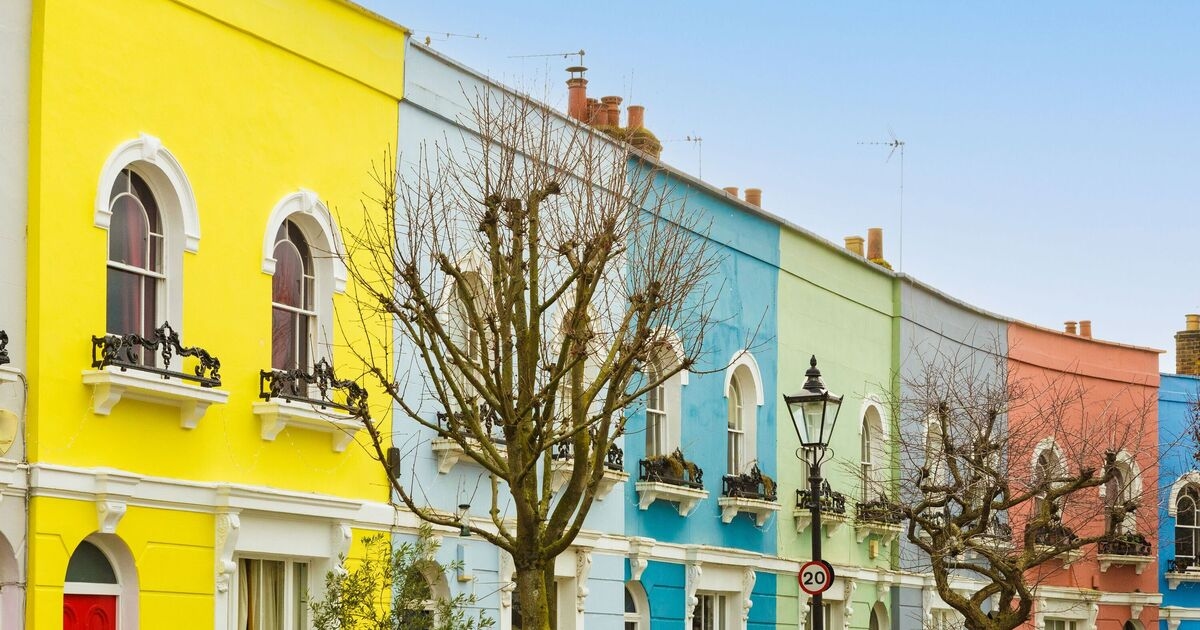

A tiny dead-end road tucked off a high street has quietly become one of London's most photographed addresses – and one of its priciest, new analysis has revealed.
Kelly Street is a curved row of early 19th-century terraced houses with matching ornamental ironwork balconies – but every single home is painted a different colour. Turquoise, lilac, raspberry, mustard, sage, sky blue – the whole street looks like a Pantone chart. The street is so tucked away that even most Londoners have never heard of it. Despite sitting a five-minute walk from Camden Market and just two minutes from Kentish Town tube, Kelly Street is a dead-end with no through-traffic – meaning it remains off the tourist trail. It didn't always look this way. Built in the early 1800s as a row of standard Georgian terraces, the street was originally a plain brick affair like thousands of others across London. The transformation began in the 1960s, when a wave of London homeowners across Camden, Kentish Town, Primrose Hill and Notting Hill started painting their terraces in bright colours. Kelly Street's residents quickly followed.

Today, neighbours informally consult one another before repainting, with most agreeing on new shades through unofficial votes to keep the rainbow effect intact.
Brickwork specialists Reclaimed Brick Company analysed Zoopla sold price data for the street and found that one home sold for £1.125 million in September 2024, while another went for £1.205 million the month before.
Both are modest two-bedroom, mid-terrace homes under 105 square metres – meaning buyers paid more than £12,500 per square metre, almost double the London average of £7,500.
The same analysis revealed an even more striking figure. The property that went for £1.125 million last sold for just £185,000 back in 1997 – meaning the property has soared in value by a staggering 507% in 27 years.
Kelly Street is far from the only reason buyers are flocking to the area. Kentish Town has become one of north London's most desirable postcodes, thanks to its mix of period architecture, independent cafes, and quick connections into central London.
Other colourful streets sit nearby in the same NW5 area, including Falkland Road, which became so iconic it's now part of a conservation area.

Daily Express