

25 Enchanting Renaissance Fair Hairstyles for a Fairytale-Worthy Look
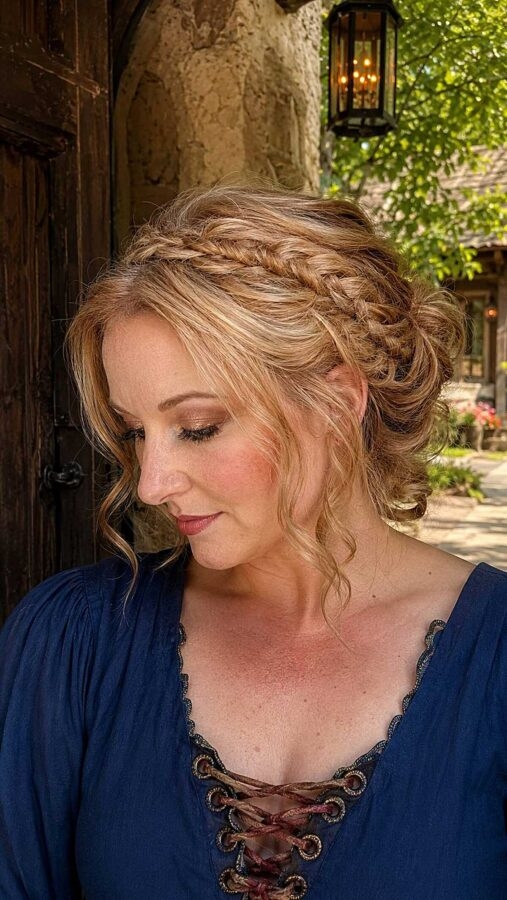
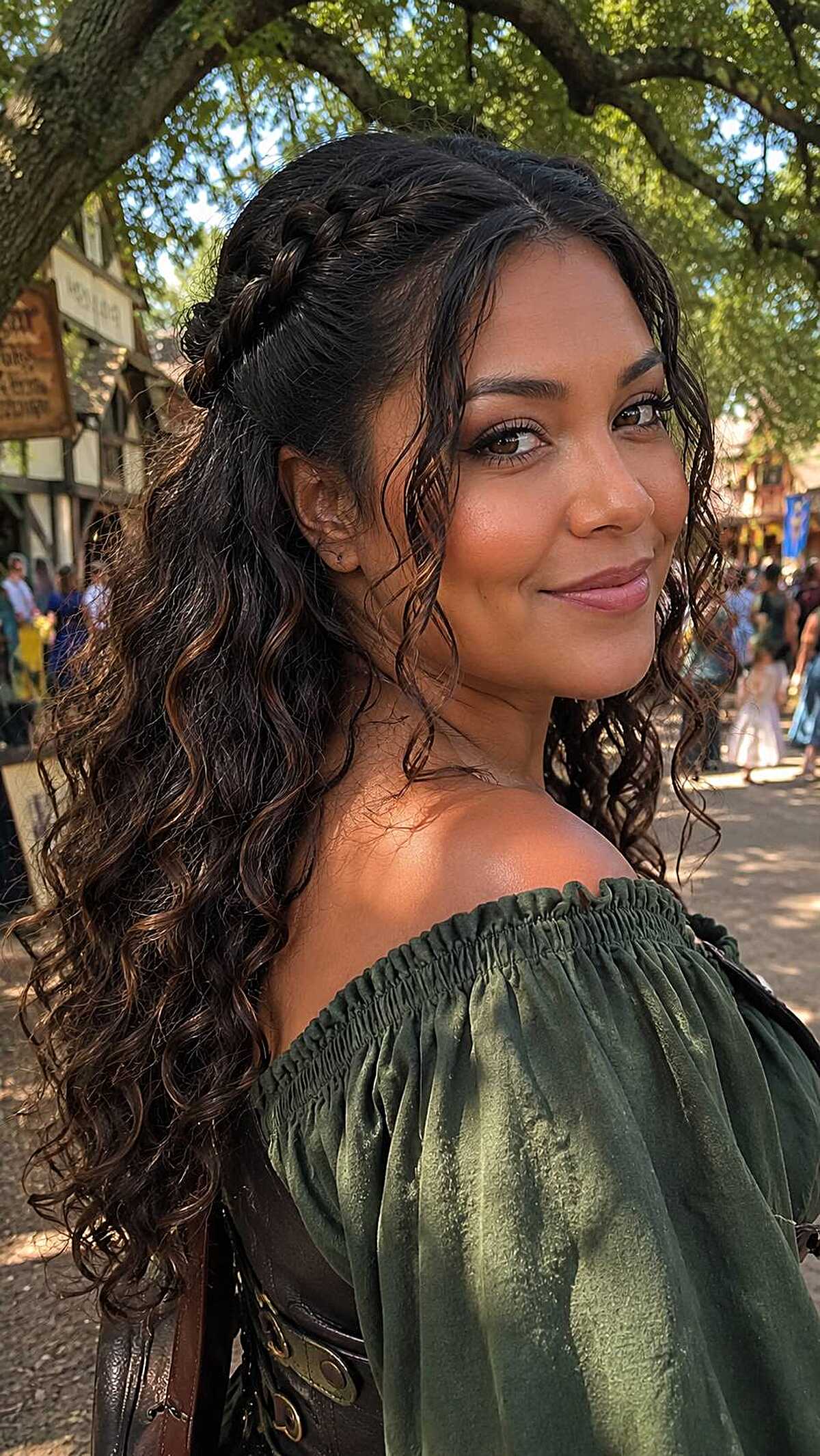

If you have naturally curly hair, this is genuinely one of the best Renaissance fair options available to you because it works with your texture instead of against it. A small braid runs along the crown, pulling the front sections back, while the rest of the curls are left completely untouched and full of life. The volume in those curls gives the whole thing an effortless grandeur that straight-haired people have to work much harder to achieve. Sometimes the period-appropriate look is just showing up with what you have and framing it well.
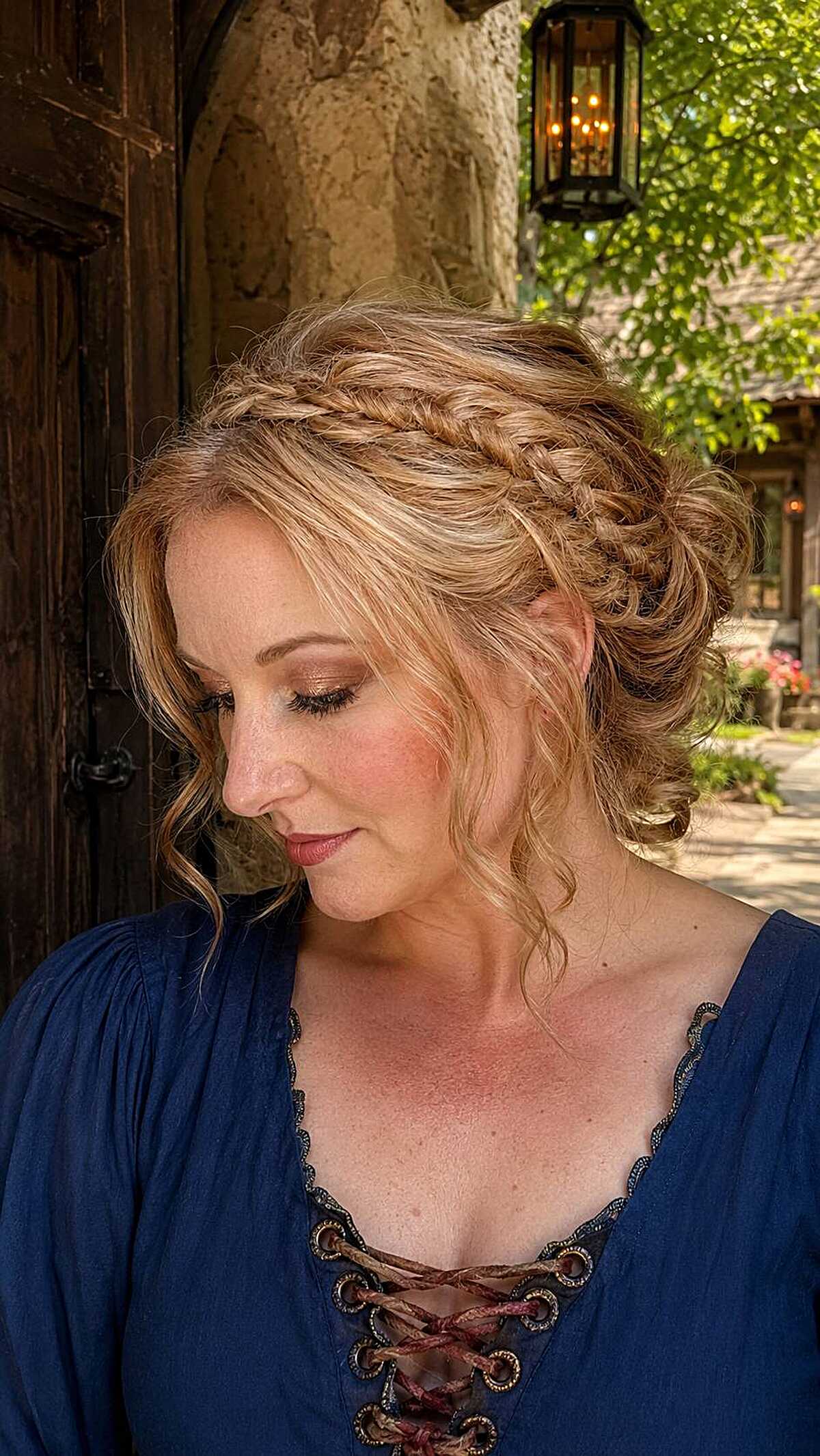
There’s a lot happening here, and all of it is working. A fishtail braid and what appears to be a regular braid are layered across the crown, while the remaining hair is gathered into a loose, textured bun at the back. Curled tendrils frame the face on both sides, softening what would otherwise be a fairly structured updo. The warm strawberry blonde tone catches the light through the braided sections beautifully. This is the kind of style that requires a mirror, some patience, and ideally a friend standing behind you, but the result justifies the effort.
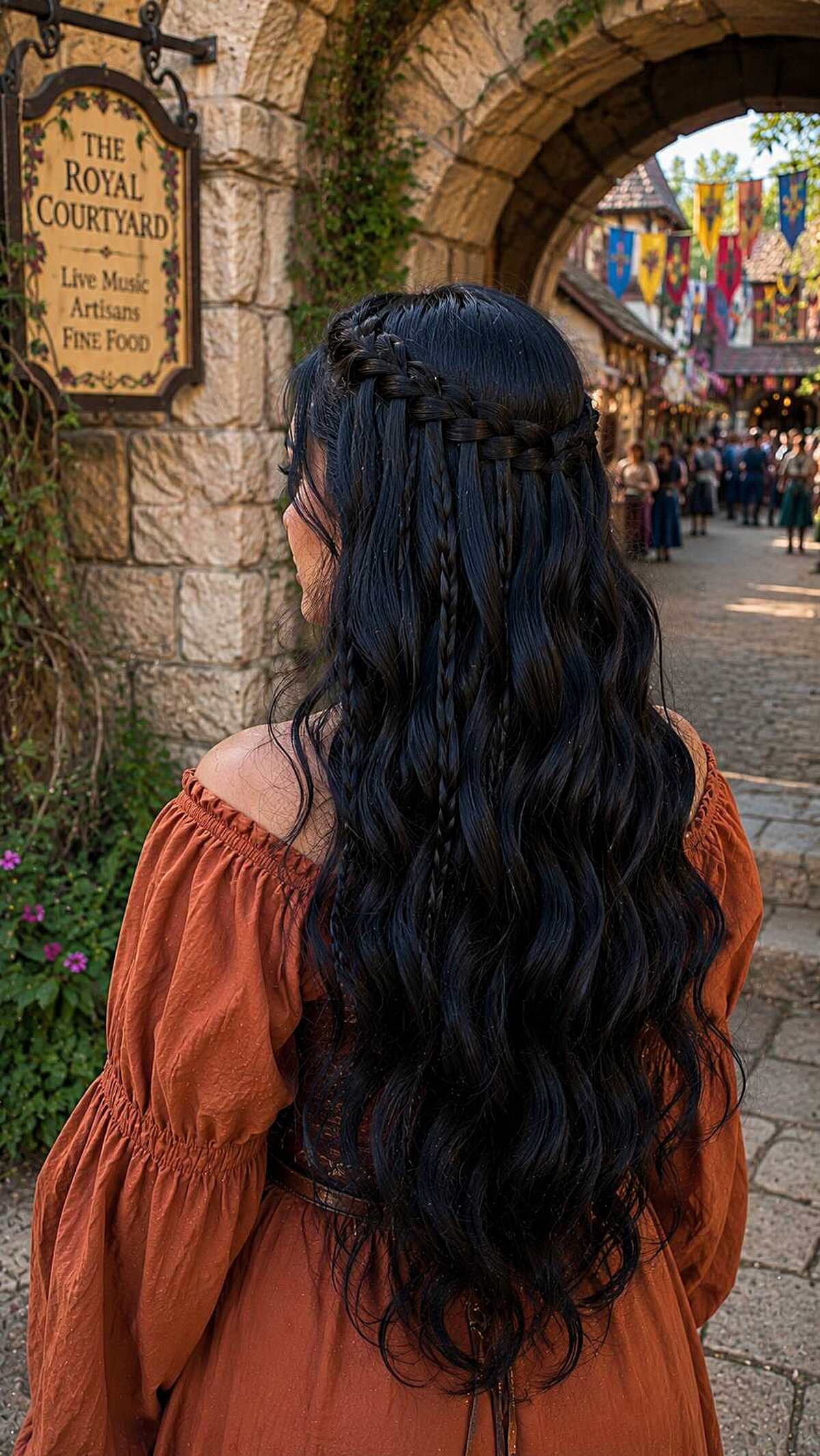
A waterfall braid crosses the back of the head, releasing strands that fall into thin individual braids among the loose waves below. On this jet black hair, the braids create a graphic, almost architectural effect, each plait visible and distinct against the smooth, glossy lengths. The rust-orange off-shoulder blouse is a striking color choice against that depth of black, and the whole style manages to feel both structured and free-flowing at the same time. It’s a fitting final look for this collection because it captures exactly what good Renaissance fair hair should be: deliberate enough to show effort, relaxed enough to show confidence, and romantic enough to make you forget what century you’re actually standing in.
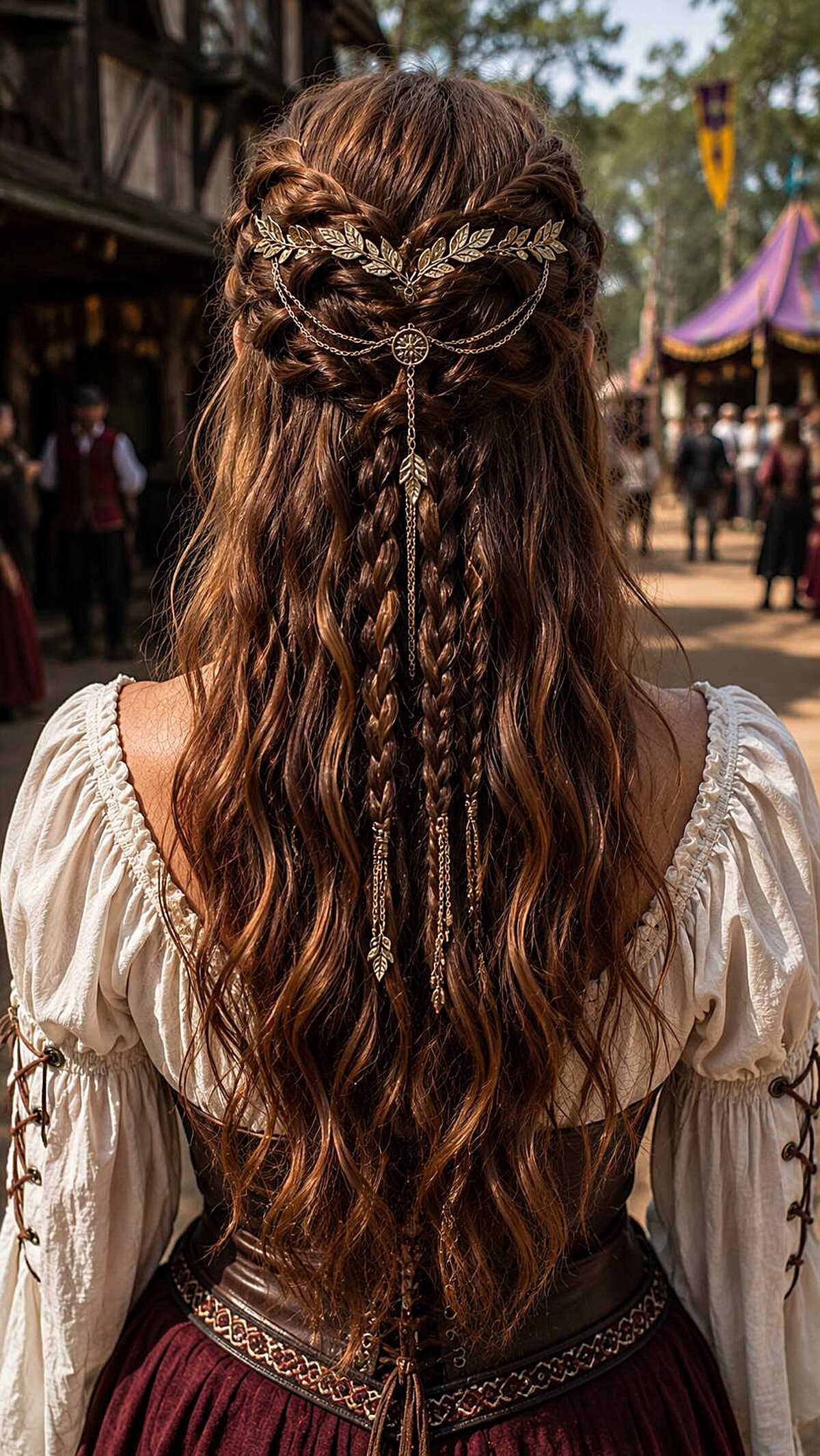
A gold leaf crown with draping chains sits over a twisted and braided half-up section, while multiple thin braids and waves fall down the back. The accessory work here is doing serious heavy lifting, transforming what would be a relatively simple braided half-up into something that feels genuinely regal and fantasy-inspired. The warm chestnut hair color works beautifully with the gold metalwork, and the cream peasant blouse keeps the bottom half grounded enough that the top half can be as ornate as it wants. A leaf hair crown like this is honestly the single best investment you can make for Renaissance fair hair, because it elevates even the simplest braid into something that feels like a costume choice.
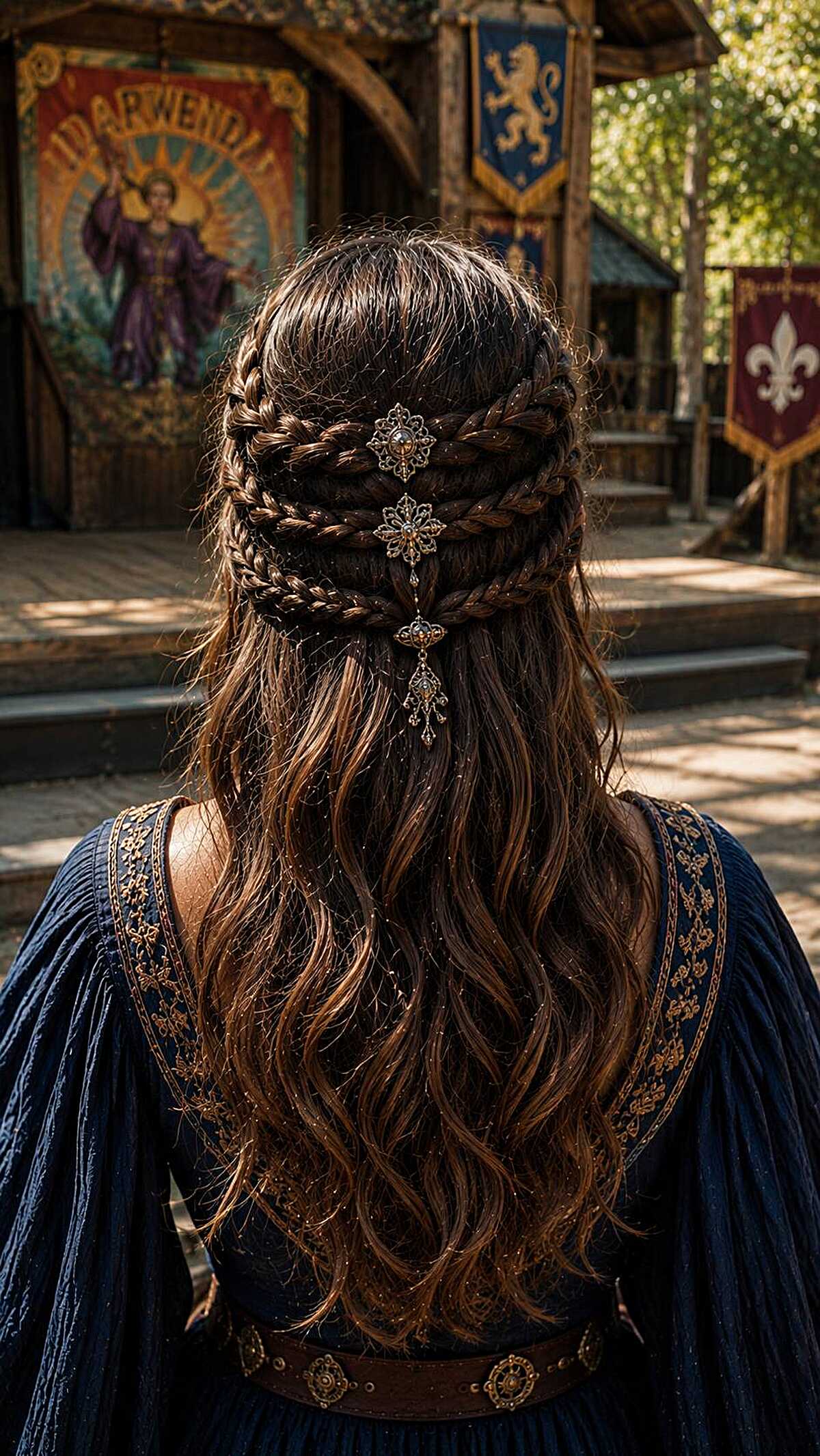
This is genuinely extraordinary work. Multiple braids cross and layer at the back of the head in a lattice pattern, accented with small metallic medallions placed at the intersections. Below the lattice, several thin braids trail down alongside loose waves, creating depth and movement. The navy dress with gold embroidery is clearly part of a coordinated effort that extends well beyond just the hair. If you’re the kind of person who starts planning your Renaissance fair look months in advance, this is the level you’re aspiring to.
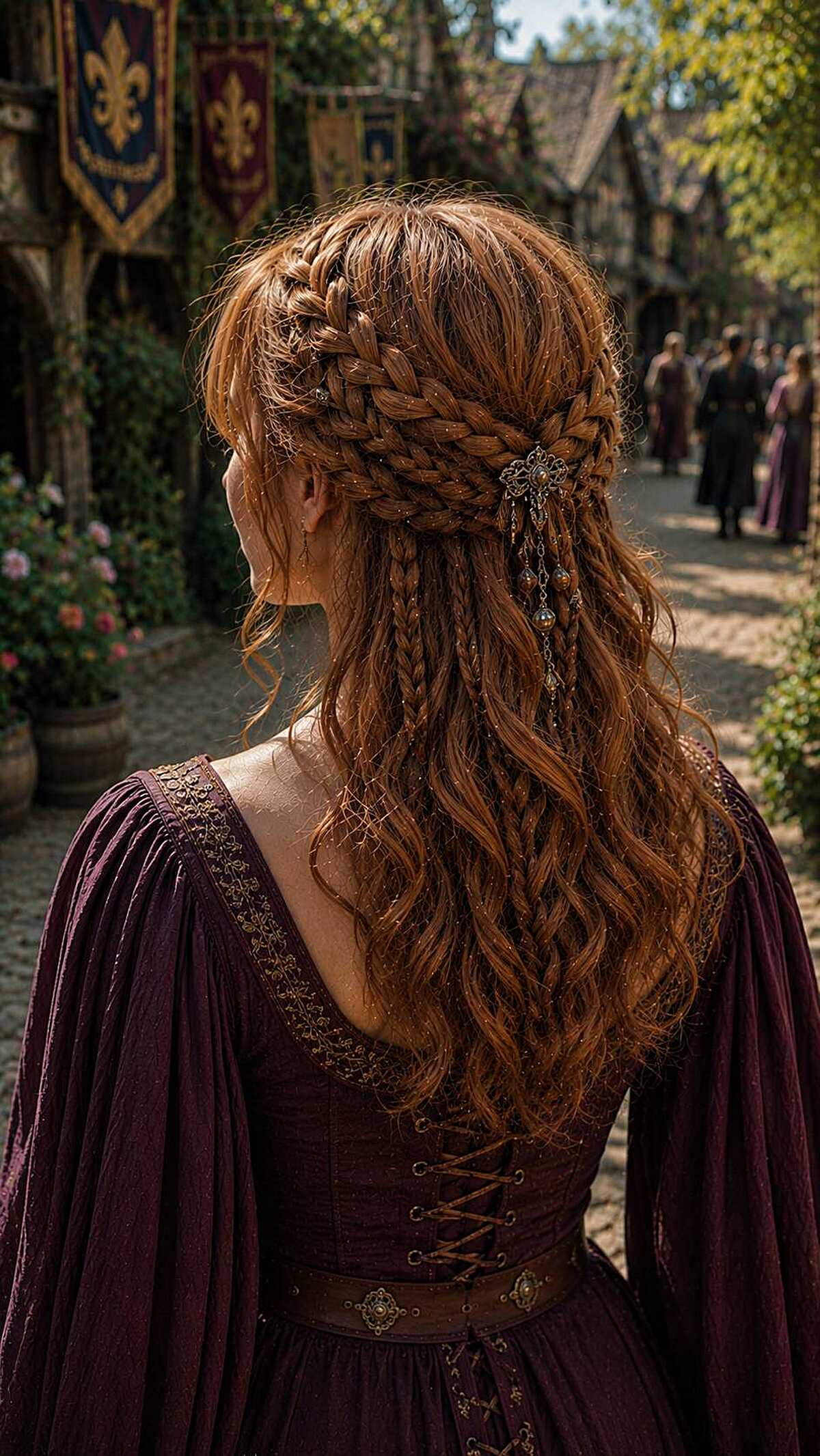
Multiple braids of different sizes layer across the back of the head, anchored by a jeweled hair clip with dangling chains that adds just the right amount of ornamentation. Below the braids, the auburn hair falls in a mix of waves and smaller accent braids, creating this rich, textured cascade. The deep plum dress is a gorgeous complement to the warm red tones. What I appreciate about this style is that the accessory feels integrated rather than stuck on, like it was planned as part of the whole composition from the beginning.
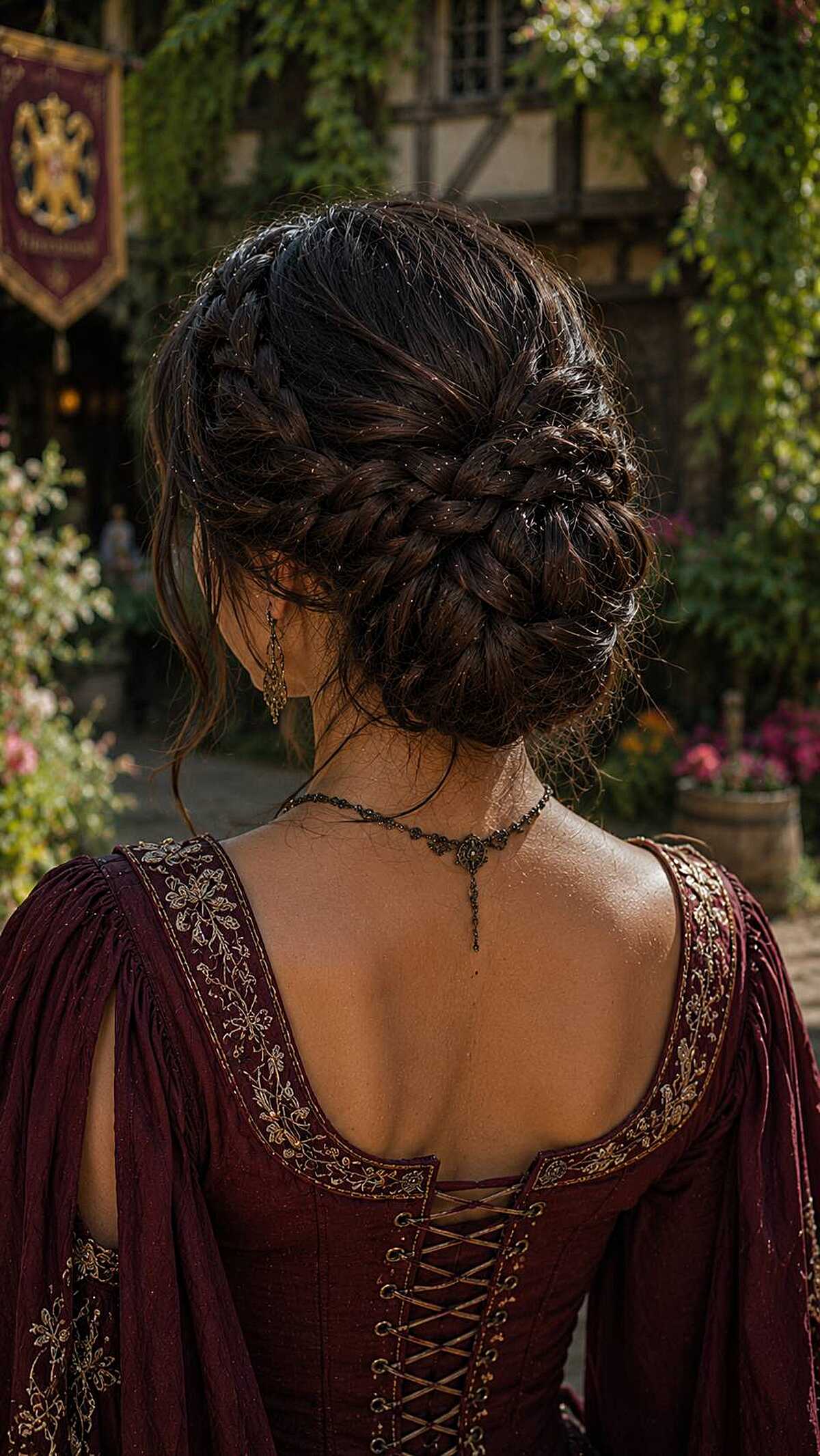
This is the most ambitious updo on the list and probably the most genuinely period-looking. Multiple braids are woven and pinned into a complex, knotted chignon at the nape, with the braids layering over each other in a way that creates real dimension and depth. The burgundy gown with gold embroidery and the delicate back necklace suggest this person did not come to the fair for a casual afternoon. This level of braiding likely requires a second person and a solid thirty to forty minutes, but some costumes deserve that kind of dedication.
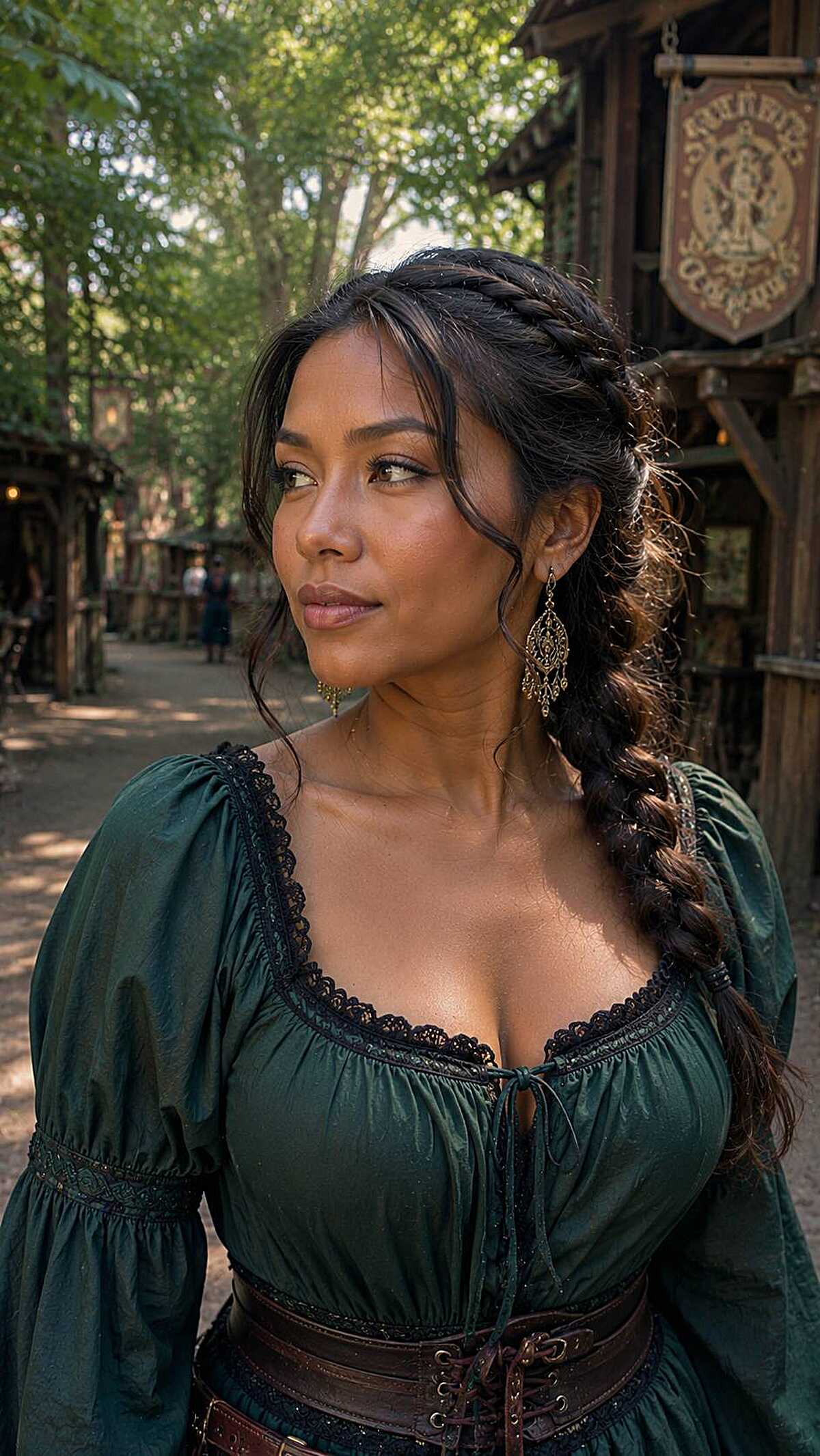
A thick rope braid sweeps from one side across the crown and falls over the opposite shoulder, with soft tendrils left out around the face. This is one of those styles that looks more complicated than it actually is, since a rope braid is really just two strands twisted together, but the placement and the volume make it read as something more intentional. The dark hunter green dress with black lace trim grounds the whole look in something a little more serious than the average fairgoer, and the ornate drop earrings are a smart finishing touch.
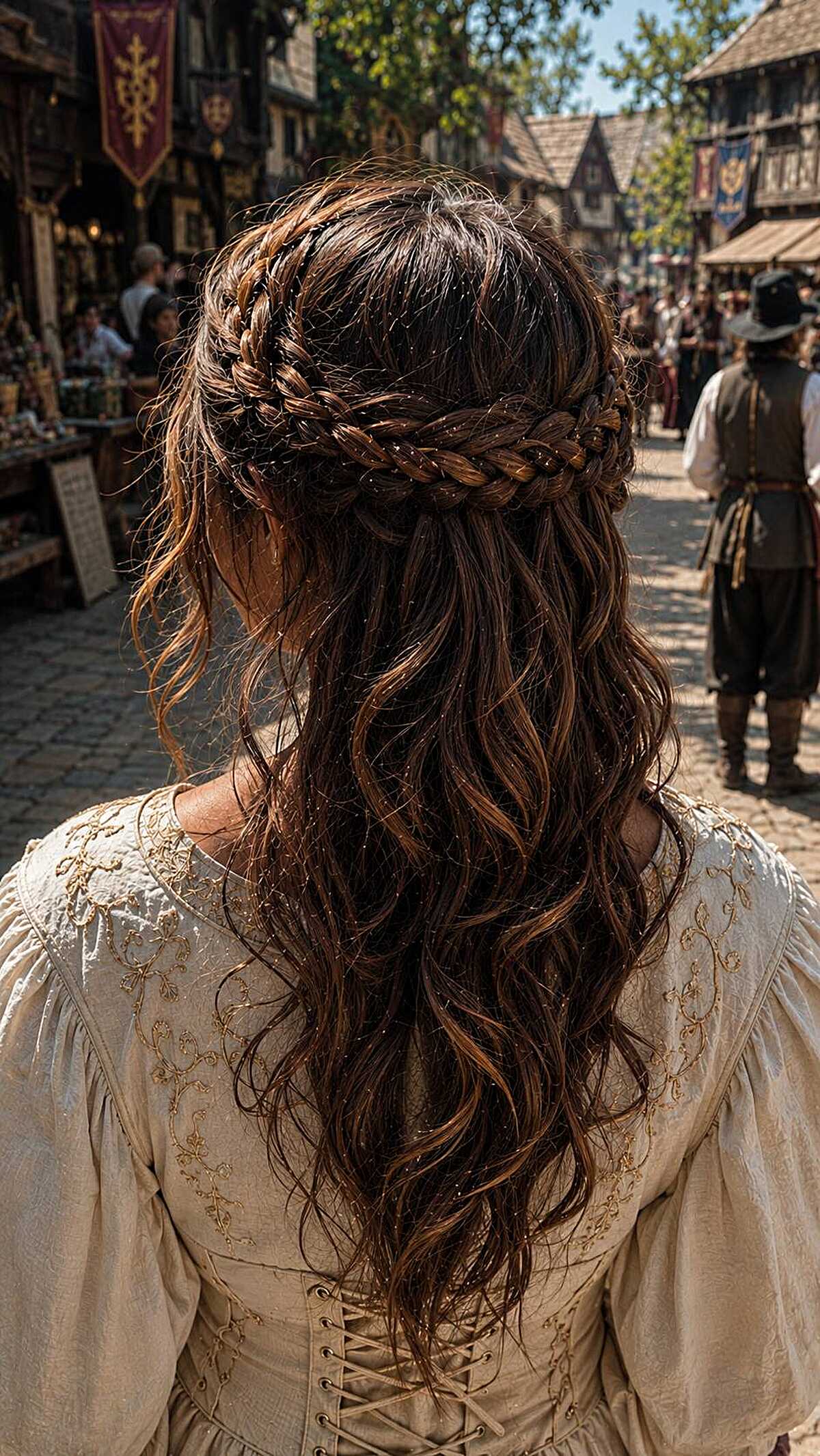
From behind, this is one of the most universally flattering styles on the list. Two braids meet at the back of the head in a layered crown formation, and the rest of the dark brunette hair falls in loose, natural waves with warm highlights catching the sun. The embroidered cream blouse with the lace-up back completes the silhouette perfectly. This is a style that photographs well from every angle, which matters more than people admit when everyone at the fair is taking pictures constantly.
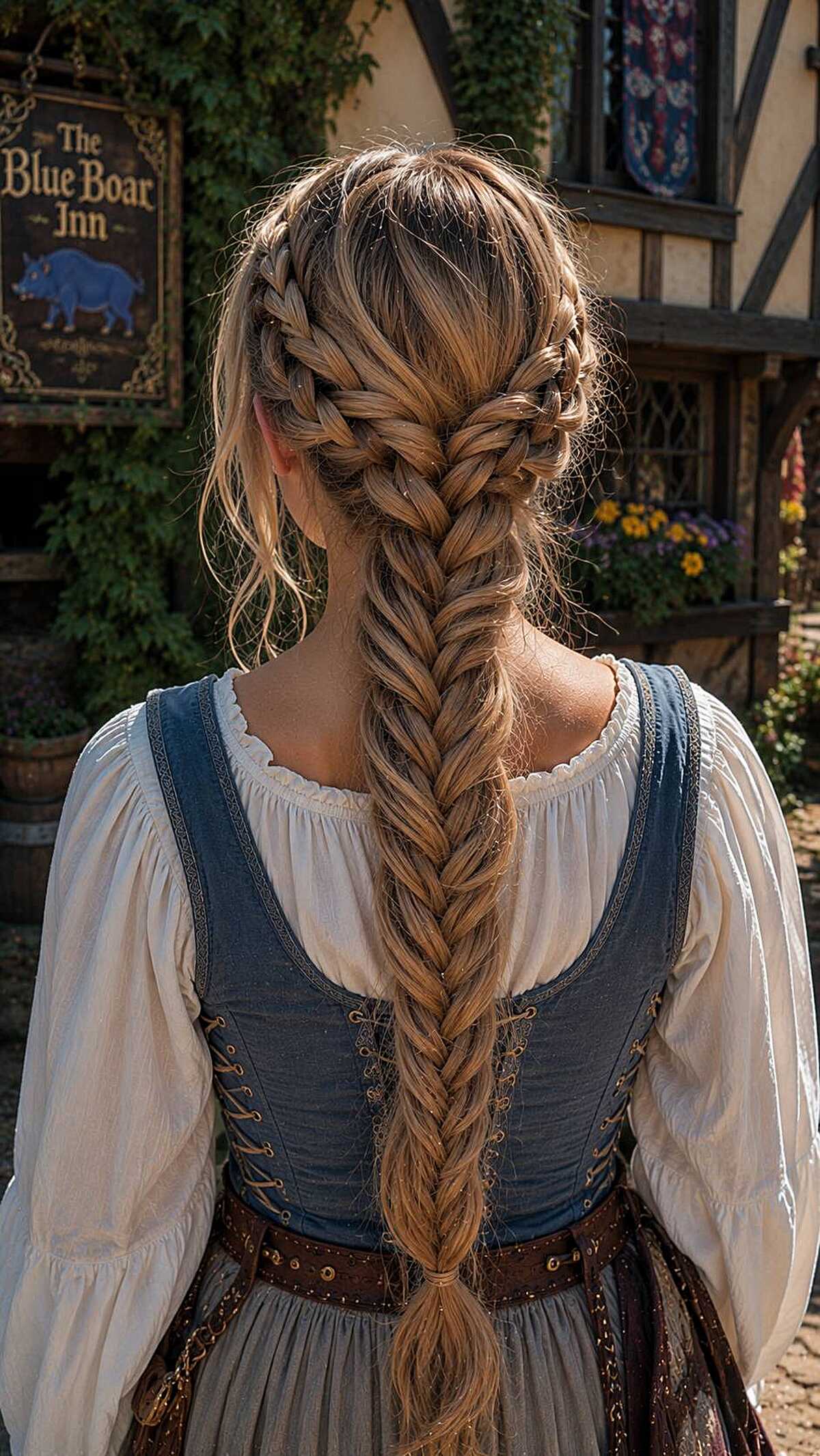
A French braid starts at the crown and transitions into a long fishtail that extends well past the middle of the back, and the combination of the two braid types creates this lovely shift in texture as your eye moves down. The sandy blonde color keeps the braid from looking too uniform, with lighter and darker strands weaving in and out naturally. With the blue bodice and white peasant sleeves, this is straight out of a storybook illustration, and I mean that as genuine praise. Some styles earn the fairy tale comparison.
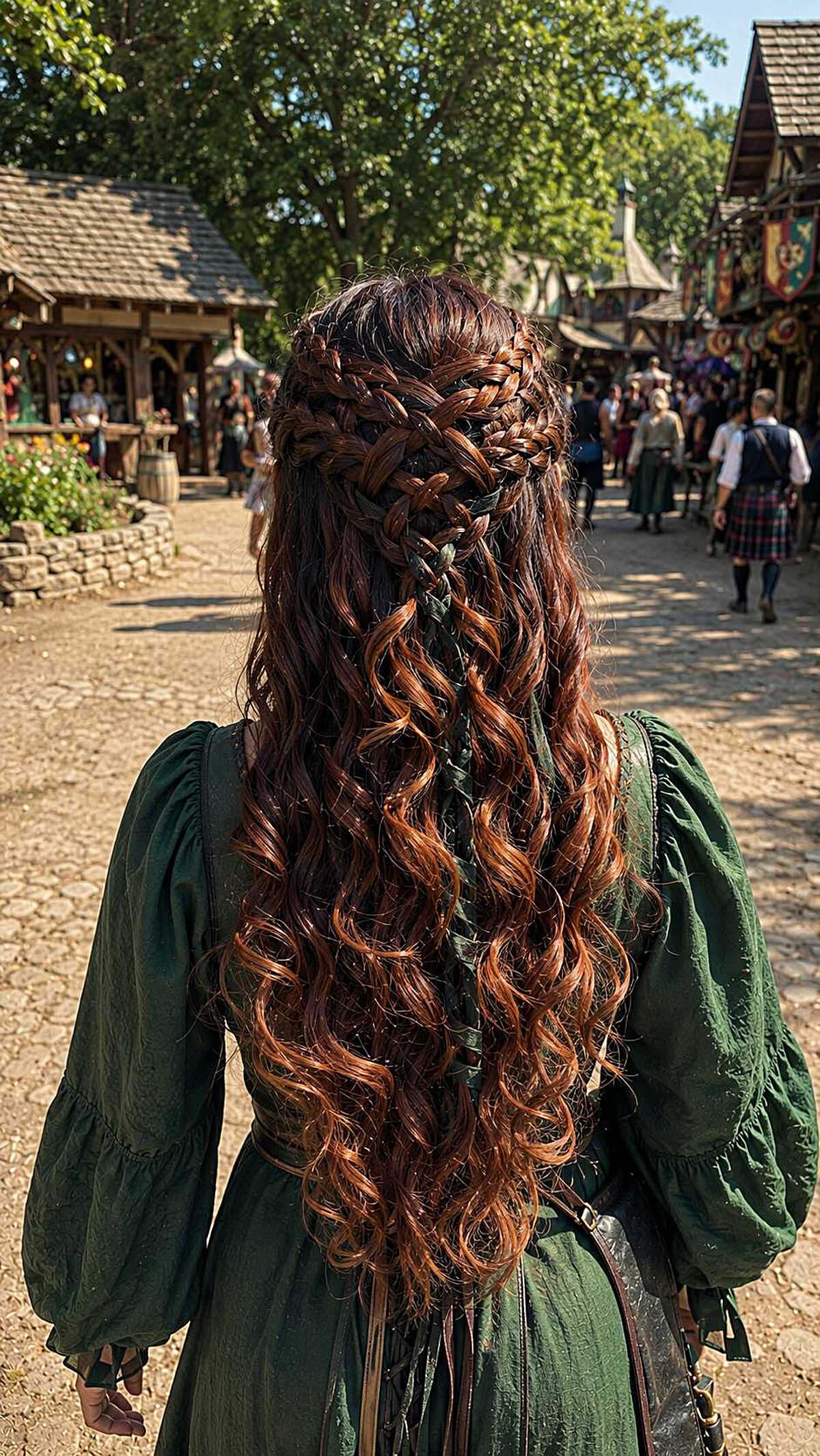
The color on this hair is doing at least half the work, a rich auburn that deepens to almost mahogany at the roots and catches copper tones through the curls. Two substantial braids cross over each other at the crown before the rest of the hair falls in defined, springy curls all the way down the back. The green dress with puffed sleeves is the right shade to make that red hair practically glow. If you’re going to the trouble of coloring your hair auburn, this is the kind of moment that makes the maintenance worth it.
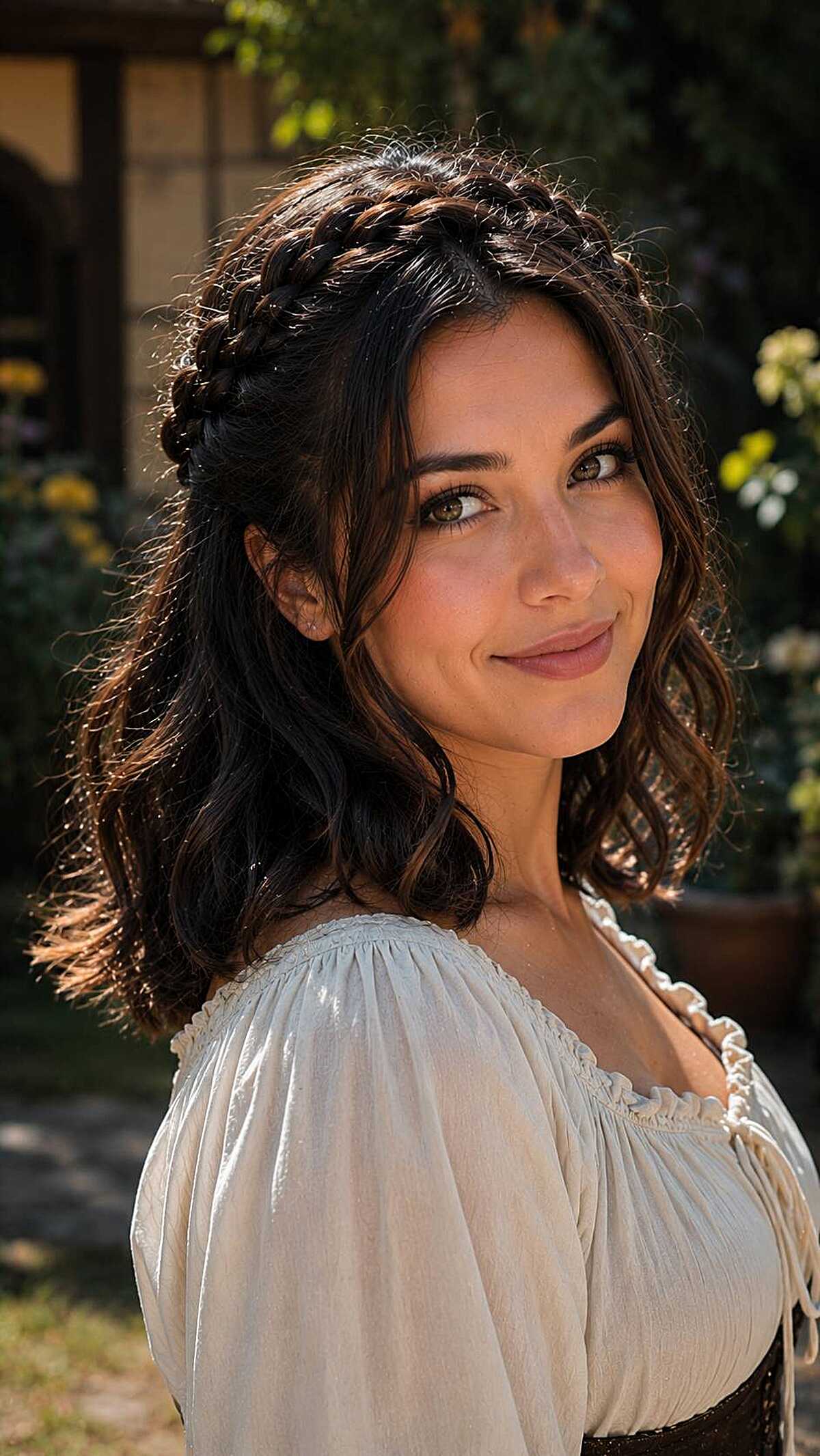
Proof that you don’t need hair down to your waist to pull off a Renaissance look. This chin-to-shoulder-length style uses a simple braid across the crown as a headband, and the wavy texture of the rest of the hair does the remaining work. It’s worth noting that on shorter hair, a braid like this actually looks more prominent because there’s less competing with it. The cream peasant blouse is classic, and the whole package is achievable with basically no special skills and about five minutes.
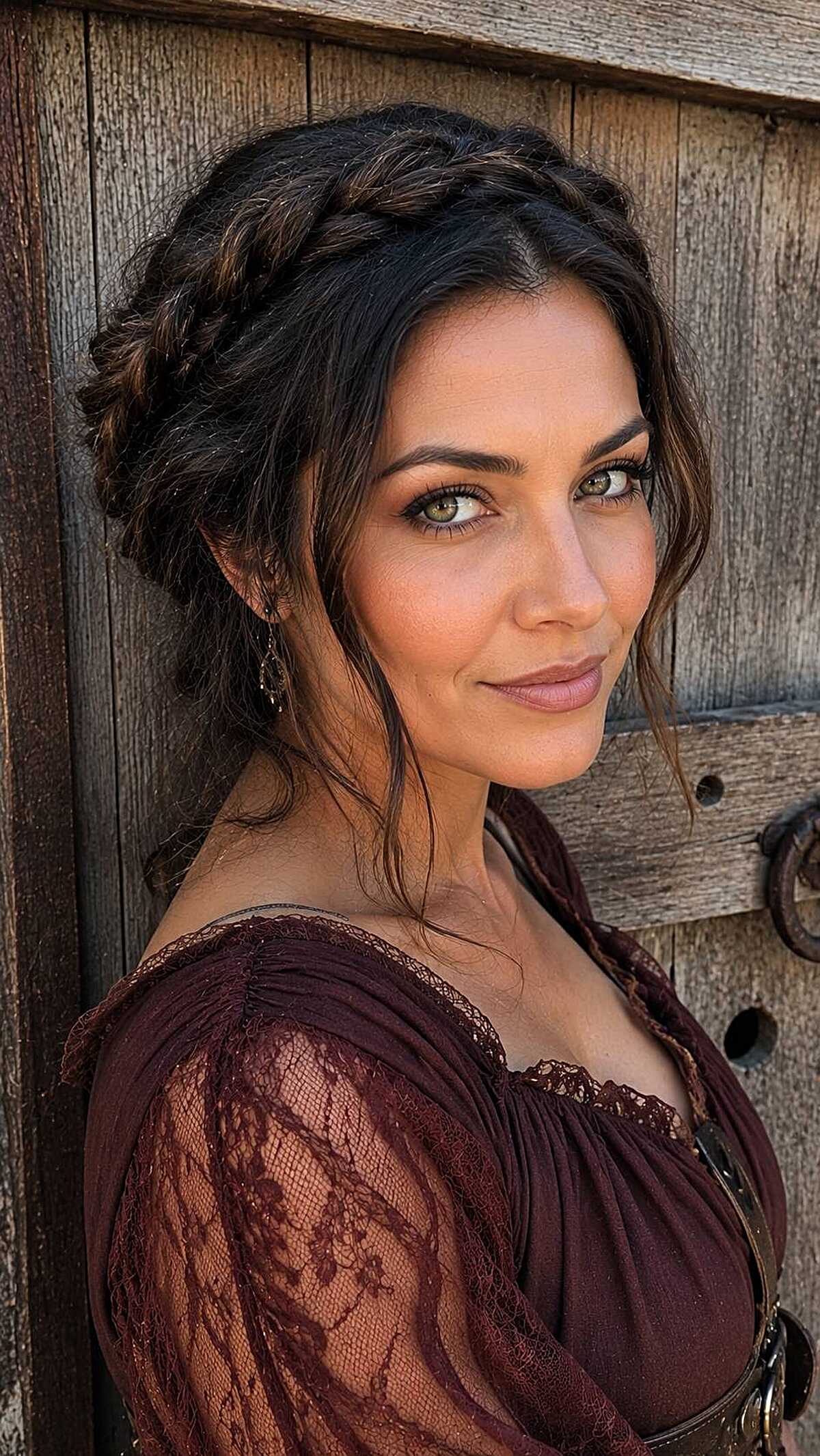
A fishtail braid wraps the entire head like a crown, with the ends tucked under and the whole thing pinned securely in place. On this deep brunette hair, the fishtail texture creates subtle visual interest without any color variation needed. A few wispy pieces are left out around the face and ears, which keeps it from looking too rigid. The plum lace dress with off-the-shoulder sleeves is a strong pairing, and the overall impression is someone who could be equally at home at a Renaissance fair or a period drama wrap party.
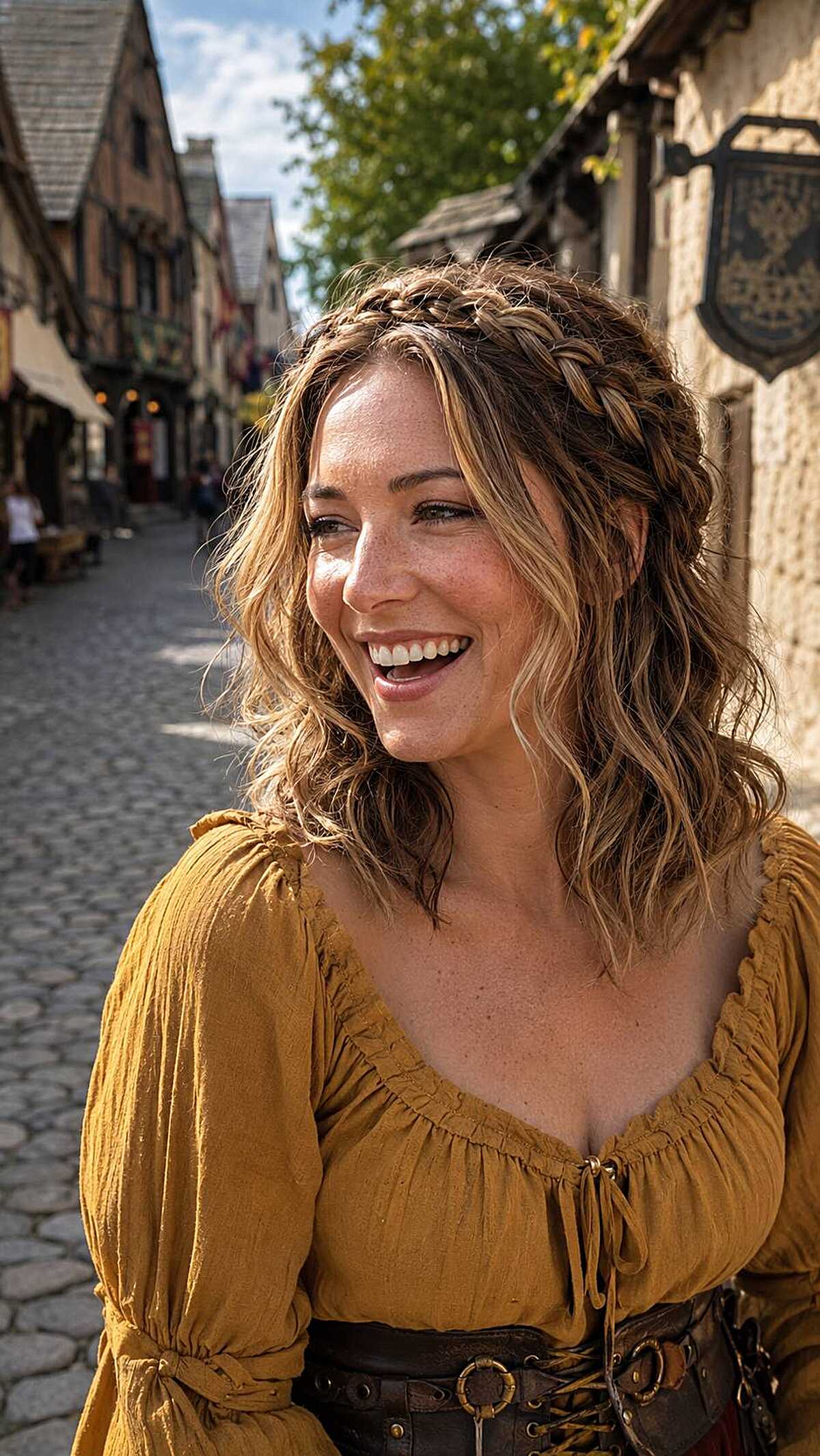
The braid across the top is so small and so casually placed that it almost reads as an afterthought, and that’s exactly why it works so well with the tousled, shoulder-length waves. The highlights are sun-kissed rather than salon-precise, and the whole vibe is someone who threw something together and it just happened to look exactly right. The mustard-colored blouse completes the warm, golden palette. Of all the styles on this list, this might be the one that translates most naturally to regular life afterward.
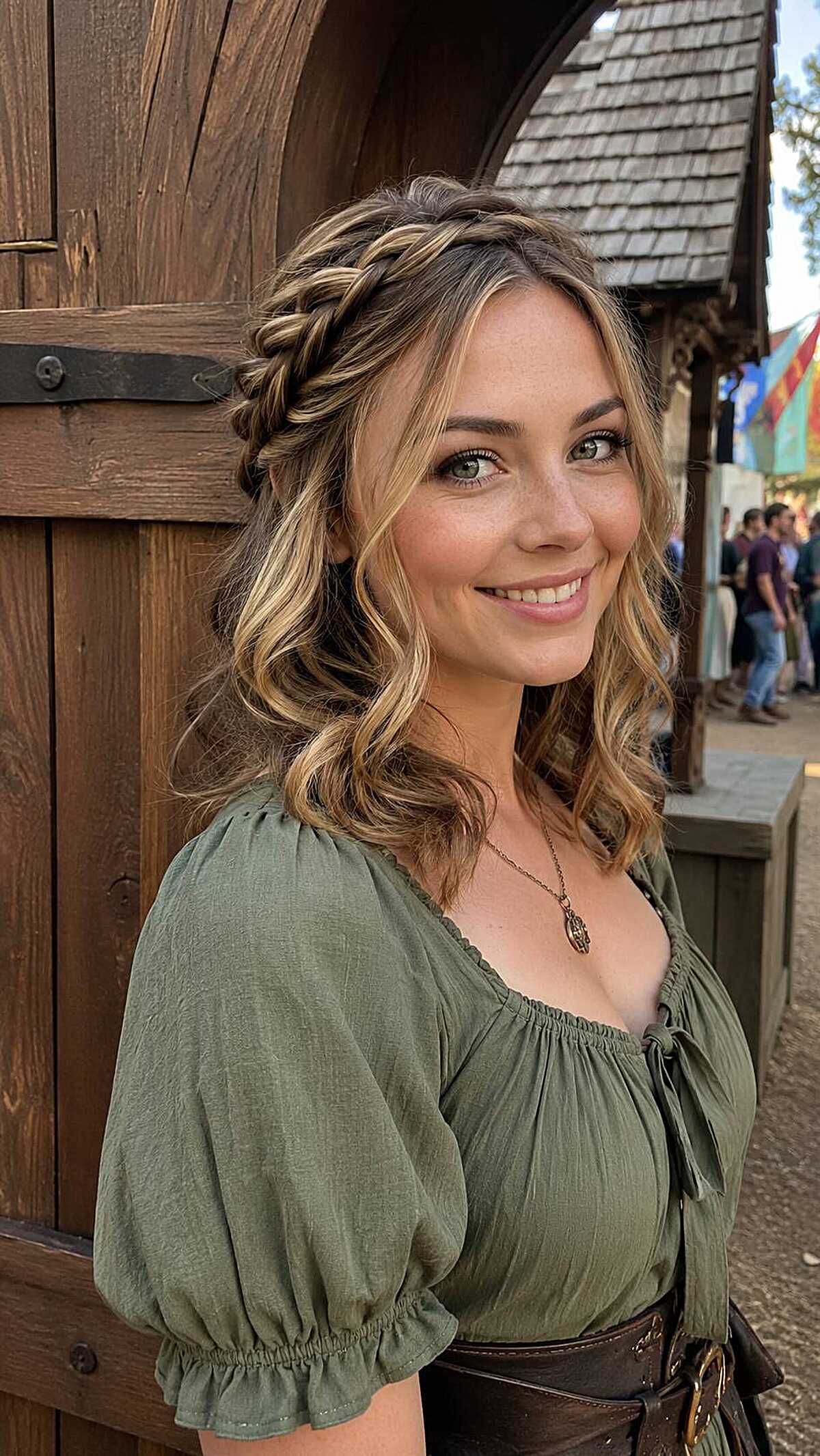
This is the style that works when you don’t have waist-length hair but still want something that reads as medieval from across a dusty fairground. A single braid wraps across the crown like a headband, while the rest of the shoulder-length waves stay down and relaxed. The honey blonde highlights catch light in the braid in a way that gives it dimension it wouldn’t have on solid-colored hair. It’s the kind of style you can do in about fifteen minutes and then not think about for the rest of the day, which matters when you’re walking around in the sun for eight hours.
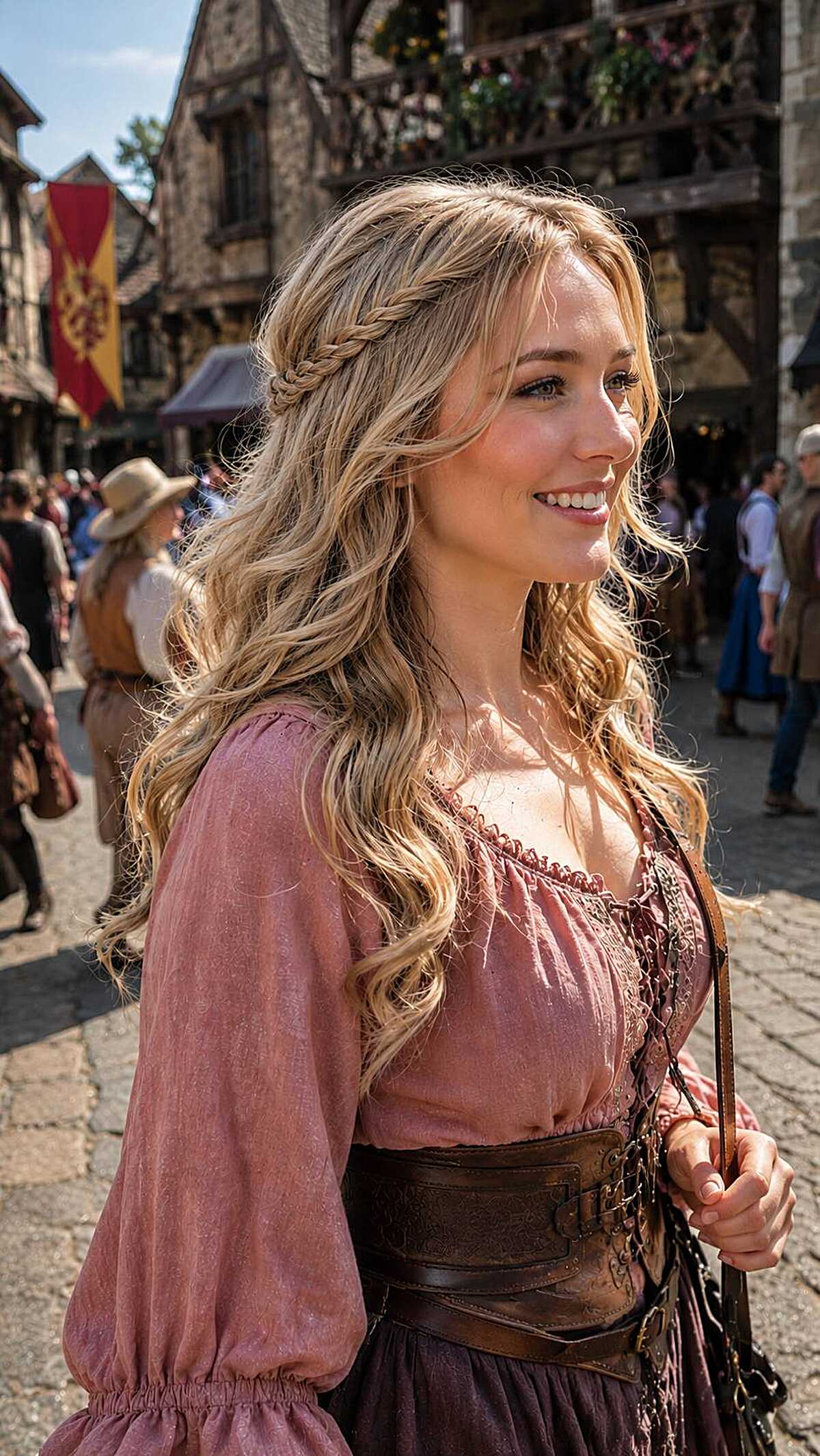
This one barely qualifies as a styled look in the traditional sense, and that’s what makes it so effective. A single braid runs along one side of the head from the part line, while the rest of the golden blonde hair falls in big, bouncy waves that look like they were set the night before and slept on. It’s the minimum viable Renaissance hairstyle, and sometimes minimum viable is the exact right call. You can be walking through the gates ten minutes after parking your car.
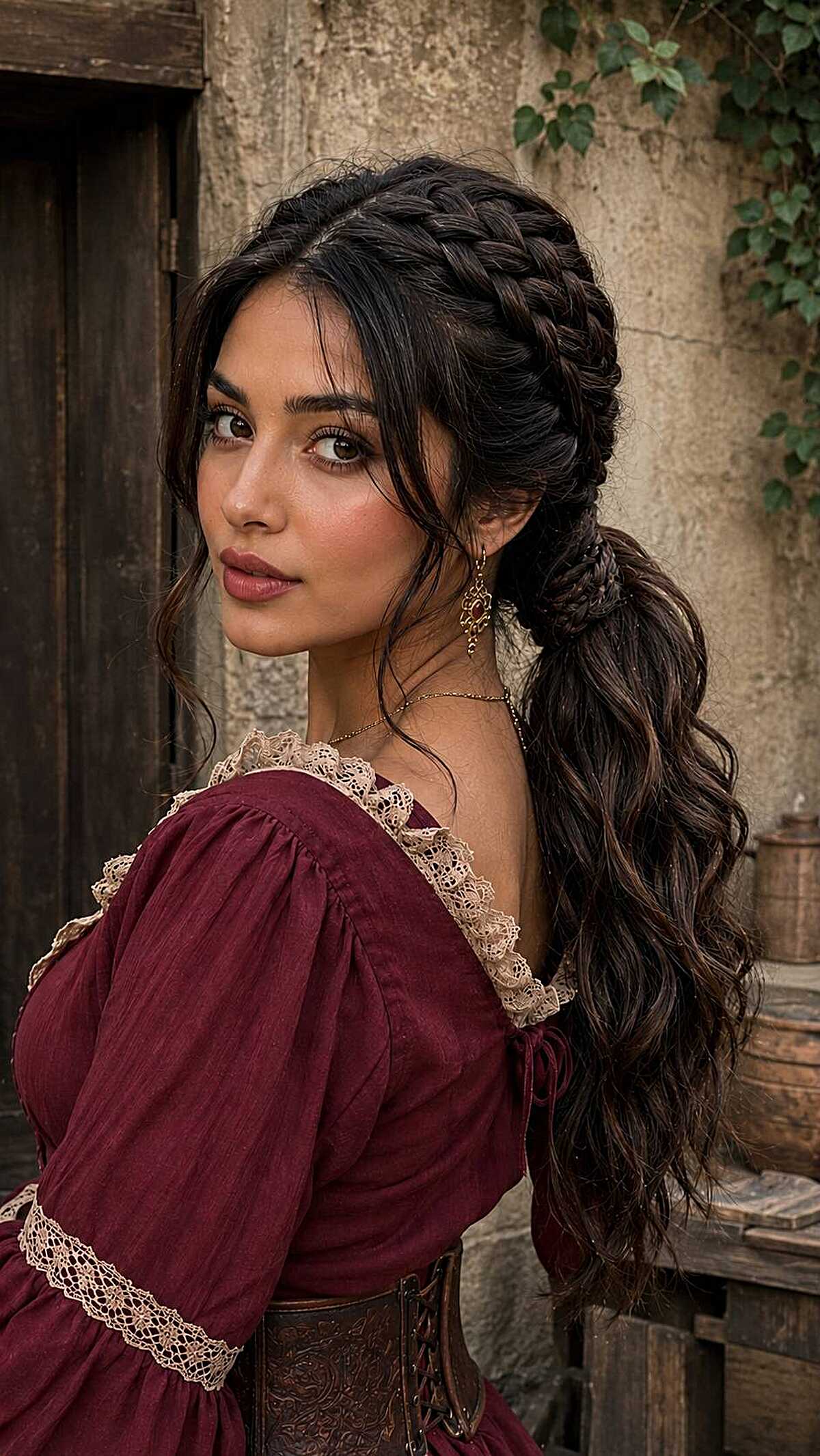
A double braid wraps the crown and feeds into what is essentially a very long, very luxurious ponytail of waves. The braids are thick enough to look intentional from any angle, and where they meet at the back there’s a banded section that keeps the transition clean. What’s worth noting is the sheer volume in the loose section, which suggests either naturally thick hair or some well-placed clip-in extensions. Either way, with the burgundy dress and lace detailing, this is a genuinely beautiful interpretation of the genre.
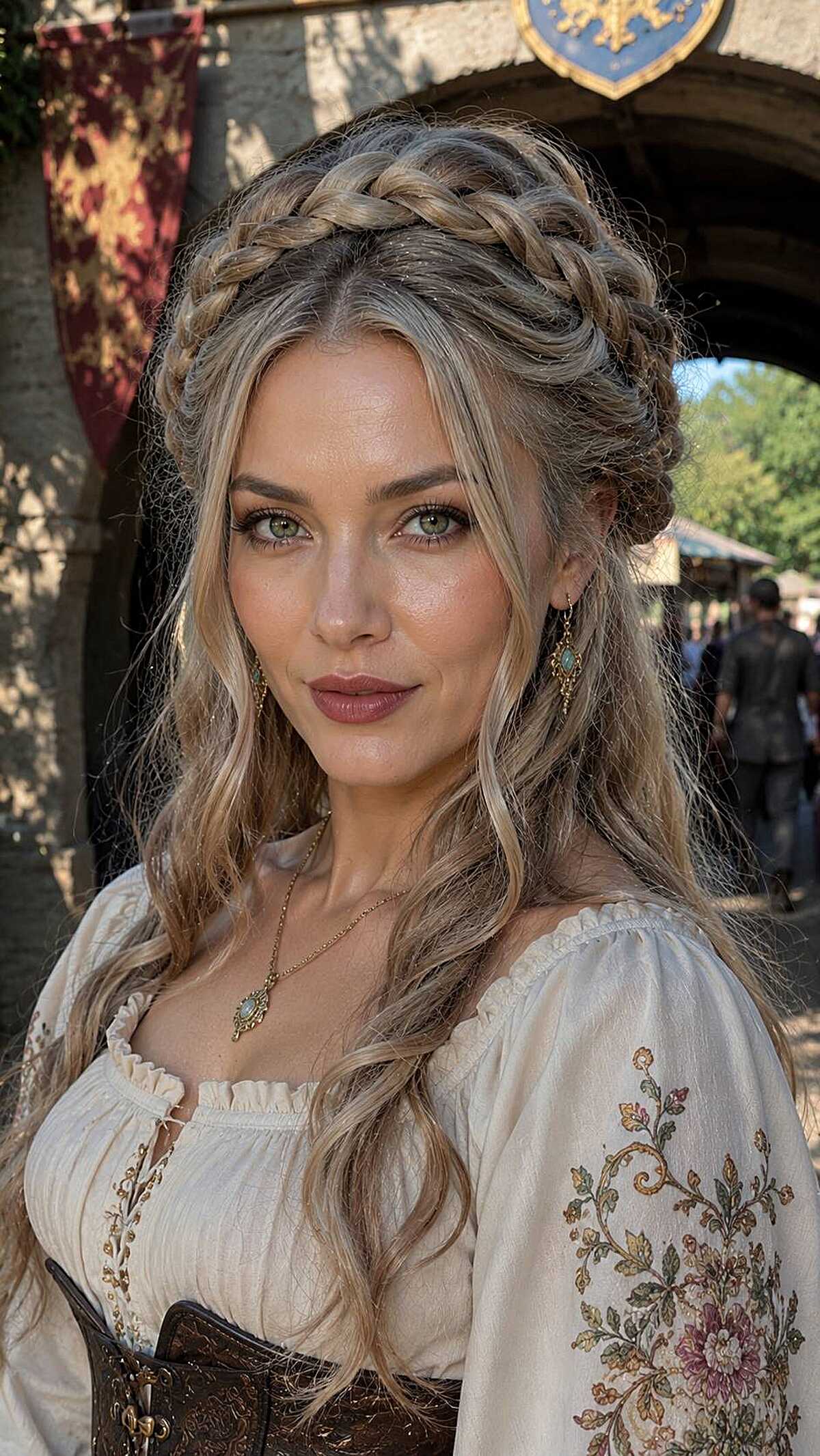
The braid across the crown on this one is substantial, almost architectural, and it frames the face like an actual crown would. Below it, the ash blonde waves fall long and slightly undone, which is a smart contrast because if both the braid and the lengths were equally polished, it would tip over into costume territory. The embroidered peasant blouse adds to the vaguely royal quality without overdoing it. This works particularly well on hair that has some natural density to it, since a thin braid across the top would read entirely differently.
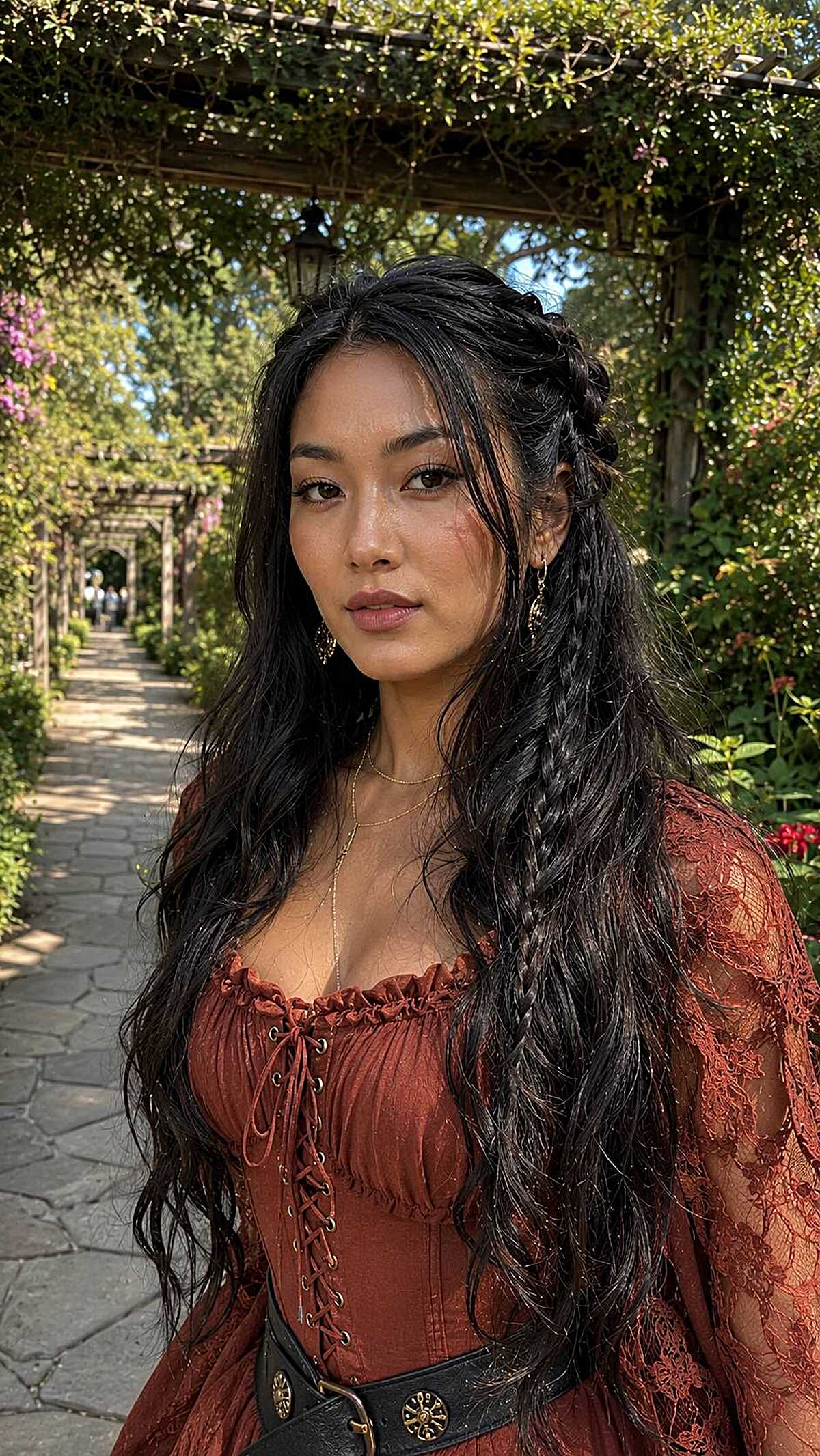
The accent braids scattered through the loose lengths are what separate this from a standard half-up style. There are at least three thin braids woven into the otherwise straight-to-wavy black hair, creating this sense of deliberate, almost ritualistic placement. The crown section is pulled back and loosely twisted, keeping the face open while the rest of the hair falls well past the chest. Against the rust-colored lace-up bodice, it has a darker, witchier energy than most of the styles on this list, and some people are going to gravitate toward exactly that.
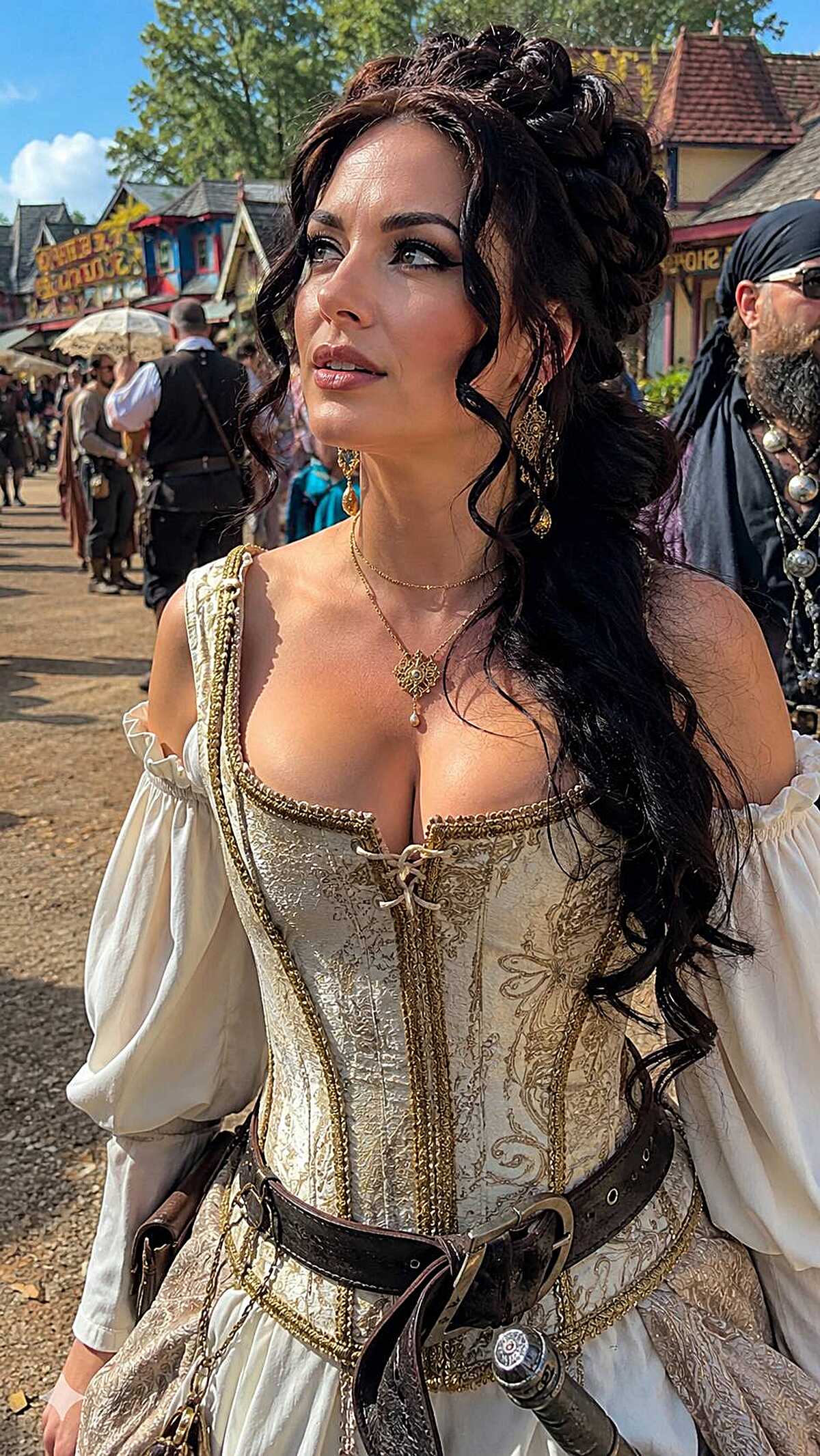
Everything about this is high-drama in the best possible way. The top section is twisted and pinned into a voluminous crown, and the remaining hair falls in large, defined curls that have been clearly set with a curling iron rather than left to nature. On this jet black hair, the curls have an almost liquid quality, heavy and glossy. The gold brocade corset and ornate jewelry are clearly not an afterthought either, and the hairstyle matches that level of commitment. This is the person at the fair who came to win.
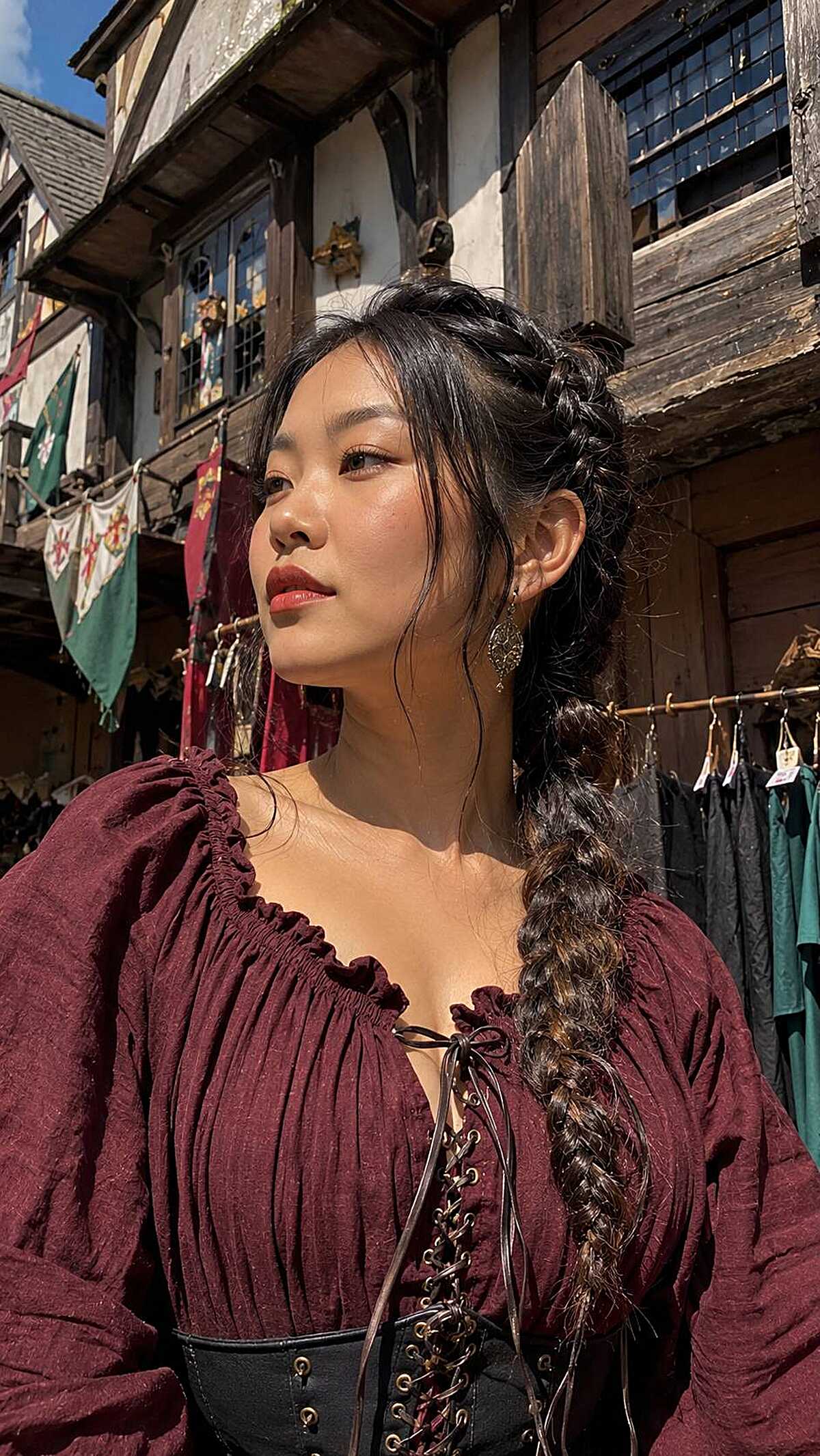
This reads less lady-of-the-court and more someone who knows how to use a sword, which is its own kind of appeal. The hair is pulled up into a high base and then woven into a thick, substantial fishtail braid that hangs over one shoulder, with a few wispy pieces left out around the face to keep it from looking too severe. The length on this braid is impressive, and the dark color gives it a roped, almost sculptural quality. Paired with the burgundy peasant blouse and corset, it tells a very specific story and tells it well.
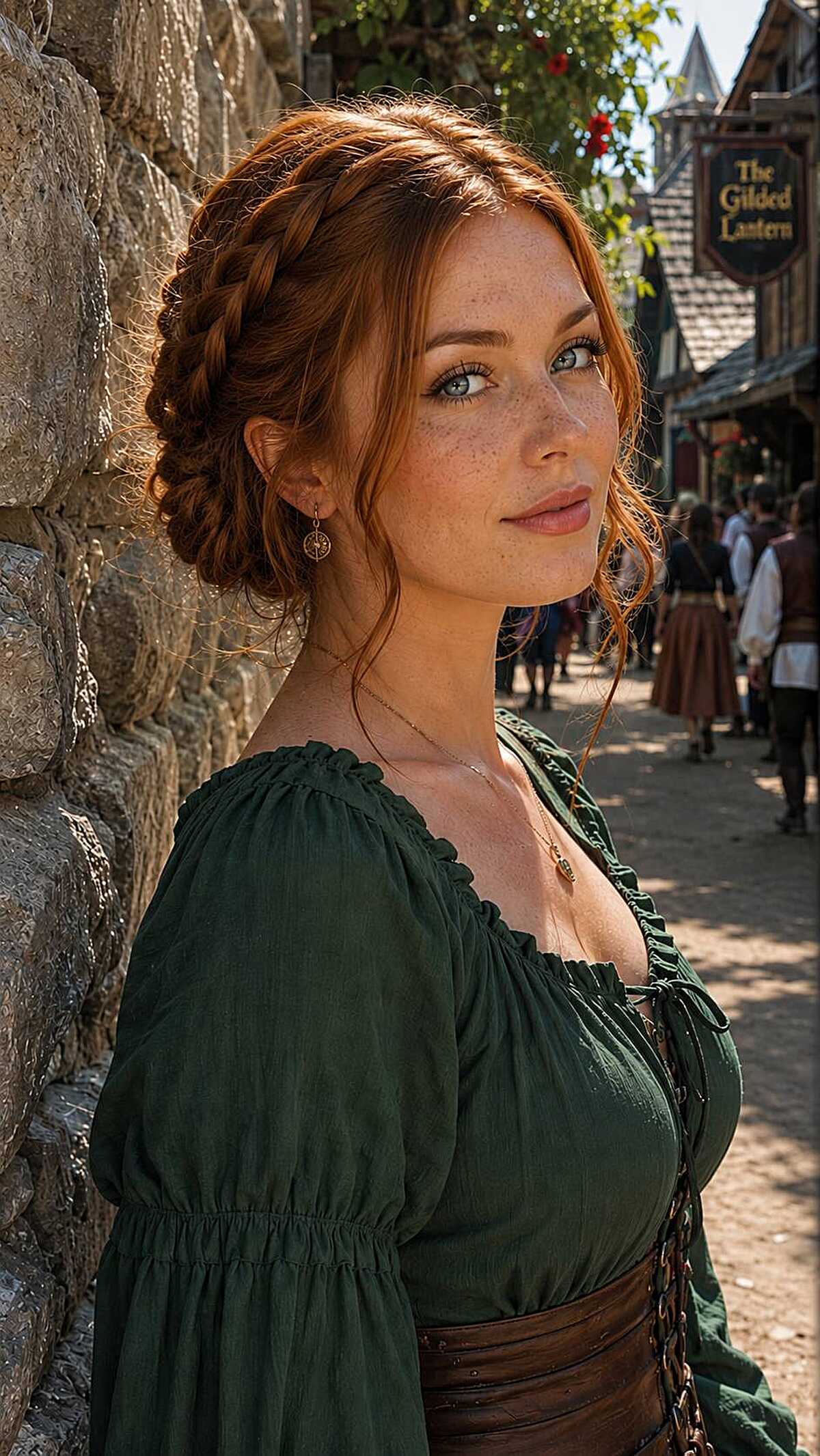
I have a weakness for red hair at a Renaissance fair, and I’m not going to apologize for it. This braided updo coils the hair into a full crown of interlocking braids gathered at the back, with just a few deliberate tendrils released around the face and at the nape. The copper tone is warm enough to feel like it belongs in a Pre-Raphaelite painting, and the dark green dress is doing exactly what it should be doing against that color. The whole thing is the kind of look that makes people stop you and ask if you work there.
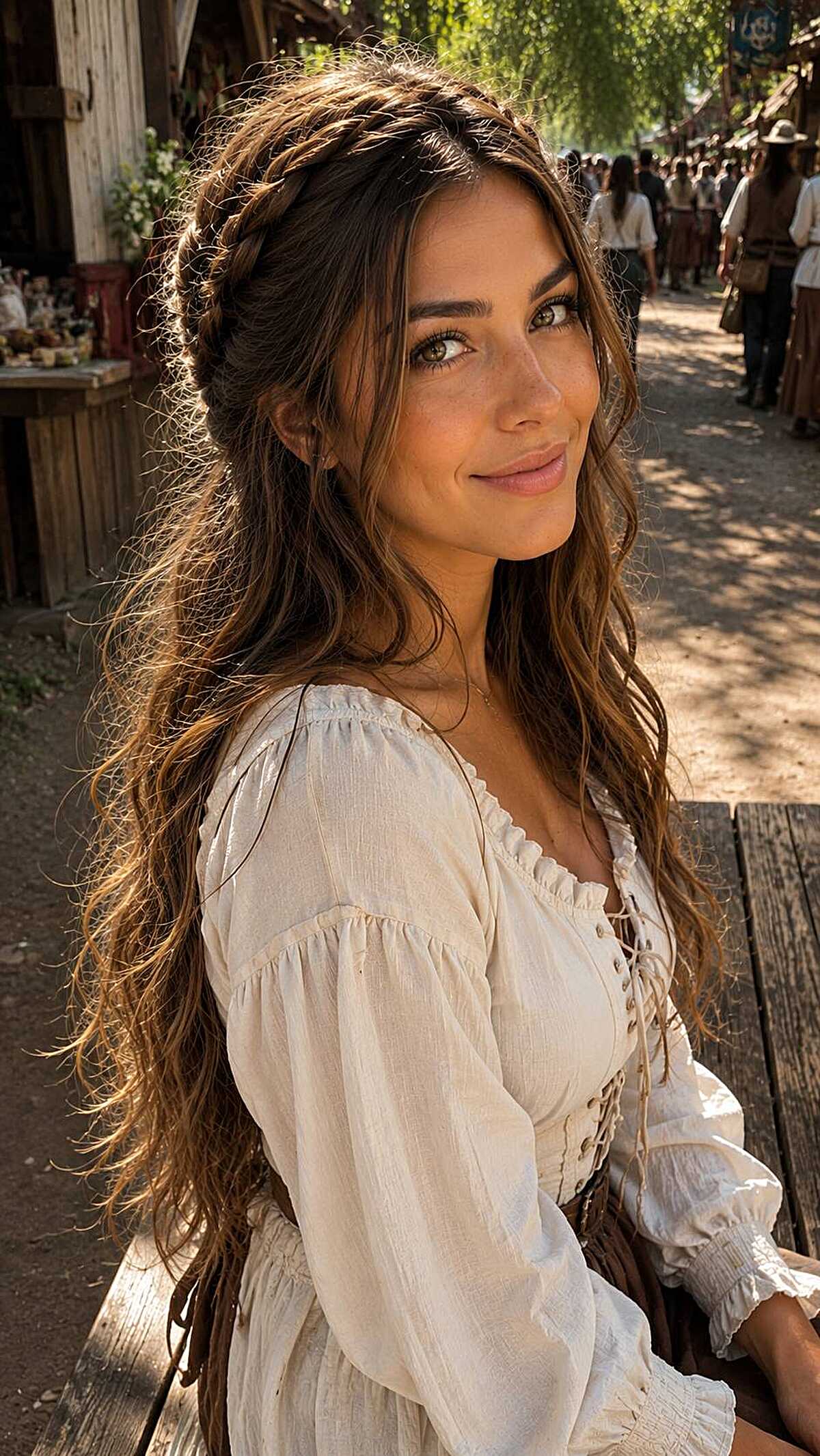
Sometimes the best Renaissance hair is just really good regular hair with one deliberate detail added. Here it’s a thin rope braid used as a headband across the top, while the rest of the long, slightly wild waves tumble well past the shoulders with that undone, lived-in texture. The warm caramel tones through the brunette base look genuinely like someone who’s spent her life outdoors, which is exactly the character this reads as. This is the style for people who want to look the part without looking like they tried.
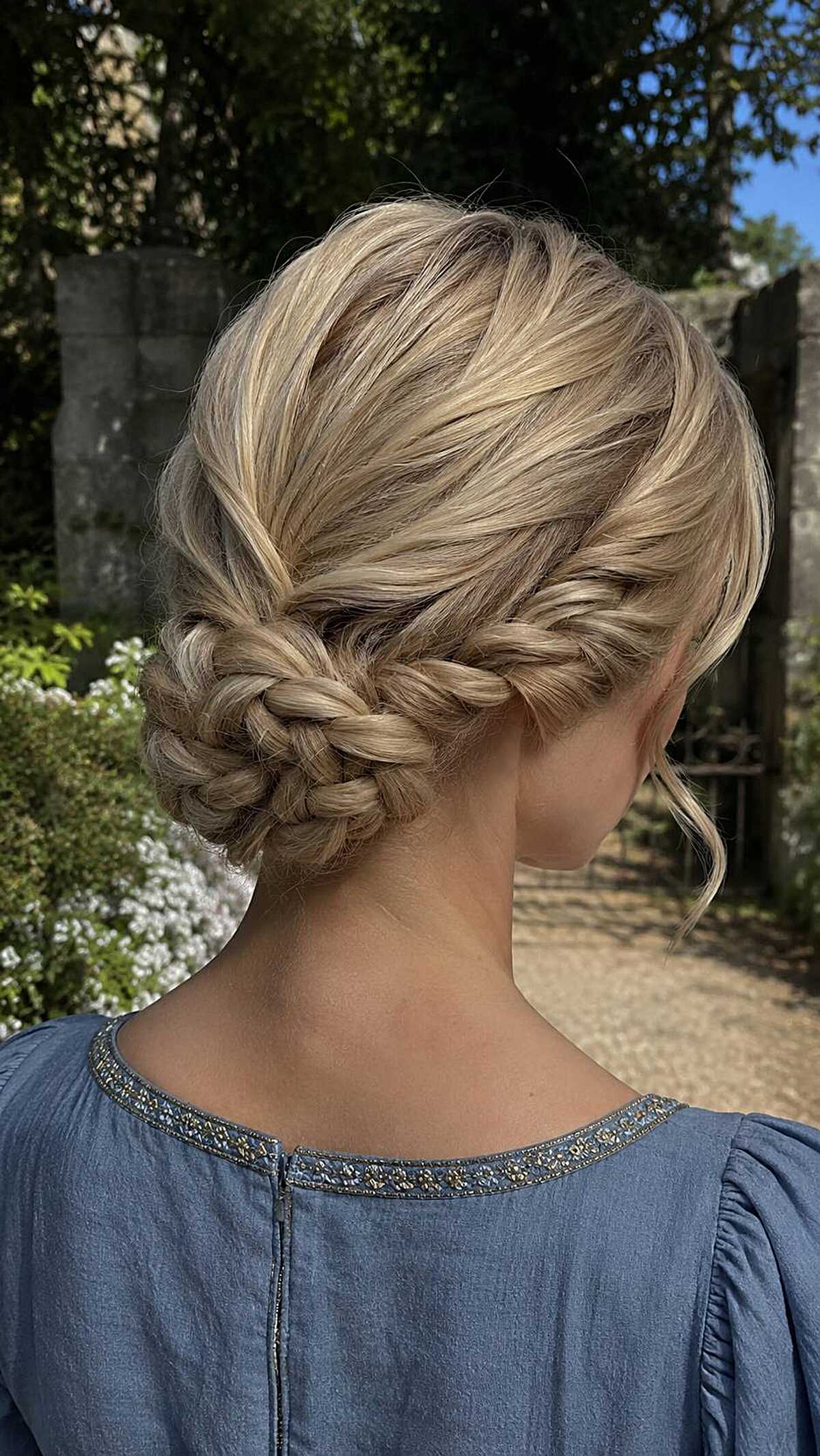
This is one of the more polished styles you’ll see at a fair, and it earns it. A chunky fishtail braid sweeps from the crown and wraps into a coiled bun at the nape, with the braid texture doing all the visual work. On this butter blonde hair, the weave of the fishtail catches shadow beautifully and creates the kind of surface interest that a regular three-strand braid just can’t match. You’ll want strong hold hairspray for this one, because a bun this structured needs to survive jousting tournaments and mead consumption alike.
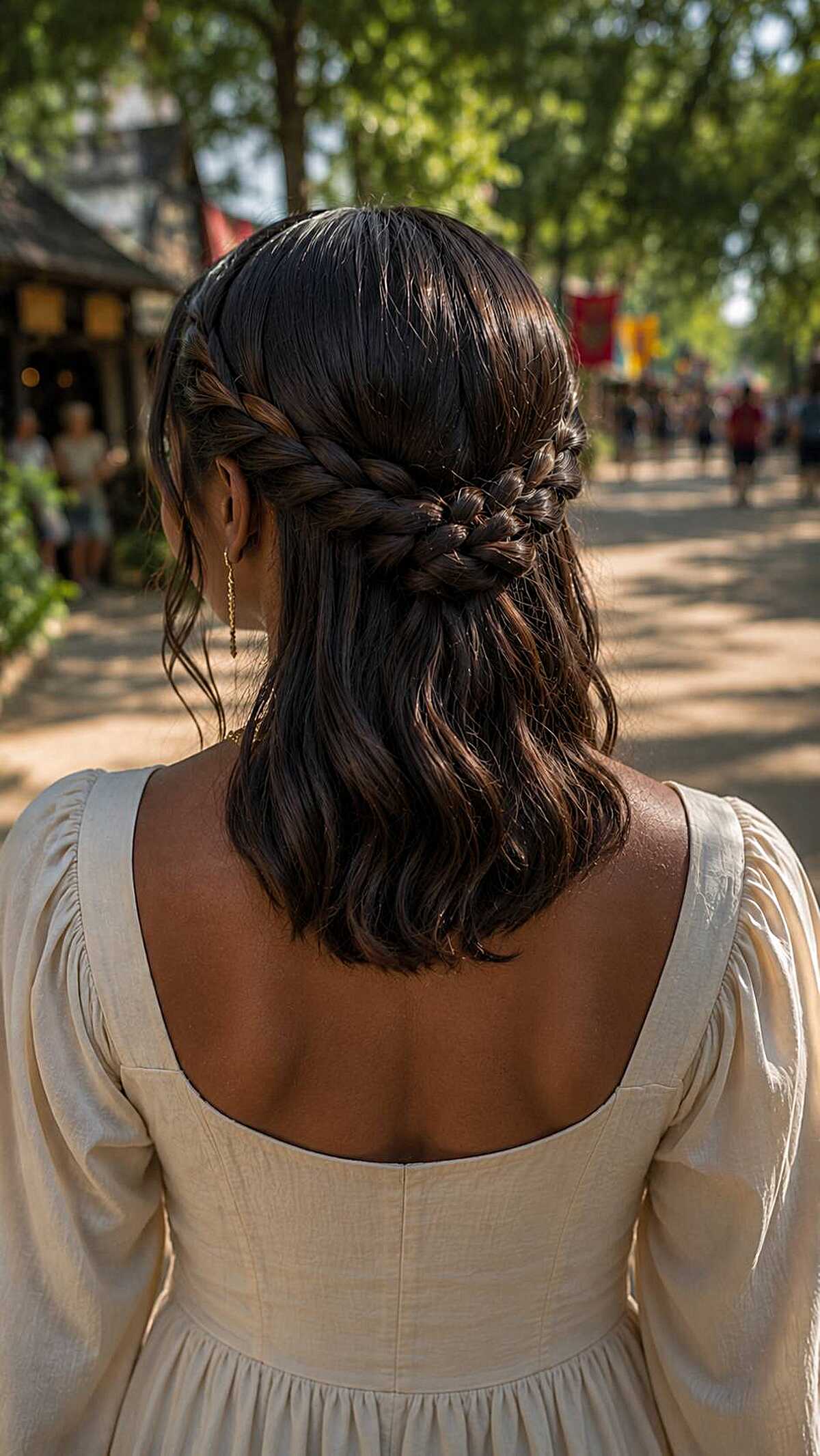
Two braids pulled from each side and knotted together at the back, creating a little woven cluster where they meet. The rest of the dark hair falls in soft, slightly tousled waves just past the shoulders. What makes this work so well is how simple the construction is compared to how intricate it looks from behind. On shorter hair like this, the proportions stay balanced without the braids looking too heavy or the loose sections looking too sparse. The cream-colored dress with the square back neckline doesn’t hurt either.

Latest Hairstyles


