Indexation and inflation: will pensions catch up with prices in 2026?
Starting in 2026, pensions in Russia will be indexed several times, but rising prices could offset the increase. What pensioners can expect and how the indexation compares to inflation—read this article.
In Russia, the next indexation of all types of pensions is planned for 2026. According to the budget, insurance pensions, received by nearly 38 million Russians, will increase by 7.6% on January 1. Social pensions will be indexed on April 1, increasing by 6.8%. For military personnel and law enforcement officers, the increase is scheduled for October 1; currently, the increase is projected at 4%, but this figure may be revised based on inflation.
In addition to regular indexation, targeted increases in payments for three categories of citizens have already occurred since November 2025: pensioners over 80, persons with Group I disabilities, and certain workers in the aviation and coal industries. For example, senior citizens and persons with Group I disabilities began receiving a doubled fixed payment of 17,815 rubles. Pensions for flight crews and miners increased by 2–5% , taking into account the inflation coefficient of 1.076. The recalculation is automatic, simplifying the receipt of these supplements.
However, amid this positive news, there are also warning signs. The Bank of Russia recently cut its key rate by 0.5%, bringing the target rate range for 2026 to 13-15%. This is the fourth consecutive cut, but it is slowing down. For individuals, this may mean a slight reduction in the cost of loans and mortgages, but a real impact is not expected anytime soon.
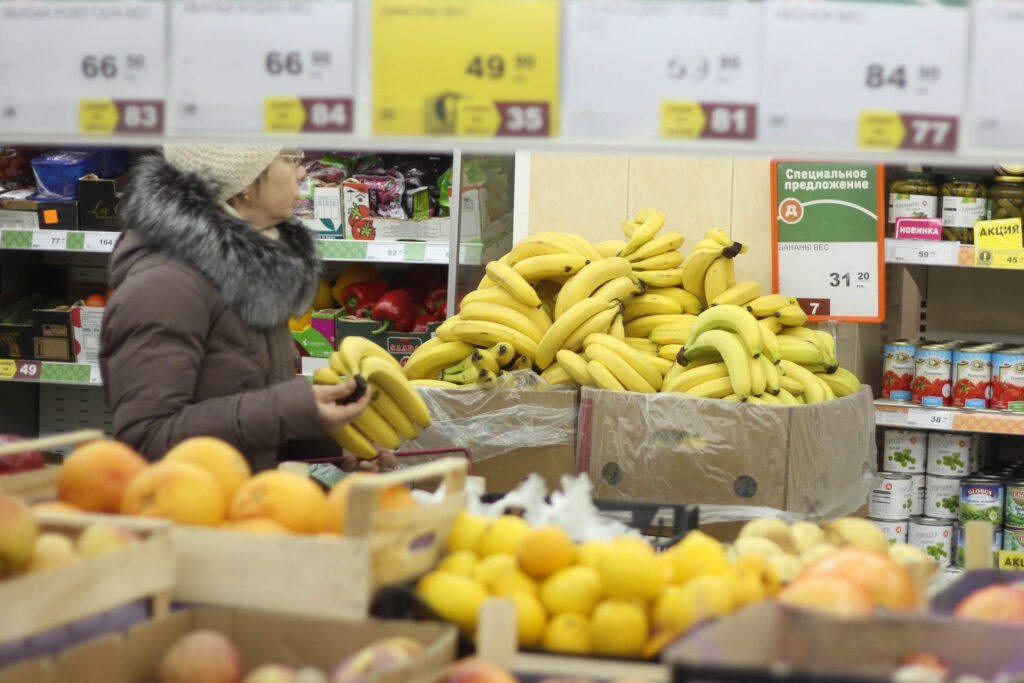
At the same time, the Central Bank expects inflation to remain high—above planned levels. This means that price increases for food, services, and utilities will outpace pension increases, and pensioners' real incomes may not actually increase. Indexation, even if it exceeds 7%, will more likely offset price increases than improve purchasing power.
According to the Russian Social Fund, the average social pension as of October 1, 2025, was 15,514 rubles per month , a 14.8% increase from the 13,512 rubles at the beginning of the year. Social pensions are received by disabled citizens who are not entitled to an insurance pension: disabled persons, orphans, and individuals of retirement age without the required work experience.
Working pensioners receive an average of 11,706 rubles , while non-working pensioners receive 15,814 rubles .
By comparison, the average old-age pension as of October 1, 2025, reached almost 25,200 rubles , up from 24,979 rubles in January. Among working pensioners, it is 22,378 rubles , and among non-working pensioners, 25,847 rubles .
Senior citizens over 80 and those with Group I disabilities began receiving a doubled fixed payment of 17,815 rubles. Photo: 1MI
A Just Russia party leader Sergei Mironov proposed indexing the fixed payment to the state insurance pension , increasing it to the aforementioned 17,815 rubles . He announced this in an address to Prime Minister Mikhail Mishustin, according to RIA Novosti.
According to Mironov, the initiative is consistent with the principles of social responsibility enshrined in current strategic documents and is aimed at improving the standard of living of pensioners. In the document, he also asked the Cabinet of Ministers to provide an official position on the issue.
Currently, the insurance pension structure consists of individual pension coefficients and a fixed payment, which currently amounts to 8,907 rubles and is indexed annually by the government.
"I propose indexing the fixed payment, increasing it from 8,907 to 17,815 rubles. This decision will improve the well-being of pensioners and strengthen public confidence in the pension system," the faction leader emphasized.
Mironov noted that the fixed payment was introduced as a basic guarantee of a minimum income for pensioners, but over time its size no longer corresponded to the real needs of retirement-age citizens.
The average old-age pension as of October 1, 2025, reached almost 25,200 rubles—working pensioners receive an average of 22,378 rubles, while non-working pensioners receive 25,847 rubles. Photo: 1MI
Russia is once again debating pensions and demographics, but this time, it's a controversial topic. "Soloviev Live" host Sergei Mardan proposed abolishing pensions for childless Russians . His statement sparked a storm of criticism among journalists, lawmakers, and the general public.
On May 17, Mardan declared on air: "If you haven't had children, you won't get a pension. If you have children, you'll get them. If you don't have children, you'll die." He later apologized for his harsh language, emphasizing that his words were ironic and adding that a real solution to demographic problems is beyond his control. He also stated that families with three to five children have a "chance to survive in the future."
State Duma Deputy Nina Ostanina noted that Mardan's proposal is unconstitutional and is little more than an attempt to hype things up. She emphasized that all citizens have the right to a pension, including those who are unable to have children for medical reasons.
MP Ksenia Goryacheva expressed a similar opinion: the controversial statement creates the appearance of a debate but does not resolve the demographic issue. TV presenter Ksenia Sobchak also condemned Mardan's approach, noting that outrageous statements are no substitute for sound analysis.
State Duma Labor Committee Chairman Yaroslav Nilov stated that parliament does not discuss such initiatives and does not support such an approach.

newizv.ru