

Cities won't become energy independent on their own. It's a team effort.
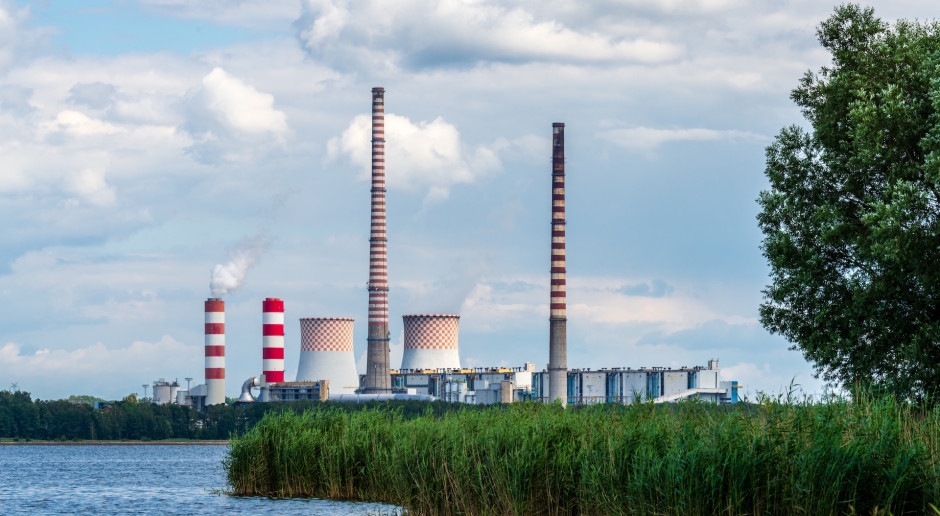
- Local governments are increasingly choosing to collaborate with universities and companies, including those in the energy sector, to accelerate the decarbonization of cities.
- An example is the former Rybnik Coal District, now being replaced by a project called Rybnik Hydrogen District.
- As part of this project, the Rybnik local government, together with the Silesian University of Technology, is creating a Centre for Renewable Energy Sources and Hydrogen Technologies in the city.
- In Wrocław, on the initiative of the energy company Fortum, the Municipal Services Congress (KUM) was established, organised in cooperation with the local government of the capital of Lower Silesia.
- The main goal of KUM is to improve the energy transformation in Wrocław.
Without cooperation between local governments, research centers, entrepreneurs, and residents, it will not be possible to efficiently implement the transformation and build energy resilience in cities.
Joint projects by all parties interested in implementing clean energy sources are becoming increasingly common. Participants in one of the debates during the PRECOP climate conference in Katowice discussed examples of such solutions.
The Rybik local government, together with the Silesian University of Technology, is already implementing the second edition of the project called Rybnik Hydrogen District, i.e. ROW 2.0 .
As part of this project , the Center for Renewable Energy Sources and Hydrogen Technologies (COZEiTW) will be established in our city.
- said Sylwia Brzezicka-Tesarczyk, director of the Center for Sustainable Urban Management at the Rybnik City Hall, during the conference in Katowice.
The project received EU funding of €5.1 million (the total project value is €6.2 million). Four components of the Rybnik COZEiTW will be created:
- Renewable Energy Competence Center;
- Hydrogen Technologies Laboratory;
- Eco-House Energy Laboratory;
- Mobile Photovoltaic Panel Diagnostics Laboratory.
The Eco-House Laboratory will be built at the Nacyna Theme Park in Rybnik. It will be a living space equipped with all the innovative elements needed to adapt to climate change and energy efficiency. Such a facility will provide excellent opportunities to test the effects of such solutions in practical everyday conditions.
- said the director of the Center for Sustainable Urban Management in Rybnik.
According to the project description, the activities of the Centre for Renewable Energy Sources and Hydrogen Technologies (its creation is to be completed in July 2027) will benefit both the residents of Rybnik and local enterprises, the municipal sector using new solutions in the field of renewable energy sources and hydrogen, as well as the scientific community and the entire economic sector through the transfer of innovative technologies.
The city has established special purpose vehicles to develop clean transport and a circular economyMoreover, Sylwia Brzezicka-Tesarczyk noted that as part of the previously implemented first installment of the project entitled Rybnik Hydrogen District, classes in hydrogen technologies were launched at the Technical School Complex in Rybnik.
The expert emphasized that, in addition to the educational aspect of the ROW project, public transport initiatives are also crucial. Among other things, the special-purpose vehicle , Transport Miejska Rybnik , was established, which currently has 20 hydrogen buses and will acquire another 14 such vehicles in 2026.
Let us recall that in October 2023, the second hydrogen refueling station in Poland was launched in Rybnik.
There's another crucial aspect of the ROW project – the circular economy (CE). "A few weeks ago, our city established another special purpose vehicle, the Green Energy Center . As part of this CE project, we secured funding from the National Fund for Environmental Protection and Water Management (NFOŚiGW) for a 96% investment in the construction of a municipal biogas plant – a facility that converts biodegradable waste generated in Rybnik into energy," said Sylwia Brzezicka-Tesarczyk.
The energy industry is cooperating more and more closely with local governmentsIn turn, Mariusz Dzikuć, Director of Strategy and Development at Fortum Power and Heat Polska, a producer and distributor of heat and electricity, pointed to examples of his company's cooperation with several local governments.
"In Zabrze and Bytom, we produce heat, and in Częstochowa, we also distribute it. In Wrocław and Płock, we own the heating networks," he explained.
Furthermore, we are strongly committed to decarbonization, meaning phasing out coal combustion at our plants in Częstochowa and Zabrze. We plan to completely phase out coal in our own generating plants by the end of 2027.
- added director Dzikuć.
He announced that Fortum will switch from the current co-firing of coal and biomass to 100% biomass combustion at its Częstochowa CHP plant. Meanwhile, in Zabrze, the company plans to burn biomass along with RDF, an alternative fuel derived from waste.
"The situation is somewhat different in Wrocław, where we own the district heating network. Therefore, our cooperation with the local government is perhaps most visible there. Of course, the city's role in moderating our joint ventures is crucial," admitted Mariusz Dzikuć.
He noted that a special mayoral team has been established in Wrocław to decarbonize the city's heating system. This body includes representatives of municipal companies, the city hall, and the owner of the heating network. The team's primary goal is to develop a target decarbonization model for the capital of Lower Silesia.
Director Dzikuć also drew attention to a rather unusual initiative, the Municipal Services Congress (KUM) , organised by Fortum in cooperation with the Wrocław local government.
We have noticed that for the efficient implementation of our decarbonization plans, better cooperation is necessary, among others, between municipal companies, public utilities and the city hall.
- explained the Fortum representative.
He emphasized that regular meetings are already held as part of the Wrocław Municipal Services Congress, where specific projects and initiatives are discussed to improve cooperation between all parties involved in the energy transformation process in Wrocław .
"Without effective cooperation with local governments and residents, we will not achieve our goals""In all the cities where we implement our projects, we need significant support from local governments. This includes issues related to permits, environmental decisions, and so on. Without effective cooperation with local governments, we will not achieve our goals," concluded Mariusz Dzikuć.
In turn, Maria Andrzejewska, Director General of the UNEP/GRID-Warsaw Centre - a centre affiliated with the UN Environment Programme - emphasised the importance of active participation of residents in achieving climate and energy resilience goals for cities.
We have implemented and continue to implement numerous projects in this area. A prime example is our Ecocraft educational program, which fascinated not only young people but also taught them how to build a new green city.
- Director Andrzejewska reminds.
The project, inspired by a game similar to Minecraft, served, among other things, to teach ecology and sustainable development.
"We loaded geodetic models, in which the student was given their entire neighborhood in gray concrete. Then, during workshops , we explained what thermal modernization is, what energy efficiency is , how to build a green city, and what the benefits of implementing renewable energy sources are," the expert explained.
She added: "During the Ecocraft program, young people built truly fantastic models of their neighborhoods and districts. This wasn't just their work, as the students also included their parents and grandparents in the project."
"The program has proven to be a great success. That's why we strive to specifically support initiatives—including those implemented by local governments—that are participatory and therefore based on understanding the problem. Only then should residents submit their proposed solutions," emphasized Maria Andrzejewska.
* * *
All statements are from the "Cities and Their Sustainable Strategies" session at the PRECOP conference (Katowice, October 1-2, 2025). Organizers: UN Global Compact Network Poland and PTWP Group. Co-hosts: Silesian Voivodeship and the City of Katowice.

portalsamorzadowy


