
Discover the Nicobar Archipelago, a remote paradise of coastal rainforests and biodiversity.
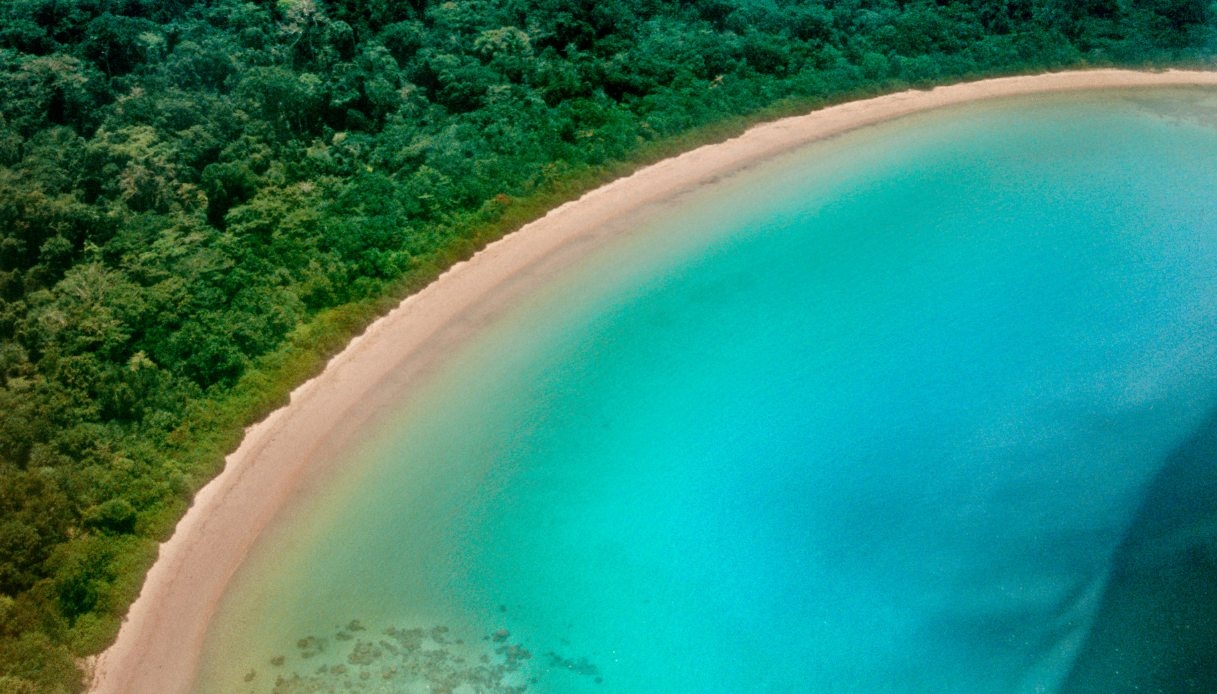
The Nicobar archipelago, comprising more than 20 islands, only 12 of which are inhabited, represents an almost unique point in the world where the ocean and the tropical forest meet in a primordial way. It is a place that retains a sense of genuine isolation : islands that have not been transformed for tourism, but that preserve ecosystems as rich as they are vulnerable.
In these waters, in fact, one of the highest levels of marine biodiversity exists; along the coasts and almost to the sea's edge, coastal rainforests (rather rare ecosystems) open up a landscape that is not just "beach and sea," but a frontier between land, water, and wildlife.
Where they are and how to reach themThe magnificent Nicobar Islands occupy the southern part of the Andaman and Nicobar archipelago , separated by the Ten Degree Channel from the Northern Andaman group. The southernmost island, Great Nicobar Island, marks the geographical limit of India and boasts reliefs exceeding 600 meters.
Given their remote and unique location, access is far from ordinary: transportation is limited, accessibility is limited, and many areas require special permits issued by local authorities. The first step is to reach Port Blair , the territory's capital, via flights from major Indian cities such as Chennai, Kolkata, or Delhi . From Port Blair, the journey continues by sea or helicopter to the Nicobar Islands. Ferries operate with limited frequency, generally a couple of times a week, and inter-island helicopter travel is a faster alternative, but equally subject to availability and weather conditions.
As mentioned, many areas require special permits, for the protection of the environment and the indigenous communities that inhabit them. This means every trip must be planned in advance, and travel times can be quite long. Furthermore, it's important to consider that logistics, while simple, are slower than those for conventional tourist destinations.
Which islands can you visit?Among the main destinations to visit are Great Nicobar , Little Nicobar, and Car Nicobar. The former is the largest in the archipelago and encompasses extraordinarily integrated ecosystems: rainforests that reach almost to the shore, mangroves along the coast, isolated beaches, and coral reefs that extend into the clear water. The variety of environments allows you to traverse, on the same route, dense humid forests, open clearings, small rivers, and cliffs where the sea meets the land in a powerful contrast.
Car Nicobar offers a different setting: a flatter and more accessible island, with sparser but equally ecologically significant forests. The beaches, almost always deserted, open onto waters so clear that marine life can be observed without any special equipment. Little Nicobar , though smaller in size, also preserves unspoiled nature: white-sand beaches, cliffs, stretches of dense forest, and isolated villages. Most of the other islands in the archipelago, as already mentioned, are not equipped for traditional tourism.
What to see in the Nicobar IslandsThe Nicobar Islands' greatest strength lies in the way their diverse environments blend into a single natural landscape. The surrounding waters, including those of the Andamans, are home to more than 1,200 species of fish, approximately 1,000 species of mollusks, and at least 179 species of coral, belonging to 61 genera. The corals form intricate labyrinths that provide shelter to sea turtles, parrotfish, surgeonfish, and schools of colorful fish that move in unison as if in a natural dance.
In some places, submerged mangroves, including those in Campbell Bay , besides creating shelters and hiding places for marine life, cause the water to take on shades of green and turquoise that change with every step or every wave.
View this post on Instagram
On land, Great Nicobar is home to a UNESCO-recognized Biosphere Reserve, where coastal rainforests extend almost to the sea—an extremely rare phenomenon on our planet. The vegetation includes tropical trees, ferns, lianas, and palms, while local birds include species such as the Nicobar pigeon, contributing to the unique character of the land fauna.
The forests of the villages of Campbell Bay and Galathea Bay offer trails where the density of the vegetation seems to envelop every sound, amplifying the sensation of being in a world far removed from time and noise.
The beaches complete this picture: Indira Point , India's southernmost point, appears as an isolated strip of land overlooking the open ocean, with pale sand and crystal-clear water where you can see fish and small crustaceans moving among the coral just beneath the surface. Pulomilo Beach in Little Nicobar offers an almost unreal tranquility: the vegetation reaches almost to the shore and the shallow, calm waters invite you to observe marine life with light snorkeling. Car Nicobar, flatter and more open, offers extensive stretches of coastline and villages integrated into the landscape, while the most accessible coral reefs are found near Malacca Bay , where the underwater world is more easily observed even without deep diving.
Logistics and traveler commitmentAs you can see from the previous lines, visiting the Nicobar Islands requires more than just luggage and a swimsuit. You'll need appropriate gear for both land and sea: hiking boots for the trails through the forest, a mask and snorkel, insect protection, and light but covering clothing.
Moving from one island to another may mean changing boats or waiting a while (sometimes due to the weather). Accommodations are simple , often basic. For this reason, it's important to travel with respect, especially towards indigenous communities and the precious environment.
View this post on Instagram
The best season to visit the archipelago is when the rains are lightest and the seas are calmest: roughly between October and April. However, from May to September, during the monsoon season, heavy rains and rough seas make transportation, land routes, and activities more difficult.
Choosing the right time isn't just about avoiding a downpour: it's more about increasing your chances of finding crystal-clear water, coral reefs in better condition, and forests less tormented by wind and rain.