Nostalgia for Pietro Ingrao, the militant of the unfinished
10 years ago the former PCI member disappeared
Reflecting on him is like reflecting on the global technocracy that widens the gap between rich and poor. He taught us that another society is possible and must be pursued with tenacity.
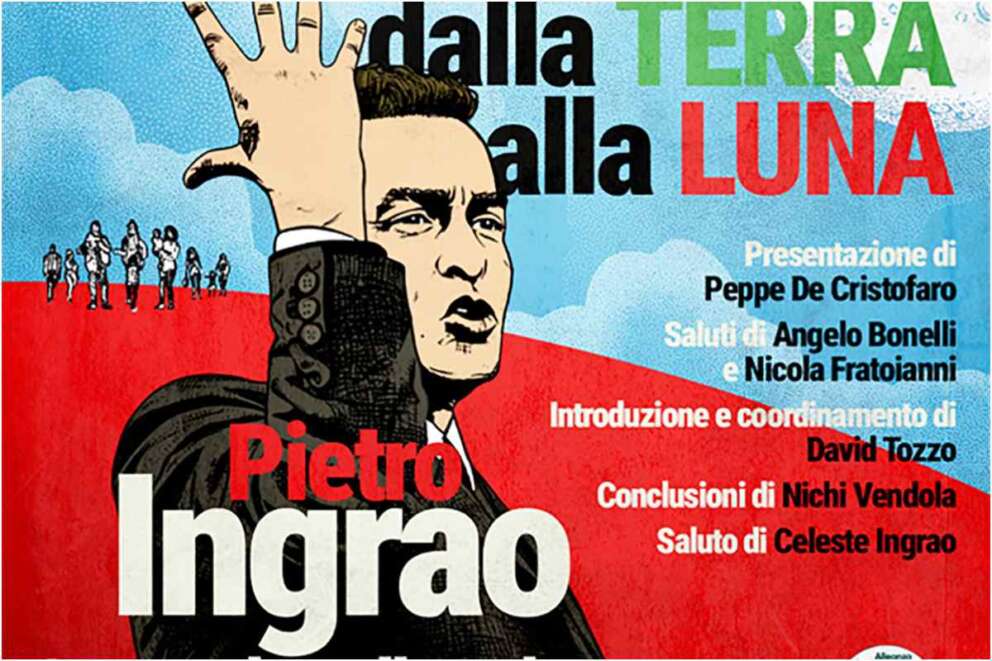
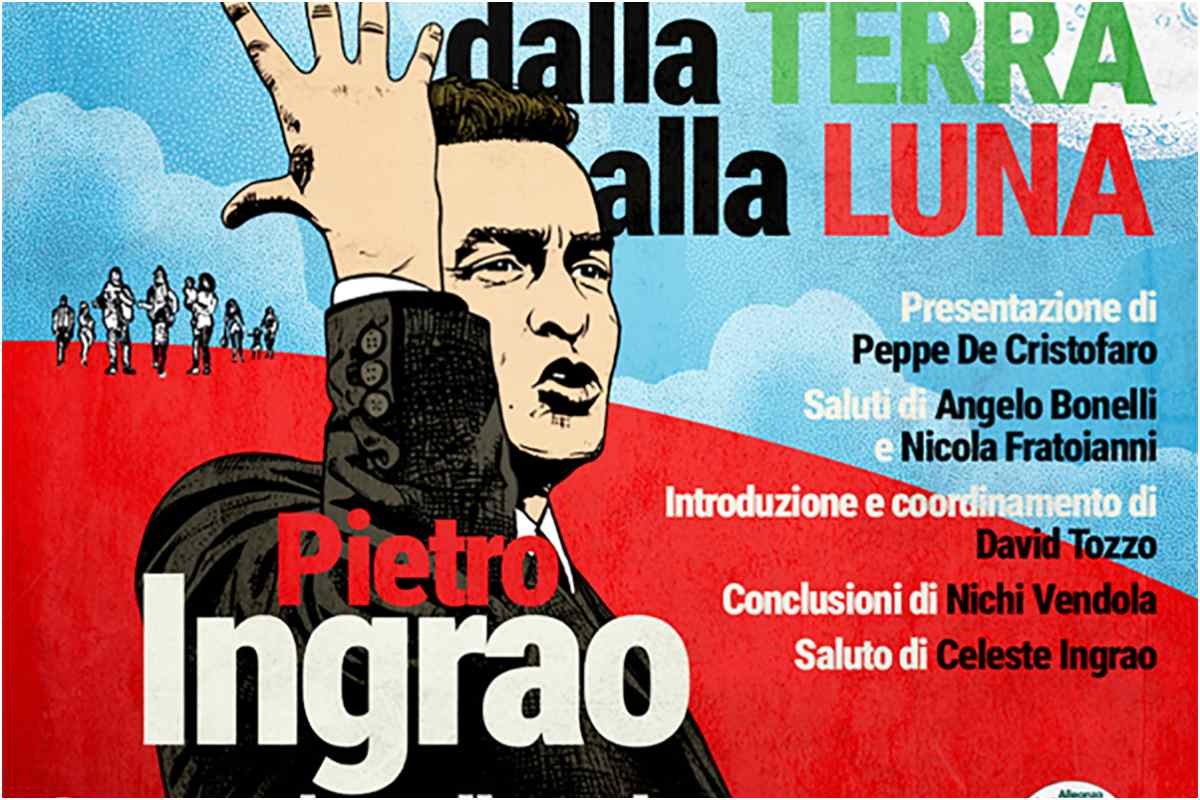
Ten years after Pietro Ingrao's death and one hundred and ten years after his birth, following an initial conference dedicated to Alexander Langer last June, on November 13th the Senate will host the second of two conferences "From the Earth to the Moon," promoted by the Green and Left Alliance. Not a commemoration, but a collaborative effort, a laboratory of politics and study: because remembering Ingrao today means questioning the meaning of the left in an age of control and oblivion, of artificial intelligence and global madness, when the speed of calculation seems to have replaced the depth of thought.
Ingrao was not just a communist leader, but a restless thinker, a constructor of questions rather than answers. " Volere la luna "—the title he chose for his autobiography, drawn from a childhood episode—was not a metaphor for wishful thinking, but for radical concreteness: the will not to settle for the immediate, not to confuse the possible with the necessary. Nor, on the other hand, to hastily, cynically, or cowardly substitute the easily possible for the probably impossible. He never did. He did not give in. He was, like few others, a militant of the unfinished, convinced that the left should live in tension, not in the income of certainties. In the PCI, Ingrao represented the most advanced and most fragile frontier. Where others consolidated, he disrupted; where others closed, he opened. He was an emblem of that left that never ceases to question democracy, understood not as a framework but as a substance, not as a concession but as a daily achievement.
His confrontation with Norberto Bobbio, in 1976, remains one of the most profound disputes on the relationship between freedom and equality: for Ingrao, the former is subordinate to the latter. Without social (and environmental!) justice, freedom is a privilege, not a right. Far from orthodoxy and simplification, Ingrao understood before many that the challenge of socialism lay in the quality of life, peace, ecology, and the freedom—or rather, the independence—of individuals. He anticipated the end of the Fordist era, the emergence of movements, and the women's and environmental issues as political horizons and not simply "collateral" concerns. He was able to read the signs of our times in the magma of the 1970s: the crisis of representation, the dispossession of labor, the need for a new form of participation. Yet, he was never a melancholic prophet. His was a gentle yet tenacious revolt: the revolt of those who refuse to surrender to the idea that history is over. Even when the party chose to "come to terms with reality," he continued to seek a different reality. Opposing the Bolognina turnaround didn't mean nostalgia for him, but loyalty and tenacity. A refusal to surrender.
When everything seemed to be crumbling, Ingrao remained anchored to doubt as the highest form of loyalty: to the party, to the class, but above all to humanity, to others, and finally to himself. It's no surprise that he defended the centrality of Parliament and the "network of elected assemblies " as the backbone of a new anti-fascist compromise, that he sensed before many the crumbling of Fordism and the need for real participation in the places of production. He understood that either representation, labor, and knowledge must be reconciled, or politics becomes a process without people: a ritual without faith. And he looked beyond: to Europe. When today we speak, often inappropriately, of a "European left," we forget that Ingrao was among the first to envision it as a space for supranational democracy, not an accounting apparatus. Not the Europe of a balanced budget, but of recovery. A Europe of social, civil, and happiness rights, the often (at times wearily) invoked "Europe of the people." His idea of a “ horizon of communism ” coincided with this open vision: not a return to the past, but a push to invent new forms of equality in a continent that was already showing the cracks of technocracy.
There's a line by Ingrao, in The Doubt of the Winners , that inspired the conference's title: " We imagined a tower / we dug in the dust." Did the tower collapse? Perhaps. But every collapse is a beginning, if one has the courage to bend down into the dust—first to save those buried there while serving, and then to restore the foundations, the fundamentals that are essential, like bread, like roses. And to try to build a bridge to the moon, which today seems less risky than stretching it, without rules or restraints, much less tolerating counterweights, from Scylla to Charybdis. A red thread that runs through the age of algorithms and resignation, holding together ethics and imagination: two words that, if separated, become sterile.


l'Unità