Current Foreign Office advice with 'at least 80 deaths' in Ebola outbreak
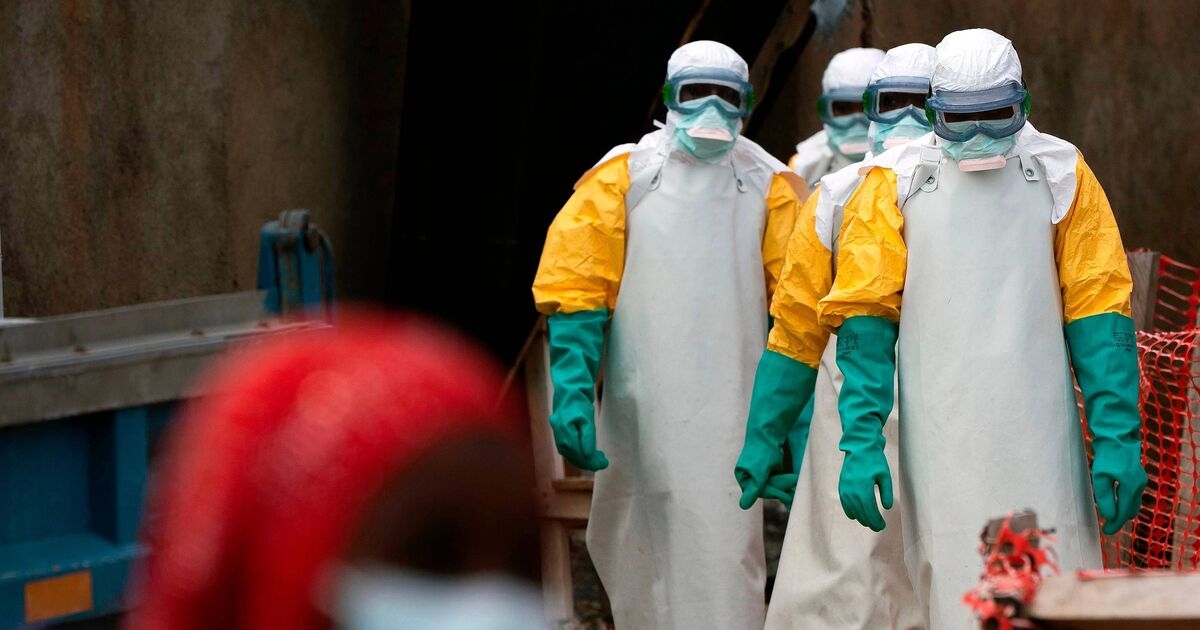

At least 80 deaths have been recorded as a nation battles a highly contagious disease outbreak.
The fatalities were confirmed amid a fresh Ebola outbreak in the Democratic Republic of the Congo's eastern Ituri province, authorities announced, as health workers scrambled to step up screening and contact tracing efforts to bring the disease under control. Officials first declared the outbreak on Friday, with 65 deaths and 246 suspected cases already recorded. Meanwhile, journalists in Ituri's capital, Bunia, spoke to local residents who described their fears and the relentless stream of burials.
"Every day, people are dying ... and this has been going on for about a week. In a single day, we bury two, three, or even more people," said Jean Marc Asimwe, a resident of Bunia. "At this point, we don't really know what kind of disease it is."
Congolese health minister Samuel-Roger Kamba revealed on Friday evening that eight laboratory-confirmed cases had been recorded, including four deaths. Test results identified the Bundibugyo virus, a strain of the disease that has been less prevalent in Congo's previous outbreaks.
This marks the country's 17th outbreak since Ebola first surfaced there in 1976, according to the Associated Press. Ebola is highly contagious and can be transmitted through bodily fluids such as vomit, blood, or semen. While rare, the illness it triggers is severe and frequently fatal.

The suspected index case in the latest outbreak is a nurse who died at a hospital in Bunia, Mr Kamba said, with the case dating back three weeks to April 24. He did not specify whether samples from the nurse were tested, though stated the individual displayed symptoms consistent with Ebola.
The DR Congo possesses expertise in handling Ebola outbreaks, yet frequently encounters logistical difficulties in delivering specialist knowledge and resources to affected areas. As Africa's second-largest nation by land mass, Congo's provinces are distant from each other and predominantly grappling with conflict. Ituri, for example, lies approximately 620 miles from the country's capital, Kinshasa, and is devastated by violence from Islamic State-backed militants.
The disease has thus far been confirmed in three health zones within the Ituri province, including the capital city, Bunia, alongside Rwampara and Mongwalu where the outbreak is most concentrated.

As of Saturday afternoon, the Foreign, Commonwealth and Development Office had not issued specific guidance regarding travel to the Democratic Republic of the Congo in relation to the Ebola outbreak.
Its current advice, which it confirmed remained valid on May 16, was that UK citizens should avoid travel to multiple parts of the country owing to political instability.
It stated: "If you are in North or South Kivu and judge it safe to do so, and if routes are available, you should leave. M23 rebels and Rwanda Defence Forces (RDF) have captured the cities of Goma and Bukavu and the surrounding areas in North and South Kivu. M23 rebels and RDF captured the city of Uvira in December 2025, and then withdrew from the city in January 2026, though clashes continue in the surrounding areas. The situation remains highly unstable and unpredictable. Routes to depart Uvira, Goma and Bukavu are limited and may change at short notice.
"The border crossings between Rwanda and the DRC at Gisenyi-Goma and Ruzizi-Bukavu could close at short notice. Goma and Bukavu airports have been attacked and commercial flights are no longer operating from the airports.
"Support from the UK government is severely limited outside Kinshasa. You should not assume that FCDO will be able to provide assistance to leave the country in the event of serious unrest or crisis."
The FCDO advises against all but essential travel to:
- The districts of N’djili and Kimbanseke in Kinshasa city south of the main access road to N’djili airport, in Nsele commune
- The N1 road in Kinshasa Province, between and including Menkao to the west, Kenge to the east, the border of Mai-Ndombe province to the north, and 10km to the south
The FCDO advises against all travel to within 50km of the border with the Central African Republic and to the provinces of:
- Haut-Uélé and Ituri, including the entire DRC-South Sudan border
- North Kivu
- South Kivu
- Maniema
- Tanganyika
- Haut-Lomami
The guidance also strongly warns against all travel to the Kwamouth territory of Mai-Ndombe Province, encompassing the towns of Kwamouth, Bandundu and the southern border of Mai-Ndombe province. Furthermore, all travel to the province of Kasaï Oriental is strongly discouraged, while all but essential travel to the provinces of Kasaï and Kasaï Central, as well as Bangoka International Airport in Kisangani, is similarly advised against.

Daily Express