Rare 'blue moon' appears tonight—but you may be disappointed

Stargazers across the country will witness a so-called "Blue Moon"—but astronomers warn it won't live up to the colourful name many expect. According to Evan Irawan Akbar, a lecturer from the Astronomy Research Group at Bandung Institute of Technology (ITB), a Blue Moon is not a celestial event that turns the Moon blue.
Instead, it simply refers to the second full moon occurring within the same Gregorian calendar month. In May 2026, the first full moon took place on May 2, making the full moon on Sunday night the second—and thus a Blue Moon.
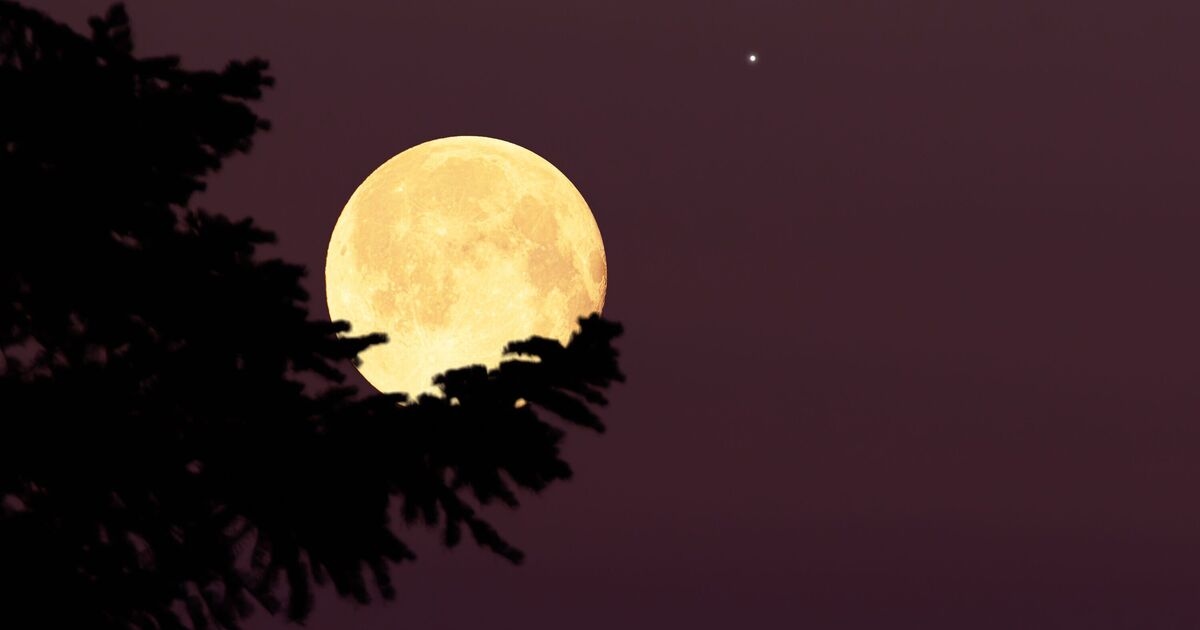
Mr Akbar emphasised that the Moon will look like any ordinary full moon tonight. It will not appear larger, brighter, or blue in colour.
He added: "For the May 31 event, it has nothing to do with the Moon turning blue. The Moon will still appear like a regular full moon."
The term "Blue Moon" stems from traditional American naming conventions for full moons tied to seasons or events (such as the "strawberry moon" or "harvest moon"). Its modern usage as the second full moon in a month became popular after a misinterpretation in a Sky & Telescope magazine article by James Hugh Pruett.
True blue-coloured moons are rare and unrelated. They can occur due to atmospheric conditions, such as large particles from volcanic eruptions scattering light.
Our community members are treated to special offers, promotions, and adverts from us and our partners. You can check out at any time. Read our Privacy Policy
A notable example followed the 1883 Krakatau eruption, when observers in Europe reported bluish moons and unusual sunsets.
Contrary to the phrase "once in a blue moon" implying rarity, Blue Moons are relatively common in astronomical terms.
They occur about seven times every 19 years and can fall in any month, driven by the Moon's synodic period of approximately 29.5 days compared to the 30- or 31-day Gregorian months.
Future Blue Moons are projected for December 31, 2028, and September 30, 2031.
For observers in the UK, the full moon peaks around 9:44 a.m. British Summer Time. However, the Moon will remain visible throughout the night, rising near sunset and setting the following morning. No special equipment or telescopes are needed—it can be observed with the naked eye.
ITB's Astronomy program, which operates facilities like the telescope lab at the Ganesha Campus and Bosscha Observatory, is not conducting special observations for this event, as it lacks unique scientific phenomena beyond the calendar definition.
Mr Akbar noted that public interest in the Blue Moon provides a good opportunity to educate people about lunar cycles and the calendar system.
So while the "Blue Moon" tonight offers a beautiful full moon to enjoy, those hoping for a literally blue lunar spectacle may indeed be disappointed.

Daily Express