
NASA announces 3 Moon missions in huge lunar base update
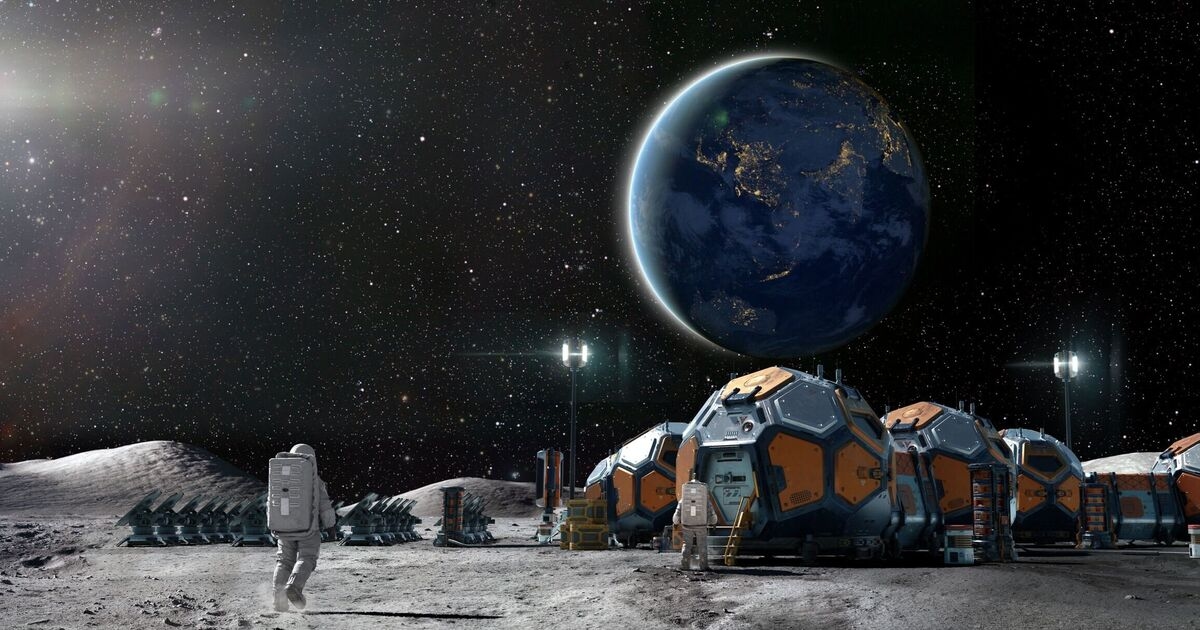

NASA has revealed plans for three new Moon missions as it pushes ahead with ambitions to establish humanity's first permanent outpost beyond Earth. The uncrewed missions will head to the lunar south pole and are designed to test technology, transport scientific equipment and prepare the way for future astronaut landings.
The announcement was made at NASA headquarters in Washington, where officials also confirmed new contracts for lunar rovers and cargo landers ahead of planned crewed Artemis missions later this decade. NASA Administrator Jared Isaacman described the project as humanity's first settlement on another world and said it would pave the way for future missions to Mars. The first mission, known as 'Moon Base I', is scheduled to launch no earlier than autumn 2026.

It will use Blue Origin's 'Blue Moon Mark 1 Endurance' lander to carry scientific instruments to the Moon's surface, including cameras that will study how rocket engines interact with lunar dust during landing. The mission will also deploy a laser retroreflector system designed to help spacecraft determine their location with greater precision. Moon Base II is expected to follow later in the year.
The mission will use Astrobotic's Griffin lander to transport more than 1,100lbs of cargo, including Astrolab's FLIP rover. NASA hopes the mission will help develop mobility systems and technologies needed for future lunar vehicles.
A third mission, 'Moon Base III', will focus on scientific research. The mission will fly aboard Intuitive Machines' Nova-C Trinity lander and carry the Lunar Vertex investigation, which aims to study mysterious light-coloured markings known as lunar swirls.
It will also transport payloads from the European Space Agency and the Korea Astronomy and Space Science Institute.

Alongside the mission announcements, NASA confirmed it had awarded more than $600million (£446million) in contracts linked to the Moon Base programme. Astrolab received a $219million (£163million) contract while Lunar Outpost secured $220million (£164million) to develop the first generation of crewed lunar rovers.
Blue Origin was awarded $188million (£140million) to transport the vehicles to the Moon's south pole, with options that could significantly increase the value of the deal.
NASA also selected Firefly Aerospace to build a spacecraft for the MoonFall mission, which is due to launch in 2028 and will deploy four drones to scout future astronaut landing sites.
The space agency hopes the missions will help establish a sustained human presence on the Moon, with the lunar south pole considered one of the most promising locations for long-term exploration due to the potential for water ice.

Daily Express