
Groundbreaking 'Dragon Man' skull discovery of brand new human
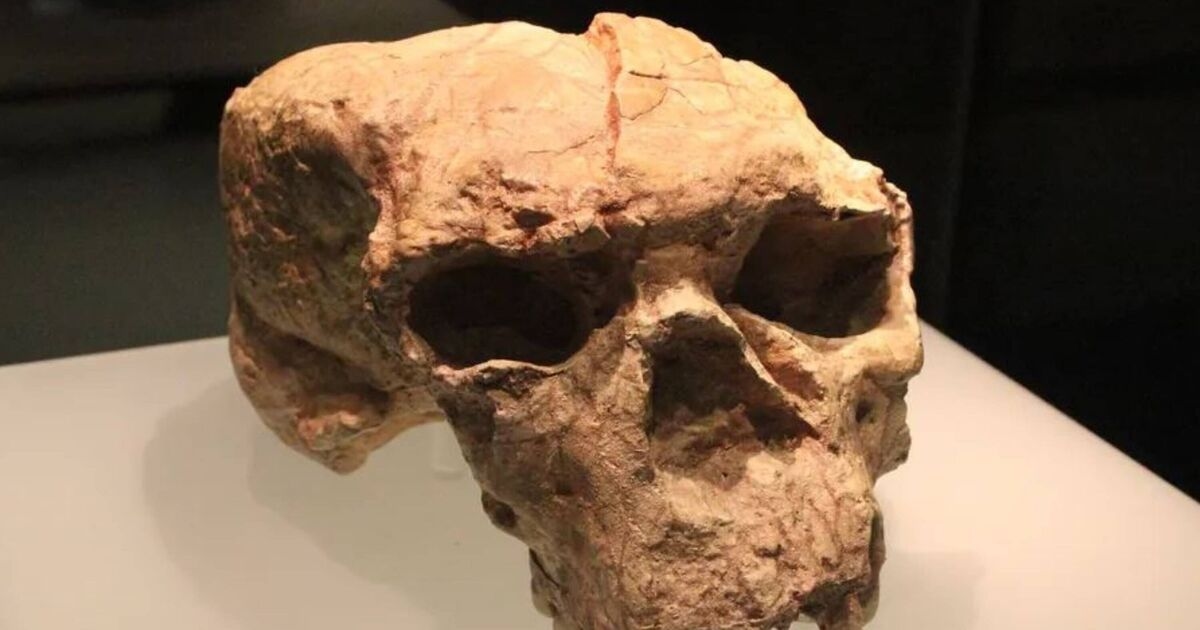

A revolutionary archaeological excavation has discovered a skull which may belong to a previously unknown species of 'dragon man.'
Chinese scientists revealed the skull which represents our closest ancient ancestor to species including the Neanderthals and Homo erectus.
Named dragon man, the ancient human probably lived alongside his community in East Asia no less than 146,000 years ago, according to Cell's research in The Innovation.
It was discovered at Harbin, north-east China, in 1933, but only recently came to scientists' attention, and has the capacity to transform our understanding of human beings.
Prominent UK human evolution expert, Prof Chris Stringer from London's Natural History Museum, was part of the research team. "In terms of fossils in the last million years, this is one of the most important yet discovered," he told BBC News, reports the Express US.

"What you have here is a separate branch of humanity that is not on its way to becoming Homo sapiens (our species), but represents a long-separate lineage which evolved in the region for several hundred thousand years and eventually went extinct.
"We found our long-lost sister lineage," said Xijun Ni, a professor at the Chinese Academy of Sciences and Hebei GEO University in Shijiazhuang.
"I said 'oh my gosh!'. I could not believe that it was so well preserved. You can see all the details. It is a really amazing find!" Compared to the skulls of other human species, its brain is considerably larger, while its eye sockets are unusually square in shape. It also features thick, Neanderthal-like brow ridges, a broad mouth and significantly larger teeth.
Prof Qiang Ji, of Hebei GEO University, described the remarkable find as one of the finest preserved early human skulls ever unearthed.
"It has a mosaic combination of primitive and more modern features, setting itself apart from all the other species of human," the researcher explained.

While scientists believe Dragon Man had a powerful, robust build, very little else is known about him, as the skull was removed from its original location. Without any archaeological context — such as stone tools or other cultural artefacts — it remains extremely difficult to piece together a picture of what his daily life may have looked like.
The skull was reportedly unearthed in 1933 by a construction worker involved in the building of a bridge over the Songhua River, which runs through Harbin in Heilongjiang province. Heilongjiang, when translated literally, means Black Dragon River — hence the ancient human's distinctive name.
As the city was under Japanese occupation at the time, a Chinese worker smuggled the skull home, believing it could be of great value, and hid it at the bottom of his family's well. Prior to his death, the man revealed the skull's existence to his family, which ultimately led to it being passed on to scientists.
Dragon Man forms part of a broader collection of human remains unearthed across China, including those found at Dali, Jinniushan, Hualongdong, and the Xiahe jawbone from the Tibetan Plateau.
Considerable debate surrounds whether these remains represent primitive examples of Homo sapiens, Neanderthals, a human group known as the Denisovans, or something else entirely.
Prof Marta Mirazon Lahr, from the University of Cambridge, is firmly of the opinion that Dragon Man was, in fact, a Denisovan.
"The Denisovans are this fascinating mystery population from the past. There is a suggestion (from DNA evidence) that the jawbone found in the Tibetan Plateau might be a Denisovan," she said. "And now because the jawbone from Tibet and Dragon Man look like each other - now we might actually have the first face of the Denisovan."
Chinese researchers, however, maintain that the notoriously difficult-to-classify fossils from East Asia represent the gradual evolution of an entirely new species. Prof Ni said:
"The results will spark a lot of debate, and I am quite sure that a lot of people will disagree with us. But that is science and it is because we disagree that science progresses."

Daily Express