
Copper-Rich Foods For Gray Hair (Causes, Prevention & Vitamins That Help)
Question from Debra Holloway, Muncie, Indiana: “I’ve been noticing a lot more gray hairs lately and someone at my salon mentioned that copper deficiency might actually be a factor. I had no idea diet could affect this. Can you tell me more about copper-rich foods and vitamins that might help slow down the graying? I’m 54 and not ready to give up my natural color just yet.”
Here’s something that surprises almost everyone when I bring it up at the shampoo bowl: gray hair isn’t always just about age. I know, I know, that sounds like I’m about to sell you something, but stay with me for a second. The science behind why hair loses its pigment is genuinely fascinating, and the nutritional piece of it is something most doctors don’t even think to mention, let alone your colorist.
After 20+ years behind the chair, and the shift I’ve noticed in the last several years is that more and more of my clients in their late forties and early fifties are asking about premature graying specifically. Not the slow silver progression that comes with age gracefully, but the sudden accelerated kind that catches you off guard when you look in the mirror one morning. A client of mine, Renee, came in last spring and said she felt like she’d gone from maybe ten gray hairs to what looked like a full streak over about eight months. She’d been under enormous stress, yes, but she’d also been restricting her diet pretty severely. When she got her bloodwork done, her copper and B12 levels were both low. Her doctor had completely glossed over it. Her hair told a different story.
So whether you’re in Debra’s shoes and just starting to connect the dots, or you’ve been curious about this for a while, here’s a practical breakdown of the copper-rich foods, vitamins, and nutritional strategies that genuinely support melanin production, and therefore your natural hair color, for as long as possible.
This post may contain affiliate links, meaning I may earn a small commission at no extra cost to you. I only share products I truly believe in. As an Amazon Associate, I earn from qualifying purchases. Your support helps me continue creating free content like this.
First, Let’s Talk About Why Copper Actually Matters for Hair ColorBefore we get into the list, it helps to understand the mechanism here, because once you get it, everything else clicks into place. Your hair gets its color from melanin, which is produced by cells called melanocytes that live in your hair follicles. The enzyme responsible for melanin synthesis is called tyrosinase, and tyrosinase is what’s called a copper-dependent enzyme. Meaning it literally cannot do its job without copper present in sufficient amounts. When copper levels drop, tyrosinase activity slows, melanin production slows with it, and the hair that grows in starts losing its pigment.
Oxidative stress also plays a significant role here. Hydrogen peroxide naturally builds up in hair follicles over time, and a healthy body produces an enzyme called catalase to neutralize it. When that system gets overwhelmed, the hydrogen peroxide essentially bleaches the hair from the inside. Several antioxidants, including some of the ones we’ll talk about, help support that process. So this isn’t just about copper in isolation, it’s really about a whole nutritional ecosystem that supports your follicles, and when one part of it is missing, you tend to notice it on your head before anywhere else.
10. Beef Liver (Yes, Really, It’s Worth It)I understand if your face just did something. Liver is not exactly glamorous. But if we’re being completely honest about copper-rich foods, liver has to come up because the numbers are genuinely remarkable. A three-ounce serving of cooked beef liver contains somewhere around 14 milligrams of copper, which is well over the recommended daily intake for adults. Nothing else on this list comes close to that concentration. It’s also packed with B12, zinc, folate, and iron, all of which support hair health in their own right, so you’re getting an enormous amount of nutritional value from one food that most people have stopped eating entirely.
Now I’m not saying you need to eat liver every day. Once a week is more than enough to move the needle on your copper levels if you’ve been deficient. The trick is preparation, because badly cooked liver is, frankly, hard to get through. Soaking it in milk for a couple of hours before cooking removes some of the bitterness, and cooking it with plenty of onions and a splash of balsamic makes it genuinely good. My mother used to make it that way and I grew up eating it without complaint, which tells you something. If you’re not ready to cook it yourself, a good desiccated liver supplement works just as well nutritionally. You can find quality desiccated liver supplements on Amazon here. Not as romantic as a home-cooked meal, but it gets the job done.
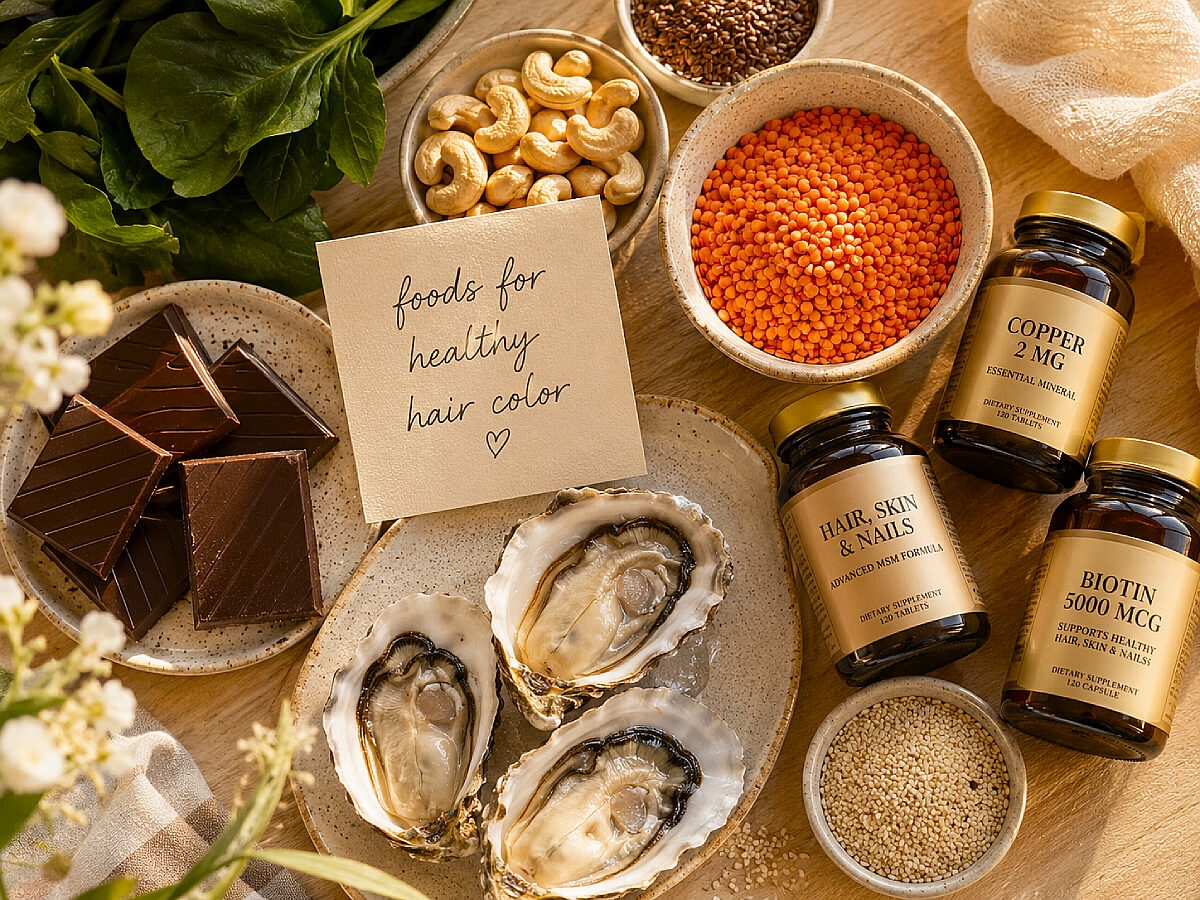
9. Oysters and ShellfishOysters are having a bit of a moment in the wellness world right now, and for good reason. They’re one of the most zinc-dense foods on the planet, but they also carry a solid amount of copper, and the combination of those two minerals together is particularly relevant when we’re talking about hair pigmentation and follicle health. Six medium oysters can deliver close to five milligrams of copper alongside all that zinc, and together they support not just melanin production but overall scalp circulation and the integrity of the hair shaft itself.
The thing about zinc and copper is that they have to stay balanced. Too much zinc without enough copper can actually create a relative copper deficiency, which is something that comes up sometimes with women who take high-dose zinc supplements without pairing them with copper. I’ve had clients who were supplementing zinc for skin reasons and noticed their graying accelerating, and it took a while to figure out why. Shellfish like clams, crab, and lobster also carry good amounts of both, so rotating them into your diet a couple of times a month is a reasonable strategy. If you’re not near a coast or just can’t access fresh shellfish easily, a good zinc and copper balance supplement might be worth looking into with your doctor.
8. Dark ChocolateThis one always gets a good reaction when I mention it, and I’ll admit I bring it up partly for that reason. But it’s legitimate. Dark chocolate that’s seventy percent cacao or higher contains meaningful amounts of copper, roughly one to two milligrams per ounce depending on the brand, along with antioxidants that help combat the oxidative stress we talked about earlier. It’s not a magic bullet, but for a food that people actually want to eat every day, it’s worth including in a conversation about building copper into your diet over time.
The antioxidant angle matters here more than people realize. The flavanols in dark chocolate support circulation and have been shown to reduce inflammation systemically, and chronic low-grade inflammation is one of the things that accelerates follicle aging. So there’s a dual benefit happening. My personal preference runs toward brands like Lindt 85% or Green and Black’s Organic, both of which are widely available and taste genuinely good without being so bitter they’re unpleasant. Here’s a search for high-cacao dark chocolate on Amazon if you want to stock up or try a few options side by side.
7. Nuts and Seeds, Especially Sesame and SunflowerAlmonds, cashews, sunflower seeds, sesame seeds, and pumpkin seeds all contribute meaningfully to copper intake, and the nice thing about this category is how easy it is to work into existing eating habits. A quarter cup of cashews has about two milligrams of copper. Sesame seeds are particularly interesting because they also contain a compound called sesamol that has antioxidant properties, and they’ve been studied in traditional Ayurvedic practice specifically in relation to hair health, which adds an interesting layer to the conversation even if the Western clinical research is still catching up.
I started keeping a small jar of mixed seeds at my station years ago, just to snack on between clients, and it became a habit. Tahini, which is just ground sesame paste, is another easy way to get sesame into your diet without it feeling like a supplement. Stir it into salad dressing, thin it with lemon juice and put it on roasted vegetables, use it as a base for a sauce. A good quality tahini like Soom or Kevala brand has a depth of flavor that the cheap grocery store versions don’t, and you’ll actually use it. Sunflower seed butter is another option that gives you similar nutritional benefits in a more familiar format if you’re someone who already keeps nut butters around.
6. Leafy Greens, Particularly Spinach and Swiss ChardThe copper content in leafy greens is more modest than liver or shellfish, but what they bring to the table is a combination of nutrients that work together to support the whole hair-health picture. Spinach in particular contains copper, folate, iron, and vitamins A and C, and that vitamin C piece matters because it helps with iron absorption, which is itself linked to hair loss and premature graying. Swiss chard adds magnesium to the mix, which supports hundreds of enzymatic processes in the body including, yes, some that are relevant to melanin synthesis.
I want to be honest that leafy greens alone aren’t going to reverse your graying. The copper amounts just aren’t high enough for that. What they do is contribute to an overall nutrient-dense diet that keeps your follicles well-supported over the long term, which is the real goal here anyway. One thing worth mentioning: cooking spinach actually makes the iron and copper more bioavailable, so a sauteed or lightly wilted preparation gives you more nutritional benefit than eating it raw, which contradicts the instinct a lot of people have toward salads being the healthiest option. Spinach extract supplements exist too, though I’d always lean toward real food first when it’s accessible.
5. Legumes, Lentils in ParticularLentils don’t get nearly enough credit. They’re cheap, they keep forever in your pantry, they cook relatively quickly compared to other legumes, and they contain a really solid combination of copper, iron, folate, and protein. Protein matters here because hair is made of keratin, which is a structural protein, and without adequate dietary protein your body doesn’t have the raw materials to build strong hair regardless of what else you’re eating. Copper and protein together are kind of a foundational pairing for hair health, and lentils give you both in one place.
Black beans and chickpeas are in a similar neighborhood nutritionally, and if you’re not someone who eats a lot of meat, this category becomes even more important for meeting your copper needs. A cup of cooked lentils has about half a milligram of copper, which is meaningful when you’re eating them several times a week as part of a varied diet. The one caveat with legumes is that they contain phytates, which can mildly inhibit mineral absorption, and soaking your dried lentils before cooking reduces the phytate content and improves how much copper you actually absorb from them. It’s a small thing but it adds up over time.
4. The B Vitamin Connection, B12, Biotin, and FolateWe’ve been talking mostly about copper but I’d be doing you a disservice if I didn’t spend real time on the B vitamins, because the link between B12 deficiency and premature graying is one of the most well-documented nutritional connections in the hair health literature. B12 is essential for the production of red blood cells that carry oxygen to your scalp and follicles, and without adequate oxygenation, follicle function degrades, including melanocyte activity. Women who follow plant-based diets are particularly at risk for B12 deficiency because it’s found almost exclusively in animal products, and the deficiency can develop slowly over years before it becomes obvious in bloodwork.
Biotin is one that you’ve probably heard about endlessly at this point, and I’ll give you my honest take: biotin supplementation for hair is overhyped when you’re not actually deficient, but when you are deficient, the difference it makes is real. The problem is that most people don’t know their levels. Folate is the one I think gets overlooked most often in the gray hair conversation, and it works alongside B12 in the methylation cycle, which is relevant to both DNA repair and melanin synthesis. A good B-complex supplement that includes methylated forms of B12 and folate, meaning methylcobalamin and methylfolate rather than the cheaper synthetic versions, is a worthwhile investment for anyone dealing with premature graying who hasn’t had their B vitamin levels tested recently.
3. Antioxidant Support: Vitamins C and E TogetherRemember that hydrogen peroxide buildup in the follicles I mentioned earlier? This is where vitamins C and E come directly into play. Vitamin C is a potent antioxidant that neutralizes free radicals and supports the regeneration of vitamin E, which does its own protective work in the lipid layers of the cell membrane. The two of them together have a synergistic effect that’s more powerful than either one alone, and their combined action on oxidative stress in the scalp is one of the more compelling arguments for making sure you’re not running low on either.
Food sources for vitamin C are abundant, citrus, bell peppers, kiwi, broccoli, strawberries, and you’re probably already eating some of these. Vitamin E is found in nuts, seeds, olive oil, and avocado, which means a diet built around whole foods tends to cover both reasonably well. Where it gets complicated is that cooking destroys a fair amount of vitamin C, so relying entirely on cooked vegetables isn’t enough. Raw bell peppers, fresh citrus, and berries are easy ways to maintain your intake without overthinking it. For supplementation, a vitamin C and E combination supplement is a reasonable option, though I’d prioritize food sources first and use supplements to fill genuine gaps rather than as a replacement strategy.
2. Catalase-Boosting Foods and SupplementsThis one is a little more niche and I find it genuinely interesting, which is maybe why I’m giving it more time than some of the others. Catalase is the enzyme your body produces to break down hydrogen peroxide, and as we age, catalase production naturally declines, which is part of why graying accelerates over time. The idea that you can support catalase activity through diet and supplementation has gained a lot of traction in the natural hair health world over the last decade, and while the clinical evidence is still building, the logic is sound enough that it’s worth paying attention to.
Foods that are associated with catalase activity include garlic, onions, cruciferous vegetables like broccoli and Brussels sprouts, and certain fermented foods. There are also direct catalase supplements on the market now, often combined with other antioxidants and B vitamins specifically marketed toward gray hair reversal or prevention. I want to be careful about the word reversal here because once a hair has grown in gray, that hair is gray, and no supplement is going to change the color of existing strands. What you’re really trying to do is support the new growth coming in, which is a slower process and requires patience. Catalase supplements specifically formulated for hair pigmentation are easy to find now, and brands like Foligain and GetAwayGrey have been around long enough to have real user reviews worth reading through before you decide.
1. Copper Supplementation: When Food Isn’t Enough and How to Do It RightI saved this one for last not because it’s the most exciting thing to talk about, but because it’s the most important thing to get right, and I wanted you to have all the context before we got here. If you’ve been eating a reasonably varied diet and you’re still noticing accelerated graying, there’s a real possibility that your copper intake from food alone isn’t sufficient, either because of absorption issues in your gut, because of competing minerals in your diet, or because of an underlying health factor that’s worth discussing with a doctor. This is where supplementation enters the picture, and it needs to be done thoughtfully.
The recommended daily intake of copper for adult women is around 900 micrograms, which is less than one milligram. Copper toxicity is real if you over-supplement, so this isn’t a situation where more is better. The sweet spot for most people who are deficient is somewhere between one and three milligrams of supplemental copper daily, ideally in a form called copper glycinate or copper bisglycinate, which are chelated forms that absorb more efficiently than copper oxide or copper sulfate. I’ve seen clients make real, visible differences in the texture and color of their new growth after three to six months of consistent, appropriate copper supplementation alongside an improved diet, and Renee, the client I mentioned at the beginning, was one of them. Her new growth had noticeably more warmth in it by the time she came back in around month five. Was it dramatic? No. But it was real, and she noticed it herself before I said anything.
The key is to get bloodwork done before you start supplementing, specifically a serum copper test and a ceruloplasmin test, which gives a better picture of functional copper status than serum copper alone. That way you know what you’re working with and you’re not guessing. Copper bisglycinate supplements are available from reputable brands like Thorne, Pure Encapsulations, and NOW Foods, all of which are well-regarded in the supplement space for quality control and transparency. Thorne in particular is one I recommend consistently because their manufacturing standards are genuinely rigorous. Pair your copper supplement with a B-complex that includes methylated B12, eat a diet that rotates in liver or shellfish a couple of times a week, prioritize your antioxidants, and give it time. Hair grows slowly and nutrition works slowly, but it works.
A Few Final Thoughts Before You GoI want to be straightforward with you about expectations, because I think some of the content floating around online about reversing gray hair naturally sets people up for disappointment. Nutrition can meaningfully support melanin production and slow premature graying when there’s a genuine nutritional component to what’s happening. It is not a guaranteed reversal strategy, and genetics will ultimately have the final word on your timeline. What I’ve seen in my years behind the chair is that women who pay attention to their nutrition tend to hold onto their natural color a little longer, and more importantly, their hair looks and feels healthier overall, which is its own reward regardless of how many gray strands are in the mix.
Debra, I hope this gives you a real place to start. Get your copper and B12 levels checked, add some of these foods into your regular rotation, and be patient with the process. And if your graying is at a point where you want some color while you work on the internal stuff, there’s no shame in that either. Color and nutrition aren’t mutually exclusive. That’s half of what keeps me in business.

Latest Hairstyles