
Best Foods for Healthy Hair
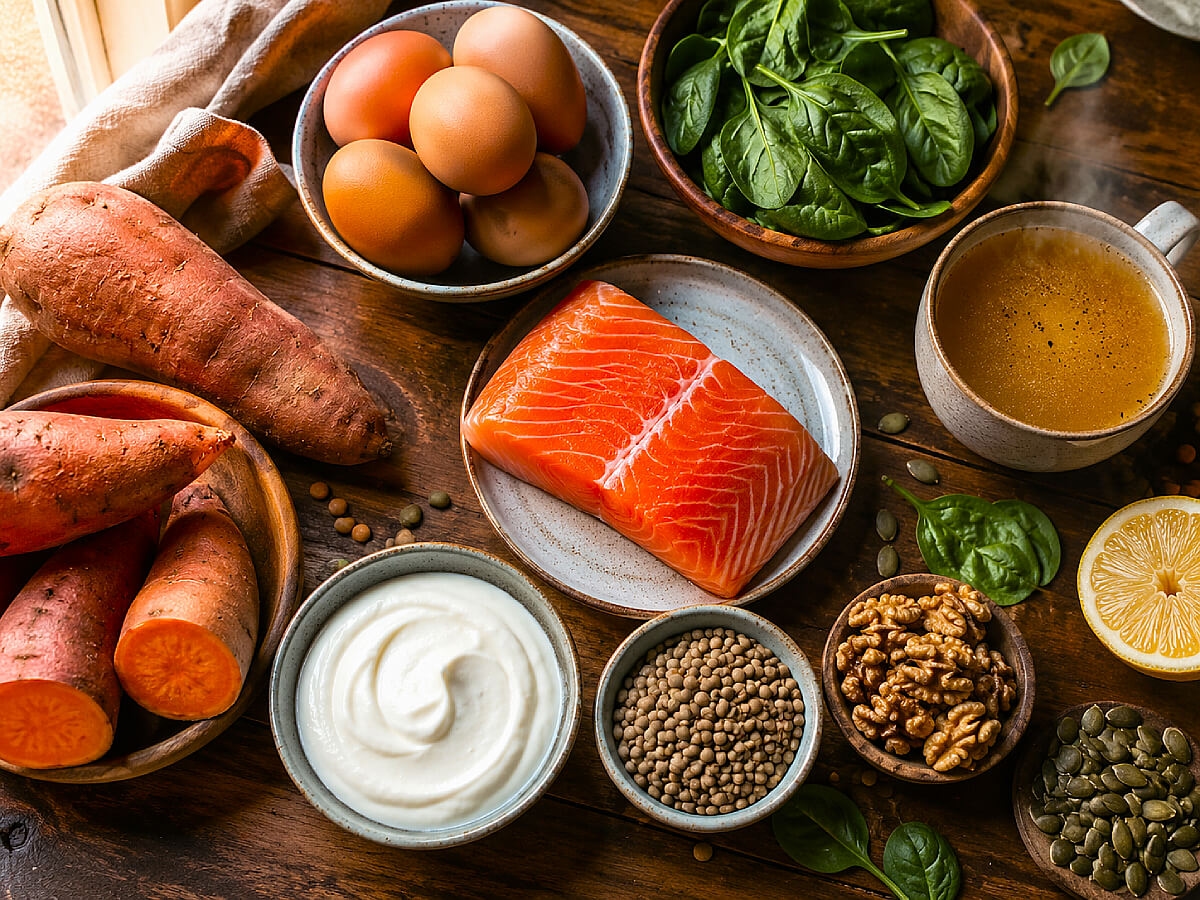
From Margaret Collins, Beaverton, Oregon: “I’ve been struggling with thinning hair and dullness for the past couple of years and my stylist keeps telling me to ‘eat better’ but never actually tells me what that means. I take a biotin supplement and I feel like it’s not doing much. Can you actually change your hair through diet, or is that just something people say? What should I really be eating?”
Margaret, I hear you, and honestly, “eat better” is one of the laziest pieces of advice anyone in my industry gives. I’ve been a hairstylist for many years and the number of clients who come in with brittle, slow-growing, dull hair, and who are otherwise perfectly healthy, is genuinely striking. And more often than not, when we actually dig into what they’re eating day to day, something is missing. Not dramatically missing, not in a way that shows up on a basic blood panel, but quietly, consistently missing in ways that hair is the first to signal.
Hair is not essential tissue. Your body knows that. When resources get scarce, whether that’s protein, iron, or certain vitamins, your body sends nutrition to your organs first and your hair follicles last. So your hair ends up functioning like a canary in a coal mine for your nutritional status. The good news is that this also means it responds when you course-correct, and that’s genuinely exciting to see in a client over a few months. I’ve watched hair transform, not through a product, but because someone started eating eggs for breakfast. So let’s actually answer your question with specifics, because you deserve better than “eat better.”
This post may contain affiliate links, meaning I may earn a small commission at no extra cost to you. I only share products I truly believe in. As an Amazon Associate, I earn from qualifying purchases. Your support helps me continue creating free content like this.
10. Whole Eggs, Not Just the WhitesI want to start here because eggs are almost universally underrated for hair health, and also because there’s a stubborn myth that’s been floating around since the low-fat diet era that you should skip the yolk. Please don’t skip the yolk. The yolk is where most of the hair-relevant nutrition actually lives, including biotin, which you mentioned taking as a supplement, along with fat-soluble vitamins like A and D, and a meaningful hit of choline that supports cell membrane function all the way out to your follicles.
One whole egg gives you a real dose of complete protein, meaning it contains all the essential amino acids, including the ones your body uses to synthesize keratin, which is the structural protein your hair is literally made of. If your diet is low in complete protein, your body simply cannot build strong hair strands, and no topical treatment in the world makes up for that. I had a client in her late fifties who was eating very little protein because she’d read somewhere that it was inflammatory. Her hair was coming out in the shower in genuinely alarming amounts. We talked through her diet and she started eating two whole eggs every morning. Three months later, her ponytail felt thicker and her stylist (me) was doing a lot less trimming of breakage.
If you’re worried about cholesterol, current dietary guidelines have actually backed off significantly from the old egg limits for most healthy adults, so I’d encourage you to have that conversation with your doctor rather than just defaulting to egg whites and missing out. Two eggs in the morning is one of the simplest, most effective things you can do for your hair, and it costs almost nothing.
9. Fatty Fish, Especially Salmon and SardinesOmega-3 fatty acids come up constantly in conversations about skin, brain health, and heart health, but their role in hair is just as significant and gets a lot less attention. The scalp is skin, and it needs adequate essential fatty acids to maintain its barrier function, regulate sebum production, and support the kind of healthy follicle environment that actually grows hair well. When the scalp is dry, inflamed, or producing too little oil, hair growth slows and the strands that do grow are more prone to dryness and breakage.
Salmon is the obvious recommendation here and it’s a good one. A decent piece of wild-caught salmon a couple times a week gives you omega-3s, high-quality protein, B vitamins including B12, and selenium, which is a mineral that supports follicle health and is often low in women who are seeing hair changes. But I’ll be honest, salmon gets expensive, and sardines are just as nutritionally dense, sometimes more so. I know sardines have an image problem. I started eating them regularly about four years ago because I read enough about their nutritional profile that I felt like I had to try, and now I genuinely like them on whole grain crackers with a little mustard. You don’t have to become a sardine person if that’s a hard no for you, but if you’re open to it, they’re worth considering.
If fish isn’t something you eat regularly, a high-quality omega-3 supplement like Nordic Naturals Ultimate Omega is a legitimate option. Just know that food sources are generally better absorbed than supplements, so if you can get it from actual fish, do that first.
8. Spinach and Dark Leafy GreensIron deficiency is one of the most common and most overlooked causes of hair thinning in women, particularly women over forty who went through heavy periods for years, or anyone who eats very little red meat. Your hair follicles have some of the highest iron requirements of any tissue in your body because iron is essential for the production of red blood cells, which carry oxygen to the follicle. Without enough oxygen delivery, follicles miniaturize, growth cycles shorten, and shedding increases. This can look a lot like genetic thinning, which is why it often gets misidentified.
Spinach isn’t the highest iron food in the world, but it’s a reliable, accessible, and genuinely useful source of non-heme iron, along with folate, vitamin C, and vitamin A. The vitamin C matters because it dramatically improves non-heme iron absorption, so eating spinach in a salad with some citrus dressing or a squeeze of lemon is doing double duty. I think about it as food combinations working together rather than individual foods working alone.
Beyond spinach, kale, Swiss chard, and even arugula carry similar benefits. I’ve been in the habit of throwing a couple big handfuls of spinach into a smoothie with frozen berries and it genuinely disappears taste-wise, which is a useful trick if you don’t love salads. If you suspect low iron is part of what’s happening with your hair, it’s worth getting your ferritin level checked specifically, not just hemoglobin, because ferritin reflects stored iron and it can be low while your basic CBC looks normal. I’ve had several clients discover this after years of being told their blood work was fine.
7. Sweet Potatoes and CarrotsBeta-carotene is the precursor to vitamin A, and vitamin A is one of those nutrients that has a Goldilocks quality to it when it comes to hair. Too little and your scalp gets dry, follicles struggle, and hair growth slows. Too much through supplementation, not through food, can actually cause hair loss. This is one reason I’m always a little cautious about people loading up on high-dose vitamin A supplements without medical guidance. But getting it from food, especially from orange-pigmented vegetables, is both safe and genuinely effective.
Sweet potatoes are such an easy and satisfying way to get there. A medium sweet potato has more than enough beta-carotene to meet your daily vitamin A needs, and your body converts only what it needs and no more, which takes the guesswork out of dosing. They’re also a good source of potassium, vitamin C, and fiber, so they’re supporting overall health at the same time. I roast a big batch of them on Sundays and eat them all week, sometimes sweet with a little cinnamon and butter, sometimes savory with olive oil and herbs. They hold up well in the fridge and they’re genuinely filling, which matters when you’re trying to build consistent eating habits rather than just adding a supplement and calling it done.
Carrots work on exactly the same principle and are easy to snack on raw, which makes them one of the lowest-effort additions to your day. I started keeping a bag of baby carrots on the top shelf of my fridge, in my line of sight, because I know if I have to think too hard about preparation I’ll grab something else. Small logistics decisions like that actually matter more than motivation most of the time.
6. Greek Yogurt and Fermented DairyProtein again, but from a different angle. Greek yogurt is one of the most protein-dense convenient foods available, and for women who are busy and not always eating balanced meals, convenience matters. A cup of full-fat Greek yogurt delivers somewhere between 15 and 20 grams of protein depending on the brand, along with calcium, B12, and probiotics that support gut health, which is increasingly understood to have downstream effects on nutrient absorption and inflammation levels throughout the body, including at the scalp.
I want to say something about fat here because I think it’s relevant. Full-fat dairy is more satiating, better for fat-soluble vitamin absorption, and in my opinion better for your hair than the low-fat versions. The fat-stripping process that makes low-fat dairy also removes some of those fat-soluble vitamins, and for a food you’re eating partly for nutritional density, that’s a real trade-off. I spent years defaulting to low-fat Greek yogurt because it felt like the smarter choice and now I genuinely think it wasn’t. My preference is Fage Total 5% plain Greek yogurt, which is rich and genuinely satisfying rather than that slightly watery texture you get from the 0% versions.
Kefir is worth mentioning too, especially if you’re someone who doesn’t love thick yogurt. It’s drinkable, it has a similar protein and probiotic profile, and it mixes well into smoothies. The gut-hair connection is still being researched but the early evidence is interesting enough that I think supporting your gut microbiome is a reasonable, low-risk thing to do while you’re working on the rest of your nutrition.
5. Lentils and LegumesIf you eat very little meat or none at all, lentils deserve a serious spot in your rotation rather than just an occasional appearance in soup. They’re one of the most nutritionally complete plant foods for hair health specifically, because they bring protein, iron, zinc, and folate all in one package. Zinc is one I haven’t mentioned yet and it’s significant. Zinc plays a direct role in hair tissue growth and repair, and it keeps the oil glands around the follicle working properly. Low zinc is associated with hair loss that looks a lot like the diffuse thinning Margaret is describing.
The practical thing I love about lentils is that they’re genuinely fast to cook compared to other legumes. Red lentils in particular dissolve into soups and sauces in about 20 minutes and add a creamy thickness without any soaking required. I make a simple red lentil soup with tomatoes and cumin probably twice a month, and it’s become one of those things I look forward to rather than treat as a nutritional obligation. Black beans, chickpeas, and edamame are all in a similar category for zinc and protein content, and rotating between them keeps things from getting boring.
The bioavailability of non-heme iron and zinc from plant sources is lower than from animal sources, which is just a nutritional reality, but pairing legumes with vitamin C-rich foods improves absorption meaningfully. A squeeze of lemon on your lentil soup, some tomatoes in your bean salad, these pairings aren’t arbitrary. They’re doing functional work. If you’re primarily plant-based and dealing with hair loss, I’d really encourage you to get your iron and zinc levels checked before just adding more supplements, because knowing your actual levels changes the strategy significantly.
4. Nuts and Seeds, Particularly Walnuts and Pumpkin SeedsWalnuts are the only nut with a meaningful amount of omega-3 fatty acids, which circles back to everything we talked about with salmon, but in a format that requires zero cooking and lives in your pantry indefinitely. They also contain vitamin E, which acts as an antioxidant that protects hair follicles from oxidative stress, biotin, and copper, which is a trace mineral involved in melanin production and structural hair protein formation. Copper is interesting because low copper is sometimes associated with premature graying, though the research is still evolving on that.
Pumpkin seeds are quietly one of the most impressive foods for hair and they’re still kind of under the radar in most conversations about this topic. They’re dense in zinc, iron, magnesium, and protein, and there’s actually some promising research on pumpkin seed oil specifically in the context of hair loss related to DHT, which is the hormone implicated in androgenic hair thinning. The research isn’t conclusive enough for me to tell you pumpkin seed oil is a hair loss treatment, but eating pumpkin seeds as part of a varied diet is a genuinely smart move.
I keep a small container of mixed nuts and pumpkin seeds on my desk at the salon. It’s not a romantic food story, it’s just that having something available when I’m busy means I actually eat it. A small handful of walnuts and pumpkin seeds in the afternoon, maybe with a piece of fruit, is the kind of snack that actually contributes something meaningful rather than just filling the gap until dinner. You can find good options like raw pepitas in bulk at most grocery stores or online.
3. Beef Liver (or Chicken Liver if Beef is Too Much)Okay, I know. I know. Stay with me for a second because this one is genuinely worth your time even if your immediate reaction is no. Liver is the single most nutrient-dense food for hair health that exists, and I mean that in a way that isn’t close. One serving of beef liver covers your daily needs for B12, folate, riboflavin, copper, vitamin A, and iron, often several times over. It is the most concentrated source of bioavailable heme iron you can eat, and if you are dealing with hair thinning related to iron deficiency, and statistically a meaningful percentage of women reading this are, liver is the most direct food-based intervention available.
I didn’t grow up eating it. My grandmother made it, I avoided it completely for about thirty years, and then I started reading enough about its nutritional profile in the context of hair health research that I decided I had to try preparing it well rather than just tolerating it poorly. The trick, at least for me, is soaking the liver in milk for a couple of hours before cooking, slicing it thin, cooking it hot and fast, and not overcooking it. Overcooked liver is the problem, not liver itself. Chicken liver is milder and honestly a better starting point if beef liver sounds too intense. Chicken liver mousse, if you can make yourself think of it that way rather than as pate, is rich, spreadable, and genuinely pleasant on a cracker.
If liver is truly a non-starter for you, desiccated liver supplements like Ancestral Supplements Grass Fed Beef Liver are a reasonable workaround, though I always prefer the real food version when possible because whole foods come with cofactors that isolated supplements don’t replicate perfectly.
2. OystersIf liver felt like a stretch, oysters might feel more manageable, and the nutritional argument for them in the context of hair health is just as strong. Oysters are the highest dietary source of zinc on the planet. We’ve already talked about what zinc does for hair, so I won’t repeat all of it, but I want to emphasize that zinc deficiency is more common than most people think, particularly in women who have been through long periods of stress, illness, or restricted eating, and the hair is often where the deficiency shows up most visibly.
Beyond zinc, oysters are rich in iron, B12, selenium, and omega-3s. They are a complete protein source. Per calorie they are arguably the most nutritionally dense food that exists, which is a strange thing to say about something people eat at happy hour, but here we are. I had a client who started eating oysters regularly after a trip to the Pacific Northwest where she ate them almost daily for a week, and she came back glowing, honestly glowing, and told me her hair felt different. I wasn’t surprised.
The accessibility issue is real, I understand that. Fresh oysters aren’t available everywhere and they’re not cheap. Smoked oysters in a tin, though, are available at almost every grocery store, are surprisingly good on a cracker with hot sauce, and deliver much of the same nutritional profile at a fraction of the cost. I’ve converted several skeptics in my life by just putting a tin of smoked oysters on the snack board at parties without announcing what they were. People enjoy them first and then act offended when they find out what they ate, which I find very funny.
1. Eggs, Wait, No, Actually, Bone Broth Made From ScratchI’m putting bone broth at number one not because it’s the most scientifically bulletproof entry on this list, though the evidence is genuinely solid, but because I think it represents something bigger that gets at the heart of what most women are missing when they’re trying to fix their hair through food. Most of us are eating in a way that prioritizes convenience and macros and we’ve lost the old-fashioned habit of cooking things low and slow and extracting nutrition from the whole animal rather than just the lean parts. Bone broth is the most tangible way back to that.
Collagen is the dominant structural protein in hair, not keratin the way people often assume, keratin is the surface protein, but collagen provides the scaffolding underneath. As we age, collagen production declines, which is part of why hair texture changes, why it loses that juicy thickness it had in our thirties. Bone broth made from collagen-rich bones, so knuckle bones, feet, necks, slow-simmered for 12 to 24 hours, produces a liquid that’s rich in collagen-building amino acids, particularly glycine and proline, along with minerals like calcium, magnesium, and phosphorus that come directly out of the bones themselves.
I make a batch almost every week in my slow cooker. I use a mix of whatever bones I can get from the butcher counter, sometimes chicken feet which sounds off-putting but they are collagen-dense in a way that nothing else quite matches, and I let it go overnight. The house smells incredible. I drink a cup in the morning instead of a second coffee and I season it with a little salt, sometimes a squeeze of lemon. It’s warming and grounding in a way that feels genuinely nourishing rather than medicinal. You can also find high-quality pre-made options like Kettle and Fire Bone Broth if making your own feels like too much to take on right now, and while it’s not quite the same as homemade, it’s a respectable starting point.
The collagen supplement industry has grown up around this need and products like Vital Proteins Collagen Peptides are widely used and reasonably well-supported by research, but I keep coming back to bone broth because food is food and supplements are supplements and they don’t always behave identically in the body. There’s also something to be said for building a ritual around nourishment rather than just adding another powder to your morning routine.
The Bigger Picture, Before You GoMargaret, the thing I really want to leave you with is this. Your biotin supplement probably isn’t the problem or the solution. Biotin deficiency severe enough to cause hair loss is genuinely rare in healthy adults who eat any varied diet at all, because biotin is present in so many foods and your gut bacteria also produce it. The supplement industry has done a remarkable job convincing people that biotin is the key to hair growth, and while I don’t think it hurts anything to take it, I wouldn’t expect it to be the thing that changes your situation.
What I’d actually do in your position is look at your protein intake first, because most women are eating less protein than they think they are. Then I’d get your ferritin, zinc, and vitamin D levels checked because those are the deficiencies most commonly associated with the kind of diffuse thinning and dullness you’re describing. And then I’d start adding some of the foods on this list, not all at once in a frantic way, but steadily over a few weeks, treating it like building a new habit rather than fixing an emergency.
Hair grows about half an inch a month on average, and dietary changes take at least three months to show up meaningfully in the hair you can see, sometimes longer. So if you start now and commit to eating differently, you’re looking at real results by the fall. That’s not a fast fix, but it’s a real one, and in my experience the women who take this seriously and stay consistent are the ones who come in a few months later and say something has changed. I love those appointments.

Latest Hairstyles