

Price gap between flats and houses hits 30 year high as buyers swerve leasehold properties
Updated:
The gulf between the cost of a flat and a house has reached its highest level for 30 years, with buyer concerns over leasehold properties largely to blame.
Average prices for houses have increased by 43 per cent since 2016, while flat prices have risen by just 10 per cent over the same period according to property website Zoopla.
The typical cost of a house is £327,000, while a flat is £193,000.
This means houses now typically cost 1.7 times more than flats. A decade ago houses generally cost around 1.3 times more than flats.
The West Midlands is home to the 'most extreme' gulf between house and flat prices, Zoopla said.
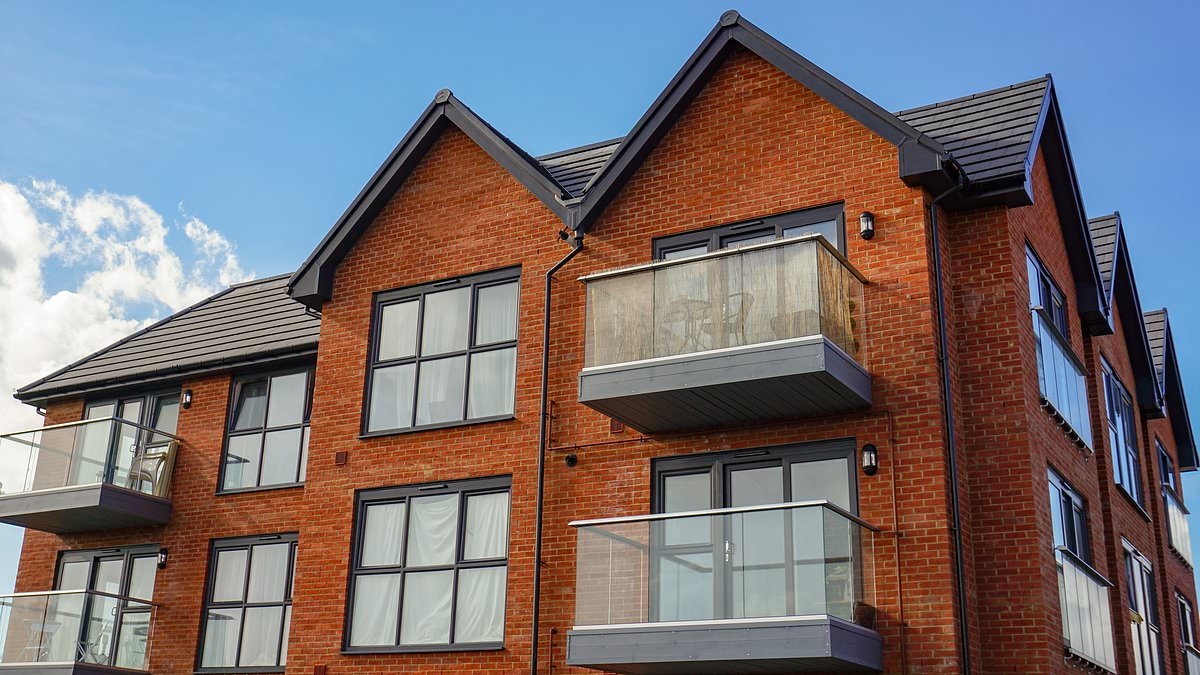
Gulf: The gap between house and flat prices is the biggest for 30 years, Zoopla said
In the West Midlands, the average cost of a house is £296,000, 2.5 times the cost of a flat, at £120,000.
The flat-house price gap is widest in the Midlands and northern regions, where houses are affordable enough that many first-time buyers skip flats, Zoopla said.
In Yorkshire and the Humber, a house typically costs about £250,000, while a flat costs around £104,000, meaning houses are 2.4 times more expensive than flats in this location.
Across the North East of England a house typically costs around £202,000, with flats coming in at £86,000. This means houses are 2.3 times more expensive than flats in the North East.
In London the average cost of a house is typically £809,000, while flat prices are hovering around the £416,000 mark, Zoopla said. That gives an average price difference of £393,000 and means houses generally cost 1.9 times more than flats in the capital. Seven in ten buyers in London are on the hunt for a flat, the findings added.
In Scotland, the leasehold system does not apply. Flat owners buy the 'heritable title' to their flat which is more similar to owning the freehold.
There, the price ratio between houses and flats has barely budged for years.
Zoopla said this showed how 'uncertainty around leasehold in England is impacting the pricing of flats versus houses'.
In London, it typically takes 45 days to sell a flat, against 37 for a house. In Scotland the median time to sell a flat is a mere 15 days, the same as it is for a house.
1. Lease length
Around a fifth of leasehold properties currently listed for sale have a lease with less than 100 years remaining.
Leaseholders have the statutory right to extend their lease, but the cost of doing so rises quickly once a lease drops below 80 years thanks to a charge known as 'marriage value'.
The Leasehold and Freehold Reform Act 2024 will abolish this cost, but this has not yet come into force. For any lease below 85 years get a legal quote on extension costs before exchange, and take specialist advice on whether to extend now or wait for reform.
2. Service charge history
Ask for three years of accounts. The trajectory matters as much as the current level and how the property is managed.
3. Ground rent terms
Fixed below £250 a year is normal - two thirds of leasehold listings have ground rents below this level.
Escalating or doubling clauses are a red flag for lenders. Proposed reforms will cap existing ground rents.
4. Building safety
For buildings over 11 metres, check whether EWS1 certification is in place and whether Building Safety Act costs are already budgeted for.
The gulf between house and flat prices could provide an opportunity for buyers on the hunt for a bargain. But be cautious before taking the plunge.
Before snapping up a seemingly cheap flat, consider the lease length, service charge and ground rent terms carefully.
Zoopla's analysis showed the average leaseholder pays £200 a year for ground rent and £1,900 a year in service charges.
Average leasehold running costs range from 0.7 per cent to 1.3 per cent of a property's value a year. When considering whether to hand out a mortgage, lenders scrutinise properties where costs exceed 1 per cent of the property's value.
Richard Donnell, executive director at Zoopla, said: 'The gap between house and flat prices has never been wider, and for buyers who are prepared to do their homework, that presents an opportunity.
'For many, flats remain the main route into home ownership, particularly in London and the South East where the cost of buying a house is higher.'
Zoopla added: 'Uncertainty around buying flats is clearly impacting the market, but not all flats face the same challenges and the leasehold system is undergoing significant reforms.'
Ground rents have been banned on new leases. In January 2026 the Government published a draft Commonhold and Leasehold Reform Bill which will now be subject to parliamentary scrutiny.
The Bill proposes to cap existing ground rents at £250 a year, ban the sale of new leasehold flats and make commonhold the default tenure for new-build flats.
The Bill is expected to be introduced to Parliament this autumn, with Royal Assent expected next year.
Mortgage rates have soared after conflict with Iran has driven up inflation expectations and dashed hopes of interest rate cuts.
If you need a mortgage because you are buying a home, or your current fixed rate deal is due to end, you should explore your options as soon as possible.
This is Money has a long-standing partnership with fee-free broker L&C, to provide you with expert mortgage advice.
Use This is Money and L&Cs best mortgage rates calculator to show deals matching your home value, mortgage size, term and fixed rate needs.
Or use L&C’s online Mortgage Finder to search thousands of deals from more than 90 different lenders to discover the best deal for you.
This is Money's mortgage tips
What if I need to remortgage?
Borrowers should compare rates, speak to a mortgage broker and be prepared to act. Homeowners can lock in to a new deal six to nine months in advance, often with no obligation to take it.
Most mortgage deals allow fees to be added to the loan and only be charged when it is taken out. This means borrowers can secure a rate without paying arrangement fees. If you do this and don't clear the fee on completion, interest will be paid on it over the term of the loan.
What if I am buying a home?
Those with home purchases agreed should also aim to secure rates as soon as possible, so they know exactly what their monthly payments will be. Buyers should avoid overstretching and be aware that house prices may fall, as higher mortgage rates limit people's borrowing ability and buying power.
What about buy-to-let landlords?
Buy-to-let landlords with interest-only mortgages will see a greater jump in monthly costs than homeowners on residential mortgages. This makes remortgaging in plenty of time essential and our partner L&C can help with buy-to-let mortgages too.
> Find your next mortgage deal with This is Money and L&C
Mortgage service provided by London & Country Mortgages (L&C), which is authorised and regulated by the Financial Conduct Authority (registered number: 143002). The FCA does not regulate most Buy to Let mortgages. Your home or property may be repossessed if you do not keep up repayments on your mortgage

This İs Money


