EVs take longer and cost more to repair than petrol cars
Updated:
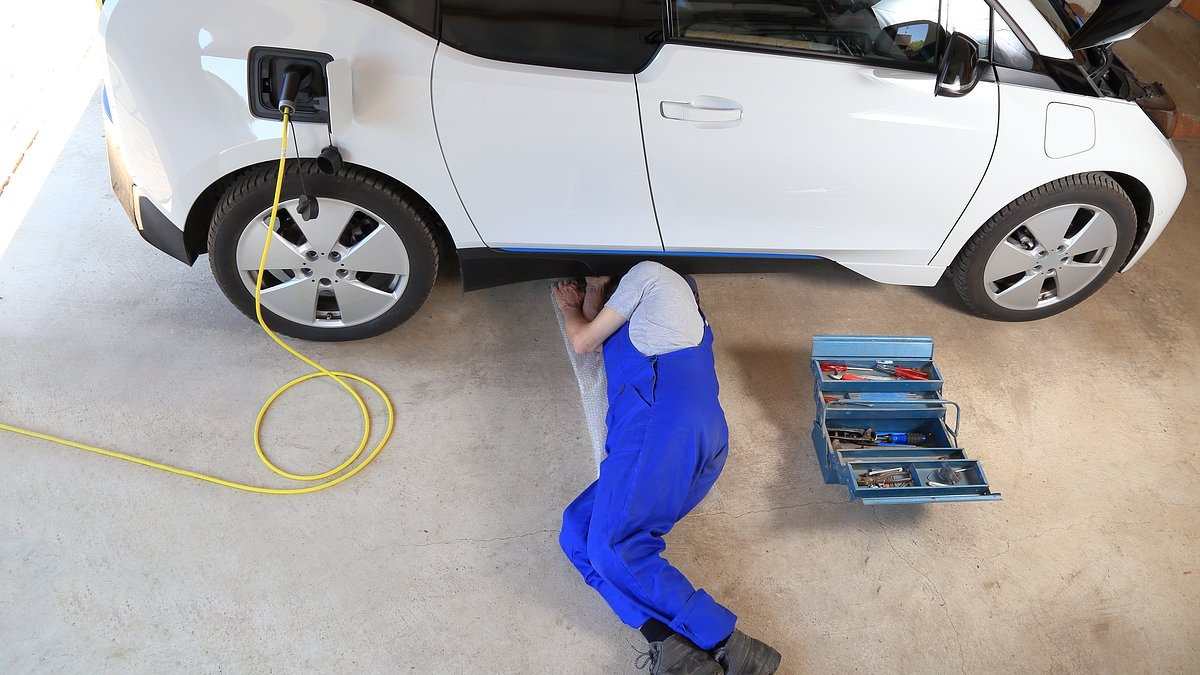
Electric cars take longer to repair following an accident and are more costly to fix than traditional petrol models, according to new data.
An EV's repair cost is typically 19 per cent higher than the price of fixing an internal combustion engine (ICE) car.
Battery electric models also spend, on average, 9 per cent longer in workshops, according to the latest Accident Exchange (AX) Repair Index.
This is based on more than 40,000 vehicle repairs carried out during the 12-month period between March 2025 and February 2026.
The findings go against the general perception that EVs are cheaper and easier to mend because they have fewer moving parts.
Instead, AX says the overall higher repair burden for EVs is 'placing a greater strain on the UK accident repair sector, resulting in increased costs for UK motorists and insurers'.
The report comes amidst mounting concerns about a lack of qualified technicians to work on EVs safely, while a recent survey of mechanics found that four in five would not recommend switching to electric, particularly because of battery replacement costs.
Analysis of car repair bills over the last 12 months reveals that EVs, on average, cost £6,363 to fix compared with £5,338 for petrol, diesel and hybrids models
Drawing on data from its nationwide repair network, the index compares EVs with ICE vehicles, including petrol, diesel and hybrid powertrains.
It uses ICE vehicles as a baseline score of 100 and measures the relative repair burden created by repair costs and repair duration.
With EVs achieving a score of 114, this indicates a greater repair burden than their combustion-powered counterparts.
Analysis of repair bills revealed that EVs, on average, cost £6,363 to fix compared with £5,338 for ICE vehicles.
In terms of time off the road, an EV is in the garage for 25 days, while petrol and diesel cars are typically in the workshop for 23 days.
| Measure | ICE vehicles | EVs | Difference |
|---|---|---|---|
| Average repair cost | £5,338 | £6,363 | 19.2% |
| Average repair duration | 23 days | 25 days | 8.7% |
| Source: AX based on more than 40% repairs conducted between March 25-February 26 |
The report comes as EV adoption continues to grow.
According to figures from the Society of Motor Manufacturers and Traders (SMMT), more than 473,000 battery electric vehicles were registered in 2025, a 23.9 per cent increase on the previous year.
So far this year, 220,629 EVs have been registered up to the end of May, representing almost one in four new car deliveries.
This makes the UK one of Europe's largest EV markets.
Scott Hamilton-Cooper, chief commercial officer of AX, said the expansion of the EV market is both 'creating new opportunities and challenges' for the auto repair sector.
'While the gap between EV and ICE repairs is narrowing as repairers gain experience and technology improves, our AX Repair Index shows that electric vehicles still place a greater overall burden on the repair process.
'This is partly due to more costly EV parts and because they usually require calibration, even for small repairs.'
Hamilton-Cooper said the results shine a light on the importance of the industry investing in skills, equipment and repair capability when it comes to working on EVs.
The Institute of the Motor Industry (IMI) - the professional body for those working within the nation's automotive sector - warns that the number of mechanics with EV qualifications is 'failing to keep pace with EV demand' and is putting workforce and motorist safety at risk.
While the number of EVs on UK roads is increasing, just 35 per cent of technicians are currently qualified to repair and service them safely, it says.
IMI forecasts predict continued growth in EV certification over the next decade, with the number of EV-qualified technicians projected to reach around 137,000 by 2032 and 193,000 by 2035.
However, projected demand continues to rise at a faster rate.
The gap between technician supply and demand increases sharply from the early 2030s, with shortages beginning in 2033 and growing year by year.
By 2035, the projected shortfall rises to more than 43,000 technicians.
'Unless this qualification trajectory changes dramatically, there will be a dangerous skills shortfall in just five years - just in time for the sale of new petrol and diesel vehicles to be phased out,' explains Emma Carrigy, the IMI's head of research and public affairs.
AX says that 99 per cent of its repair network is accredited to work on EVs.
The IMI says there will be a 'dangerous shortfall' of qualified EV mechanics in just five years
In a separate study conducted by vehicle repair platform ClickMechanic, it revealed that the vast majority of mechanics would not recommend switching to an EV today.
In its survey of 197 technicians and garages nationwide, just 12.7 per cent of mechanics said they would currently advise drivers to buy an electric car, while 87.3 per cent said they would not.
Of those mechanics who said they wouldn't recommend an EV, the most common reason was concerns about battery life and replacement cost, cited by 59.4 per cent of respondents.

Limited driving range (55.3 per cent) and a lack of charging infrastructure (54.8 per cent) followed closely behind, while 42.1 per cent pointed to repair and maintenance complexity.
Among the panel with experience repairing electric vehicles, three in five said EVs are either slightly harder or much harder to repair than petrol and diesel cars.
By comparison, only 9.7 per cent said they are easier to repair, while 30.6 per cent believe the repair process is broadly similar.
The findings suggest concerns extend beyond today's market as well.
More than four in five mechanics said they have either some concerns or significant concerns about the long-term repairability of newer EV brands entering the UK market, including manufacturers from China.
Only 14.2 per cent reported having no concerns.
Three in five mechanics who have experience of repairing both EVs and ICE cars say the former more difficult to fix
Worries around a shortage of EV technicians (41.1 per cent) and limited access to replacement parts (29.4 per cent) also featured prominently among the reasons why mechanics didn't want to recommend an electric car to customers.
Perhaps most striking of all is that only 6.1 per cent of auto repair professionals surveyed said they had no concerns about drivers switching to EVs.
The survey also suggests many technicians believe EV ownership may become more expensive over time.
More than three-quarters (77.7 per cent) of respondents believe EVs will be either slightly or much more costly to maintain long term than petrol and diesel cars. Nearly six in ten (59.4 per cent) believe they will be 'much more expensive' to maintain.
Andrew Jervis, chief executive of ClickMechanic, said: 'Drivers often hear about lower fuel costs and environmental benefits, but mechanics are also thinking about long-term repairability and how the supporting infrastructure will develop over time.'

This İs Money