
When being fat was the height of fashion
By KATHRYN HUGHES
Published: | Updated:
Giving birth 400 years ago was like taking part in a particularly fiendish obstacle race.
Did your newborn have a red birthmark? Then you must have conceived during your period, which was an ‘unclean’ time.
A baby who came out looking a little canine was a tell-tale sign that you had spent your pregnancy fantasising about having sex with a dog.
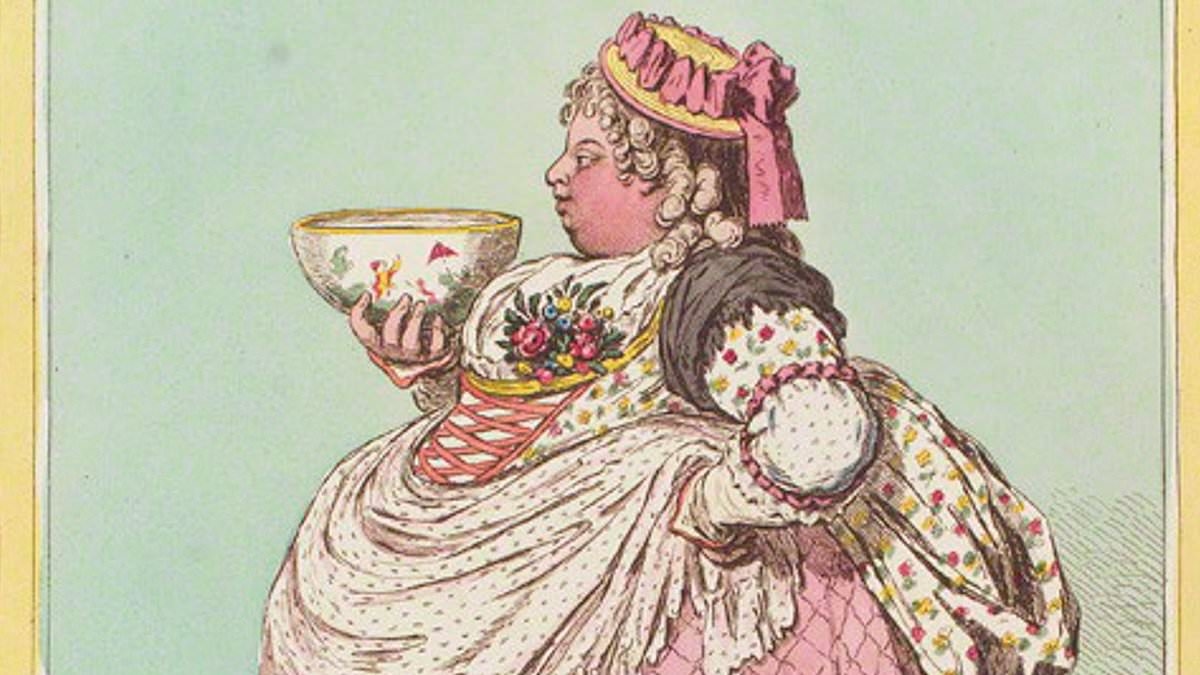
A Brighton Breakfast 1802
And when it came to labour itself, if you didn’t make much noise it suggested that your baby was illegitimate. Nice girls screamed the house down.
There were, though, some upsides to being female in the pre-industrial age. A slender figure was on no one’s wishlist: it suggested sickness, malnutrition and old age. Being nicely rounded was the thing to aim for.
In early 17th-century Venice, a bride would be fattened up with sweets so that she arrived at the altar as plump as a partridge.
More than a century later, this time in London, fat had become so fashionable that upper-class ladies resorted to padding. False hips and bottoms made of cork became all the rage. In 1793, there was even a short-lived fad for sticky-out stomachs which required buying a special roll, stuffing it under your dress, and making ‘fullness into high fashion’.
Alternatively, you could just eat yourself silly.
Nuns, surprisingly, turn out to be the greatest gourmands. Sister Maria Vittoria Verde, from 16th-century Perugia, kept a cookbook with 170 recipes recording the expensive daily dishes she made her sisters at the convent: tiny roasted pigeons, sugary pies, intricate salads of eggs and vinegar and parsley.
Presence is available now from the Mail Bookshop
Sister Maria had clearly not heard about the Church’s consistent warning against gluttony. Or perhaps – and this is the most thrilling thought of all – she simply didn’t care.
In this interesting book, Erin Maglaque covers much more than women’s earthly appetites in the early modern period.
You will find excellent chapters on subjects including breastfeeding in which Maglaque reveals that male doctors were relatively relaxed about the fact that many women ‘feel a pleasurable titillation’ when suckling their children, even to the point of orgasm.
Then there’s a section on sleep which reveals that it was common to divide the night into two shifts. The first sleep lasted from 9pm until midnight. Then it was time to wake up, say your prayers, have a snack and even do domestic chores including brewing beer, before going back to doze until dawn.
What is so original about Presence is the way that Maglaque, a university historian, weaves in her own candid experiences of pregnancy, birth, abortion, desire and insomnia as a way of getting closer to the lives of women who lived 400 years ago.
Usually, this blending of personal memoir and academic research misfires badly.
But Maglaque demonstrates how, in the right hands, the distant past can be split open to reveal ways of living that are both thrillingly familiar and utterly strange.

Daily Mail