Jonathan Swift's 22-point critique...of his friend's servant
By NEIL ARMSTRONG
Published: | Updated:
Gulliver’s Travels author Jonathan Swift was not everyone’s idea of a wonderful house guest. The Irish writer and satirist had exacting standards and insisted on things being just so, even in someone else’s home. Once, when at the house of a friend, he listed 22 errors the servant had made when serving dinner. He would sometimes set his host’s garden staff to work on projects of his own conception.
Alexander Pope's Villa in Twickenham
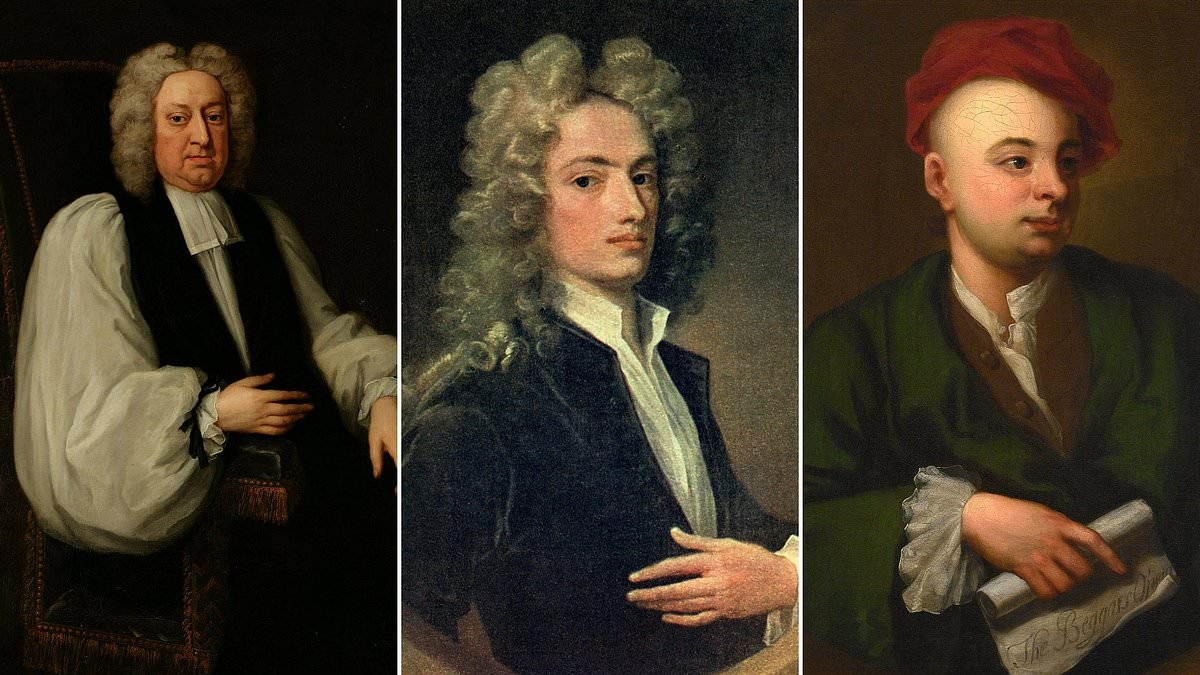
But he had a circle of devotees more than happy to tolerate his pernickety ways in order to enjoy his company. This fascinating book, a mix of social history, biography and literary criticism, loosely revolves around the summer of 1726, which Swift spent at the home of his great friend Alexander Pope, along with their other chum, John Gay.
Poet and satirist Pope had made enough money from his translations of The Iliad and The Odyssey to build a riverside villa in Twickenham (‘Twitnam’ to the three friends). Gay, a playwright and a satirist, was a good-natured wit who was usually broke and happy to spend months living off someone else’s shilling.
The Twitnam Summer is available now from the Mail bookshop
Hester Grant believes that this period ‘is remarkable in the history of English literature because of the three great works of satire that are associated with it, Pope’s The Dunciad, Gay’s The Beggar’s Opera and Gulliver’s Travels itself’.
The words ‘associated with’ are doing some heavy lifting here. Swift had arrived in England after more than a decade away with his famous novel already completed. Pope’s Dunciad, meanwhile, was not published until 1728, the same year in which The Beggar’s Opera premiered.
Grant contends that the intensity of the reunion, and the stimulation provided by Swift, spurred Pope and Gay on to their greatest achievements. I’m not convinced she entirely makes her case but it doesn’t matter because, while presenting it, she takes us on all manner of fascinating diversions and excursions.
She writes evocatively about the filth of Georgian London, where a shower would cause the street gutters to overflow, ‘spewing the sweepings of butchers’ stalls ... dead cats ... all drenched in mud, into the roadway’. Best of all is her account of the deep friendship between the three writers. I was delighted to spend the summer with them in ‘Twitnam’.

Daily Mail