How to be a real influencer...Victorian style!
By YSENDA MAXTONE GRAHAM
Published: | Updated:
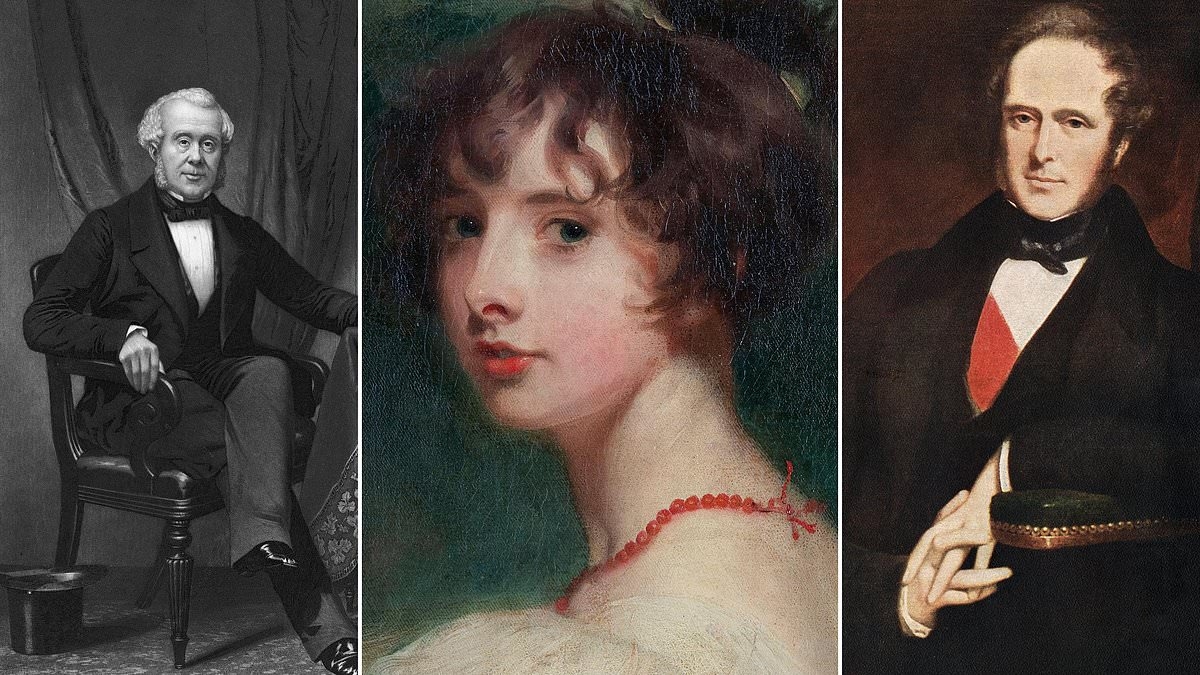
Authors Jehanne and Katie Wake are not afraid to make big claims for the heroine of their book. Emily, they maintain, was ‘besides Queen Victoria, the most influential woman of her age’. Bigger than Florence Nightingale? Better than Emmeline Pankhurst? Yes, say the Wakes, a mother and daughter team of historians. It is their bold contention that Emily was the most connected ‘politician’ of Regency and Victorian England. Of course, she could not hold office or make a speech in Parliament, but thanks to her stringent string-pulling and backroom scheming, Emily ensured that her brother and husband were prime ministers of Great Britain for a combined stretch of 15 years.
William Lamb second Viscount Melbourne
Emily had been born in 1787 into the Whig aristocracy, the group of landed families that combined great wealth with liberal, progressive politics. Her mother, Lady Melbourne, was one of the greatest networkers of the age, not afraid to use sex to form alliances with powerful men. In fact, Emily’s father was not Lord Melbourne at all but the altogether wealthier Lord Egremont, master of the magnificent Petworth House. And for several years the Prince Regent was so ‘desperately in love’ with Lady Melbourne that he had been given his own room in the Lambs’ family home, Brocket Hall. The result was a royal half-brother for Emily called George.
Pretty, witty Emily started out magnificently, attracting everyone’s attention as a debutante and receiving a kiss from Queen Charlotte (Bridgerton fans will spot all the beats). Newly married to the decent but dull Lord Cowper, she lost no time compensating by following her mother’s example and becoming a great political hostess, overseeing an ever-changing programme of balls, dances and shooting parties. Above all, she acted as a social gatekeeper, deciding who was ‘in’ and who was cast into outer darkness.
One of Emily’s first big projects was to revive the Almack Assembly Rooms as the meeting place for the creme de la creme. As an enticement, she encouraged guests to dance the new-fangled waltz, which shocked old-timers with ‘the indecency of moving thigh to thigh’ (previously everyone had jigged opposite each other, Jane Austen style). Unsurprisingly, the fight for tickets was ferocious, with only six in 300 gentlemen permitted entry. Even the Duke of Wellington, the great hero of Waterloo, was refused entrance on account of wearing trousers rather than evening breeches.
Since there was no chance of getting her sulky husband Lord Cowper into office, Emily concentrated all her energy on her brother William. But he was not a promising candidate either, having recently endured a scandalous marital breakdown. His wife Lady Caroline had embarked on a wild affair with Lord Byron, whom she famously described as ‘mad, bad and dangerous to know’. Things reached a crisis in 1812 when Caroline dressed up as a page in an attempt to gain entry to her poet-lover’s rooms (by now he was desperate to avoid her). With William forced to separate legally from Caroline, it seemed unlikely that he would ever find his way back into public life.
But Emily was determined to reverse her elder brother’s losing streak. She stepped in to become William’s hostess, adviser, strategist and intelligence gatherer. She ran political conferences for him out of her marital country home, Panshanger, and schmoozed his Tory opponents in London. Her aim was to sort out factional disputes with a quiet word and a winning smile before they reached the newspapers or burst out in bad-tempered debates in the Houses of Parliament.
The plan worked. In 1834 William, now Lord Melbourne, became prime minister and would soon be guiding teenage Queen Victoria in the first tumultuous years of her reign.
Meanwhile, Emily, now a widow, married her long-term lover, Harry Palmerston, who also happened to be the foreign secretary. At a stroke her sphere of influence doubled. You would find diplomats and even royalty from all around the world at her conferences and salons.
The Countess is available now from the Mail Bookshop
It wasn’t all plain-sailing. Hot-headed Lord Palmerston had a reputation for ‘gunboat diplomacy’– sending armed vessels into political hotspots, making things ten times worse. Prince Albert particularly disliked this side of ‘Pam’s’ character, convinced that the foreign secretary would end up starting a world war accidentally. In the end, Albert decided to dredge up an old scandal from the first months of Victoria’s reign, when Palmerston had broken into the bedroom of a lady-in-waiting and attempted to rape her. The news did not come as a surprise. Palmerston had a long track record of coercive sexual behaviour: his nickname of ‘Lord Cupid’ hardly did justice to the undertow of violence in his behaviour towards women.
Did Emily know about her husband’s dark side? Almost certainly yes. Despite being his mistress for more than 30 years, and even giving birth to at least one child by him, she had still hesitated about marrying him, knowing perfectly well about his roving eye. But Emily was a creature of the Regency rather than the new Victorian age. Men behaved badly and women did their best to ignore them or, at least, protect themselves. The crisis of the attempted rape passed. Palmerston offered an apology to the lady-in-waiting’s husband (rather than to the lady-in-waiting, you can’t help notice) and lived to fight another day. At the advanced age of 70, he finally became prime minister and died in office ten years later. And it was all because of Emily, smoothing the path and calming the waters.
The story of Lord Palmerston’s sexual violence, together with the other set pieces in this story – the Napoleonic War, the Great Reform Bill, the Abolition of Slavery, the beginning of Divorce Reform – have been told by historians before. But what has not yet been appreciated is the part that Emily Lamb played in the story of how Britain kick-started its journey towards modernity. The Wakes have cleverly spotted that Emily’s story needed to be told, and proceed to do so with empathy and at a cracking pace.

Daily Mail