

Iran charging fees in the Strait of Hormuz would open the door to ‘total chaos’: Rubio
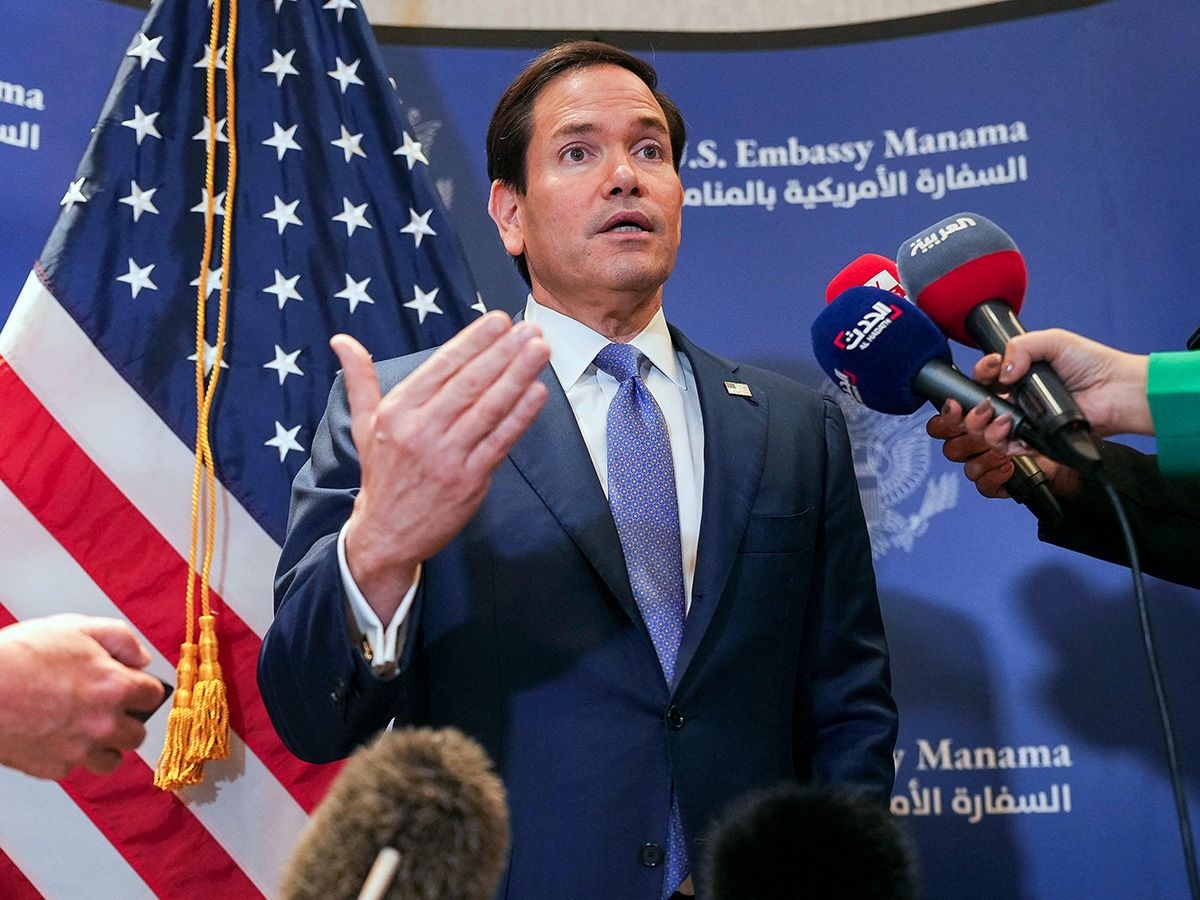
MANAMA, Bahrain — Top U.S. diplomat Marco Rubio said Thursday that there were limits to what Washington would accept in any deal with Iran, warning that permitting Tehran to charge fees in the Strait of Hormuz would open the door to “total chaos”.
Enjoy the latest local, national and international news.
- Exclusive articles by Conrad Black, Barbara Kay and others. Plus, special edition NP Platformed and First Reading newsletters and virtual events.
- Unlimited online access to National Post.
- National Post ePaper, an electronic replica of the print edition to view on any device, share and comment on.
- Daily puzzles including the New York Times Crossword.
- Support local journalism.
Enjoy the latest local, national and international news.
- Exclusive articles by Conrad Black, Barbara Kay and others. Plus, special edition NP Platformed and First Reading newsletters and virtual events.
- Unlimited online access to National Post.
- National Post ePaper, an electronic replica of the print edition to view on any device, share and comment on.
- Daily puzzles including the New York Times Crossword.
- Support local journalism.
Create an account or sign in to continue with your reading experience.
- Access articles from across Canada with one account.
- Share your thoughts and join the conversation in the comments.
- Enjoy additional articles per month.
- Get email updates from your favourite authors.
Create an account or sign in to continue with your reading experience.
- Access articles from across Canada with one account
- Share your thoughts and join the conversation in the comments
- Enjoy additional articles per month
- Get email updates from your favourite authors
Rubio was in Bahrain as part of a regional tour to reassure Gulf partners hit hard by Iran during the Middle East war, which began on February 28 with a massive U.S.-Israeli campaign of strikes against the Islamic republic.
The United States and Iran have signed a preliminary deal to end the conflict, embarking on negotiations expected to touch on thorny issues including Tehran’s nuclear programme, sanctions relief and global energy flows through the Hormuz.
Columnist Jesse Kline keeps you up to date with what’s happening in Israel and the effects of antisemitism on life here in Canada. Friday mornings.
By signing up you consent to receive the above newsletter from Postmedia Network Inc.
We encountered an issue signing you up. Please try again
But the Gulf and Israel also have longstanding concerns about Iran’s support for proxies in the region and its missile program, and it remains unclear whether those topics will be addressed in the talks.
After meeting with Rubio on Thursday, foreign ministers from the Gulf Cooperation Council emphasized that “lasting regional peace and security requires addressing the full spectrum of Iran’s threats, including its ballistic missiles, drones and support of proxies”.
Earlier, Rubio had acknowledged that while the U.S. wants “a deal, we don’t want a deal at any price”.
“We want to ensure… that there is no part of this deal that’s undertaken that in any way undermines the security, the stability or the prosperity of any of our partners in the Gulf region,” he added.
Rubio also sought to reassure the energy-rich Gulf states that the Hormuz strait, which they have relied on for decades to export oil and liquefied natural gas, would remain toll-free.
Iran imposed a blockade of the strait during the war, sparking a global economic shock, and has since said it plans to introduce what it terms maritime service fees, with the Revolutionary Guards on Thursday warning that any unauthorized crossings would be “dealt with”.
The U.S. and its allies have flatly rejected the introduction of fees or tolls, with Rubio reiterating Washington’s position that Hormuz should be considered an international waterway and therefore not subject to charges.
“International waterways do not belong to any nation state. This is a foundational principle in the world today, without which the world would be in total chaos,” he said.
The Gulf ministers, in their joint statement, also insisted that “free, unconditional and unrestricted navigation” of the strait was essential to the region.
Hormuz is a narrow stretch of water between Iran and Oman that leads to the Arabian Sea and the Indian Ocean, making it a chokepoint for crucial energy shipments out of the Gulf.
At Thursday’s Gulf meeting with Rubio, Oman’s top diplomat Badr Albusaidi said plans for Hormuz “do not entail the imposition of any transit fees” — despite his government and Iran saying Tuesday that they were studying costs to be charged for services provided in the strait.

National Post


