
Eid al-Adha 2026 LIVE: When will Dhul Hijjah start as Saudi court issues moonsighting call
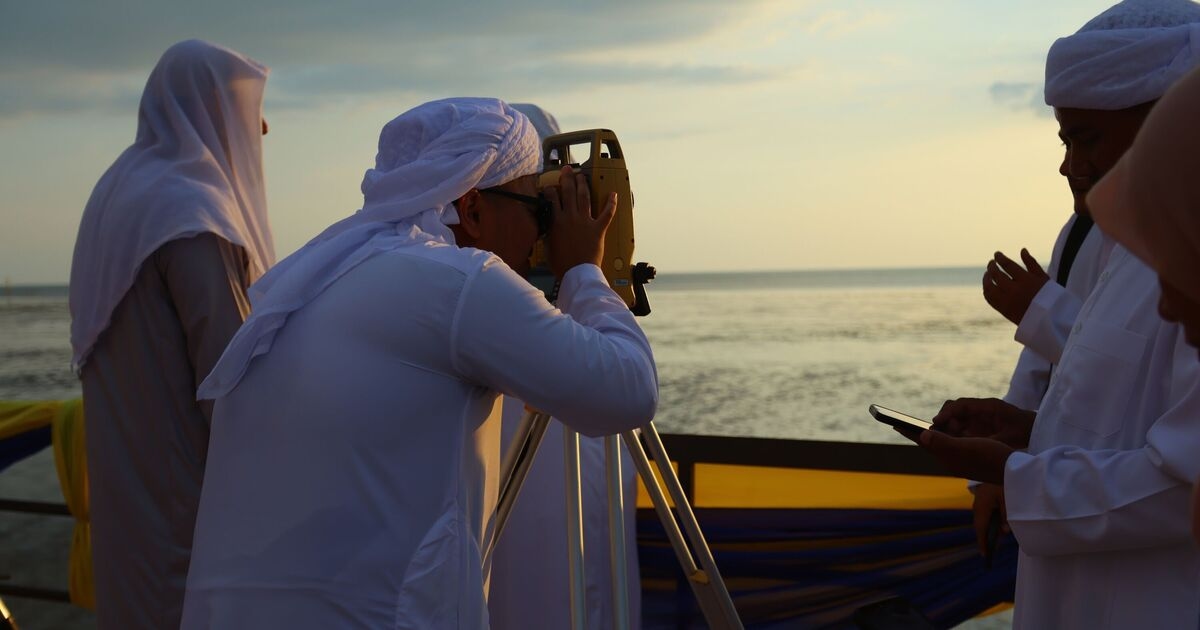
If the crescent moon is not sighted this evening, Islamic authorities may decide to complete another full day of the lunar month before Eid begins. This process is followed in many countries and is part of the traditional method used to determine important Islamic dates. Official announcements are expected once observations have concluded.
Eid Al-Adha is determined by the Islamic lunar calendar, meaning the date depends on the sighting of the crescent moon. Some countries rely on local moon sightings while others follow announcements from Saudi Arabia or regional Islamic authorities. Because of this, Muslims in different parts of the world can occasionally celebrate Eid on different days.
Saudi Arabia’s Supreme Court has called upon Muslims across the Kingdom to sight the Dhu Al-Hijjah crescent moon on the evening of Sunday, May 17.
It is currently approaching 2am there so we have some time to go.
"Eid on the Square celebrates London's diverse Muslim communities, with involvement and attendance from wider Muslim communities from London and abroad; Turkish, Middle Eastern, Palestinians, Malaysians, Indonesians, North Africa and South Asian communities, and non-Muslims alike," the Mayor of London website reads.
"This is an opportunity for attendees to connect directly with thousands of Londoners from the Muslim community, as well as bring different communities together in a celebration on Trafalgar Square."

The flagship London event, Eid on the Square, will take place at Trafalgar Square.
This free event will take place on Saturday, May 30, from 12pm to 6pm, celebrating 20 years of Eid being hosted at this iconic central London venue.

The festival takes place at the end of the annual Hajj pilgrimage to the holy city of Mecca and is marked by prayers, charitable giving, and family gatherings.
Although the main celebration takes place on the first day, Eid al-Adha is marked over three to four days, with continued visits, shared meals, and acts of charity throughout.
In the UK and many other countries it is expected to commence in the evening of Tuesday May 26 or Wednesday May 27, with the first full day of celebration on May 27.
Turkey is boosting its railway capacity to handle a surge in passengers during the upcoming Eid al-Adha holiday period.
The country is increasing its capacity by 18,664 seats.
Transport and Infrastructure Minister Abdulkadir Uraloğlu said: "We will provide a total capacity increase of 18,664 seats by introducing additional YHT services and adding extra wagons to mainline and regional trains during the Eid al-Adha holiday."
The minister added that passenger capacity on high-speed (YHT), mainline, and regional services run by the Turkish State Railways (TCDD) will be increased to handle the extra demand from travelers.

Eid al-Adha is one of the most important festivals in the Islamic calendar and is celebrated by Muslims around the world.
The day usually begins with special Eid prayers held in mosques and large outdoor gatherings. Families and friends then come together to share meals and celebrate.
Many Muslims also give to charity and take part in Qurbani - the ritual sacrifice of an animal such as a sheep, goat or cow.
The meat is often divided between family members, neighbours and people in need.
Eid al-Adha takes place during the Islamic month of Dhul Hijjah and coincides with the annual Hajj pilgrimage in Mecca.

Astronomers expect the Dhul Hijjah crescent moon could be visible after sunset on May 17, with Saudi Arabia set to carry out the official moon sighting observation on Sunday evening.
If the crescent moon is officially confirmed, the following dates are expected:
-May 18 — First day of Dhul Hijjah
-May 26 — Day of Arafah
-May 27 — Eid al-Adha begins
If the moon is not sighted, the current Islamic month of Dhu al-Qadah will complete 30 days, meaning Eid al-Adha could instead begin on May 28.
Muslim communities in the UK, UAE, Saudi Arabia, India and Pakistan are expected to closely follow the official announcement.
The Supreme Court of Saudi Arabia has called on citizens and residents across the Kingdom to look for the crescent moon marking the start of Dhul Hijjah on the evening of Sunday, May 17.
The sighting of the crescent moon will determine the beginning of Dhul Hijjah 1447 AH - the final month of the Islamic calendar - as well as the dates for Day of Arafah, Hajj and Eid al-Adha 2026.
Observers are expected to monitor the skies shortly after sunset, with several astronomical observatories across Saudi Arabia taking part in the official sighting process.
If the moon is officially sighted, Dhul Hijjah is expected to begin on May 18, with Eid al-Adha likely falling on May 27.
Saudi Arabia’s announcement is closely followed by Muslim communities around the world, including in the UK, UAE, India and Pakistan.

The first 10 days of Dhul Hijjah are considered among the holiest periods in the Islamic calendar.
Muslims believe the days are especially significant because all major acts of worship in Islam take place during the same period.
These include prayer, fasting, charity and the annual Hajj pilgrimage in Mecca.
Many Muslims also spend the days increasing worship, reflection and charitable giving ahead of Eid al-Adha celebrations.
The start of Dhul Hijjah is expected to be determined following the official crescent moon sighting in Saudi Arabia on May 17.
The director of the Astronomical Observatory at Majmaah University has said there are currently no expected obstacles to prevent the sighting of the Dhul Hijjah crescent moon.
Abdullah Al Khudairi made the comments ahead of the official moon sighting observation expected to take place in Saudi Arabia on May 17.
Le c\u00e9l\u00e8bre astronome saoudien Abdullah Al-Khudairi :
\u00ab Nous nous attendons \u00e0 qu'aucun obstacle majeur n'emp\u00eachera l'observation du croissant lunaire de Dhull Hijjah demain. \u00c0 voir ce dimanche sur place .. \u00bb pic.twitter.com/BOBBwXofYB
— SaudiNews FR \u272a (@SaudiNewsFR) May 16, 2026
Saudi Arabia is expected to announce the official Dhul Hijjah moon sighting on the evening of May 17.
The Saudi Supreme Court has asked Muslims across the Kingdom to look for the crescent moon after sunset, as its appearance will determine the start of Dhul Hijjah and the date of Eid al-Adha 2026.
Astronomers believe the crescent could be visible in parts of the Middle East on Sunday evening, with observatories including Sudair, Tumair and Majmaah expected to monitor the skies closely.
If the moon is officially sighted, Dhul Hijjah is expected to begin on May 18, with Day of Arafah likely falling on May 26 and Eid al-Adha beginning on May 27.
If the crescent is not seen, the current Islamic month will complete 30 days, meaning Eid could instead begin on May 28.

Dhul Hijjah is the 12th and final month of the Islamic calendar and is considered one of the holiest periods in Islam.
The month includes the annual Hajj pilgrimage in Mecca, the Day of Arafah and Eid al-Adha - one of the biggest festivals in the Islamic calendar.
The start of Dhul Hijjah is determined by the sighting of a new crescent moon, which is why Muslims around the world closely follow official moon sighting announcements each year.
Saudi Arabia’s Supreme Court has called on Muslims across the Kingdom to look for the crescent moon on May 17, with astronomers predicting it could be visible after sunset.
If the moon is officially sighted, Dhul Hijjah is expected to begin on May 18, placing Day of Arafah on May 26 and Eid al-Adha on May 27.
Some Muslim communities follow Saudi Arabia’s announcement, while others rely on local moon sightings, meaning Eid dates can sometimes differ between countries.
Welcome to our live blog. We'll bring you the latest on the moon sighting and Eid al-Adha announcement this weekend.

Daily Express