

Which cities are the safest to live in? BGK presents a report
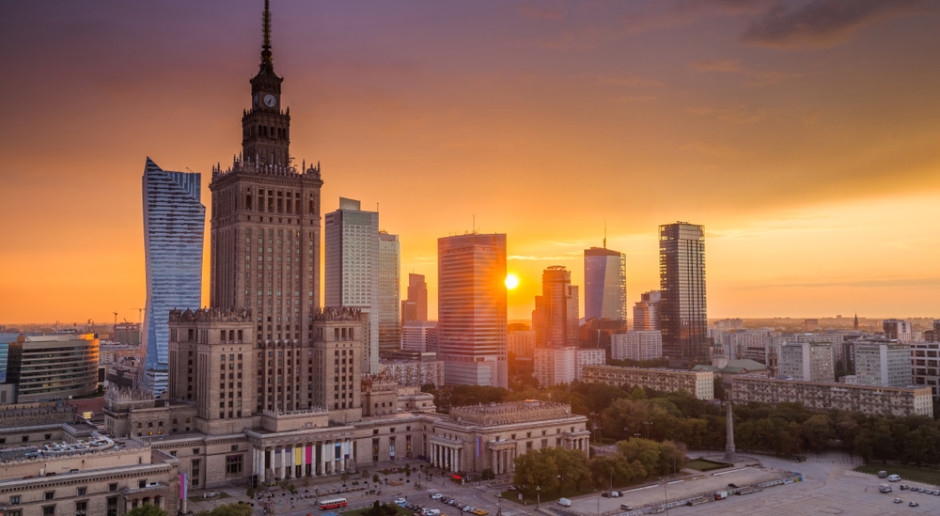
- Bank Gospodarstwa Krajowego has prepared an annual report indicating which Polish cities are most vulnerable to threats.
- "Over 1 million people live in towns that are above average in resilience and less at risk than average. This 1 million population is theoretically the safest in Poland," says Mateusz Walewski, Chief Economist and Director of the Research and Analysis Department at Bank Gospodarstwa Krajowego.
- The report on the resilience of Polish municipalities and cities to threats was first presented during the 18th National BGK Congress for Local Government Units. Since then, the report tool has been updated in October 2025. It provides insight into the threats our local governments face.
The National Economy Bank (BGK) has prepared an annual report identifying cities most vulnerable to threats . The report provides information on four types of threats: natural, health, humanitarian, and military.
As indicated in the document, there are 107 local governments in Poland that have achieved above-average levels of resilience to all four threats . These are mainly small units scattered across the country, the largest of which is Nowy Sącz.
The local governments that have achieved an above-average level of resistance to all four threats at once are home to 15.7 million people from the Masovian, Greater Poland and Silesian Voivodeships, but also from the eastern part of the country.
Over 15 million Poles live in local governments that are above average in all four aspects (natural, health, humanitarian, military). This is quite a lot. Over 1 million people live in localities that are above average in all these aspects and less at risk than average in all of them. This 1 million people is theoretically the safest in Poland. In turn, only 300,000 people live in municipalities that are at higher risk than the national average in all four aspects, yet are also less resilient.
- explains Mateusz Walewski, chief economist, director of the Research and Analysis Department of Bank Gospodarstwa Krajowego.
The majority of urban populations live in cities that we consider relatively resilient. Fifty-four percent of residents of cities with county rights live in areas that we consider relatively at risk and resistant to military threats (including Warsaw, Gdańsk, Poznań, Kraków, Wrocław, Krosno, Jaworzno, Ostrołęka – editor's note). This is due to the location of strategic facilities.
- emphasizes director Mateusz Walewski.
He adds that in the case of a military threat, the risk decreases with increasing distance from the Ukrainian border. However, the location of strategic facilities also plays a role. "The Russians mainly bomb large cities and infrastructure facilities," he emphasizes.
As he sums up, the report presents the Polish reality quite optimistically .
Local governments can check what threats their local governments are susceptible toLocal government officials and residents who want to understand local risks can review the report's appendix, which identifies specific risks for all local governments in Poland . The National Economy Bank's report on the resilience of Polish municipalities and cities includes a tool that allows local government officials and residents to check the threats facing their local governments. The tool is available at this link . Knowing the risks they face can help them prepare for their occurrence.
After entering the type of local government (rural, urban, urban-rural, district or voivodeship) and the name of the local government, as well as the selected type of threat (including natural, health, humanitarian, military) , the risks faced by this specific local government will be displayed .
Since the first presentation of the report on the resilience of Polish municipalities and cities to threats during the 18th National BGK Congress for Local Government Units in June 2025, the report tool available at this link was updated in October 2025.
What is local government resilience to threats?We define local government resilience as the level of preparedness for a crisis, the ability to respond to it, and the ability to recover in the post-crisis period . The report indicates that this understanding of resilience is considered in relation to four specific threats that Polish local governments have recently faced and which remain relevant today:
- natural disasters (e.g. floods, heatwaves, droughts),
- health disasters (various types of epidemics),
- humanitarian disasters (primarily uncontrolled influx of people from third countries),
- military threats (not only full-scale war, but also various types of hybrid operations, information warfare and cyberattacks).
Not every local government is equally exposed to a given threat.
To analyze threat levels, the focus was on metrics such as:- Activities of fire protection units (interventions),
- Risk of drought and floods,
- Emission of air pollutants,
- Participation of people with non-Polish citizenship,
- Economic attractiveness of local government,
- Distance from the eastern border,
- Possession of critical infrastructure,
- Strategic importance.

portalsamorzadowy
