Zucman vs. Arnault: French Politics Clash Over Taxes
The young economist's proposal
The young economist has proposed a 2% wealth tax, infuriating the right and the billionaire in luxury fashion.
A young French economist exults: " Finally, in Paris, I hear people talking about taxes and not Islam! For months now, we've no longer heard discussions solely about how to address the issue of radical Islam, but people are arguing about how and who to make them pay taxes. A miracle, you Italians, you might say."
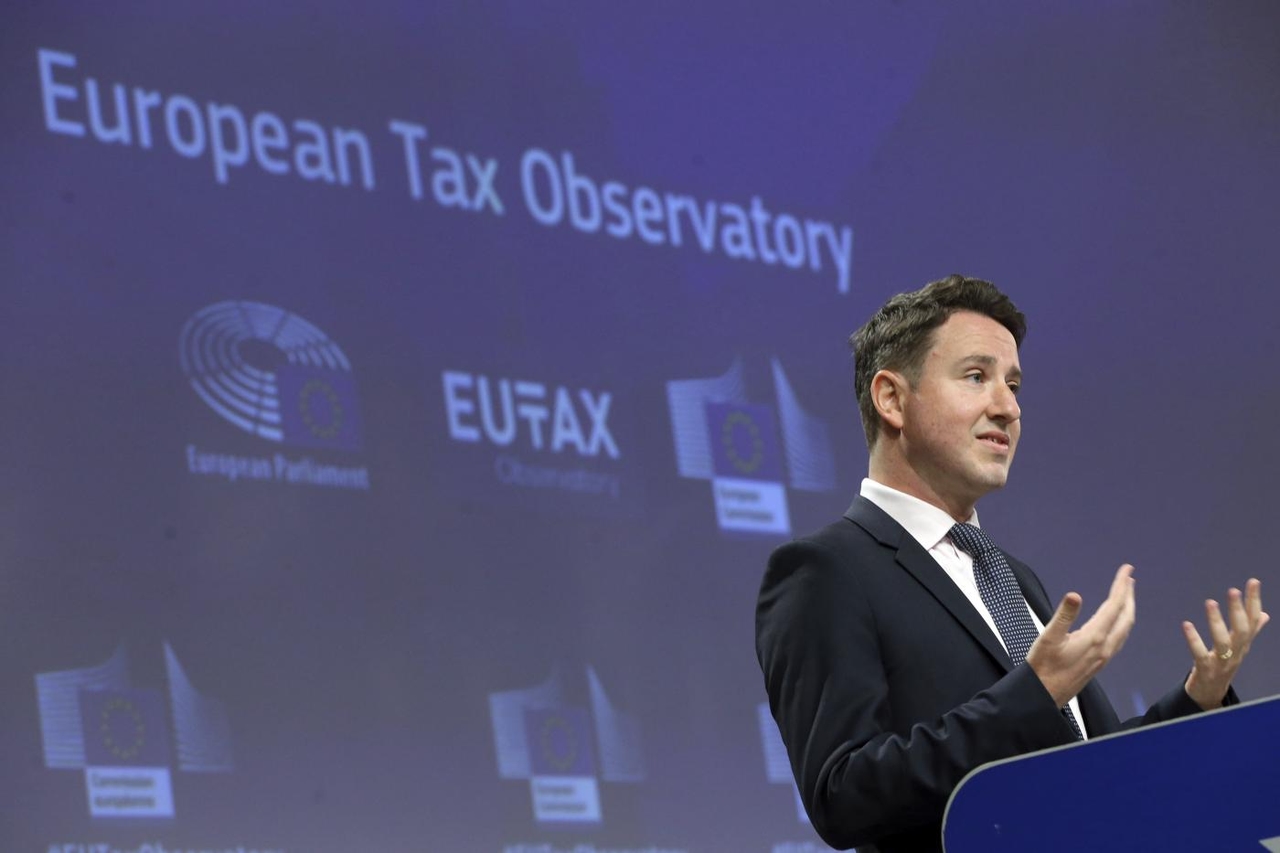
It's true that the evidence of the ever-widening gap between rich and poor is the central theme of political debate in France. The issue of growing economic and social inequality is the battleground on which political parties compete for public support. Since last December, the French political crisis, triggered by the decline of Macronism, has revolved around the need to raise at least €40 billion needed to patch the French public debt. Anyone wishing to make a decision at the future French political table cannot therefore avoid the question: who should pay these €40 billion? "The super-rich," proposed Gabriel Zucman, a 38-year-old economist (a student of Thomas Piketty ), who calls for a 2% extraordinary tax on those with assets exceeding €100 million: that's 1,800 taxpayers in total.
The proposal has infuriated one of those 1,800 owners of assets exceeding €100 million , Bernard Arnault, a luxury goods entrepreneur who, with his LVMH, the largest French company, controls nearly two-thirds of the global luxury fashion market. He considers Zucman's tax proposal unacceptable because, he says, " As a far-left activist, he puts his pseudo-expertise at the service of an ideology that aims to destroy the liberal economy, the only one capable of functioning ." Not exactly an opening for discussion, then. Now that the Socialists, in order to agree to throw a lifeline to the survival plans of Macron's right wing—through the government of President Macron's staunch supporter , Sébastien Lecornu —have said they will be content to postpone raising the retirement age, without immediately demanding the Zucman tax, the emergency has been postponed. But it's a matter of weeks. That money has to come from somewhere.
And Raphael Glucksman, founder of the Place Publique movement (a soft alternative to Mélenchon 's France Insoumise), takes flight. He has long claimed to have succeeded in placing tax justice at the center of public debate, forcing everyone to take a stand: "Is Lecornu opposed to the Zucman tax? We're not obsessed with the name; we can consider other solutions that go in the same direction, that is, responding to the indignation of the French and forcing billionaires to participate in the tax effort. But I raise the question of how to strengthen our Western democracies in the face of the advance of the far right, and the key factor is employment. In France, the working classes vote en masse for the Rassemblement National. Then pensioners and students mobilize and manage to halt the advance with the success of the various republican fronts, but that's the situation. We won't be able to stop the populist wave if we don't listen to the frustration of workers and put them at the heart of the social contract."
For now, Sébastien Lecornu has escaped. On October 16, he survived motions of no confidence passed by the National Assembly, but he owes his bailout to the Socialists . This help isn't free, it's not very reliable in the long term, but it's not even reliable in the short term, given the era of seaside governments that began with Macron's Elysée. Neither vote reached the 289 "yes " votes needed to bring down Lecornu, but Mélenchon 's motion came closer than expected. It garnered 271 votes in favor, while that of Marine Le Pen 's far-right Rassemblement National (RN), remained at 144. The RN supported France Insoumise's motion, but the left did not vote for the Le Penists' one. Lecornu sits in Palazzo Mantignon with a noose around his neck.


l'Unità