Career and mental health issues: a delicate balance

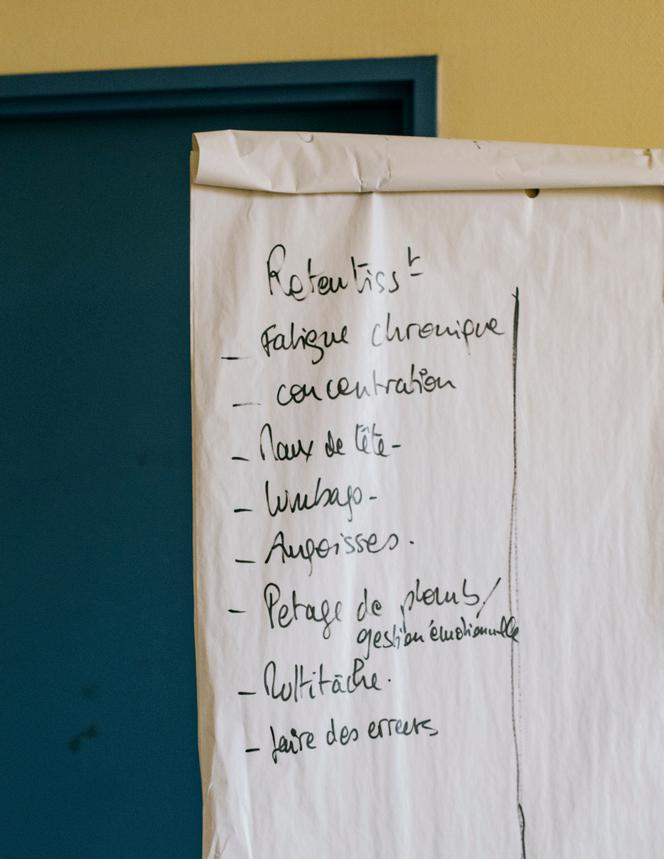
“ Working and living with mental health conditions is possible with the right support! ” declares Florian Aubry, 33. Suffering from stabilized schizophrenia with associated mood disorders, he followed a customized program for four years at the Crisalid-Hauts-de-France (HDF) center, dedicated to psychosocial rehabilitation and cognitive remediation, located within the Isarian Hospital Center in Clermont-de-l'Oise (Oise). It was at this same hospital that Florian landed his current position as a peer health mediator .
Currently pursuing a bachelor's degree in health and social sciences at Sorbonne-Paris Nord University, Florian Aubry has come a long way. At 21, he discovered his grandfather had committed suicide at home. Traumatized, the young man spiraled into depression, cannabis, and alcohol, eventually isolating himself from his family and enduring the onslaught of his now-pronounced psychotic state alone, until his involuntary hospitalization at 28. " But even at the darkest point of the crisis, I wanted to get through it and find a job , " confides the young man who completed a master's degree in chemistry during this period.
Her therapist referred her to the Crisalid-HDF center, directed by Marie-Cécile Bralet. The psychiatrist explains: " Developed gradually from the 1970s onwards in the English-speaking world, psychosocial rehabilitation and cognitive remediation are now recognized as a cornerstone of recovery for individuals affected by mental health disorders within an integrated therapeutic approach."
This method combines a range of tools selected according to the individual's needs: cognitive remediation, social skills development, therapeutic education, motivational support, cognitive and emotional behavioral therapies, caregiver support, and guidance towards the world of work. " But we provide support towards mainstream employment, not in sheltered workshops or adapted companies, as is often the case," the psychiatrist clarifies.
Relearning social interactionsFlorian Aubry followed a customized program to strengthen his memory, attention, and emotional recognition, relearn social interactions, understand his illness, and regain his self-confidence. Over the months, he participated in games, computer exercises, group workshops, sophrology sessions, and discussions with a peer health mediator. It was through these conversations that he discovered his current profession. " Without this program, I wouldn't have made it; my brain was fried," says the thirty-something. Other participants from Crisalid-HDF (the center rejects the word "patient," which it considers too passive) have become employment counselors at France Travail, school life assistants, security guards, administrative assistants, IT developers, or have returned to work as self-employed individuals.
Crisalid-HDF is one of the 135 psychosocial rehabilitation centers that have opened within hospitals in France over the past fifteen years and support tens of thousands of people annually. Since the directive from the Directorate General for Healthcare Provision on January 16, 2019, " psychosocial rehabilitation must be deployed throughout the country to be accessible to all citizens," explains Marie-Cécile Bralet .
Around thirty support centers (also called referral centers), such as Crisalid-HDF, guide institutions applying for these transformations and are affiliated with the national resource center for psychosocial rehabilitation (CRR), created in 2015 by Nicolas Franck, head of the left bank center psychosocial rehabilitation unit at Le Vinatier Hospital in Lyon. The psychiatrist notes: “ Numerous studies and meta-analyses attest to the positive impact of psychosocial rehabilitation, particularly for returning to work. The rate of integration into mainstream employment with supported employment programs is at least twice as high as that obtained through traditional reintegration support practices,” according to a 2012 study by researchers Robert Drake, Gary Bond, and Deborah Becker from the University of Oxford (UK) .
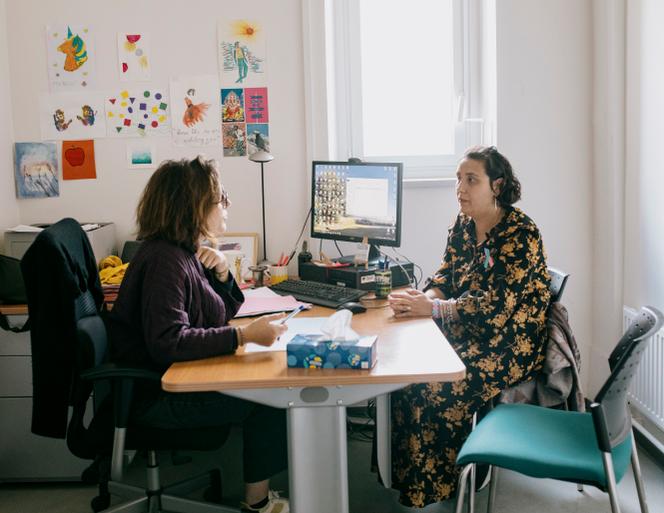
Suffering from post-traumatic stress disorder, burnout, and a crushed cervical vertebra following a road accident caused by someone running a red light, 37-year-old Marisa Da Silva, then a union representative's assistant, was unable to work for a year and a half after being dismissed for incapacity. " Today, I'm living again , " says Marisa, who landed a position as a receptionist apprentice at the Combaillaux town hall (Hérault) in February .
After several months of support from one of the five job coaches from the medical or professional integration fields at the Montpellier University Hospital's Professional Rehabilitation Platform (PRP), she observes: "I regained my self-confidence and discovered my interest in administrative work." During their weekly meetings in cafés (rather than at the hospital, to help her reintegrate into daily life), Marisa developed an action plan and set her own deadlines. Resumes, cover letters, interviews… when her job coach mentions the job posting for her current position, she's ready to apply.
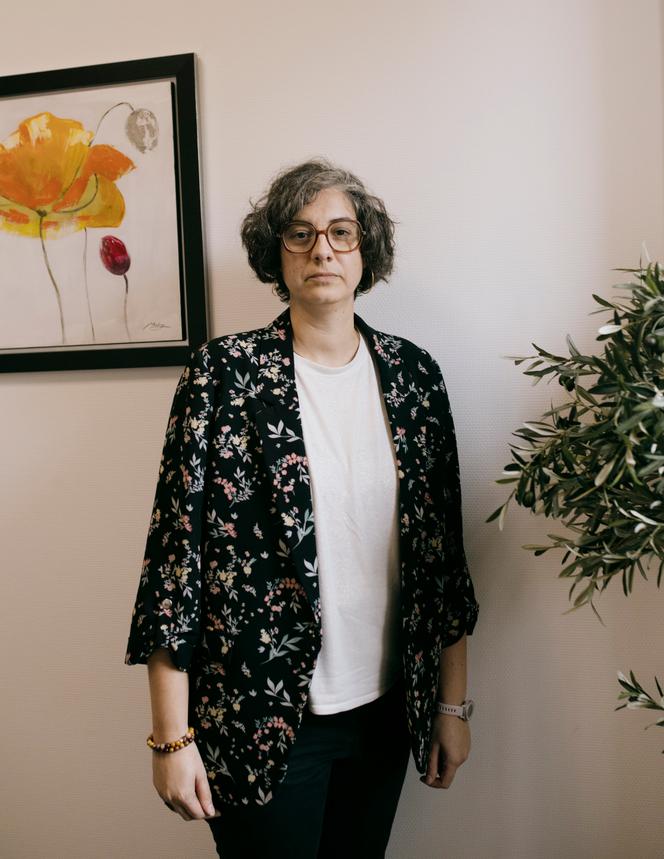
A militant struggleHaving suffered from psychotic and anxiety-depressive disorders that began in adulthood, and hospitalized involuntarily for several months, 34-year-old Emilie Arlhac recounts: “I wanted to go back to work, but I was stigmatizing myself. With the PRP (Psychological Rehabilitation Program), I understood that I should only mention my disability status (RQTH ) , gaps in my resume, and my burnout on a case-by-case basis. I learned to highlight my computer skills and my customer service abilities, to talk about my needs for workplace adjustments, and how I function at work.” For the past two years, Emilie Arlhac has been an administrative assistant at the PRP.
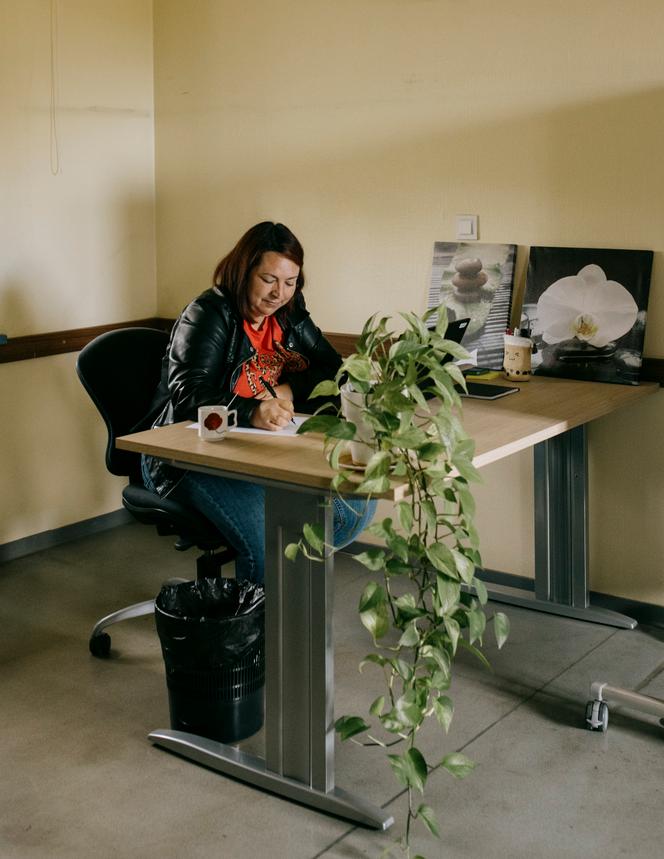
The PRP operates according to the Anglo-Saxon Individual Placement and Support (IPS) model. " The founding principle is to support individuals in their professional reintegration without waiting years for them to recover through treatment and training ," explains Karen Feuillerat, PRP job coach coordinator. "We only offer tools, therapeutic or otherwise, if the individual expresses a difficulty, for example, concentrating during interviews." And if the individual also wants to work on autonomy, social life, or housing, the PRP collaborates with two other structures within the Montpellier University Hospital: the Jean-Minvielle Recovery and Rehabilitation Center (C2R) and the Hauts-de-Massane Recovery and Rehabilitation Center (Reham), which provide broader support for the individual's life plan.
Psychosocial rehabilitation is a matter of "activism ," believes psychiatrist Nicolas Rainteau. "Healthcare professionals must stop associating mental health disorders with incapacity. With the right support, anything is possible." Currently head of the Smart 73 rehabilitation center in Chambéry, this doctor, still in his thirties, speaks from experience. In 2021, he transformed the traditional Jean-Minvielle day hospital for young people at the Montpellier University Hospital into the specialized facility it is today. He shares his experience in the book *Be Rehab: A Practical Guide to Psychosocial Rehabilitation* (Elsevier Masson, 2022).
Psychosocial rehabilitation is "a source of hope, but it needs to be made accessible to more people. This service should not be added on, but should transform what already exists, which primarily implies an evolution of care practices and approaches," he adds. Frank Bellivier, Ministerial Delegate for Mental Health and Psychiatry. For Nicolas Franck, author of the Treatise on Psychosocial Rehabilitation (Elsevier Masson, 2018, reissued January 2026), the road ahead is not straightforward: “ Apart from the implementation of territorial mental health hubs, which have no independent funding, I observe a lack of continuous and stable health policy, and a persistence of the paternalistic model, which I believe is, by tradition, risk-averse: it prefers to protect and confine . We want to take the opposite approach and take the risk of trusting the individual to lead their life as they wish.” Seeing Florian, Marisa, and Emilie thriving professionally, the struggle is worthwhile.
This article was produced for the conference "Mental Health and the Civil Service: Taking Charge of Your Career," organized in partnership with the Fund for the Integration of People with Disabilities in the Civil Service, as part of the European Week for the Employment of People with Disabilities. Free access uponregistration .
As part of the European Disability Employment Week (EDEW), which takes place from November 17 to 23, Le Monde , in partnership with the Fund for the Integration of People with Disabilities in the Public Sector (FIPHFP), is organizing a conference entitled "Mental Health and the Public Sector: Remaining in Control of Your Career." The conference will highlight innovative therapeutic initiatives and share personal accounts from people affected by mental health conditions.
This event will take place on Monday, November 17, from 6 p.m. to 8 p.m., in the auditorium of Groupe Le Monde, 67-69, avenue Pierre-Mendès-France, 75013 Paris. Admission is free, but registration is required on the dedicated platform .
Hosted by Isabelle Hennebelle, a journalist at Le Monde , the evening will be structured around several key moments:
- Introduction by Françoise Descamps-Crosnier, President of the FIPHFP National Committee
- Testimony from Constance, actress and comedian, who will share her journey: a burnout, a stay in a psychiatric hospital and then the diagnosis of bipolar disorder.
- Round table no. 1: “Mental disorders and maintaining employment: an overview of the situation in France”, with Antoine Pelissolo, professor of psychiatry, AP-HP Henri-Mondor university hospitals, and Rodolphe Soulié, head of the hospital HR department, French Hospital Federation.
- Round table no. 2: “Focus on two innovative therapeutic initiatives to reconnect with professional life: ClubHouse and psychosocial rehabilitation”, with Alice Aubineau (director of the ClubHouse of Nantes), the testimony of “Marie” (state engineer, member of the ClubHouse of Nantes, who wishes to remain anonymous), Karen Feuillerat (job coach at the J. Minvielle recovery and rehabilitation center/Professional Rehabilitation Platform – PRP – of the Montpellier University Hospital) and that of Emilie Arlhac (administrative assistant, former patient of the PRP).
- Round table no. 3: “Employment and mental health: what measures should be put in place to streamline career paths?”, with some of the previous speakers.
- Conclusion by Marine Neuville, director of FIPHFP.

lemonde