Will an EU ruling necessitate changes to the German minimum wage system? Representatives of employees and employers, as well as politicians, are watching Luxembourg with bated breath this Tuesday.
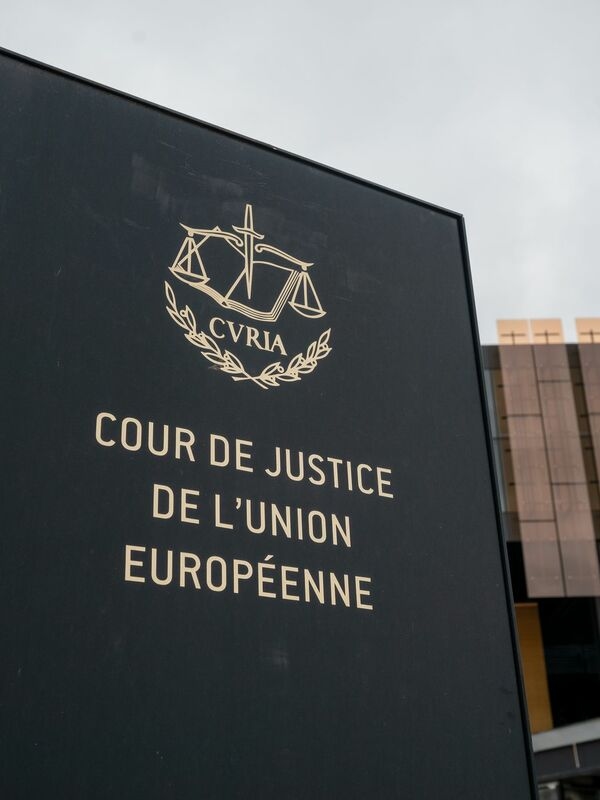
The European Court of Justice is ruling today on the future of the EU minimum wage directive. The judges of the Grand Chamber must decide whether the regulations, adopted by EU member states by majority vote in 2022, are compatible with the European treaties. Denmark, supported by Sweden, is challenging the directive and filed a lawsuit in early 2023.
The EU directive on adequate minimum wages defines standards for how statutory minimum wages should be set, updated and enforced.
Denmark argues that the EU legislature exceeded its powers by adopting the directive. It refers to the Treaty on the Functioning of the European Union (TFEU). According to Denmark, this treaty allows for directives on working conditions, among other things, but not on wages.
Advocate General for the abolition of the directiveIn his concluding submissions to the proceedings, the Advocate General of the European Court of Justice (ECJ) had followed the arguments on key points and recommended that the Court declare the directive invalid in its entirety. However, the judges are not bound by this recommendation.
Should the Minimum Wage Directive be overturned, the debate in Germany about whether the national regulations in the Minimum Wage Act, which have been in effect for eleven years, need to be adapted to EU law would become moot. In this context, there has long been a demand to set the minimum wage based on a reference value mentioned in the EU Directive. This would require employers to pay at least 60 percent of the median gross wage in Germany. The median gross wage is the wage at which half of all employees earn more and half earn less.
Should Germany raise the minimum wage to 15 euros?The German government recently decided that the current minimum wage of €12.82 will increase to €13.90 per hour on January 1st and by a further 70 cents to €14.60 per hour a year later. However, according to unions, it should actually have been raised to more than €15 if the median wage had been used as a benchmark.
According to the directive, Germany would also have to submit an action plan to promote collective bargaining, because only around 50 percent of employees in the Federal Republic were recently covered by a collective agreement. This aims to increase the proportion of employment relationships governed by a collective agreement. An action plan is only unnecessary, according to the directive, if collective bargaining coverage is 80 percent or higher.
According to the Federal Ministry of Labour and Social Affairs, Germany has not yet submitted an action plan to the EU Commission. This is expected to happen by December 31st.
Adam Sagan, a professor of labor law at the University of Bayreuth, told the German Press Agency that a declaration of invalidity of the minimum wage directive would be a severe setback for EU social policy. If, however, the European Court of Justice declares it valid, Germany will have to reform its minimum wage law, for example, regarding who is entitled to the minimum wage and which criteria must be considered when setting it. "That doesn't mean the outcome would necessarily change," Sagan emphasized. The minimum wage could ultimately remain at the currently agreed-upon €13.90.
Political scientist Martin Höpner from the Max Planck Institute for the Study of Societies, however, points out that the directive's provisions are partly vague and open to interpretation. In his view, Germany would likely be on safe ground even if the Danish lawsuit were rejected. With regard to the collective bargaining targets, however, Germany would have to submit its action plan for improving collective bargaining coverage to the Commission.
“Contrary to the European trend, tariff coverage in Germany has declined rapidly over the last two decades, to around 50 percent,” says the professor. This is dramatic, and the German legislature absolutely must do more, Höpner argues. However, he adds that this is possible both with and without an EU directive.

ad-hoc-news