Fewer controls: EU wants to save farmers paperwork

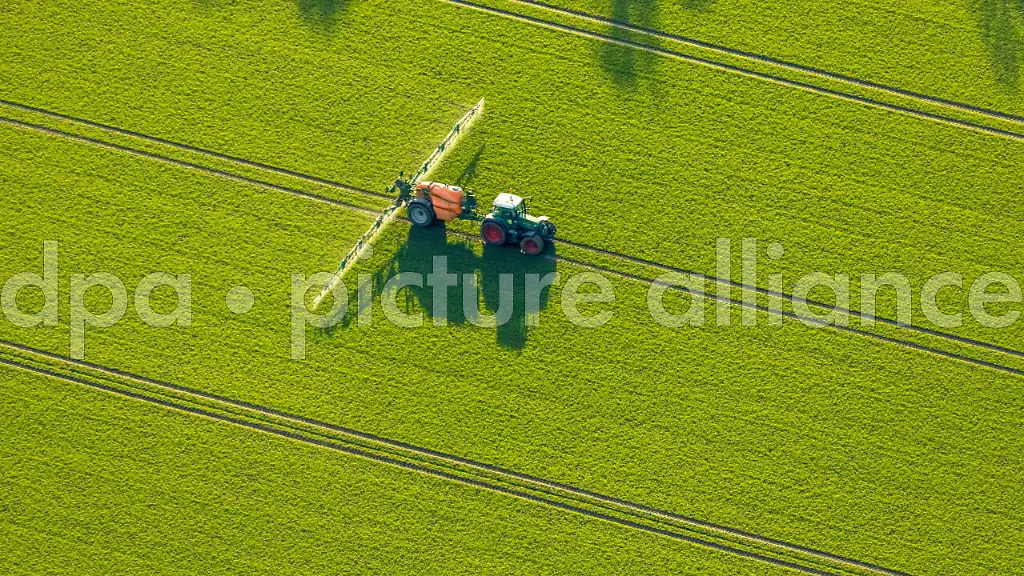
Last year's farmers' protests have clearly made an impression in Brussels: Member states and the EU Commission have agreed on measures to reduce bureaucracy. Funding is also to be disbursed more easily.
Farmers in the EU will have to deal with less paperwork in the future. Negotiators from the EU member states and the European Parliament reached an agreement on this in Brussels. Furthermore, there will be fewer on-site inspections and more funding for small farms, as announced by the Danish Presidency of the Council of the EU. Denmark currently holds the rotating presidency of the EU Council.
The plan is to grant organic farms, in particular, easier access to subsidies. Farmers will also be given better opportunities to protect themselves against risks. Furthermore, member states will be permitted to make payments to farmers in crisis situations, such as natural disasters or extreme weather. This is intended to ensure that affected farmers can continue their work, it was stated.
The negotiations were based on a proposal from the European Commission in May. The aim is to strengthen the competitiveness of European agriculture. According to the Commission, simplified EU agricultural subsidies should enable farms to save an estimated €1.6 billion annually. The reduction in bureaucracy is expected to decrease the burden on national authorities by around €200 million.
Initial measures already effectiveLast year, following farmers' protests in several EU countries, measures to ease regulations for farmers were already adopted. At that time, environmental requirements were relaxed, and smaller farms were exempted from inspections. Farmers had been taking to the streets since the beginning of 2024 after agricultural subsidies were cut in several countries. Set-aside plans and free trade agreements also fueled discontent, which erupted in road blockades and sometimes violent protests.
MEP Stefan Köhler described the agreement as a clear signal for the practicality of European agricultural policy. "It remains crucial for us that the simplifications are not only decided in Brussels, but also directly benefit farmers," said the agricultural policy spokesperson for the CSU group in the European Parliament.
CDU MP Norbert Lins said that in practice it has long been clear that the regulations of the Common Agricultural Policy (CAP) are too rigid and unwieldy. The deputy chairman of the Agriculture Committee added: "We now call on the German government to fully implement this newly gained flexibility at the German level." The agreement still needs to be formally adopted by the EU member states and the European Parliament.
Source: ntv.de, ino/dpa

n-tv.de