
Panic in Canary Islands as tourists abandon Tenerife, Lanzarote and Gran Canaria
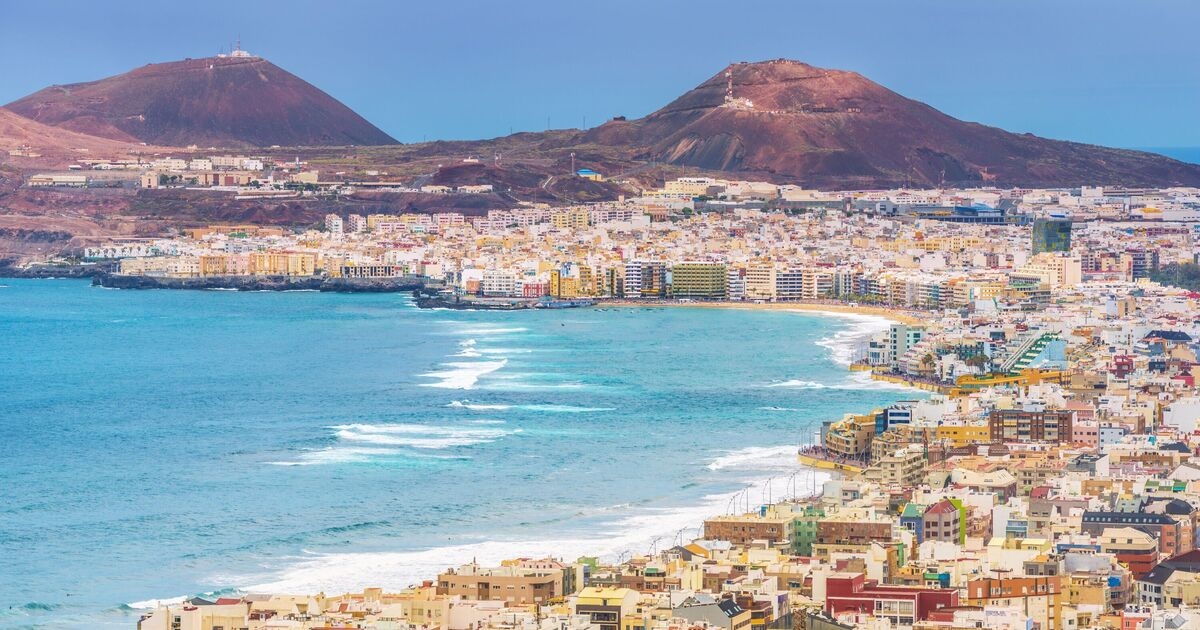

The Canary Islands have recorded a significant drop in tourists from countries outside of Spain earlier this year, the first since the end of the pandemic, new data has revealed. According to the latest Frontur figures published by the National Institute of Statistics (INE), the archipelago, a renowned year-round holiday destination off the coast of North Africa, welcomed only 1.2 million foreign tourists in April - a 8.3% drop compared to last year.
This marks the first notable decrease in international tourism to the Canaries since October 2019, excluding the pandemic shutdown period. The number of British tourists to its seven islands, which include hotspots like Tenerife, Lanzarote, Gran Canaria and La Palma, fell by 1.2% in April 2026, equivalent to just over 6,000 fewer than in April 2025. Despite the decline, British travellers continued to dominate overall arrivals, accounting for more than 506,000 visitors. However, it was the German market - one of the most vital and lucrative pillars for the Canaries - that suffered one of the steepest declines.

Rachel Reeves has just gone completely loopy – she’s about to bankrupt Britain even more
According to the INE data, German tourist arrivals fell by a staggering 13.5% compared to April 2025. A total of 225,526 Germans visited the Canary Islands during the month, around 35,000 fewer than a year earlier. This is a major blow to the islands, as German travellers, who account for roughly 15% of all visitors, are highly prized for their long average stays (11.1 days) and high daily spending, injecting over €4billion (£3.5billion) into the local economy.
Several smaller European markets saw even sharper drops, including Italy (-14.5%), Denmark (-30%), Finland (-38.4%) and Sweden (-29.2%).
As a result of the decrease in visitors, the overall tourist spending across the Canaries also fell. International tourists spent a total of €1.8billion (£1.6billion) in April, down 6.8% compared to the same period last year. That said, average daily spending per tourist increased by 8.3% to €182 (£158) per person per day. At the same time, the average holiday duration shortened slightly to 8.1 days.

Tourism experts point to growing international uncertainty as one of the key reasons behind the slowdown, including the economic situations in Germany and the UK. Ongoing geopolitical tensions, including the conflict in the Middle East, are also believed to be affecting travel confidence.
Jessica de León, the Canary Islands’ regional tourism minister, recently said the government is closely monitoring the sector amid ongoing uncertainty across Europe.
She noted that many tourists are now booking holidays much later than before, although she insisted that demand for the Canary Islands “remains stable and solid”. However, she also acknowledged that economic pressures on middle-class families in countries such as the UK and Germany are beginning to affect holiday decisions.

Daily Express