
Uber's driverless taxis to be launched on UK roads this summer
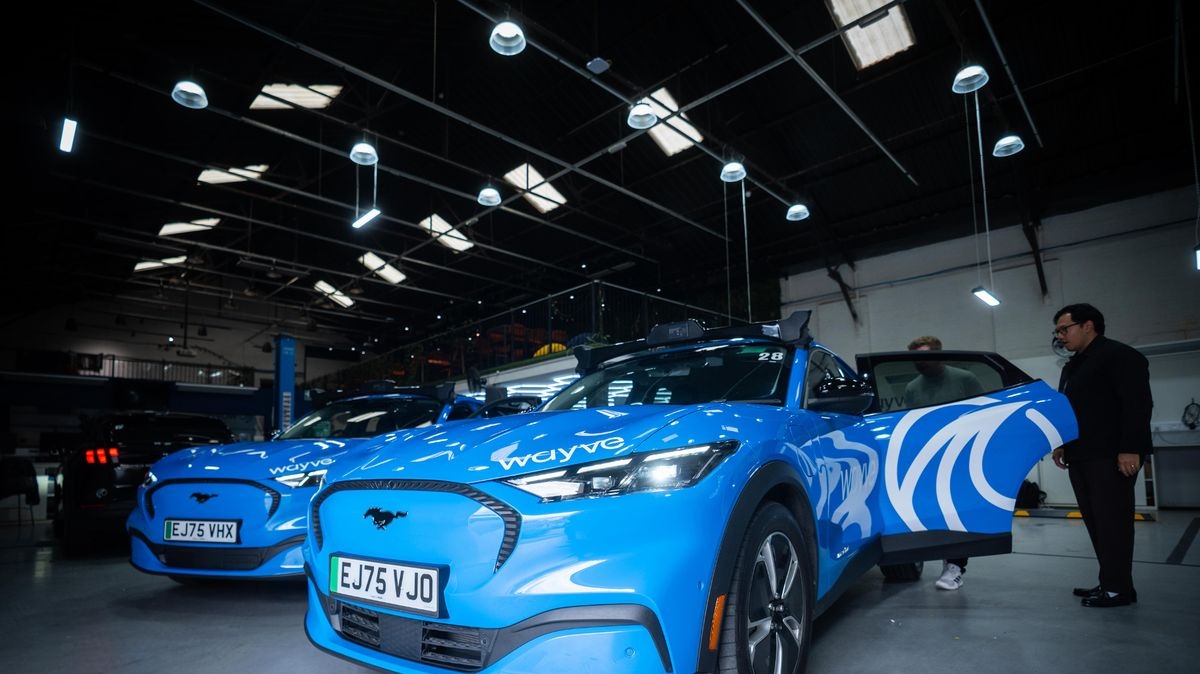
Robotaxis will carry paying passengers for the first time on UK roads this summer, a company developing the technology said. Kaity Fischer, who leads Wayve’s self-driving cabs business, declared it was “ready to go” as in a tie-up with ride hailing app Uber in London.
A human driver will initially sit behind the wheel ready to take control during journeys while the technology is demonstrated to be safe. Uber passengers will be offered self-driving vehicles at the same fare as its conventional minicabs. It has begun enabling users to express their desire to be among the first people to try the new service.
Self-driving vehicles will be available on Uber’s X, Comfort and Electric journeys. Ms Fischer said: “We’re looking forward to launching in London in the next couple of months. We’re ready to go, and can’t wait to get the public into our vehicles to experience Wayve technology first hand.”
Cars with Wayve’s self-driving systems have six cameras, a radar and an AI-powered computer in the boot which control their responses.
READ MORE: One in two fear AI will take their job - and bosses are already tracking you
READ MORE: Amazon robots will replace some 'manual' warehouse roles
The human supervisor behind the wheel of a Ford Mustang Mach-E SUV did not need to intervene during a 15-minute demonstration journey from the company’s north London headquarters on Friday.
The car reacted sensibly to hazards such as pedestrians crossing the road and overtaking vehicles travelling towards it, and when the road was clear it went up to but not beyond the 20mph speed limit. Wayve was founded in 2017 by two University of Cambridge PhD students.
London will be the first city in the world to use its technology for commercial journeys. The company will then expand to more than 10 cities globally in partnership with Uber, including Tokyo, Japan, later this year.
Wayve is also working with car manufacturers such as Nissan and Stellantis to deploy its systems in private vehicles.
Ms Fischer described London’s roads as the “ultimate testing ground for autonomous technology”. She said that compared with San Francisco in the US - which is a common location for rolling out robotaxis - London has 20 times more roadworks and 10 times more vulnerable road users, such as pedestrians and cyclists.
Combining that with London’s “2,000-year-old streets”, which are not in a grid layout and have “potholes and cobblestone paths”, creates an “incredible proving ground”, she added.
Annie Duvnjak, who leads global mobility autonomous operations at Uber, said it will launch with a “small fleet” of robotaxis in London, before “scaling up over time”.
Asked how she expects passengers in the capital to react, she replied: “What we’ve seen in other markets is it’s really magical. When you first get in, you look around and all of a sudden the car is driving and it feels normal. You forget that you’re in an autonomous vehicle (AV), and that’s the beauty of it.”
Uber already offers self-driving journeys in the US cities of Austin in Texas and Atlanta in Georgia. Some Uber drivers in London have held small-scale protests against the use of robotaxis.
In response to a question on whether the technology means fewer human drivers will be needed, Ms Duvnjak said: “We actually do believe that human drivers and AVs will continue to grow. That’s because... we do want to be really reliable.
“There’ll be multiple routes or weather conditions where it might not make sense for an AV to take a ride, and we are constantly seeing demand grow in cities, which means more drivers and more AVs over time.”
Transport Secretary Heidi Alexander said the technology has “the potential to transform how people travel” by “reducing road danger while driving growth and creating high-skilled jobs across the UK”. She added: “Wayve is a British success story and this partnership with Uber is a welcome vote of confidence in their technology.”
US firm Waymo has also picked London as the first European city to have its robocabs. It began testing on the capital’s streets late last year - with a human “safety driver” behind the wheel - as it looks to win government approval for its services. The company then hopes to gain permission from Transport for London to start autonomous rides this year.
The GMB union wants the Government to introduce laws to protect taxi and private hire drivers from job losses and reductions in earnings caused by the rollout of driverless vehicles.
Ali Haydor, Private Hire Driver and GMB Congress Delegate told its Congress in Blackpool: “We hear a lot from those on the right of politics about people not working and relying on benefits, but replacing human workers will potentially push thousands into unemployment and poverty.
“The gig economy firms present driverless taxis as progress - they tell us this technology will increase efficiency, reduce costs and benefit society, but progress for whom?
“Technology will continue to develop, but workers should not be expected to carry all the risks while companies take all the rewards.”

Daily Mirror