From space missions to sat nav - there's 1 piece of tech we just can't live without
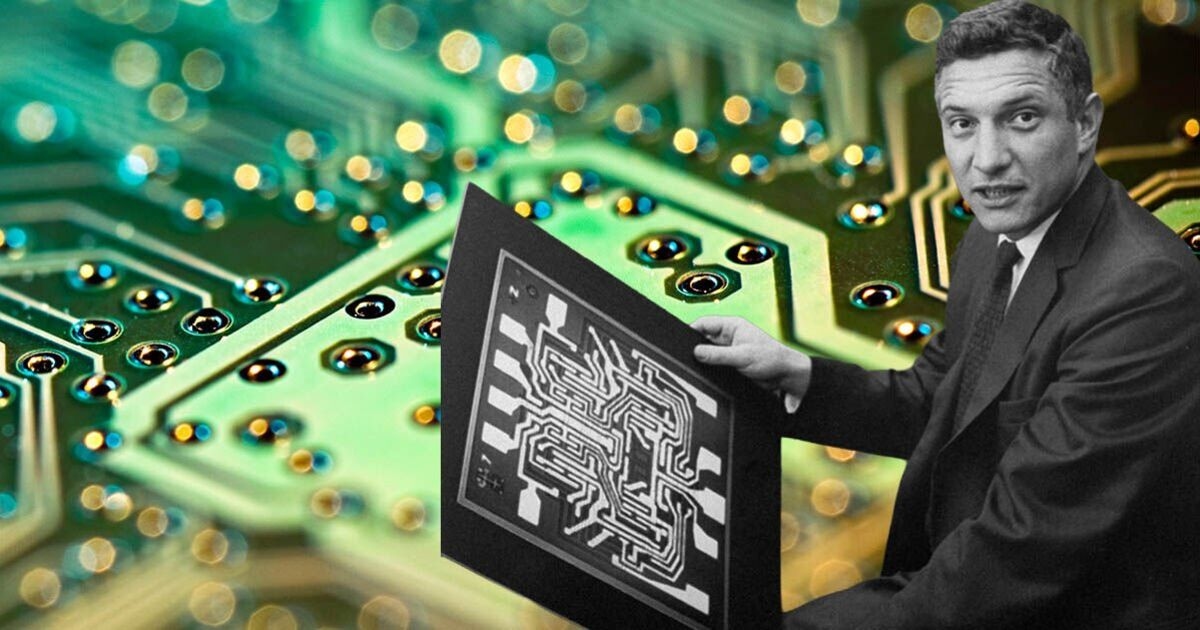

Most technology in the world today revolves around a postage stamp-sized electronic device called a microchip. Often also called a “chip” or “integrated circuit,” a microchip is a tiny electronic brain. It contains billions of microscopic switches that perform calculations and manipulate data at lightning speeds. Never has something so small created such a big impact. Chips power smartphones, cameras, televisions, microwaves, and cars. Chips birthed computers and the internet, which have impacted every aspect of human life. They have revolutionised healthcare, enabling fast development of drugs and vaccines, cheap, small, and capable medical devices, and telehealth, smart bands, and medical imaging systems. They have revolutionized the economy, personal behavior, and warfare. Modern aircraft, spacecraft, and missiles depend on chips for navigation, control, safety, and communication.
While the microscopic switch – the transistor – was invented in 1947, it took another twelve years for the chip to be invented. Jack Kilby at Texas Instruments first came up with the implementation of a chip in 1959. The potential of the invention to revolutionize society was immediately clear to everybody – The New York Times named it as one of the top three inventions of the year. Robert Noyce from Fairchild Semiconductor soon came up with an implementation that would allow mass production of chips. Money poured in. Every new generation of chips packed even more switches, providing even greater capability. The invention soon changed the world as I examine in my new book, The Chip Age: How Chips Shaped Our Past and Will Define Our Future

Since the potential of chips was clear from the beginning, their invention created a scramble among nations to own the technology. The US had a headstart and was able to scale up a chip industry by providing funding and market through its Minutemen missile program and the Apollo spaceflight program. The Soviet Union and its allies ran an ambitious program first to develop indigenous chip technology and then to clone the state-of-the-art. However, they could never achieve parity with the US despite their efforts. Japan provided a formidable challenge to the Americans until the 1980s, but their efforts unraveled in the 1990s. South Korea, Taiwan, and China were able to gradually become the centers of chip manufacturing after the 1980s by leveraging state support and lower costs.
Today, chipmaking is a global exercise. No one country owns all stages of chip development end-to-end. Many countries collaborate in the development of a single chip to maximize cost efficiency and resilience. Some provide input materials, others provide tools and equipment, some manufacture the chip, while others come up with chip designs. A single chip can travel over 25,000 miles and cross international borders more than 70 times before reaching the end customer.
The success of the chip industry has come at a price. Chipmaking has high energy and water costs, straining the availability of energy and water in local communities. It produces significant emissions that impact the environment. Many inputs come from regions with poor regulations and human rights violations. High demand and usage of chips also create challenges. Chips used in large data centres consume a lot of energy and water, impacting electricity bills, power reliability, and water availability in local communities.
It produces significant emissions that impact the environment. Many inputs come from regions with poor regulations and human rights violations.

The chip industry itself faces several challenges. Globalised chipmaking creates trust vulnerabilities. A bad actor can meddle at any stage creating security problems and counterfeit chip markets. It also creates supply risks since a natural disaster, an accident, sabotage, or a geopolitical or military conflict in some part of the world can stall or slow down overall chip production.
Chip production costs are also becoming a challenge. Every new chip technology is more expensive than the previous one. The most advanced chips are particularly expensive to produce – only one firm in the world, based in Taiwan, can manufacture these chips. This creates an additional supply risk since a natural or geopolitical event in Taiwan can throttle advanced chip production for the entire world.
Despite the challenges, chips will be critical to future prosperity and world order. Artificial intelligence (AI) is one of the most consequential technologies of our time that has the potential to turbocharge productivity and growth and dramatically reshape military power. Many believe that the nation that dominates AI will dominate the world. Chips are critical to winning the AI race. AI models need a large number of the most advanced chips to develop and use. Nations with access to these chips will likely lead AI.
As a result, a global chess match is afoot among nations to both secure access to chips and chip technologies and to deny access to geopolitical competitors. In particular, the US and China are engaged in a game of one-upmanship. While China is investing an enormous amount of resources to achieve chip self-reliance, even allegedly using espionage and intellectual property theft, the US is using export controls and other pressure tactics, even involving its allies, to prevent China from accessing advanced chips and other chip technologies. Both recognize that the outcome of this tug-of-war may determine future economic and military world order.

In this great power competition, Taiwan is fast becoming a flashpoint. Since TSMC, a chip manufacturing company based in Taiwan, is the only company in the world that can manufacture the most advanced chips, any Chinese aggression in Taiwan will have dramatic consequences for the chip industry and the world order. Some believe that TSMC creates a silicon shield for Taiwan – the world will not let China take over Taiwan and TSMC, to ensure continuous supply of advanced chips. Others believe that potential control of TSMC and the advanced chips gives China an added motivation to attack Taiwan. TSMC is building some of its advanced chipmaking factories outside Taiwan – mostly in the US – both under pressure and as a strategy. This will further complicate the equation. What is clear, however, is that chips will be a critical factor in determining the future course of events in US-China-Taiwan relations.
Chips are the new oil – everyone needs them, everyone wants to reduce reliance on others, and everyone benefits from producing them. We will see increased efforts by nations to achieve chip sovereignty. The UK and the EU have already invested large sums into growing chipmaking at home, with plans for further investment. We will also increasingly see alliances between nations to secure the supply of chips. Current European alignments run through the US. Alignments may look different depending on the future of US-Europe relations. We will likely see a strengthening of alliances in the West to prevent chip access to the CRINK (China, Russia, Iran, North Korea) bloc. We will also see increased efforts at managing the emissions, water, and energy footprint of chips to manage the impact on climate and communities. We are living in the chip age, and chips will continue to define our future.
The Chip Age: How Chips Shaped Our Past and Will Define Our Future by Rakesh Kumar (Icon Books, £20) is published on July 16. Rakesh Kumar is a Professor and John Bardeen Faculty Scholar in the Electrical and Computer Engineering Department at the University of Illinois Urbana-Champaign. He is a renowned expert on chips who has received multiple awards in recognition of his influence on chip research and the chip industry. Some of the technologies he's developed now power the chips in your phones, tablets, and computers. He has written extensively about chips for a general audience.

Daily Express