
The Ancient Uzbeki City That’s New Again
T’s monthly travel series, Flocking To, highlights places you might already have on your wish list, sharing tips from frequent visitors and locals alike. Sign up here to find us in your inbox once a month, along with our weekly roundup of cultural recommendations, monthly beauty guides and the latest stories from our print issues. Have a question? You can always reach us at [email protected].
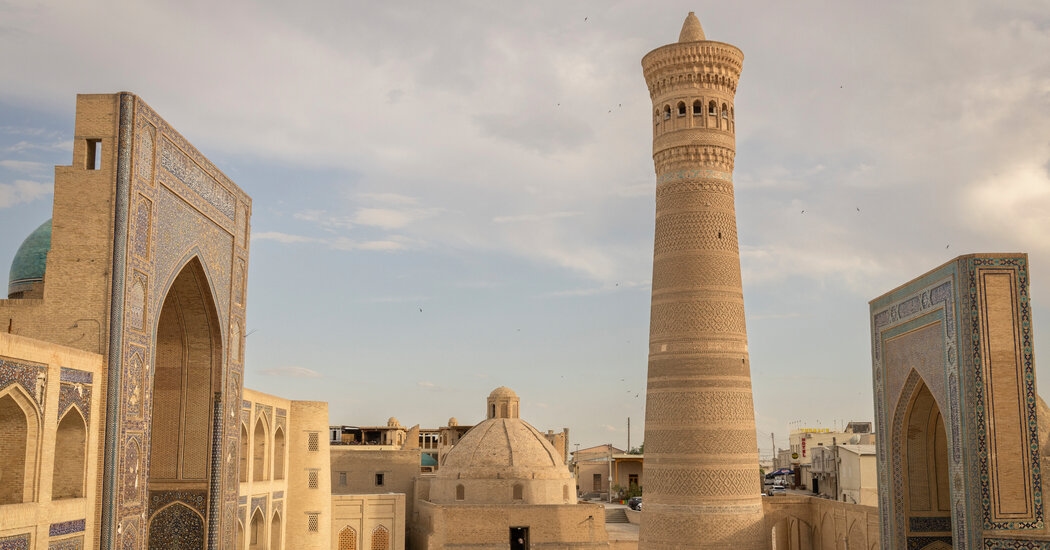
For more than a thousand years, Bukhara, a city in south-central Uzbekistan, was a major settlement along the Silk Roads, a dynamic trading post for jewels, textiles and porcelain. From roughly the eighth to the 13th century, it was also a cultural epicenter during what’s now known as Islam’s Golden Age, when scholars, architects, mathematicians and artists living in the region achieved important advances in everything from math and medicine to painting techniques. The city’s wealth gave rise to ornate, turquoise-domed mosques; Sufi tombs; and massive mud-brick forts that look like something out of “Game of Thrones.” Today, many of these structures remain, with over 140 UNESCO-protected monuments easily navigable on foot.

Now, the city is attracting the attention of the art world: Last fall, a mix of international and Uzbek artists created site-specific exhibitions, collaborated on projects and met up for communal feasts as part of the first-ever Bukhara Biennial. The purpose, said the Uzbek curator and the biennial’s commissioner, Gayane Umerova, was to activate historic sites, support the work of local master artisans and restore some of the city’s traditional architecture. But it’s also sparking a commercial renaissance, with several new hotels and shops rising up to meet the international influx. “The energy in the city is palpable,” said Suna Abdullaeva-Park, a co-founder of the new concept store and cultural space Pavillon Kalon. “Bukhara is reclaiming its place as a cultural hub.”
Abdulvakhid Bukhoriy Karimov is a Bukhara-based ceramics master known for his use of historically significant glazes, including the same turquoise hue that appears on domes of the city’s mosques.

The New York Times