How to Cut and Style Your Hair if You’re in Your 50s and Plus Size
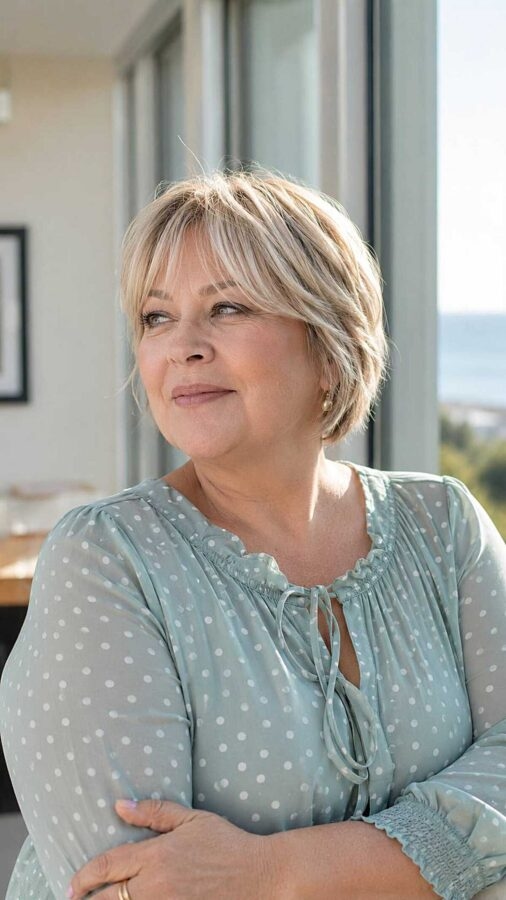


There’s a warmth to this blonde that reads as completely natural, like someone who’s been blonde their whole life and it’s just softened and mellowed with age. The sandy and buttery tones blend together without any obvious demarcation, and the wispy bangs across the forehead add softness without commitment. This is a color that was almost certainly built over multiple sessions rather than achieved in one sitting, which is why it looks so seamless. The feathered layers have a very classic feel to them, and honestly, that’s fine. Not everything needs to be edgy to be good.

This is a textbook example of balayage that’s been applied to work with the movement of the cut rather than against it. The lighter toffee pieces land on the parts of the layers that flip out and catch the most light, while the deeper brown sits in the areas that naturally fall into shadow. When the balayage is painted this way, with the cut already in mind, the result looks effortless even though it takes serious skill to execute. The shag shape here is forgiving and easy to style, which is half the reason it keeps coming back in popularity. You can air-dry this with some texturizing spray and it looks intentional.

Ending with this one because it’s the kind of look that people underestimate until they see it in person. The curls create all the volume and texture on their own, and the warm brunette color with those subtle reddish highlights peeking through the curls adds depth without any complicated technique. A curly pixie is one of the lowest-maintenance cuts you can get if you know how to work with your texture rather than against it, and this is a good example of someone who clearly does. The shape is soft and full without being round, with enough length on top that the curls have room to form properly while the sides stay tapered and clean.

There’s a warmth in this dark brown that keeps it from looking harsh, probably a level 3 with a golden-mahogany undertone that you’d see most clearly in bright outdoor light. The pixie has nice length through the top with those piecey, directional layers that can be styled differently depending on the day, swept forward, pushed to the side, or tousled for texture. Short cuts like this on plus size women sometimes get dismissed as too severe or unflattering, which is advice that drives me crazy because it’s based on nothing. This looks great.

A warm sandy blonde at this chin length is one of the most reliably flattering combinations I see, and this version of it is very well done. The color has enough dimension, with slightly darker roots blending into lighter ends, that it avoids looking flat or processed. The full fringe is soft rather than blunt, which keeps it from feeling heavy or dated. This is a wash-and-go kind of cut for someone with naturally straight or slightly wavy hair, and the grow-out on a color like this is forgiving because the darker root is already part of the design.

I wish more people could see transformations like this, because the before photo shows exactly what happens when color is left to fade without a plan and length is maintained out of habit rather than intention. That faded, brassy copper on damaged ends was doing absolutely nothing for her. The after is a completely different story. The colorist brought the tone down to a cool-leaning sandy blonde, which immediately looks healthier and more intentional, and the short bob with side-swept bangs takes off all the damaged length while creating structure and movement. This is one of those cases where cutting off six or seven inches of hair makes someone look like they have more hair, not less, because the remaining hair is healthier and fuller at the ends.

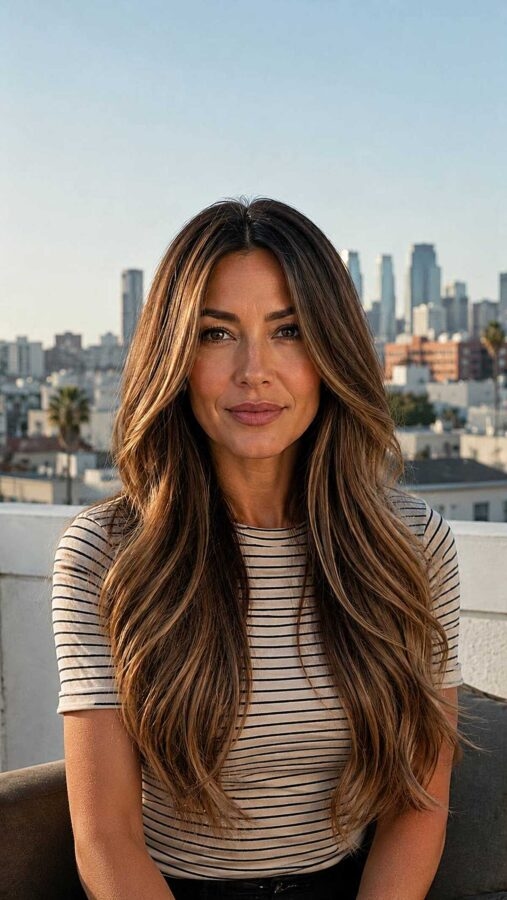
The layer placement in this longer style is really doing something for the overall shape. The shorter layers at the crown create lift and volume up top, while the longer layers below give it that full, cascading look that balances beautifully with a wider frame. The caramel ribbons are concentrated from mid-shaft down, which keeps the roots looking natural and deep while the ends get all the dimension. This kind of layered style needs a volumizing mousse at the root area before blow-drying to maintain that crown lift between washes, because without it, the weight of the length will pull the top flat by day two.

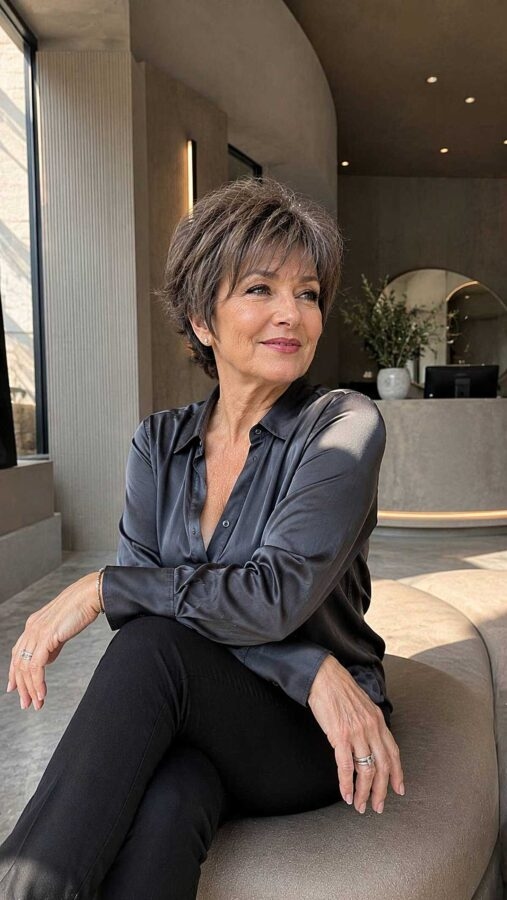
This is one of my favorites in the entire collection because of how the natural silver is working with the remaining dark hair rather than against it. Instead of covering the gray or going fully silver, someone has let the salt-and-pepper pattern do its thing within a cut that maximizes texture and movement. The longer, piecey fringe falling across the forehead and the choppy layers through the crown give those lighter strands a place to catch light in a way that makes them look like deliberate highlights. A tiny bit of matte styling paste worked through the ends would enhance the separation without making it look crunchy.

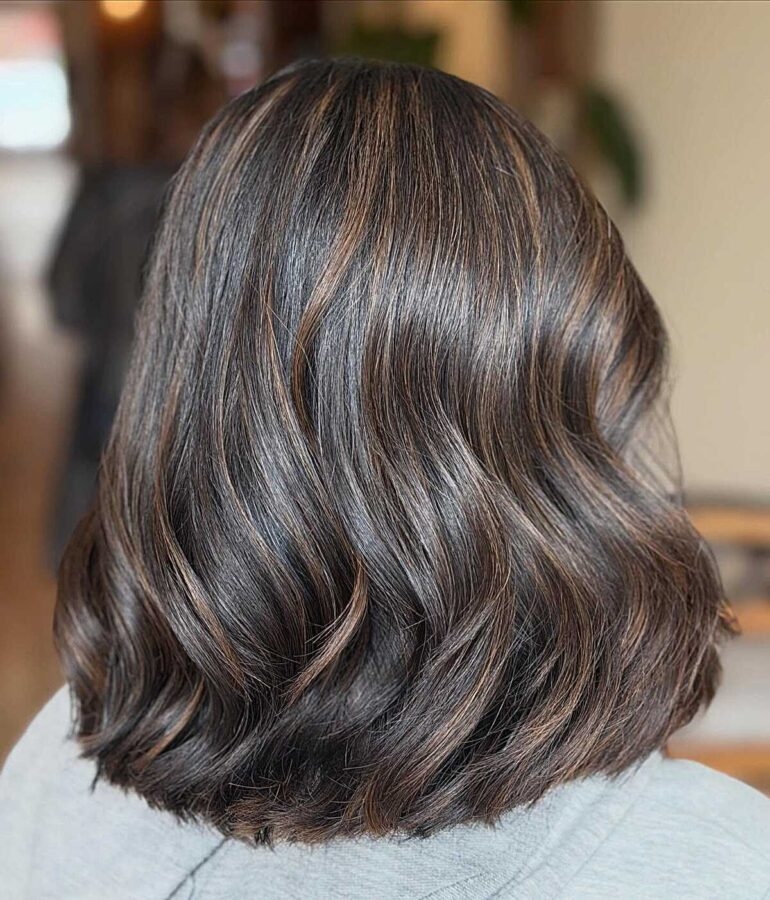
The highlight work here is so subtle that you almost don’t register it consciously, but it’s doing something important. Those thin caramel pieces through the mid-lengths and ends keep the espresso base from reading as solid and heavy, which is a risk with dark hair at this length. The straight, sleek styling shows off the shine, and the blunt-ish ends give it weight and structure. Not every look needs to be layered within an inch of its life.

This copper is sitting in that perfect zone between natural-looking and obviously intentional, a solid level 7 with strong warm copper tones that would be gorgeous in sunlight. The beveled ends curving inward give the bob a very polished finish, and on someone with a round face, that inward turn at the chin actually creates a really nice visual effect, guiding the eye along the jawline rather than widening at the bottom. Copper at this depth fades beautifully too, shifting from vibrant into a warm strawberry territory that still looks purposeful weeks later.

The highlight placement in curly hair like this is completely different from straight hair, and you can tell when someone has nailed it versus guessed at it. Here, the lighter pieces are scattered through the outermost curls, the ones that would naturally lighten from sun exposure, and the interior stays dark and rich. That’s what gives it that believable, “I just spent a summer outside” quality rather than looking like someone sat with foils. The curl definition is excellent, tight and springy with no frizz halo, which tells me this hair is well-moisturized and probably being styled with a diffuser on low heat.

When you go this dark and this solid, the cut becomes everything. There’s no color variation to create the illusion of texture, so every angle of the shape has to be precise, and this one is. The stacking in the back gives it that rounded, full silhouette while the slight length through the front keeps it from looking too structured or helmet-like. A glossy black like this is one of the easiest colors to maintain at home because root touch-ups with a demi-permanent color are straightforward, and the single tone means there’s nothing to match or blend.

The tonal range here is really interesting to me. You’ve got a cool-leaning brunette base with highlights that land in that champagne-ash blonde range, and the combination creates this mushroomy, lived-in quality that’s incredibly current right now. I see a lot of women in their 50s default to warm because they’ve been told cool tones wash them out, but that’s not universally true at all. If your skin has pink or neutral undertones, a cool-toned color like this will actually make you look more alive than a warm one would. The loose wave in this lob is giving the highlights maximum visibility because each bend catches and releases light differently.

This is a really well-balanced color job. The base is a solid level 5 chocolate brown, and the highlights are placed exactly where they need to be, concentrated through the fringe and around the face where they’ll catch the most light. What I love is that the warmth of the caramel pieces doesn’t overwhelm the depth of the base. There’s enough contrast to create movement in the layers without it reading as stripey. The cut itself is doing smart work too, with that gentle graduation in the back keeping the shape clean and the face-framing pieces long enough to skim the jawline. This is the kind of look that survives a six-week stretch between appointments without falling apart, because the highlights were painted to grow out gracefully rather than leave a hard line.

A glossy, single-tone brunette that’s been maintained well. The color itself isn’t trying to do anything dramatic, and that’s what makes it work. It’s a level 4 with warm undertones, and the shine tells me there’s likely a clear or tonal gloss layered over it, because natural hair at this age rarely reflects light this uniformly without some help. The deep side part adds asymmetry that gives the style personality without needing layers or highlights to create interest. Clean and understated.

Oh, this color makes me happy. That warm ginger copper on natural curls is one of the most beautiful things you can do in hair color, because the dimension of the curl pattern creates its own highlights and shadows without any foil work at all. A single-process copper like this reads as multi-tonal on curly hair in a way it simply wouldn’t on straight hair. The key with a copper this warm is getting the right base, because if the underlying pigment is too cool, the copper will fight it and turn peachy in weird spots. On someone with warm undertones in their skin, this is absolutely ideal. The volume and curl definition here suggest the hair is in excellent condition, which matters because damaged curls won’t hold this kind of definition or reflect light this well.

There’s a red-violet shift happening in this black that you might miss at first glance, but in person it would catch the light beautifully. It’s the kind of tone you get when you gloss a natural level 2 or 3 with a violet-based demi, just enough to give the black some life without turning it into something obviously colored. The cut is pure confidence, with all that height and texture on top and the sides cropped close. This shape looks great from every angle, which matters more than people think about when choosing a short cut.

The money pieces here are placed so well. Just those two sections framing the face are lifted to a warm caramel while the rest stays a natural-looking medium brown, and the effect is this brightening around the eyes and cheekbones that you can’t achieve any other way. This is one of those looks I find myself recommending more than almost anything else because the maintenance is minimal, the impact is significant, and it works across so many different hair textures and face shapes. The lob length with that slight bend at the ends is easy to achieve with a large barrel round brush and a blow dryer if you don’t feel like using heat tools.

Sometimes the best color work is the kind you barely notice. This is a deep espresso base with just a handful of warm brown highlights placed through the mid-lengths, enough to keep it from reading as flat under artificial light but not so much that it looks highlighted. The chin-length bob is doing that nice thing where the slight inward bend at the ends creates a sense of roundness and softness. On someone with a fuller face, a lot of stylists would try to go longer to “elongate,” but that advice is often wrong. A clean chin-length bob that moves and has body can be far more flattering than long, heavy hair dragging everything down.

The shag is having its moment again and it’s particularly good on thicker, heavier hair because all those internal layers remove bulk without sacrificing the perception of fullness. The color here is a warm medium brown with auburn ribbons concentrated heavily around the face, which is exactly where you want warmth in your 50s because it reflects light back toward the skin. I appreciate that the curtain bangs are long enough to push behind the ears on days when they’re not cooperating, because bangs that only work one way are bangs that end up pinned back by week three.

The root shadow here is doing all the work. Going this light on someone with naturally dark hair means there’s going to be contrast at the root no matter what, so the smart move is exactly what they’ve done here, letting the dark base bleed into the platinum as a deliberate design choice rather than fighting it. The shaggy, piecey texture of the cut means the two tones intermingle in a way that looks intentional and cool rather than grown-out. This is a commitment look though, because platinum this icy on thicker hair requires serious lifting and regular toning to prevent it from going brassy. If you’re not prepared for that upkeep, this will disappoint you within a month.

I get genuinely excited when I see someone commit to a red-violet tone like this. Those burgundy panels against the near-black base create this richness that you can’t get with any other color family. The problem most people run into with reds at this depth is that they fade fast and shift muddy within a few weeks, but when they’re placed as chunky panels like this rather than fine babylights, the fade actually looks interesting instead of just dull. The body and movement in this lob keep the color visible from multiple angles. A good color depositing shampoo in a red-violet shade once a week would keep these panels punchy for much longer than people expect.

A really polished execution of a classic shape. The graduation is tight in the back with the length extending forward to just graze the chin, and the color is a seamless blend of sandy blonde and honey tones that avoids any visible line of demarcation at the root. This is the kind of bob that looks like it would be high-maintenance, but if the colorist is doing a shadow root technique with a demi-permanent gloss, it can stretch to eight weeks before it needs attention. The side-swept bang is doing something quietly important here, breaking up the roundness of the face with a diagonal line that draws the eye at an angle rather than straight across.

This is what embracing gray looks like when you do it with intention rather than just giving up color appointments. There’s still some darker lowlighting woven through, which keeps the silver from going flat or washed out. The cut is doing most of the heavy lifting here, with all that texture on top creating height and the tapered sides keeping it structured. On finer hair that’s gone mostly silver, this kind of choppy layering is essential because it creates the illusion of density. Without it, a pixie this short can look thin and deflated. The cool tone of the silver against the blue top is a nice reminder that clothing color matters just as much as hair color when it comes to how a shade actually reads.

The way those copper pieces wrap around each individual curl is genuinely beautiful. On curly hair, color placement has to account for the way the strand spirals, because a highlight that looks like a straight line when wet will land on a completely different part of the curl once it dries. Whoever did this understood that. The warmth is distributed throughout the mid-lengths without touching the root, which gives it that sun-kissed depth that reads as natural even though it clearly isn’t. A good curl defining cream scrunched in while soaking wet would keep this definition going between wash days.

Latest Hairstyles