
6 Scalp Scrubs For Faster Hair Growth
Question from Marguerite Hollenbeck, Sheboygan, Wisconsin: “I’ve been struggling with sluggish hair growth for the past two years, and my scalp always feels kind of gunky no matter how often I wash it. A friend mentioned scalp scrubs might help, but there are so many out there, and I don’t even know where to start. Are these actually worth doing, or is it just another beauty trend? Any recommendations for specific ingredients to look for?”
There’s a whole shelf in my supply room dedicated to scalp treatments, and I’m not even a little embarrassed about it. Scalp health is genuinely one of those things that took me years to fully appreciate, and I think a lot of stylists still underestimate it. The scalp is skin. It builds up dead cells, it gets congested with product residue and sebum, and when it does, that environment is not doing your hair follicles any favors. I had a client in her mid-fifties, lovely woman, had been complaining about thinning edges and slow growth for ages. We’d talked about everything, diet, stress, the usual suspects. But it wasn’t until I actually examined her scalp closely that I realized she had significant buildup that had probably been sitting there for months, maybe longer. We started doing a simple scrub routine, and within about four months, she noticed real new growth along her hairline. Not dramatic, but consistent and visible. That kind of thing sticks with you.
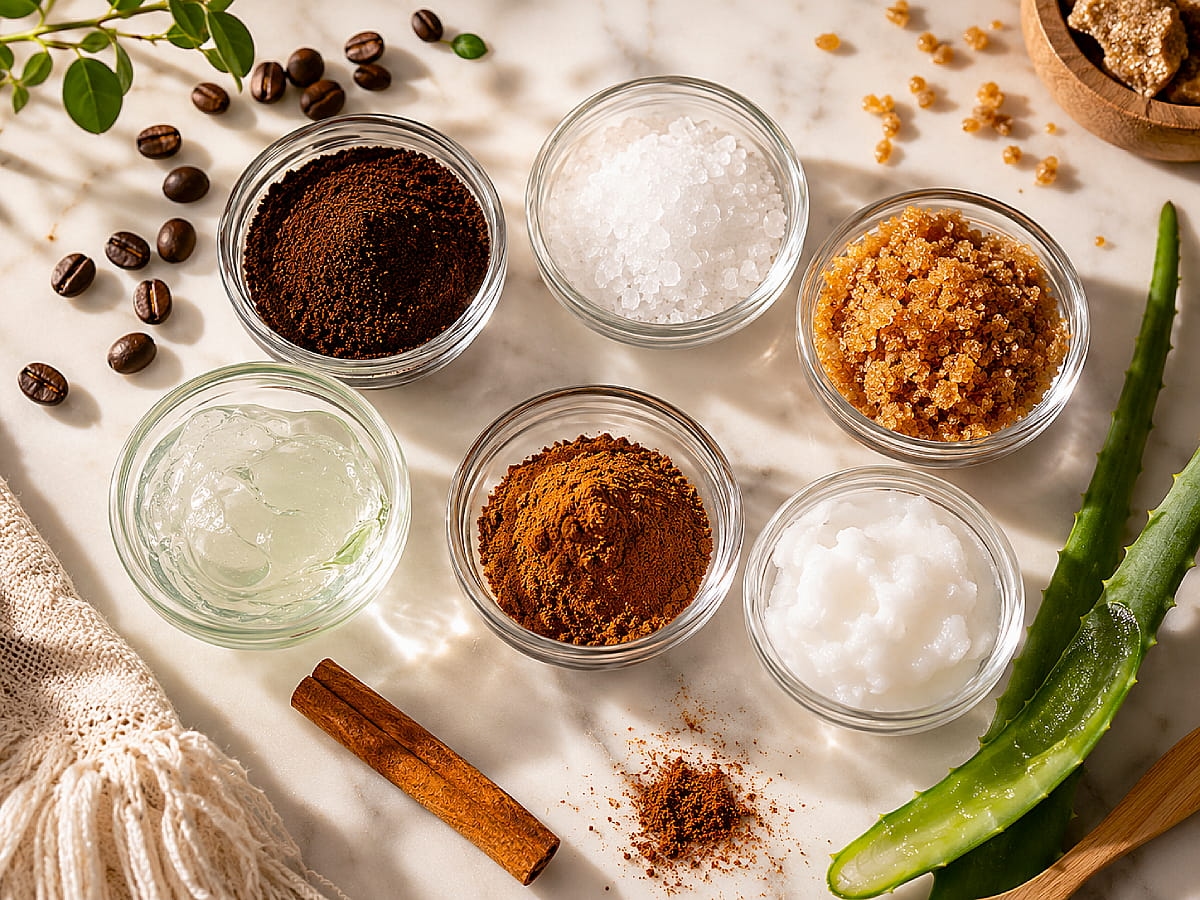
Scalp scrubs work partly by physically exfoliating dead skin and product buildup that can clog hair follicles, and partly by stimulating blood circulation to the scalp, which is genuinely important for hair growth because your follicles need a good blood supply to function well. The ingredients matter a lot here, and some of the most effective ones are things you probably already have in your kitchen. So let’s talk through six of the best, counting down to my personal favorite, because I think by the time you get there, you’ll understand exactly why it earned that spot.
This post may contain affiliate links, meaning I may earn a small commission at no extra cost to you. I only share products I truly believe in. As an Amazon Associate, I earn from qualifying purchases. Your support helps me continue creating free content like this.
6. Aloe VeraAloe vera is one of those ingredients that gets lumped into the “gentle and boring” category, and I understand why, but it’s genuinely doing something important when you use it on your scalp. The reason I put it at the start of this list isn’t because it’s weak, it’s because it’s the most approachable option if your scalp is sensitive or reactive, and a lot of women over forty deal with a scalp that has become more sensitive over time even if it never used to be. Hormonal shifts change skin behavior everywhere, including up top, and a scrub that’s too aggressive can leave you with irritation that sets you back further than the buildup you were trying to remove.
Aloe vera contains enzymes that gently break down dead skin cells, plus it has anti-inflammatory and antimicrobial properties that can help if you’re dealing with any flakiness or mild scalp irritation. When you pair it with a gentle exfoliant like finely ground oat flour or even a small amount of brown sugar, you get something that sloughs off buildup without stripping the scalp of its natural oils. I usually suggest mixing fresh aloe gel, the kind you scoop right out of a leaf if you can get one, with a tablespoon of fine sugar and a few drops of peppermint essential oil. The peppermint adds some tingle and helps with circulation, which is part of the whole point of doing this in the first place.
If you want a ready-made option, the Majestic Pure Aloe Vera Scalp Scrub is something I’ve actually recommended to clients, and I’ve had good feedback on it. It’s not going to replace a really potent scalp treatment, but for someone easing into exfoliation, it’s a nice starting point. Use it once a week, work it into your scalp with your fingertips in small circular motions for about three to four minutes before shampooing, and give it a few weeks before you expect to see any difference in growth or density. Patience is genuinely required here.
5. CinnamonOkay, cinnamon is one I feel strongly about, and I’ll also give you a warning upfront because it’s an ingredient that people misuse constantly. Cinnamon has vasodilating properties, meaning it can help expand blood vessels and increase circulation to the scalp. More blood flow to the follicle means more oxygen and nutrients getting where they need to go, and that’s a good thing for growth. There’s a reason cinnamon has been showing up more and more in professional scalp care formulations, because it actually does something.
The warning is this: you cannot use a lot of it. If you’ve ever applied straight cinnamon essential oil to your skin and left it there, you know exactly what I’m talking about. It can burn. Not a nice tingly burn, an actual irritating burn that can cause redness and even mild chemical irritation if you use too much or leave it on too long. The rule I give my clients is no more than half a teaspoon of ground cinnamon in any scrub mixture, combined with something soothing like honey or coconut oil to dilute the intensity, and never leave it on the scalp for more than five minutes. Some people even have mild sensitivities to cinnamon topically, so do a small patch test first, I’m serious about that.
When you get the formula right though, a cinnamon and honey scalp scrub is one of the most effective at-home treatments I know of for sluggish growth. Mix a teaspoon of honey, half a teaspoon of ground cinnamon, and a tablespoon of fine sugar, work it gently into your scalp, give yourself a few minutes of massage, and rinse thoroughly. You can find pre-formulated versions too, and searching for a cinnamon scalp treatment will pull up some decent options. Just read the ingredient list and make sure cinnamon isn’t the first or second ingredient in anything you’re applying directly, because concentration matters here more than with almost any other natural ingredient.
4. Salt Scalp ScrubSalt scrubs have been around forever, and there’s a good reason they keep coming back. Sea salt in particular has a mineral composition that does a few things at once, it exfoliates physically, it helps absorb excess oil from the scalp, and the minerals in unrefined sea salt, things like magnesium, potassium, and calcium, can actually support scalp health at a cellular level. I know that can sound like marketing language, but the mineral content in sea salt is genuinely different from table salt, and it’s worth paying attention to.
For women dealing with a scalp that’s oily at the roots but dry at the ends, which is incredibly common and something I see almost daily in the salon, a salt scrub used once every ten days or so can help regulate sebum production over time. It sounds counterintuitive, but sometimes stripping the scalp too aggressively with harsh shampoos actually causes it to overcompensate and produce more oil. Gentle, regular exfoliation can help recalibrate that cycle. I had a client in her late forties who had been washing her hair every single day because her roots got oily so fast, and within six weeks of adding a weekly salt scrub, she was down to washing every other day. That was a real quality of life change for her.
For a DIY version, coarse sea salt mixed with a carrier oil like jojoba or argan works beautifully. Jojoba in particular is structurally similar to the scalp’s natural sebum, so it moisturizes without contributing to congestion. If you want something pre-made, the dpHUE Apple Cider Vinegar + Sea Salt Scrub is one I’ve kept in my salon for clients to try, and the apple cider vinegar adds a clarifying element that plays really well with the salt. Be gentle with the application. Salt particles can be sharp, and if you scrub too aggressively, you’ll cause micro-abrasions on the scalp, which defeats the entire purpose.
3. SugarSugar is my go-to recommendation for anyone who’s new to scalp scrubbing and genuinely doesn’t know where to begin, and here’s why. The sugar crystals are smaller and rounder than salt, so they exfoliate more gently. Sugar also contains glycolic acid naturally, a member of the alpha hydroxy acid family, which means it doesn’t just physically scrub, it chemically dissolves the bonds between dead skin cells at the same time. You’re getting a dual-action exfoliation without any of the harshness of synthetic chemical exfoliants. For a scalp that’s dealing with flakiness, product buildup, or a general lack of vitality, this is really a strong starting point.
I started recommending sugar scrubs heavily a few years back after noticing how many of my clients were using heavily fragranced commercial shampoos that were leaving significant residue behind. The residue was coating the scalp, sitting in the follicle openings, and creating a kind of film that was making hair look dull and flat almost immediately after washing. A sugar scrub used before shampooing cleared all of that, and the difference in how their hair looked and how quickly it grew was noticeable. One client specifically told me her stylist back in Ohio had told her she had “fine, thin hair” and there wasn’t much to be done. After two months of pre-shampoo sugar scrubbing, her hair had a completely different texture at the roots. Thicker, more present. Same hair, better environment.
Brown sugar tends to work better than white for this purpose because it retains more moisture and has a slightly coarser texture, which makes the scrub feel more substantial without being rough. Mix it with a little raw honey and a few drops of rosemary essential oil, which has actual clinical research behind it for hair growth, and you have something that is genuinely worth making a habit of. If you’d rather buy something ready to go, searching for a sugar scalp scrub treatment will give you a lot of options, and you’re looking for one where the exfoliant is the second or third ingredient, not buried at the bottom of the list.
2. CoconutCoconut is a little different from the other entries on this list because it functions more as a base or carrier than as the primary exfoliant, but what it brings to a scalp scrub formulation is genuinely impressive. Coconut oil has well-documented antimicrobial properties, specifically against the malassezia fungus that contributes to dandruff and seborrheic dermatitis, both of which can interfere significantly with healthy hair growth. If your scalp has ever been itchy, flaky, or uncomfortable in ways that go beyond normal dryness, coconut oil in your scrub is doing more than just conditioning. It’s working against the organisms that cause that inflammation.
Beyond the antimicrobial angle, coconut oil is one of the only oils with a molecular structure small enough to actually penetrate the hair shaft rather than just sitting on top of it, and when it’s massaged into the scalp as part of a scrub, it can help nourish the follicle directly. I think there was a period where coconut oil got a bad reputation because people were using too much of it and it was causing buildup, but in the context of a scalp scrub that you’re rinsing out, that’s not really a concern. You get the benefits without the residue issue.
A coconut and sugar combination is probably the most popular DIY scalp scrub recipe for a reason, it’s easy, it smells wonderful, and it works. Add a tablespoon of melted coconut oil to two tablespoons of brown sugar, a pinch of sea salt, and a few drops of tea tree oil for extra antimicrobial support, and you have a scrub that addresses multiple scalp concerns at once. For a commercial option, the OGX Coconut Miracle Oil Scalp Scrub is one I’ve seen clients use with good results, though I’ll be honest, I generally prefer the DIY version for this particular combination because the coconut to exfoliant ratio is something you can adjust based on how your scalp responds. Some scalps want more coconut, some want more scrub, and knowing your own scalp takes a little trial and error.
1. CoffeeCoffee. This is the one. I have been singing the praises of coffee scrubs for scalp health for probably a decade now, and I genuinely believe it’s the most effective natural scalp exfoliant you can use for hair growth specifically. Let me tell you exactly why, because I think once you understand what it’s doing, you’ll make this a permanent part of your routine.
Caffeine applied topically to the scalp has been studied in a clinical context, and the research is actually pretty compelling. It appears to stimulate the hair follicle directly by blocking DHT, which is one of the primary hormones responsible for hair thinning and follicle miniaturization, especially in women going through perimenopause or menopause. This isn’t folklore, there are peer-reviewed studies on this. A study published in the International Journal of Dermatology found that caffeine could help counteract the suppressive effects of testosterone on hair growth in follicle cultures. For women in their forties, fifties, and beyond who are noticing thinning, this is meaningful information.
Beyond the caffeine biology, the physical texture of ground coffee makes it an outstanding exfoliant. The particles are irregular and slightly firm, so they really lift away buildup and dead skin cells, and the stimulation of blood flow from the scrubbing action combined with the vasodilating effect of caffeine means you’re getting a serious circulation boost. I’ve seen clients start a coffee scrub routine and report noticeably less shedding and more noticeable growth within two to three months, and that timeline tracks with what I’d expect given how hair growth cycles work.
For the DIY version, I always recommend using coarsely ground coffee rather than espresso grind because you want that texture doing real work. Mix two tablespoons of ground coffee with one tablespoon of coconut oil and a teaspoon of brown sugar, and massage it into your dry scalp before you get in the shower. Let it sit for about five minutes, then shampoo as normal. The coffee may tint the water slightly when you rinse, that’s normal, don’t panic. If you want a pre-made option, the Majestic Pure Arabica Coffee Scrub is a longtime favorite and very easy to work with. The Briogeo Scalp Revival Charcoal and Tea Tree Scalp Treatment is another professional-grade option worth looking at if you want something more sophisticated that incorporates similar stimulating principles.
Use the coffee scrub once a week and give yourself a full scalp massage for at least four minutes while it’s on. If you can recruit someone else to do that for you, even better, because the pressure applied by someone else tends to be more consistent and more thorough than what most of us manage on our own. Pair it with a growth-supporting shampoo like the Nioxin System shampoos on the days you’re not scrubbing, and you’ll be giving your follicles the best possible environment to do their job.
A Few Things Worth Knowing Before You StartHow often you scrub matters almost as much as what you use. Once a week is the sweet spot for most scalp types, twice if you’re particularly prone to buildup, and if your scalp feels irritated or tight after a scrub, pull back to every ten days. More is not more with exfoliation. The scalp needs time to recover and regulate between treatments, and over-scrubbing can actually disrupt the microbiome and make things worse.
The massage technique really does make a difference too. Use the pads of your fingers, not your nails, and work in small circular motions across the entire scalp, not just the crown. A lot of people concentrate the scrub on the top of their head and neglect the nape and the temples, but the hairline and nape areas are often where women notice thinning first, and those areas deserve just as much attention. I typically spend about sixty seconds on each quadrant of the scalp, which sounds clinical but actually just means I’m being thorough rather than rushing through it to get to the rest of my shower routine.
Consistency over intensity. That’s really the thing I want you to take away from this. A gentle scrub done regularly over three months will do far more than an aggressive one done twice and then forgotten about. Set a reminder on your phone if you need to, make it a Sunday ritual, do whatever it takes to make it a habit rather than a one-time experiment. Your scalp health is cumulative, and so is the payoff.
The Bottom LineScalp scrubs are not a magic fix, and I want to be honest about that because I think the wellness industry sometimes oversells these kinds of treatments. But they are a genuinely useful tool for supporting hair growth, especially if buildup, congestion, or poor circulation is part of what’s slowing things down for you. For Marguerite and anyone else who has been feeling frustrated with sluggish growth, starting with a weekly coffee or sugar scrub is a low-risk, evidence-adjacent thing to add to your routine that has a real chance of making a visible difference over time.
Pick one ingredient from this list that sounds most appealing to you, try it consistently for six to eight weeks, and pay attention to how your scalp feels after each session. If it feels cleaner and less congested, if you notice less shedding in the shower, if new growth starts showing up along your hairline, those are all signs it’s working. And if you want to share what you try or ask a follow-up question, drop it in the comments. I genuinely love hearing how these things work out in real life.

Latest Hairstyles