
25 Trending Allie Cut Everyone Is Asking For This 2026
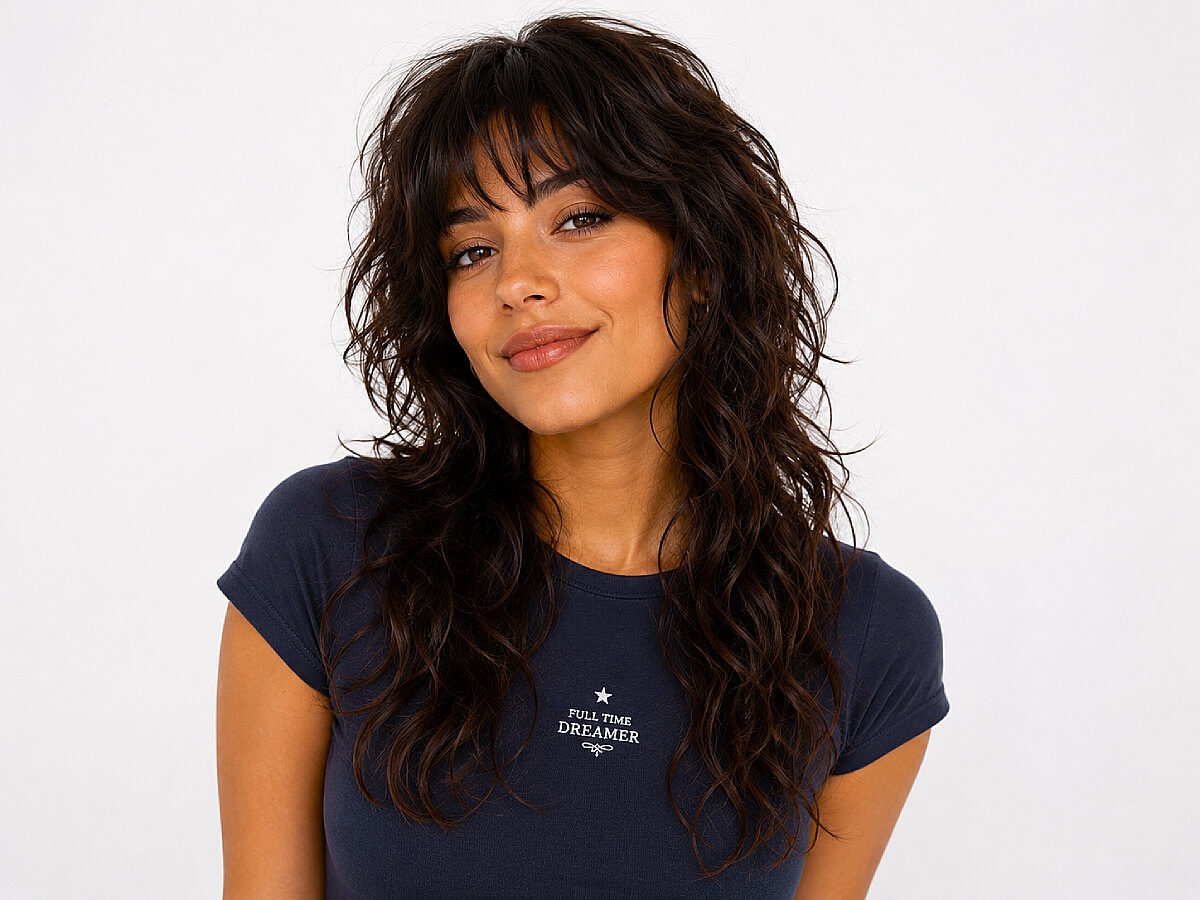
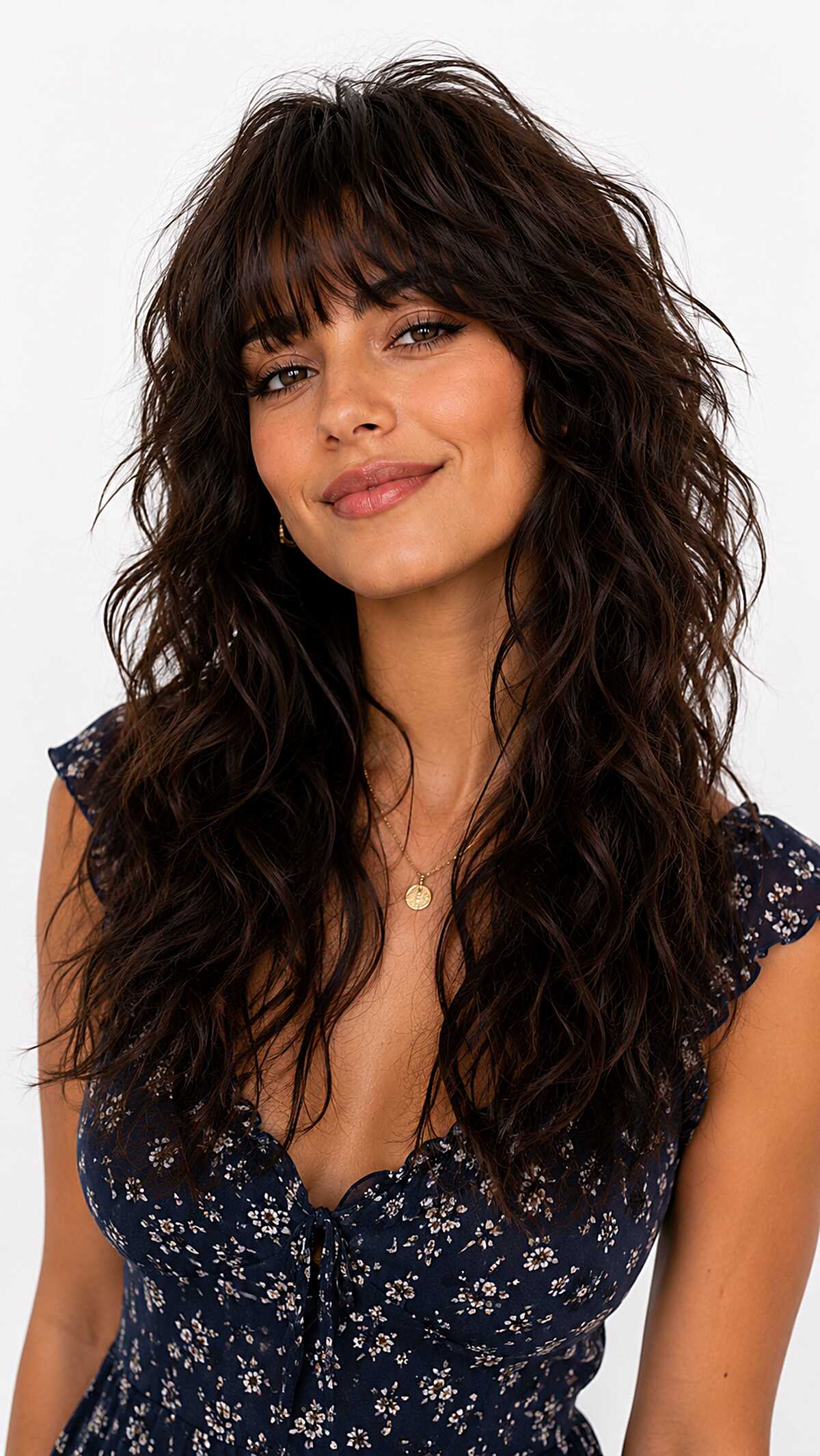

That fringe is doing serious work. It’s cut thick and blunt across the brow, then point-cut just enough to let it separate into pieces when the texture kicks in. Notice how the shortest layers start right at the cheekbone and blend into that wave pattern without creating a shelf. This needs density. Truly needs it. Fine or thin hair will leave gaps in the fringe within hours, and the body through the mid-lengths that makes this cut look alive simply won’t hold. If you have medium to thick hair with natural wave or curl, this is one of the most flattering long cuts you can ask for because the layers do the styling for you. On straight hair, you’re committing to daily effort you probably don’t want. Oval and heart-shaped faces wear a heavy fringe like this well, though round faces can pull it off if the cheekbone layers are kept longer than what’s shown here.
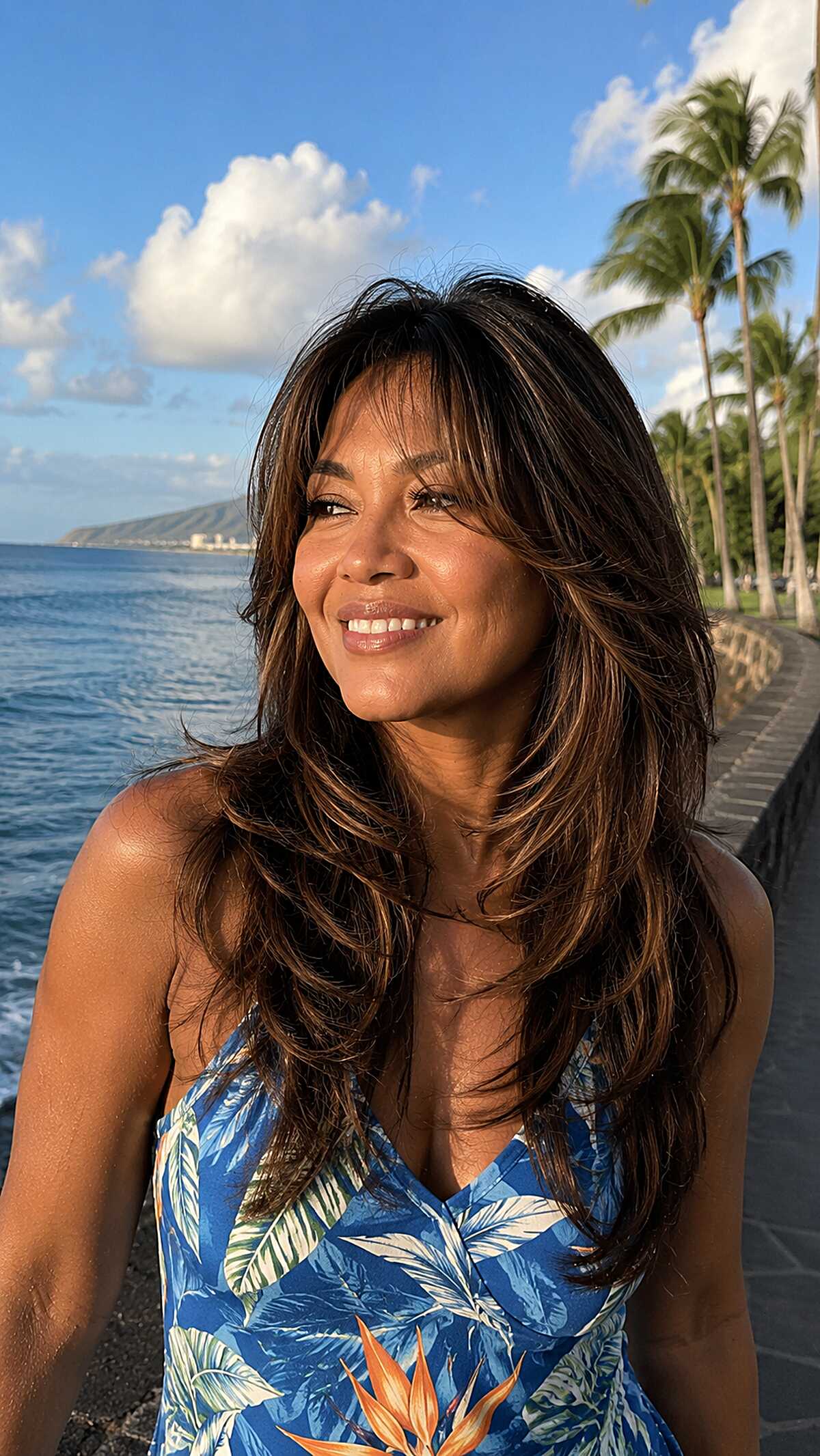
Notice how the layers kick outward at the collarbone instead of curling inward. That is not accidental. This was cut with a razor or heavy point-cutting through the mid-lengths to remove enough weight so the ends flip on their own, and it only works this well on medium to thick density hair. The color is a dark chocolate base with fine, hand-painted caramel pieces concentrated where sunlight would naturally hit, which means the grow-out stays believable for months. On fine hair, this whole thing goes flat. The face-framing pieces are cheekbone length and slightly separated from the longer curtain bangs behind them, which does a lot of quiet work opening up a rounder face shape. If you have naturally straight hair and expect this tousled movement without a round brush and some effort, you will be disappointed every single morning.
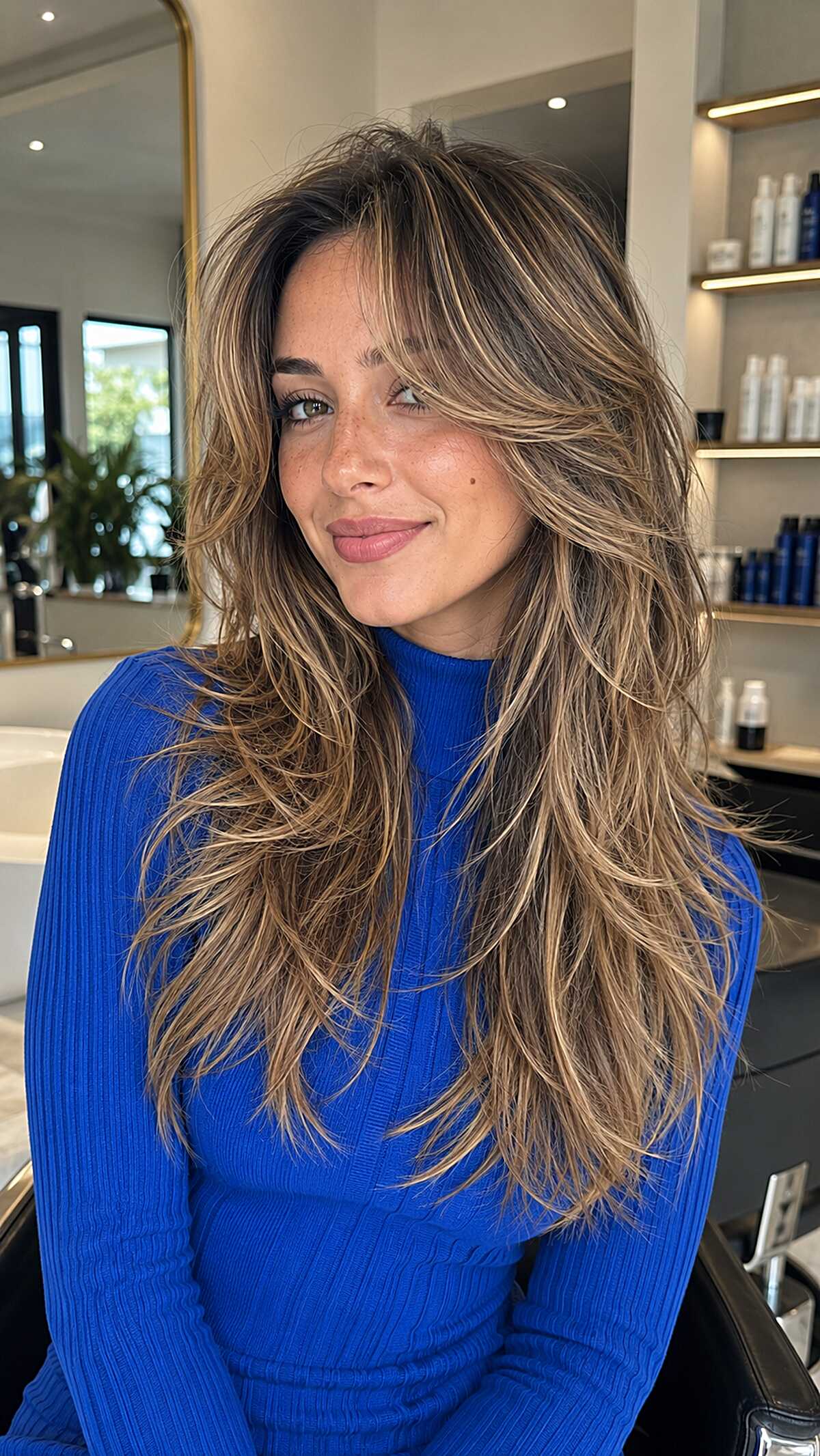
The ends tell the whole story here. They’re wispy, almost shredded, which means a razor or heavy point cutting was used throughout the lower half to strip weight and create that separation between pieces. On medium to thick hair, this looks incredible. On fine hair, it will look stringy within two weeks. The highlight placement is tight, thread-like babylights woven through a natural level 5 or 6 base, concentrated heavily around the face frame and scattered lighter through the back, which keeps the color from reading as stripy or dated. Notice how the fringe pieces aren’t blunt at all; they taper into the face-framing layers without a hard starting point, so they grow out without that awkward in-between stage. This works well on oval and heart-shaped faces because the long swooping pieces soften width at the cheekbones while the volume at the crown adds length. Round faces could pull it off too, though I’d keep the shortest layer higher. The real drawback is that this texture does not happen on its own. This is a round brush blowout with product, and without that effort, you’re getting flat roots and frizzy mids.
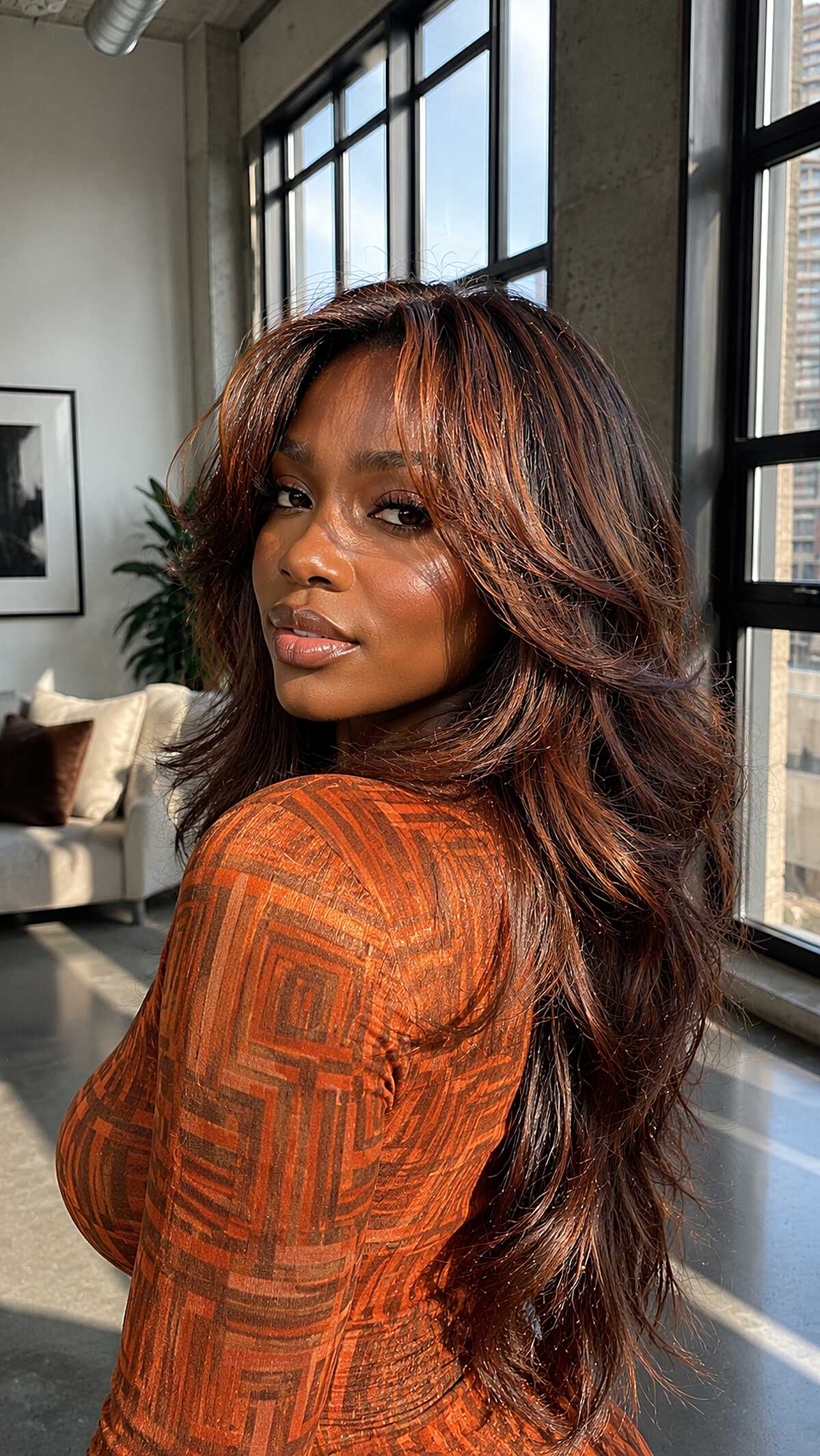
Those copper pieces are not balayage. They’re fine foiled ribbons placed through the mid-lengths, concentrated heavily around the face frame, and that precision is what makes the color look like it’s catching light instead of sitting flat. On deep brown to black natural hair, this copper tone reads warm without going orange because the base stays dark enough to anchor it. The cut is long with interior layers starting around the cheekbone, and the face-framing pieces flip outward in a way that only works if you’re willing to blow dry with a round brush or large barrel iron every time. This will not air dry like this. If you want wash-and-go ease, skip it. Dense, thick hair carries this volume naturally, and the weight at the ends keeps everything from looking too wispy or thin at the bottom. Round and oval face shapes wear this well because those shorter pieces opening away from the face create width at the temples without adding any below the jaw.
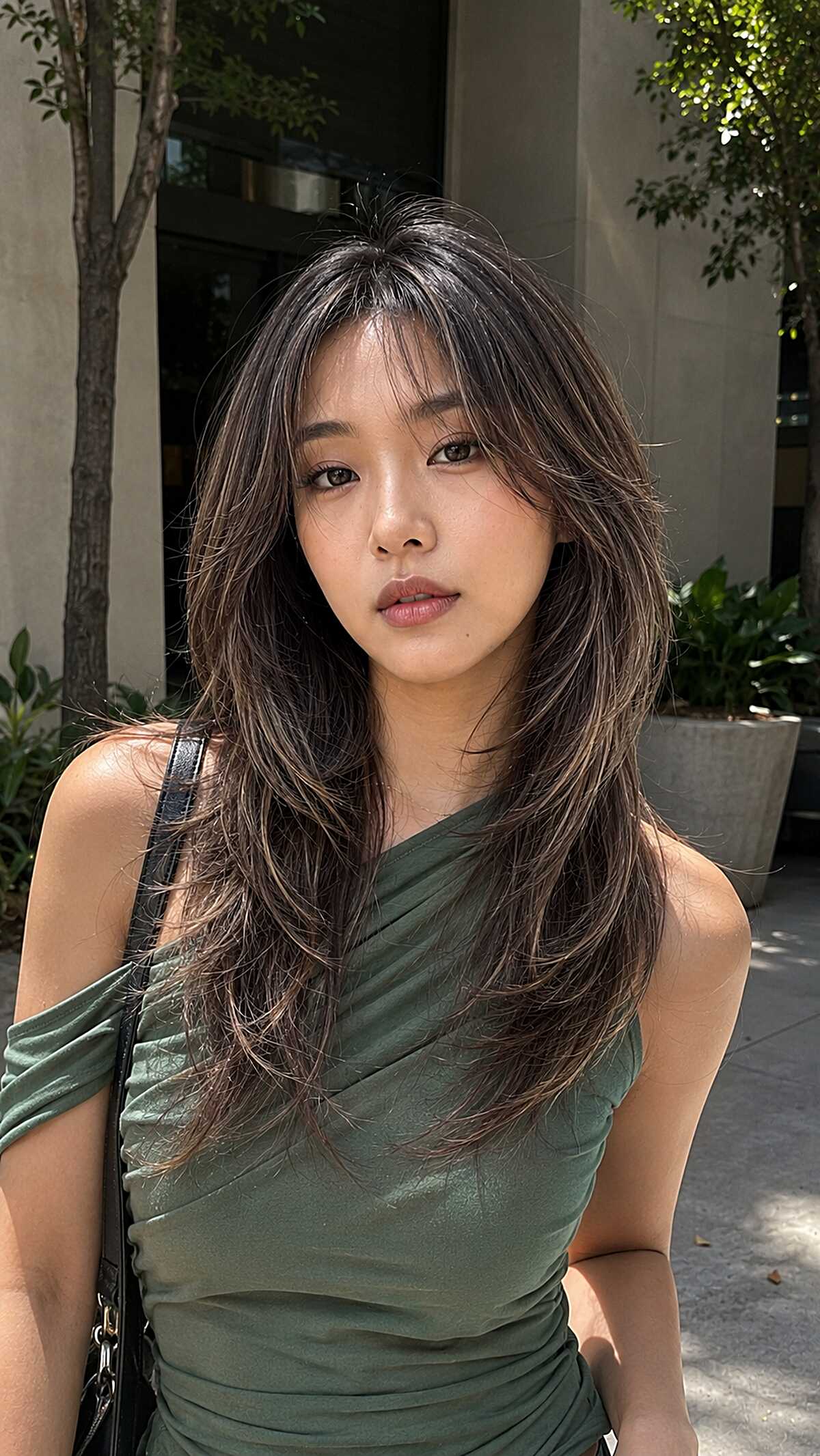
The shortest layers here sit right at the cheekbone, and that’s doing most of the work. They kick outward just enough to break up what would otherwise be a lot of flat, heavy hair hanging straight down. Look closely at the crown and you’ll see the layers were point cut to create lift without bulk, which is why the top has that natural separation instead of lying flat against the scalp. This is a medium to thick density cut. On fine hair, those wispy fringe pieces won’t hold their shape and the whole thing will read limp by noon. The length falls past the collarbone with long internal layers that taper toward the ends, keeping movement without sacrificing length. Oval and heart face shapes wear this well because the fringe and face framing soften width where it matters. Round faces will want shorter fringe pieces than what’s shown here, or the whole thing just frames the fullness you’re trying to minimize. Color is a natural dark brunette with no visible lightening work, which means zero upkeep on that front.
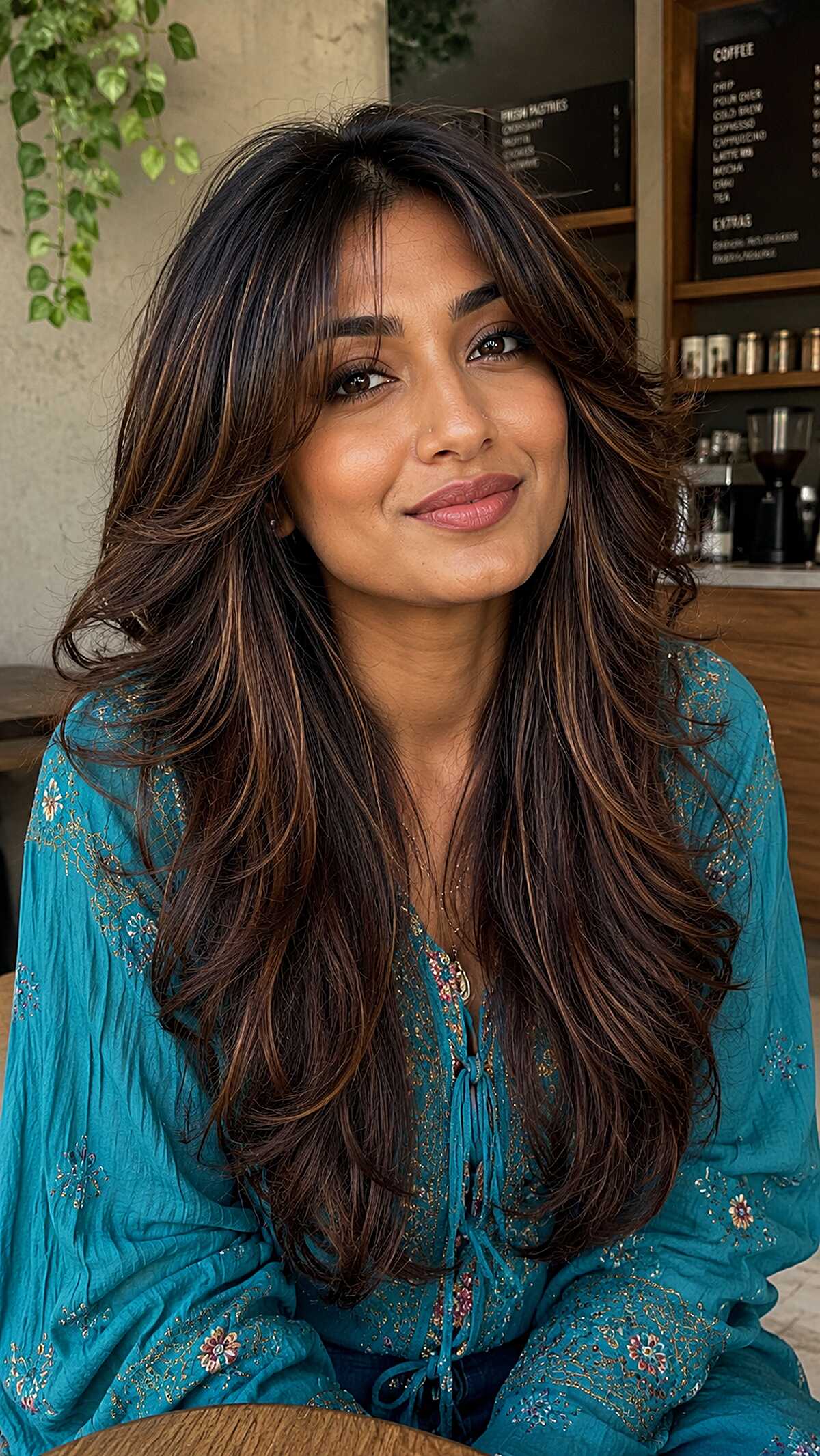
The face-framing pieces here are doing all the heavy lifting, and they’re cut shorter than you’d think, sitting right at cheekbone level with a razor so they kick outward instead of falling flat. That’s what gives this shape its width through the midface. If you have a longer or narrower face shape, this is worth paying attention to. The color is a warm cinnamon hand-painted through a deep espresso base, concentrated at the mid-lengths with almost nothing at the ends, which keeps the brightness close to the face and lets the length stay rich and dark. Thick hair only. Fine or medium density will not hold this structure without looking stringy by day two, and no amount of product fixes that. The interior layering is aggressive, probably point-cut and then razored to remove bulk from the crown down, which is what creates that natural lift at the top without any teasing or round-brush work.
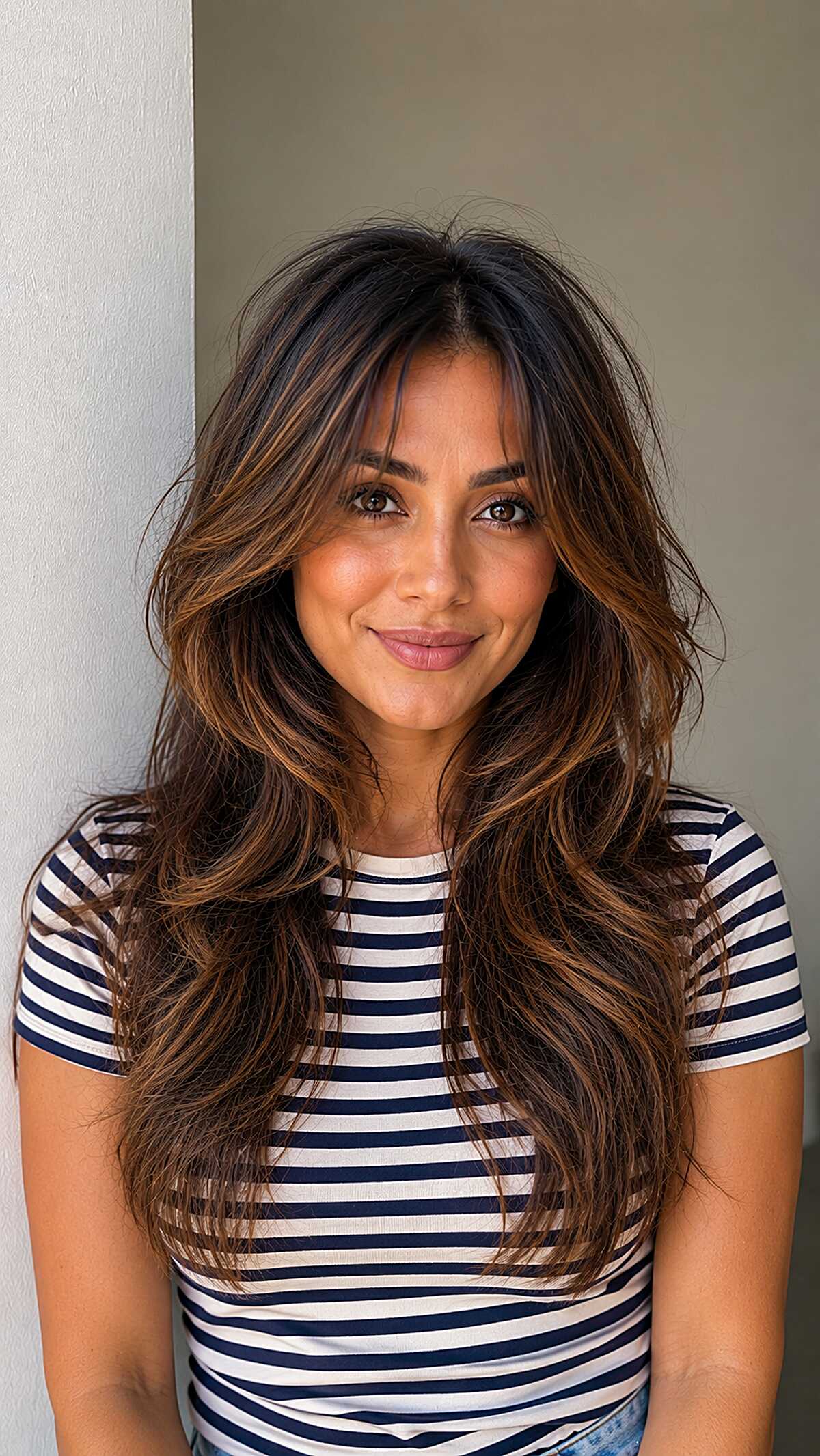
Look at where the volume sits. It’s all concentrated at cheekbone level, which means those interior layers were cut shorter than they appear, probably around chin length, then blow-dried with a round brush flipping away from the face. This is a thick hair cut. Fine hair will not hold that shape without serious product and effort, and even then it’ll fall flat by noon. The caramel balayage is painted only on the face-framing pieces and scattered through the midlengths, keeping the root area untouched so grow-out stays invisible for months. Oval and heart faces will love what those swooping layers do. Round faces, less so, because all that width at the cheeks adds more fullness exactly where you don’t want it.
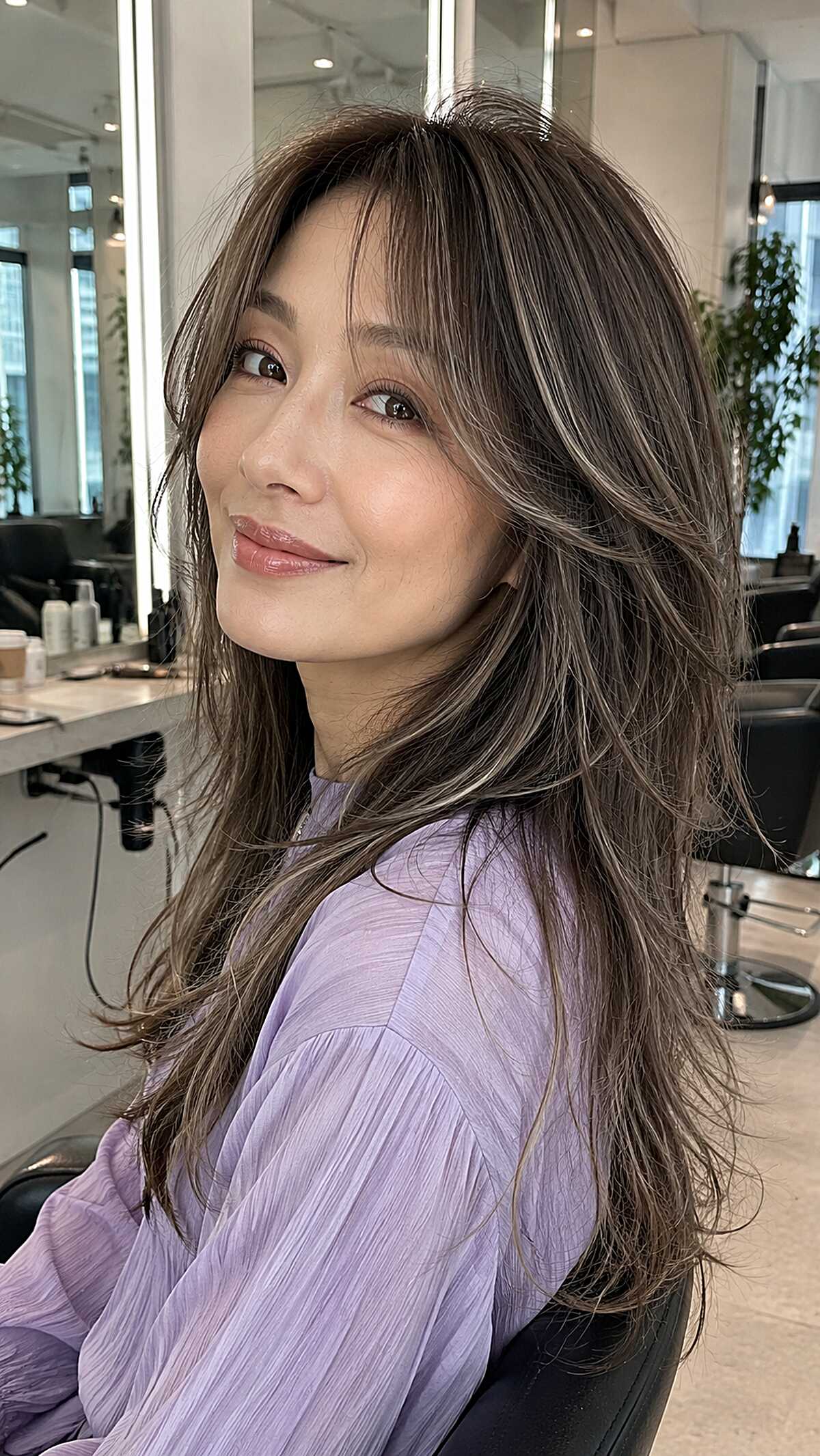
Those highlights are not blonde. They’re a deliberate ashy mushroom tone woven through a dark base, and the colorist kept them concentrated from the midshaft down so the root area stays clean for weeks longer than a traditional foil job would. The layers start high around the cheekbone and the fringe pieces are cut thin, almost transparently so, which is what gives the whole thing that airy quality around the face. This works on medium to thick density because the internal layering needs enough hair to hold volume at the crown without looking sparse at the ends. If your hair is fine, those wispy fringe pieces will go flat by noon and the whole structure collapses. Oval and heart face shapes wear this well. One thing worth noting is how textured the ends are, likely point cut or razor finished, which means they will fray and lose their shape faster than blunt ends.
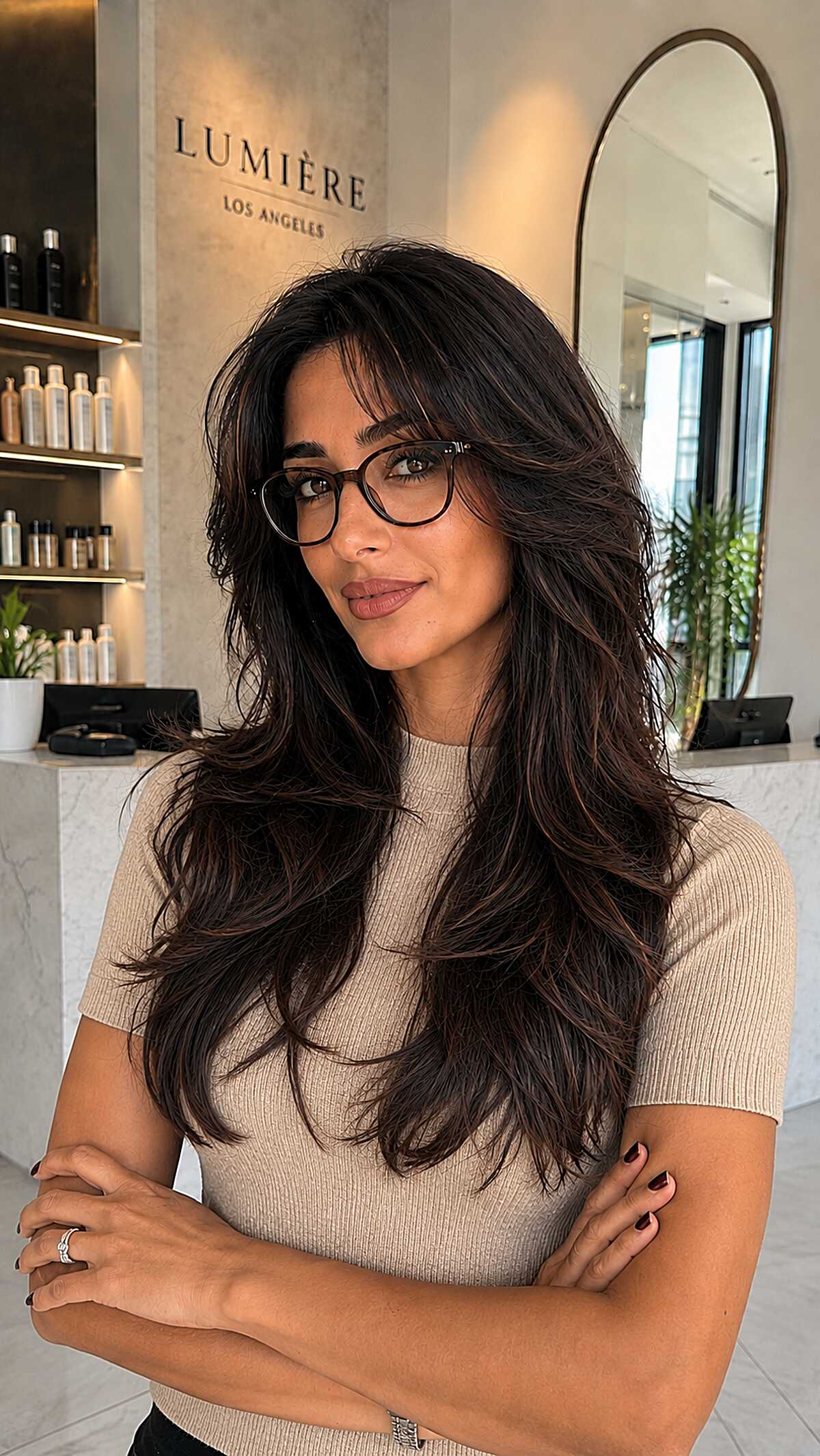
The shortest layers here sit right at the cheekbone, and that’s doing all the heavy lifting for the shape of this cut. Long razored layers through mid-length to ends create that big, swept movement without bulk sitting in the wrong places. You need thick or at least medium-density hair for this. Fine hair will not hold this silhouette and will look stringy by noon. The color is nearly monochromatic, a deep espresso with zero visible highlights, which is what lets the texture read so clearly. On thin or flat hair, that single-tone dark would go flat fast. This works on oval and oblong faces particularly well because the width at the cheekbones and jaw created by those face-framing pieces balances length. One thing worth noticing is how the fringe pieces are kept intentionally longer and choppier than a traditional curtain bang, blending into the layers rather than sitting as a separate element. It makes styling forgiving. The tradeoff is that this cut grows out messy, not cool-messy, and needs reshaping every eight weeks to keep the face frame from losing its purpose.
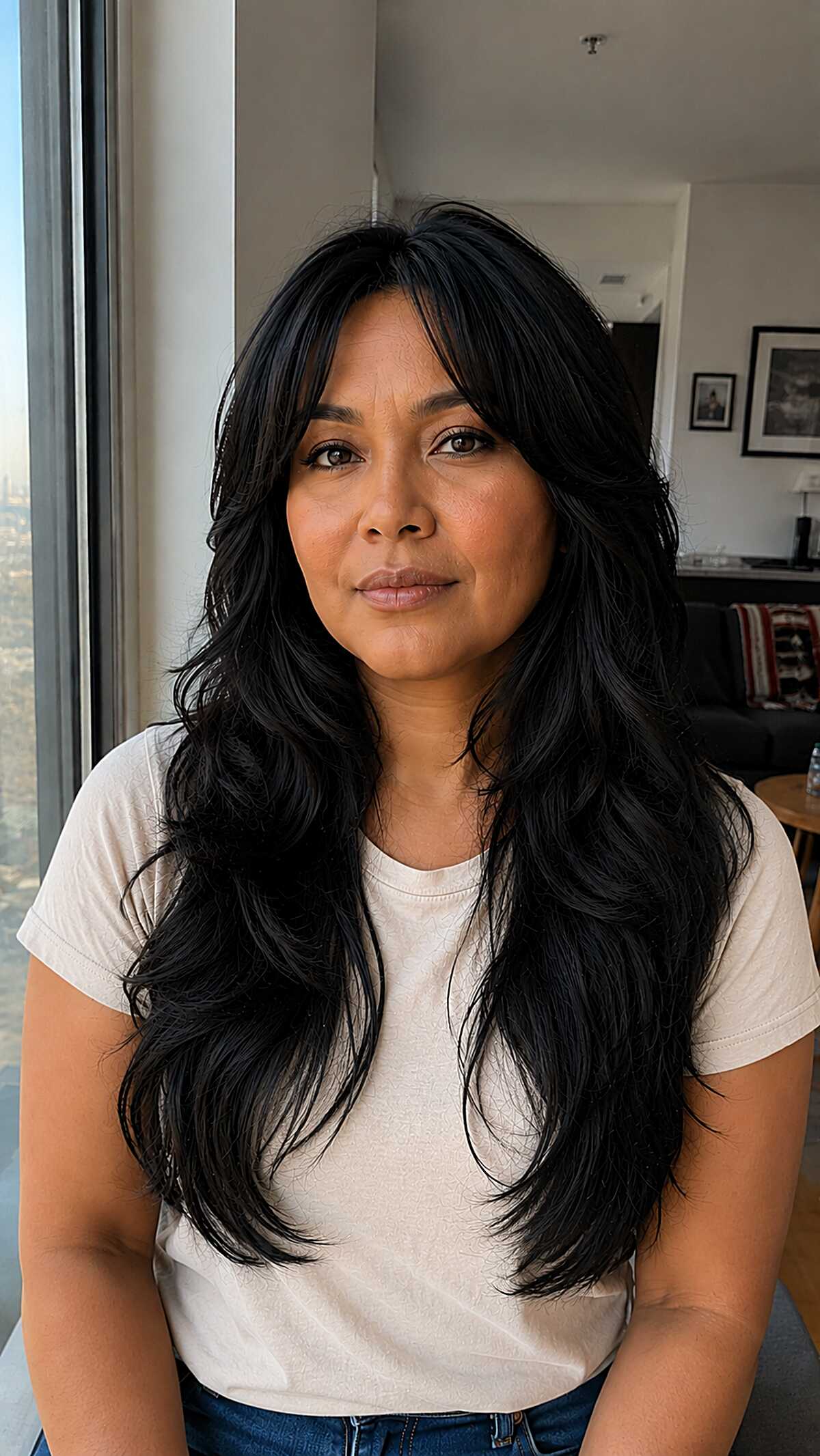
The shortest layers here start right at the cheekbone, and that placement is doing real work to keep a rounder face shape from looking wider. Look at how the fringe splits and fans outward just enough to create openness around the eyes without going full curtain bang. This is thick, dense hair with a natural wave pattern that the stylist clearly worked with rather than against, using long razored layers to remove bulk through the midsection while keeping that dramatic weight at the ends. On fine hair, this cut falls flat. It needs volume to hold the shape. The single-process black is glossy and low-maintenance, which is honest, but it will show every bit of damage if you heat-style daily.
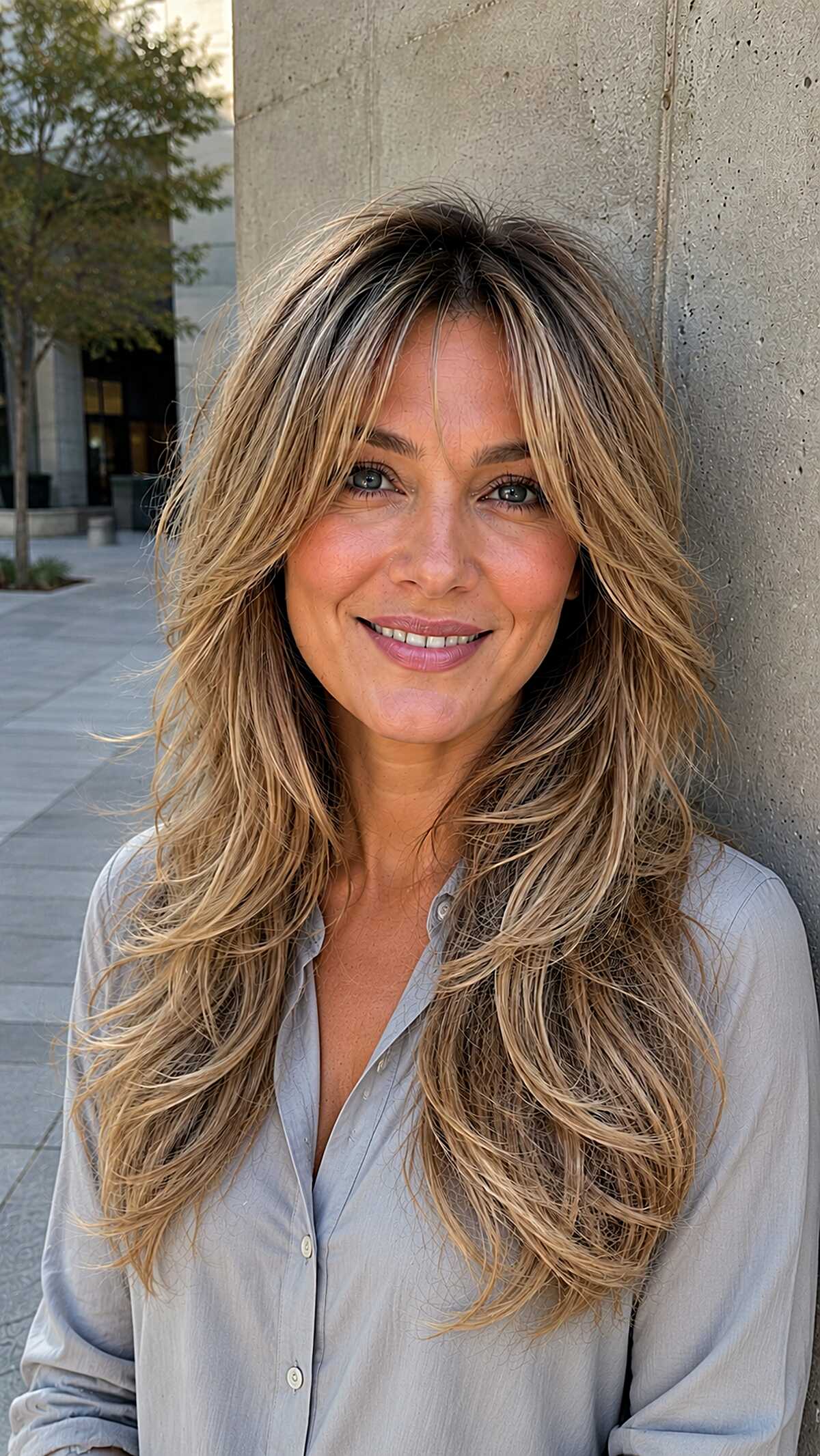
The fringe here is doing something sneaky. It’s cut thin and wispy enough to separate into individual strands across the forehead, which narrows a wider face without looking heavy or blunt. That takes a razor or point cutting with real restraint. This is a long, heavily layered shag on medium-density hair with a dark root melting into warm honey and sandy blonde through the mids and ends. The layers start high at the crown and cascade outward, creating that full, lifted shape at the top that gradually loosens toward the collarbone and below. It will not work on truly fine hair. The volume you see depends on having enough hair to stack through those interior layers, and without it you’ll get flat wisps instead of movement. Oval and heart faces wear this well. If your jaw is already narrow, the long face-framing pieces will only make it look longer.
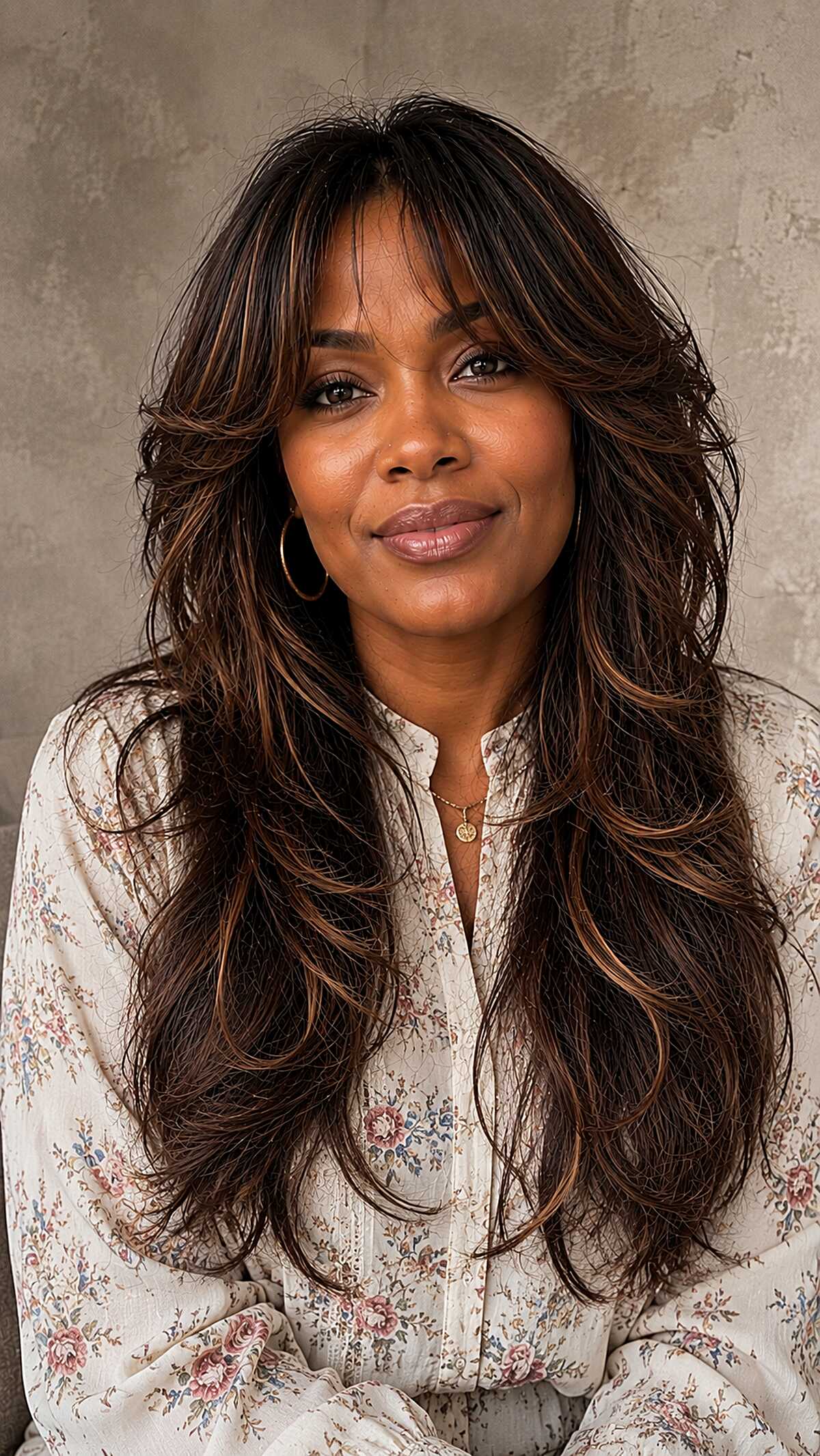
The fringe here is doing almost all of the structural work, and that’s worth knowing before you commit. Those curtain bangs are cut with a razor to feather right at the cheekbone, which is why they blend so seamlessly into the face-framing layers rather than sitting as a separate element. The chestnut highlights are hand-painted only on the mid-lengths and ends, leaving the root area completely untouched, which is what keeps this from reading as “highlighted.” On fine hair, this amount of layering would collapse. You need density. This is a thick-hair cut, and on anything less it will look stringy by day two.
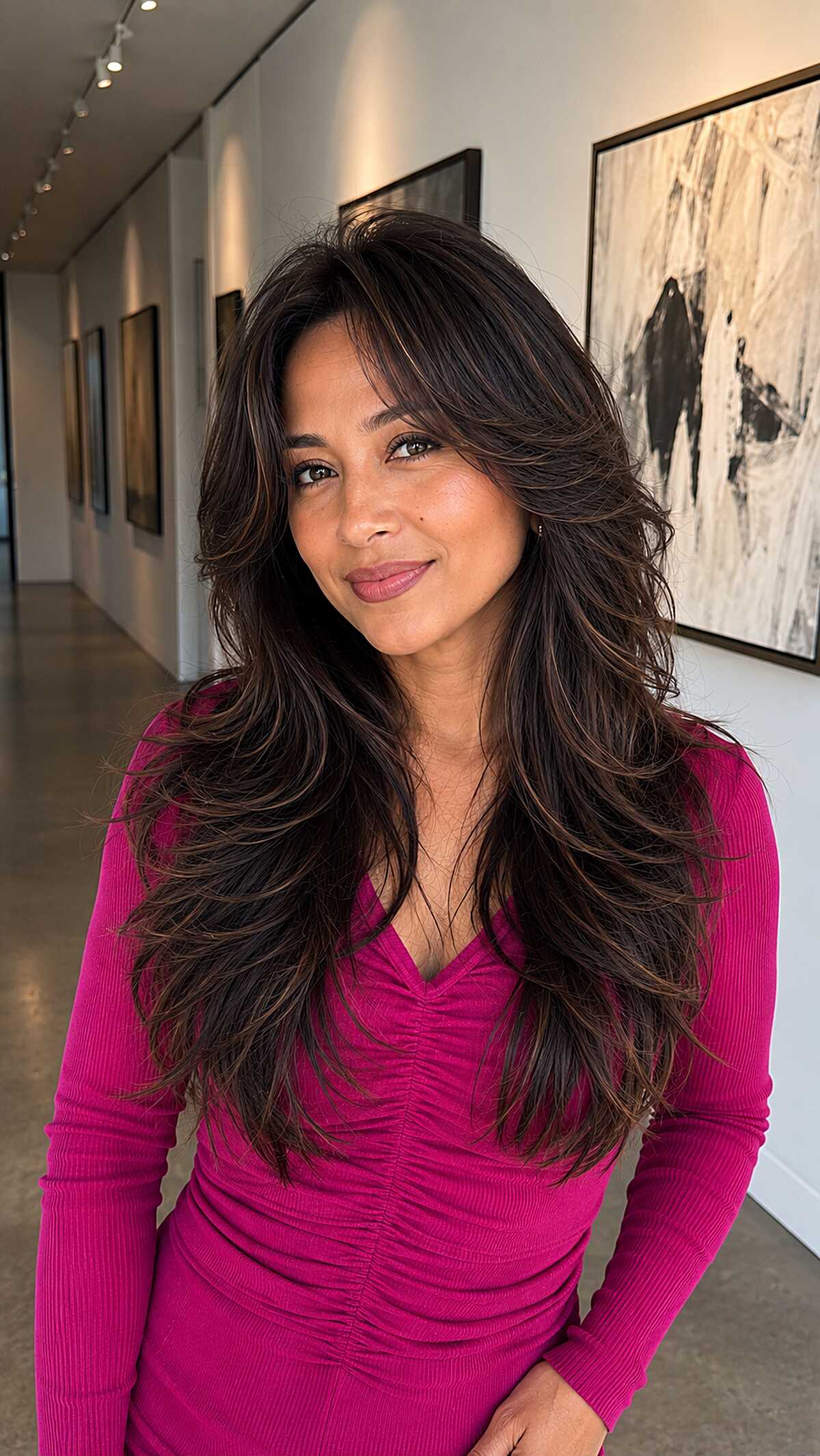
The shortest layers here sit right at the cheekbone, and that’s doing all the heavy lifting. Notice how they kick outward away from the face instead of curving in, which is what gives this cut its width and keeps it from looking like every other long layered style. This needs medium to thick density to hold that volume through the crown and midsection; on fine hair the top will flatten within an hour and the whole shape collapses. The color is her natural dark brunette with barely-there warm threading picked up by the light, nothing that requires foils or upkeep. Slide cutting through the interior created that piecey separation without thinning the ends too much. Oval and heart face shapes wear this well. Round faces should know those outward-flipping cheekbone layers will add horizontal width exactly where you don’t want it.
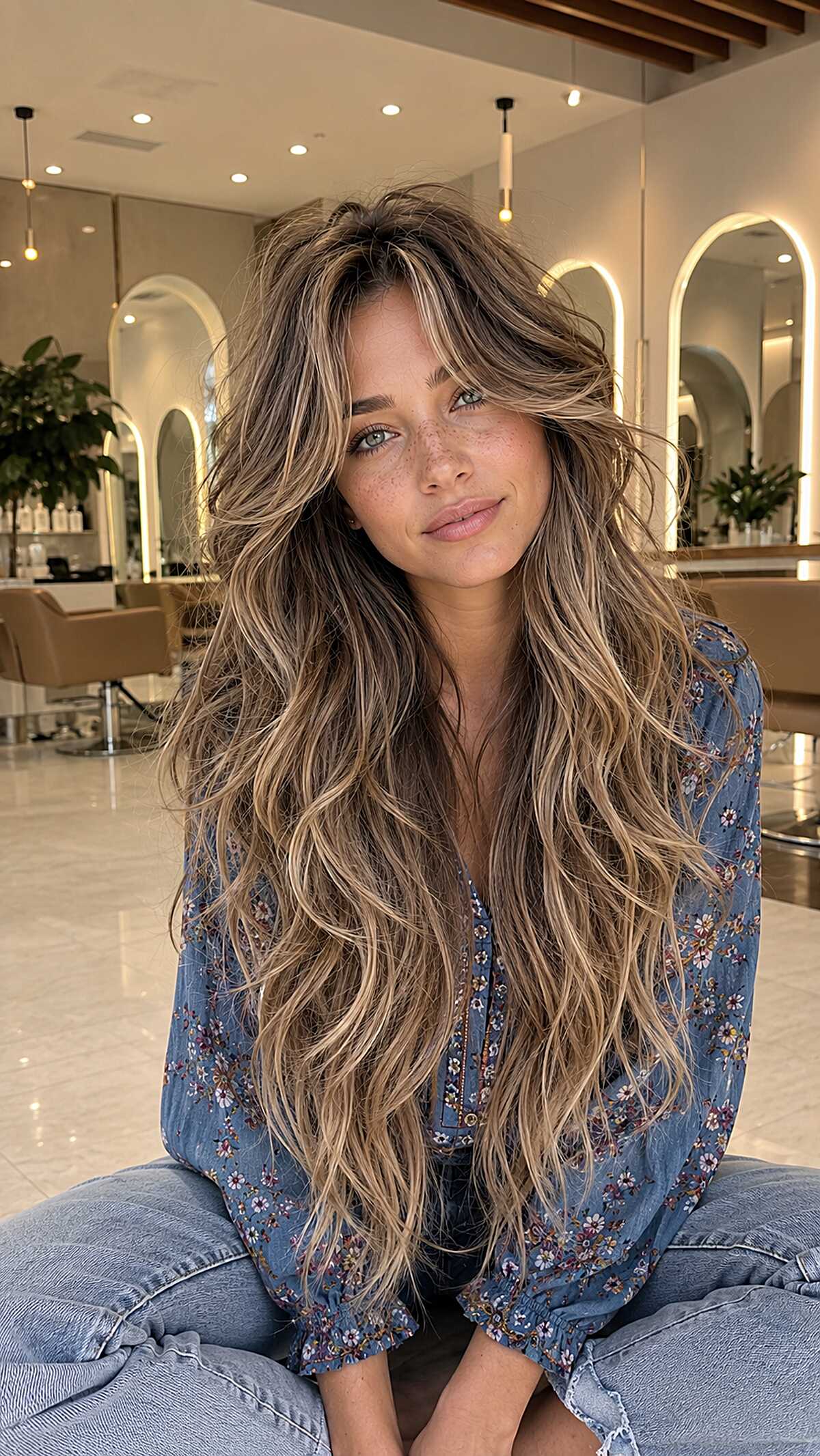
The color here is doing at least half the work. That bronde situation, where you genuinely can’t tell if someone is a brunette or a blonde, is one of the most flattering tonal ranges that exists, and when it’s layered into an Allie cut with this much texture, it reads as the kind of hair people are born with in places where the weather is always good. The deep side part pushes all that volume to one side, which is a nice way to wear this cut when you don’t want the full symmetrical curtain effect.
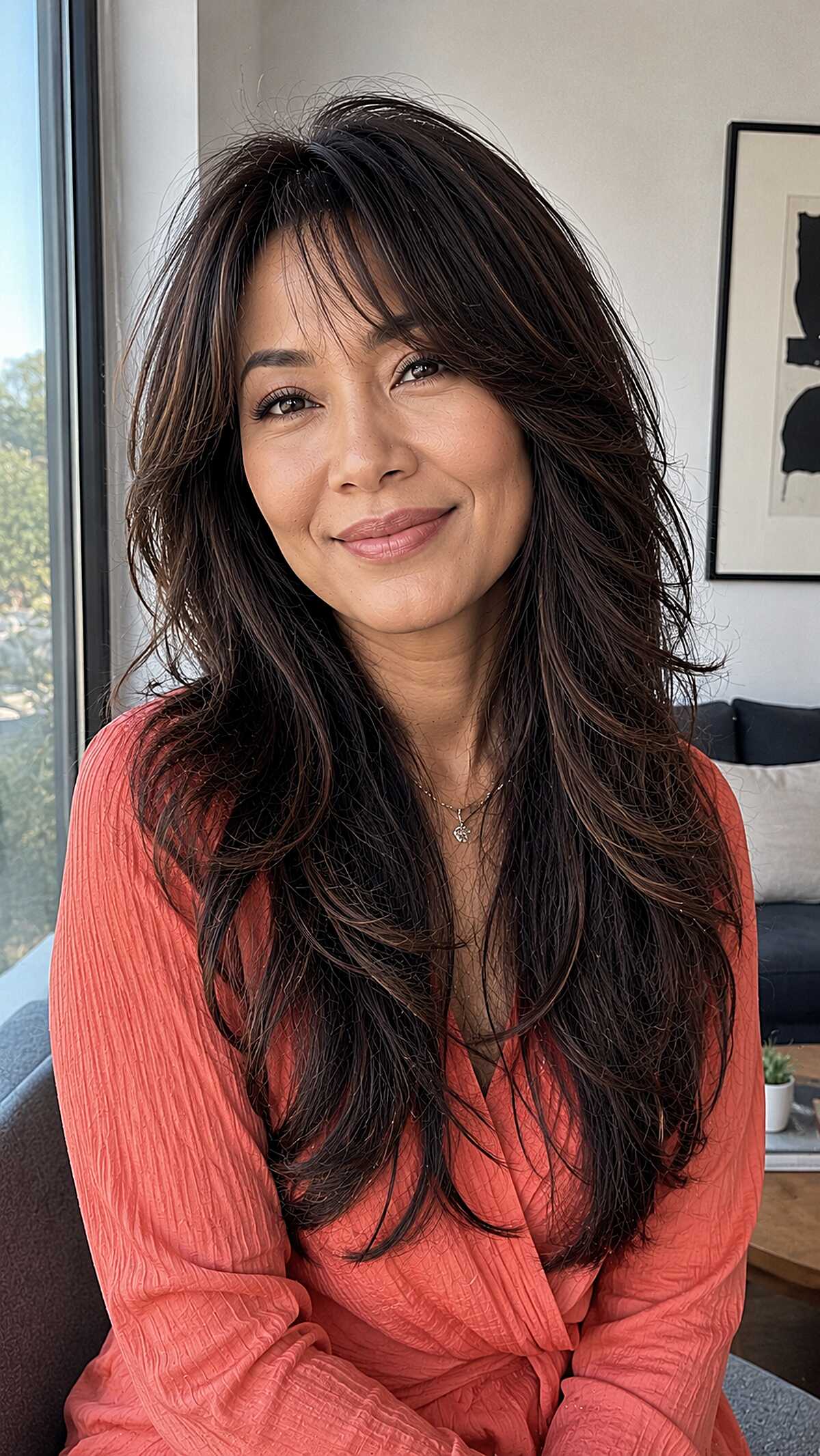
Look at the crown. There’s real volume happening there, and it’s not from a round brush or product buildup. The interior layers were razor cut short enough to lift on their own, which is doing most of the heavy lifting in this whole look. Long, dark, natural-colored hair with graduated face-framing pieces that start around the cheekbone and blend into the length past the collarbone. This works on medium to thick density because the razoring removes weight without making the ends look scraggly. On fine hair, those wispy fringe pieces will separate and go flat by noon. Oval and heart face shapes benefit from the way the shorter pieces open up around the eyes while the length below the jaw keeps things balanced. One thing worth noting is how the texture through the mids reads slightly rough, almost air-dried, and that’s intentional. This cut is built to look good without much effort, which is honest until you realize you still need to know how to scrunch and diffuse correctly or it just looks messy.
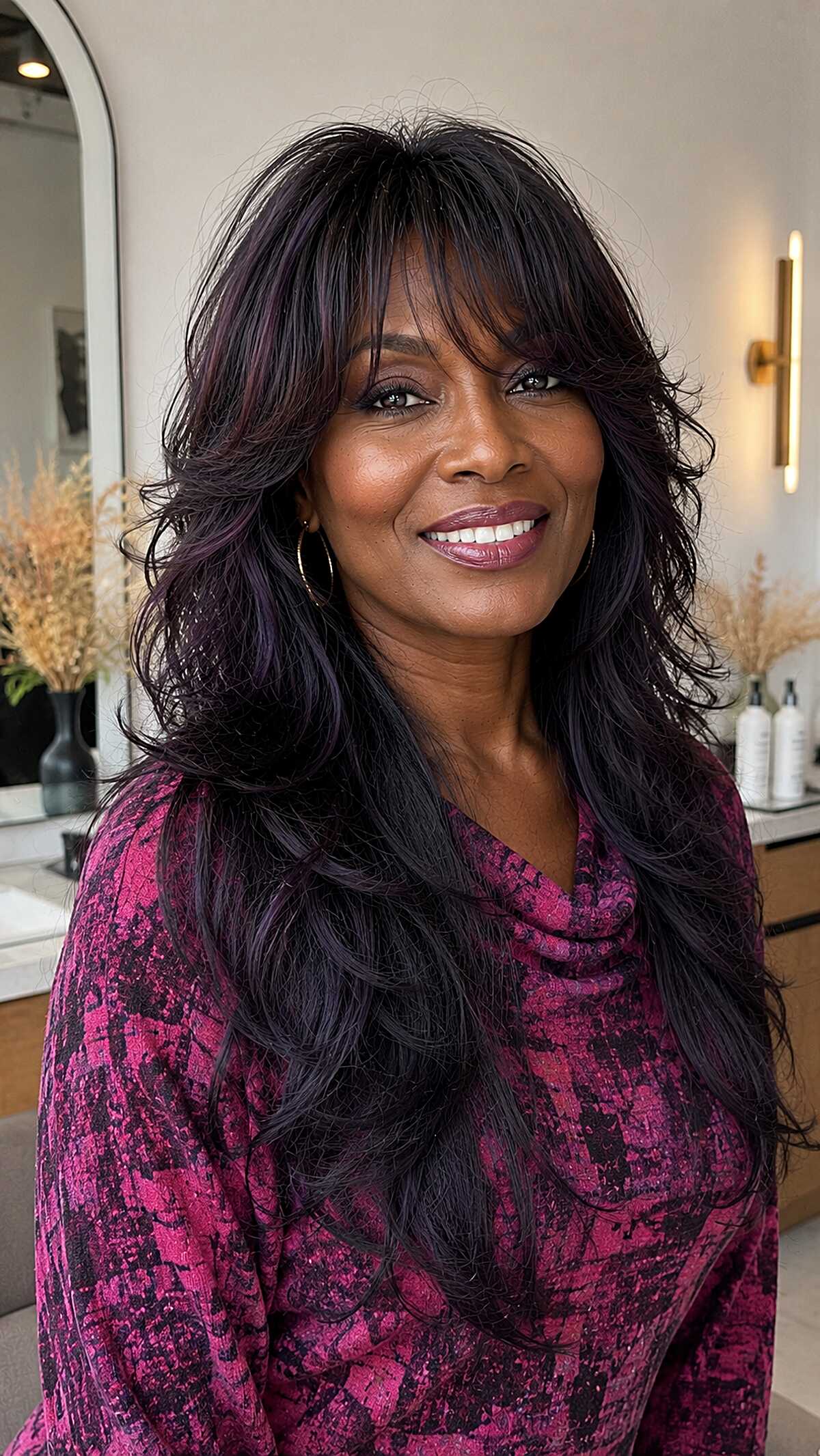
Look at how the shortest layers sit right at the crown and kick outward, creating all that height without a single hot roller. That’s razored layering doing the work, carved in at steep angles so the pieces separate on their own. The color reads jet black at first glance, but there’s a cool violet thread running through the midshaft that only catches light at certain angles, likely a semi-permanent gloss over natural dark hair. On fine or thin hair, this cut would fall flat within an hour. It needs density. The volume here comes from having enough hair to let those layers stack and lift without exposing scalp at the crown, so if your hair is on the thinner side, this specific structure will disappoint you. For anyone with medium to thick hair and natural texture, though, this is one of the most forgiving cuts you can get because the movement hides imprecision and rewards second-day hair. The fringe is long enough to sweep past the brow and blend into the face-framing pieces, which keeps it low commitment. Oval and heart face shapes wear this well. Round faces might find the volume at the cheekbones adds width exactly where they don’t want it.
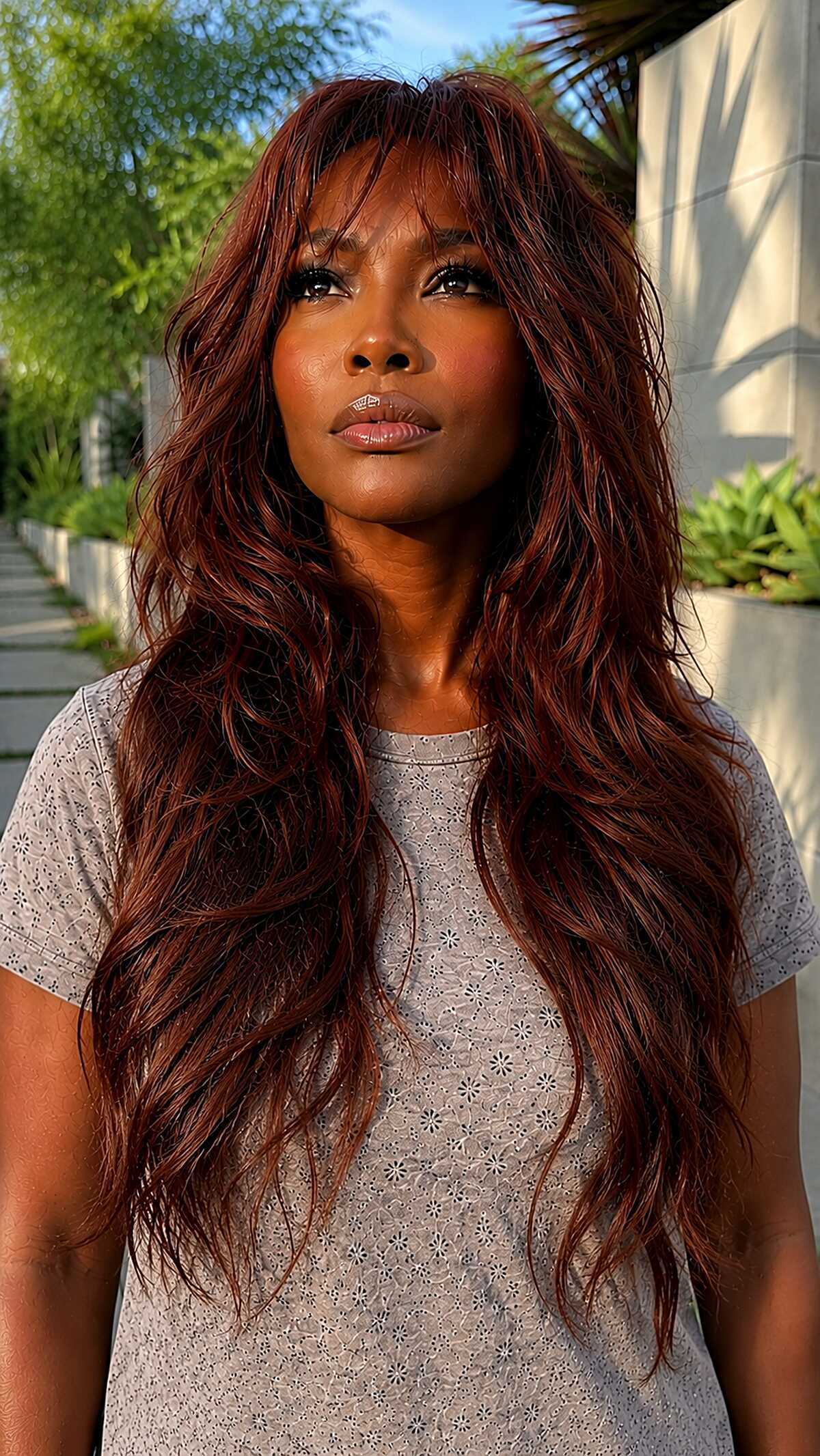
That red will fade. Fast. If you’re not ready for color-depositing conditioner every wash and a gloss refresh every few weeks, this cherry cola tone will go muddy on you before the month is out. Now, what’s worth knowing: the fringe here is cut wispy and thin, not blunt, which is why it sits so naturally against her forehead without looking heavy. Long razored layers through waist-length hair with enough density to hold that wave pattern without going flat at the ends. If your hair is fine, you won’t get this volume. The color itself looks like a demi-permanent overlay pulling warm red over a dark base, and in direct sunlight those auburn ribbons catch light in a way that works particularly well on deeper skin tones. Oval and heart faces wear this fringe well.
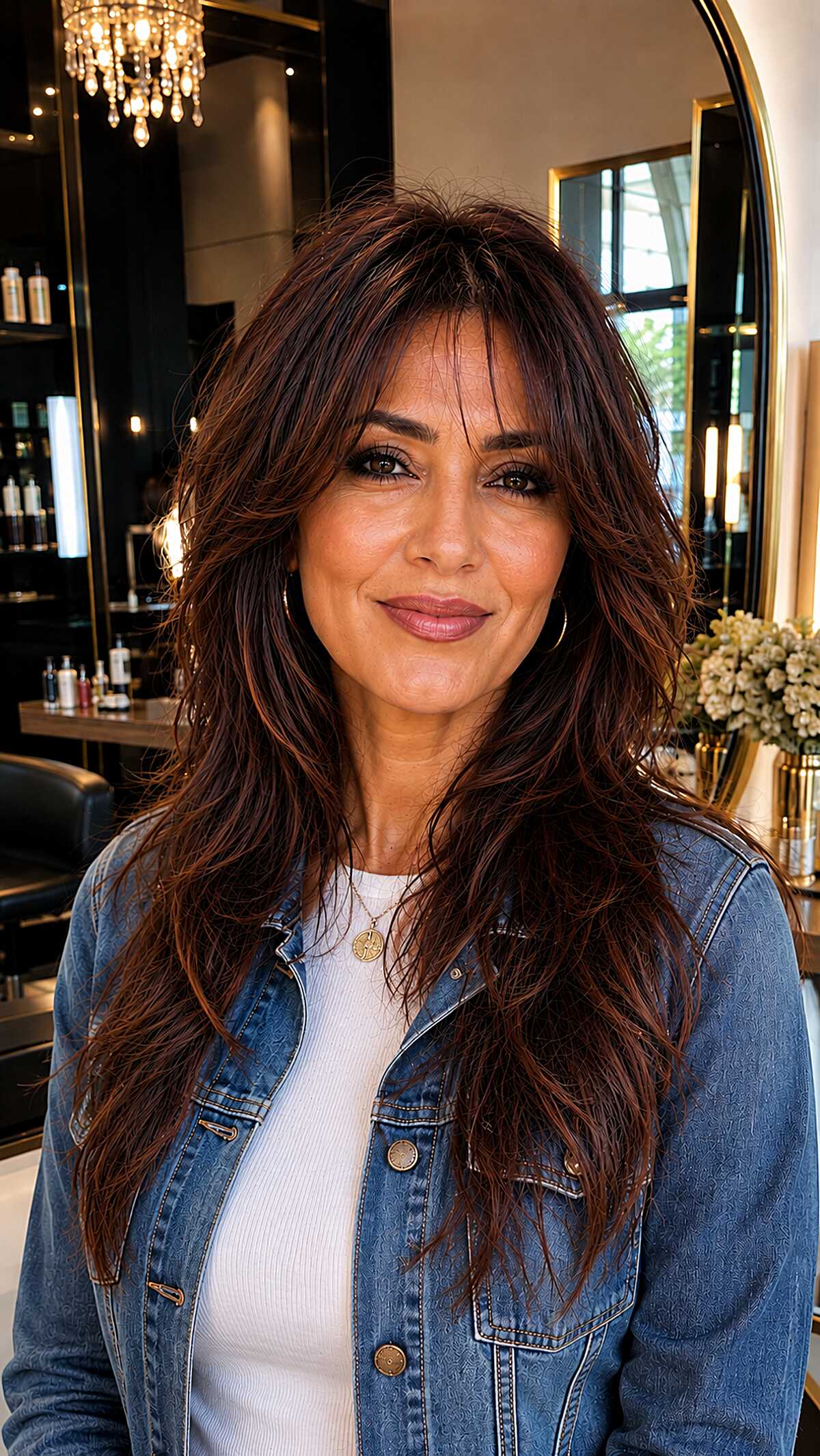
The crown volume here is doing all the heavy lifting, and it only works because of how aggressively those interior layers were razored to build lift without bulk. This is a long shag on medium-to-thick hair with a deep mahogany tone that reads almost black at the root and warms to a reddish chestnut at the ends. Notice how the shortest face-framing pieces hit just below the cheekbone, not at the jaw, which keeps the whole shape feeling open rather than heavy. On fine hair, this cut will go flat within hours. It needs density. The fringe is wispy and parted soft, blending into those choppy layers so there’s no hard commitment line if you’re growing it out. Oval and heart face shapes wear this well because the width sits high. If your face is round, all that cheekbone-level texture will work against you.
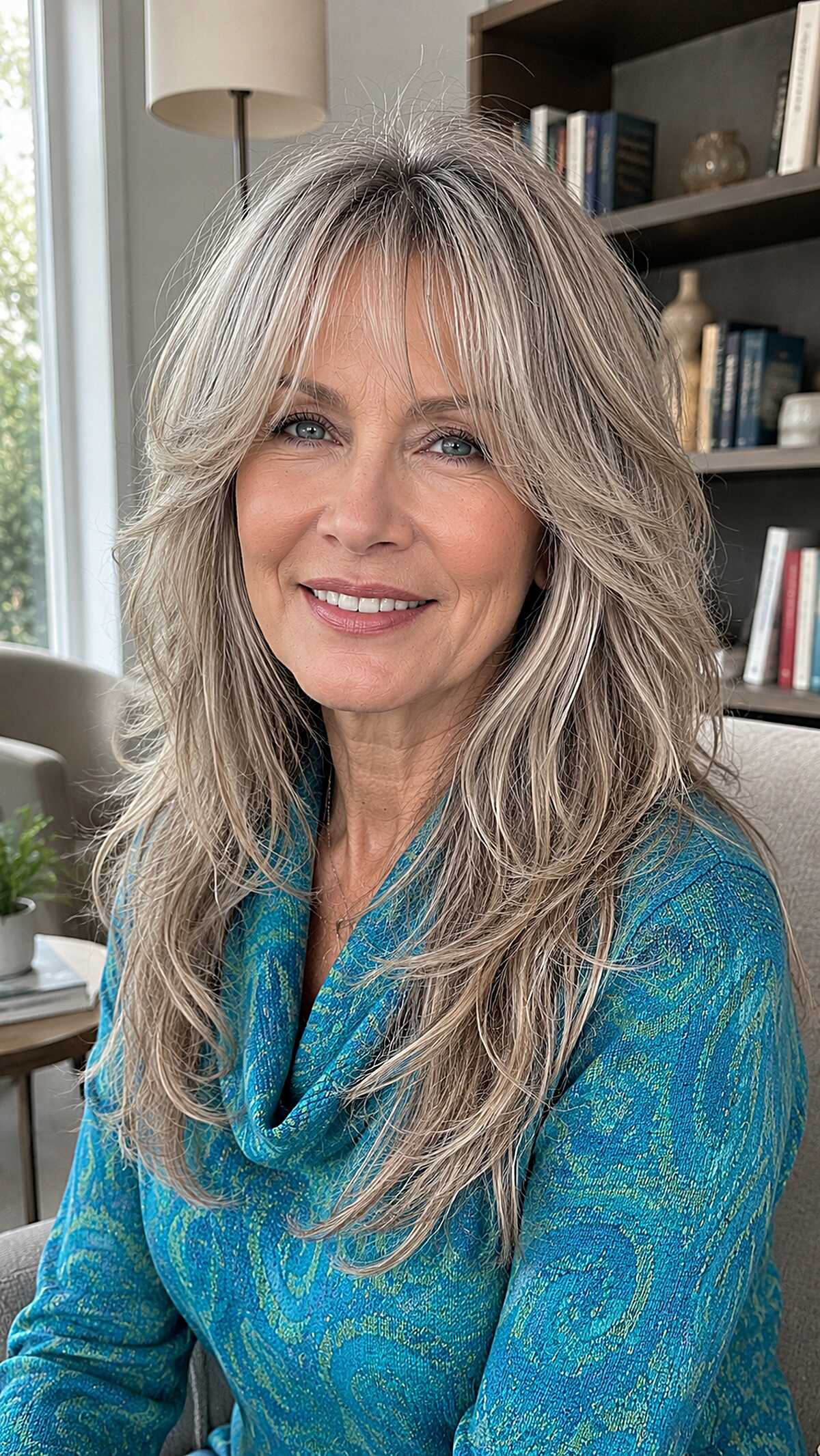
What strikes me first is that the gray isn’t hidden. It’s woven in with the remaining darker strands through what looks like a strategic decision to stop fighting the grow-out and instead let a colorist place lowlights around the natural silver so everything reads as one intentional palette. The layering starts high at the crown with razor-cut interior texture that builds volume where fine hair tends to go flat, and the face-framing pieces are cut to sweep open across the cheekbones, which is genuinely flattering on longer face shapes. This needs medium to thick density to pull off. Thin hair will look sparse at these lengths. The fringe is wispy and parted, not blunt, so it won’t work if you want something structured across your forehead.
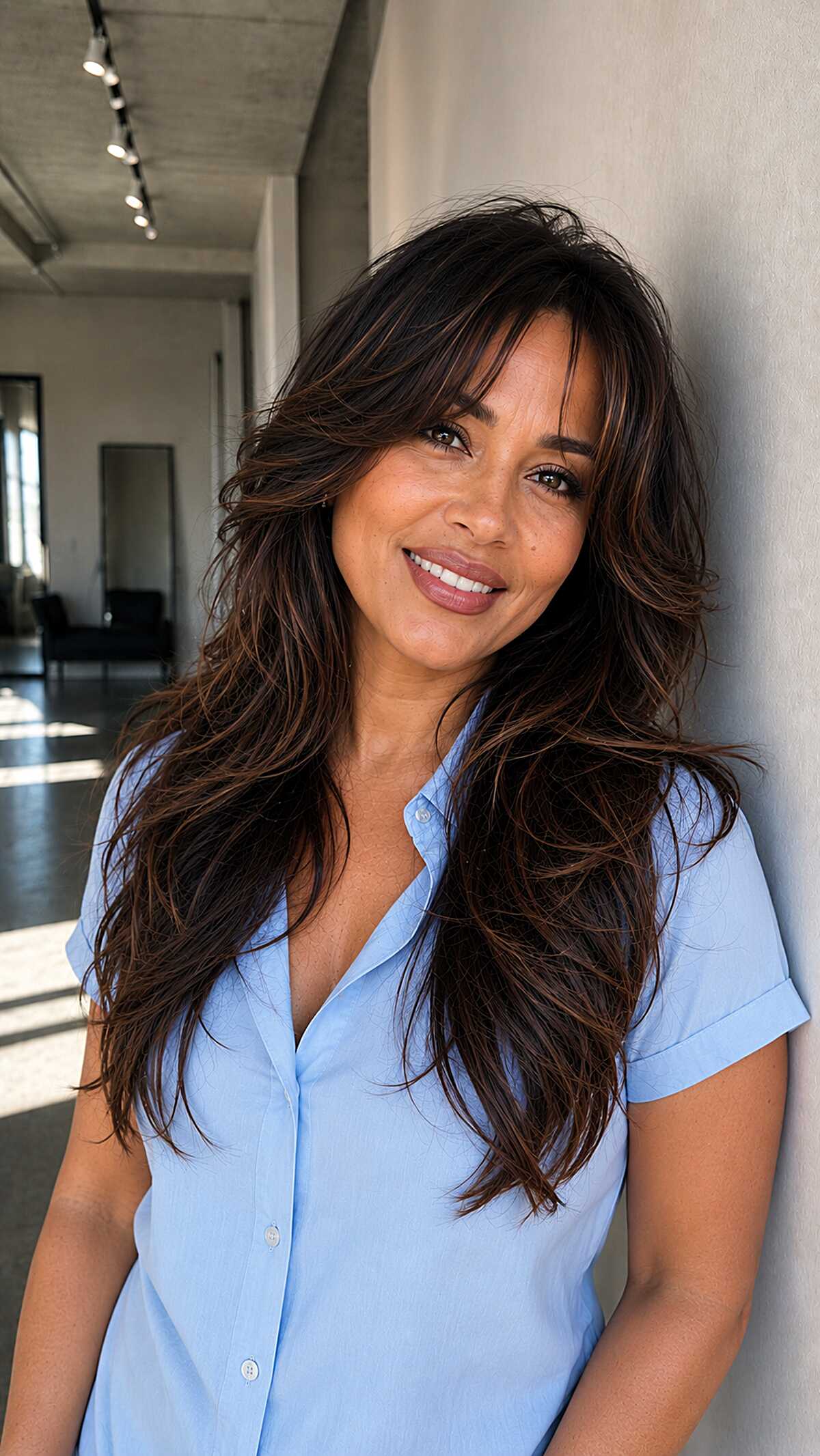
Notice the fringe isn’t one length. It’s been point cut in staggered sections so it fans across the forehead and blends into the face-framing pieces without a hard line, which is what gives the whole front that effortless diagonal sweep. This needs medium to thick density to pull off. On fine hair, those long interior layers will just hang flat and you’ll lose all that texture and volume through the midshaft that makes this cut work. The color is a near-natural dark espresso with a few finely woven caramel ribbons placed mostly from the mid-lengths down, just enough to catch light without reading as highlights. It suits oval and heart face shapes particularly well because the heavy side part and that sweeping fringe create asymmetry that balances wider foreheads. Round faces will struggle here. The length past the collarbone plus the volume at the crown can widen the overall silhouette in ways that won’t flatter you. This cut will not air dry like this.
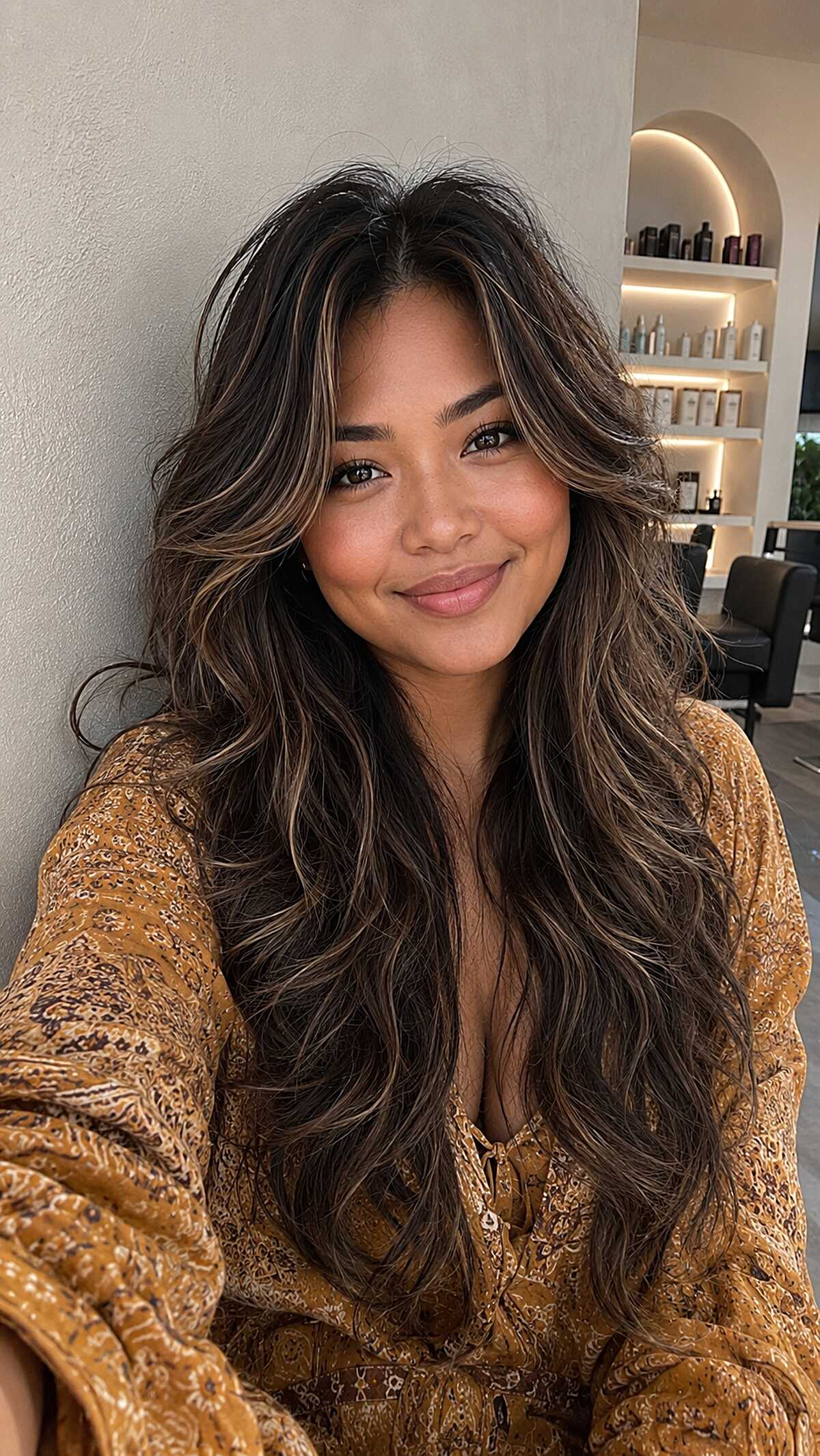
The color here is so close to natural that it takes a moment to register the highlights at all, which is exactly the point. This is the kind of work where the colorist is enhancing what’s already there rather than creating something new, and it suits the Allie cut’s low-effort ethos perfectly. The volume through the crown is impressive without looking stiff, and the longer layers have a soft, relaxed wave pattern that suggests either naturally cooperative hair or a 1.5-inch curling iron used loosely and strategically.
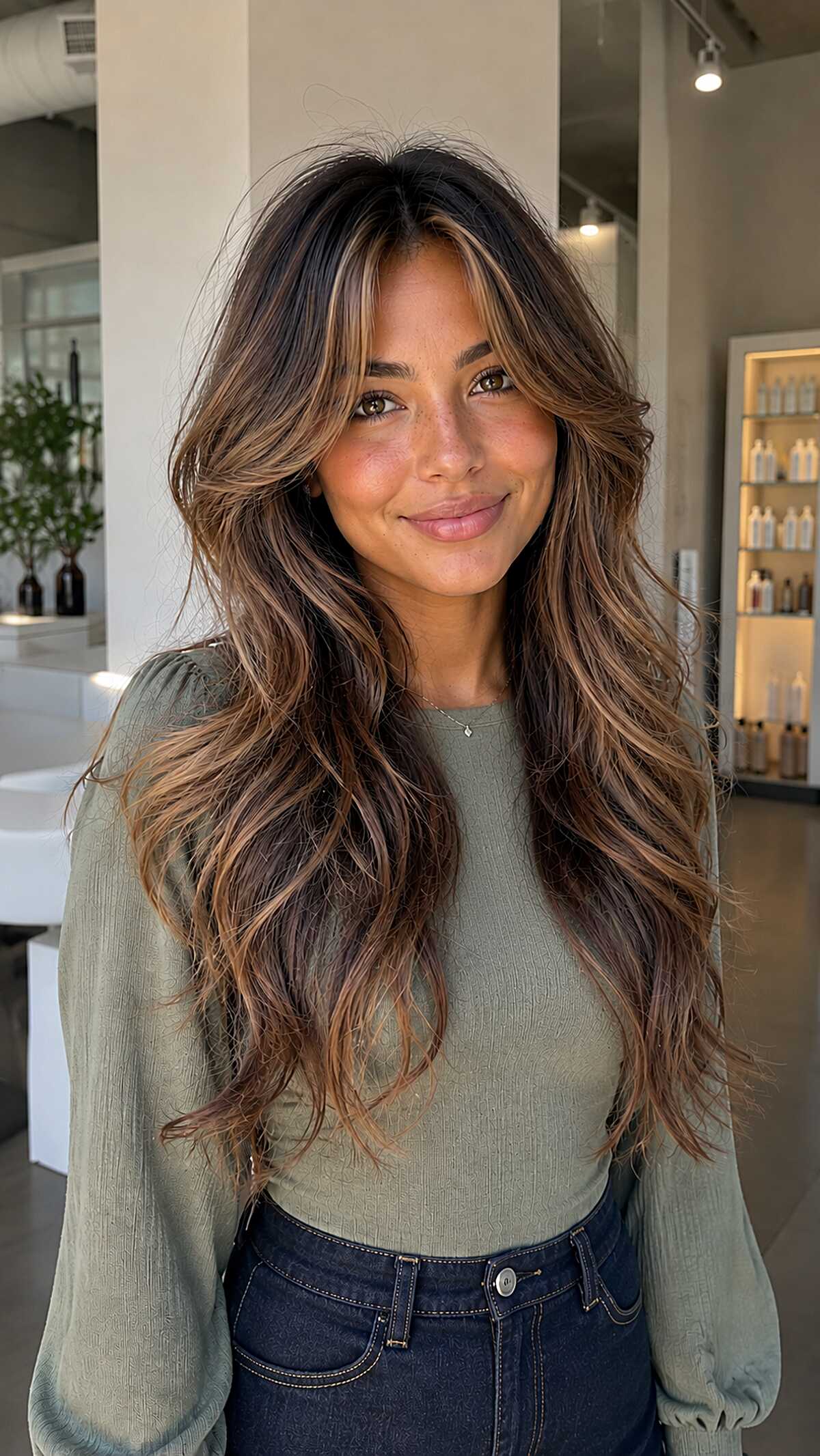
If there’s a single image that shows what makes curtain bangs essential to the Allie cut, it might be this one. The way they part right at the center and sweep outward past the cheekbones before blending into the longer layers creates a natural frame for the face that softens everything it touches. The caramel balayage is concentrated through the front half, lighter near the face and gradually deepening as it moves toward the back, which is a smart approach for anyone who wants low maintenance without looking like they’ve given up on color entirely.
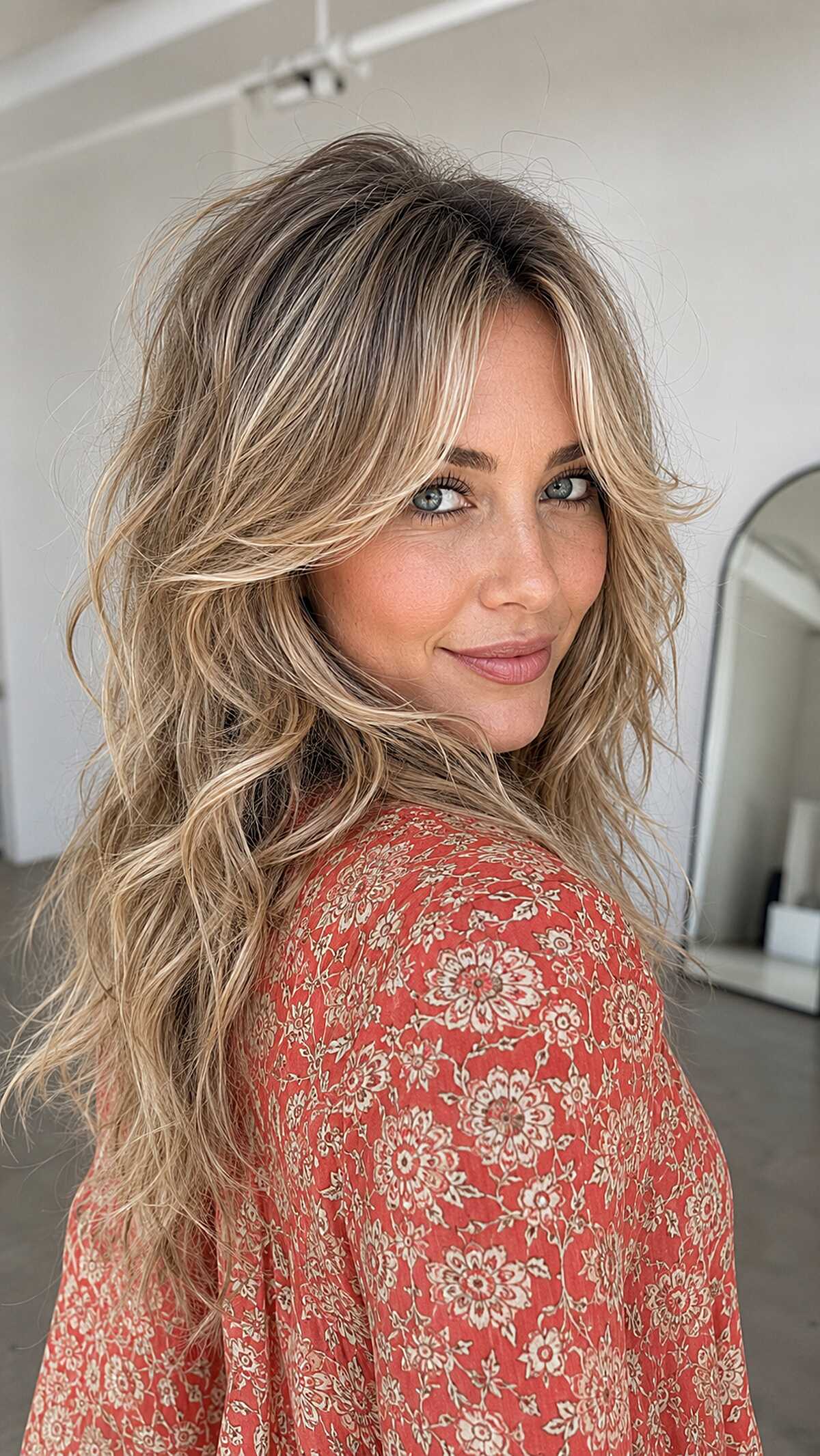
The shorter length here, just grazing the shoulders, makes this one of the more versatile versions in the bunch. It could go up in a clip, sit nicely with a half-up style, and still has enough length to create that signature layered curtain effect around the face. The sandy blonde dimension is beautiful, with enough tonal variation to keep it interesting without any single highlight calling attention to itself. A lightweight hair oil smoothed through the ends would give those waves a bit more definition and polish.
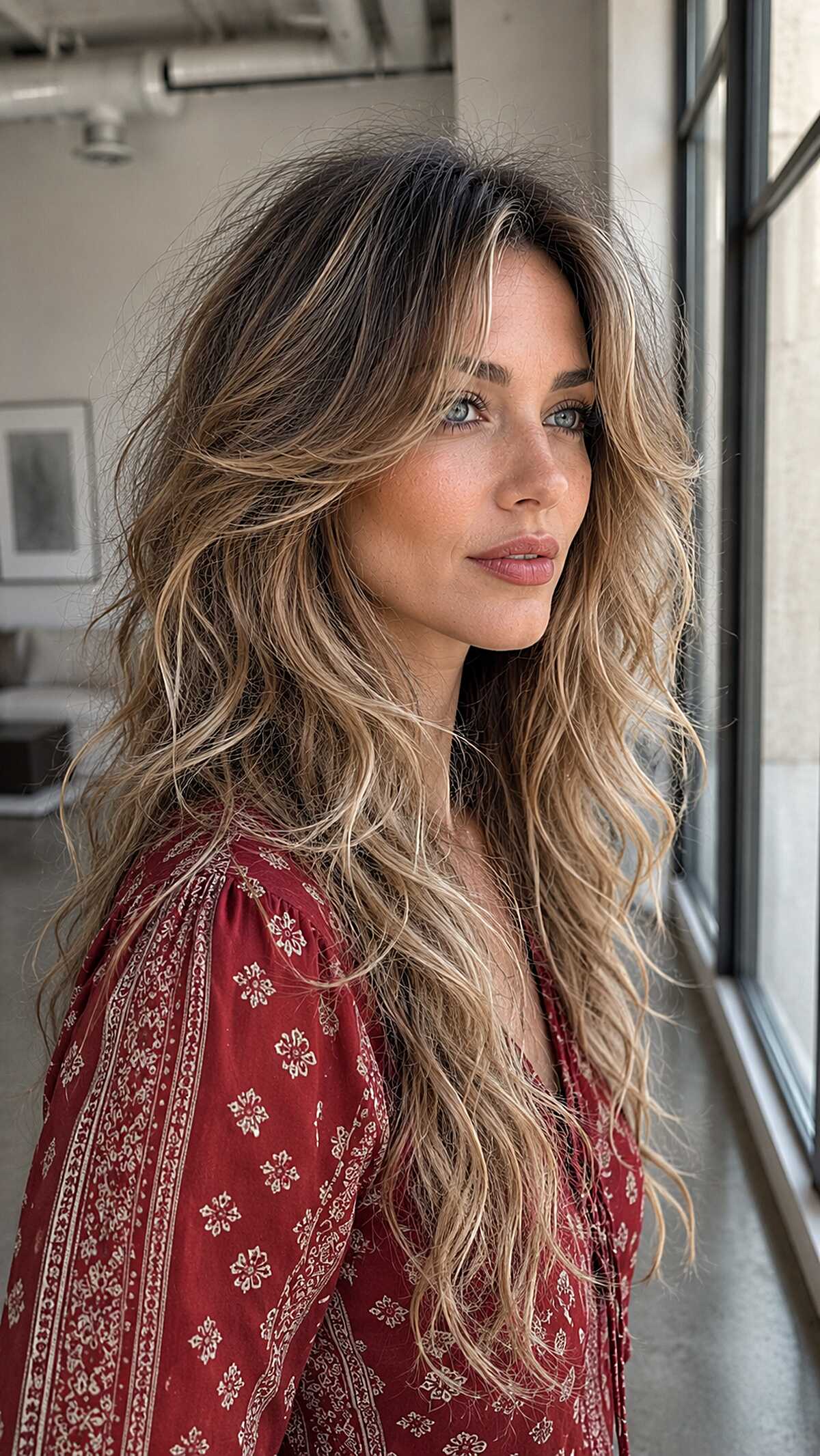
The blonde version of the Allie cut tends to look a little more rock-and-roll than its brunette counterpart, and this one leans into that completely. The roots are a solid three inches of natural brown before transitioning into a sandy, butter blonde that gets progressively lighter toward the ends. This is three-day hair at its best, and the kind of look that benefits enormously from sleeping on it, which is the highest compliment I can pay a hairstyle from a practical standpoint.
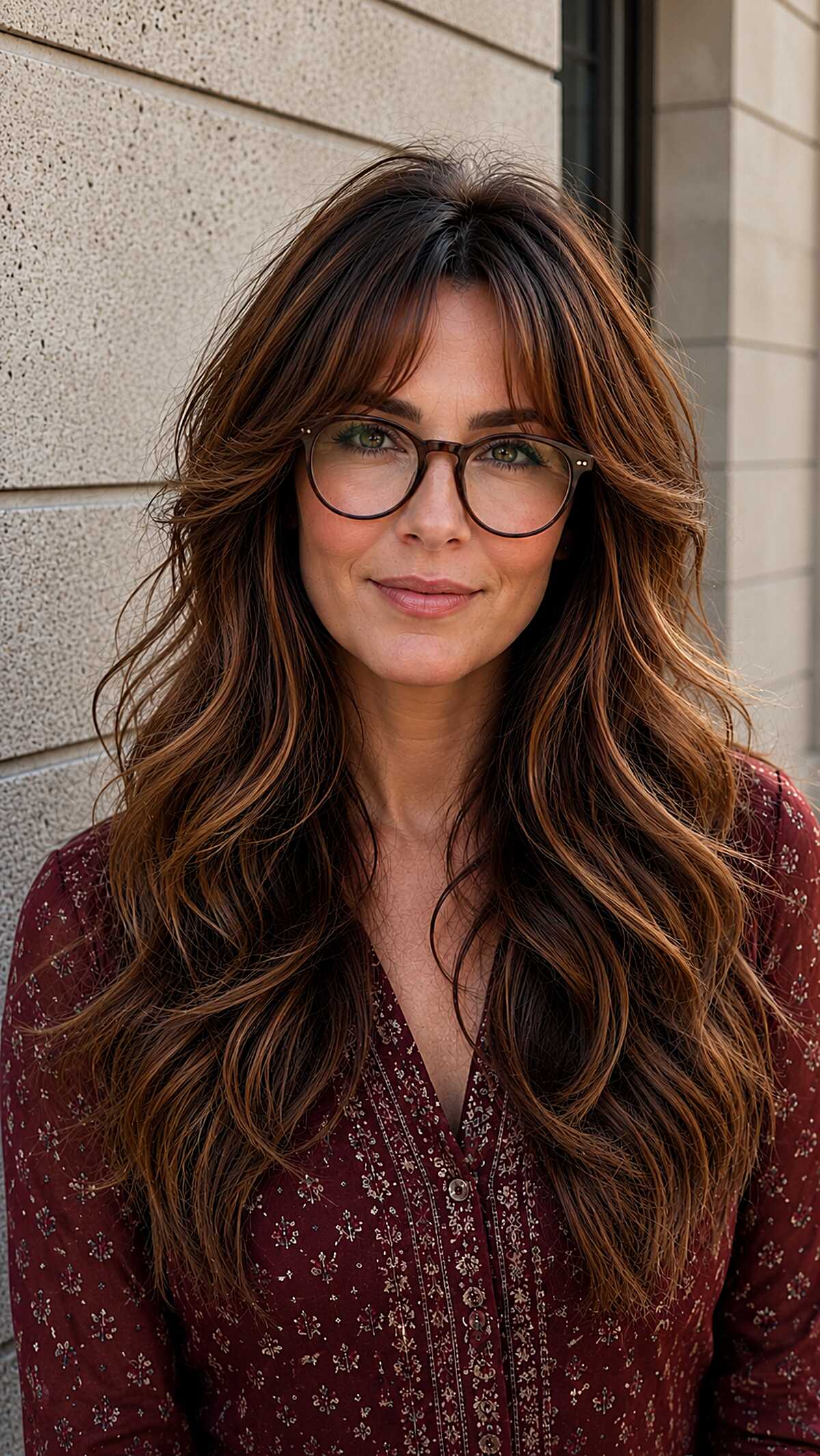
The interaction between the curtain bangs and the glasses is something worth paying attention to, because getting that balance wrong can make the whole face feel cluttered. Here, the bangs are cut long enough to sweep just above the top of the frames, which keeps things open and lets the glasses be a deliberate accessory rather than something the hair is fighting against. The copper-toned highlights are a smart choice against that warm brunette base, adding richness without brightness.
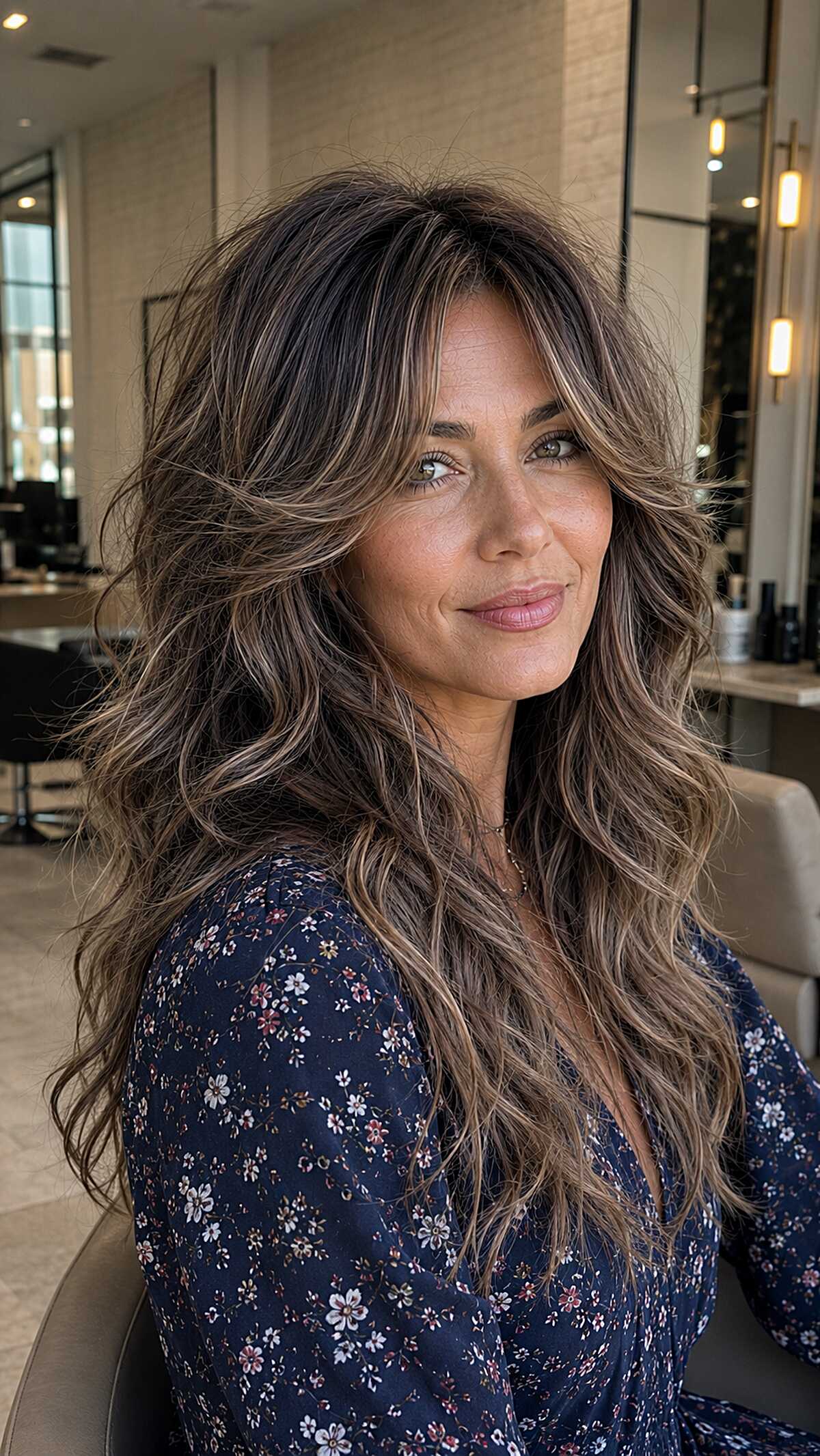
Most Allie cuts lean warm, which makes this cooler, ashier version worth noting. The highlights here are more mushroom than caramel, sitting closer to a taupe tone that gives the whole thing a slightly editorial edge without venturing into gray territory. The layers are moderate in their graduation, nothing too dramatic at the crown, which keeps the shape feeling grown-up and wearable for someone who doesn’t want to look like she’s trying to channel her younger self.

Latest Hairstyles