
Unhealthy snacks provide a quarter of Britons' daily calories, survey reveals
Published: | Updated:
Britons use a quarter of their daily calorie allowance on unhealthy snacks, research has revealed.
The survey revealed that 95 per cent of people snack regularly, and are ill-informed about what the healthy choices really are.
Researchers found that 68 per cent of people eat a snack bar, cereal bar or protein bar as their treat of choice, while crisps, biscuits and chocolate are the next most popular options.
When picking a snack, consumers considered convenience and price first, the research said, with sugar content coming as only the fourth most important consideration.
The survey of 1,000 participants, conducted by gut health company Zoe, found that people are consuming as many as 600 calories a day on snacks - a quarter of the recommended daily 2,500 calorie intake for men and 30 per cent of the women's 2,000-calorie level.
Experts say that when looking for a snack, the best options are ones that are full of nutrients and fibre, such as houmous, fruit, nuts or seeds.
Unhealthy treats have been linked with higher BMI and higher visceral fat mass, both of which are associated with higher risk of metabolic diseases such as stroke, cardiovascular disease and obesity.
'The UK is undeniably a nation of snackers, but for too long the snacking food category has optimised for convenience over nutritional quality and gut health,' says Professor Sarah Berry, chief scientist at Zoe and professor of nutritional sciences at King's College London.
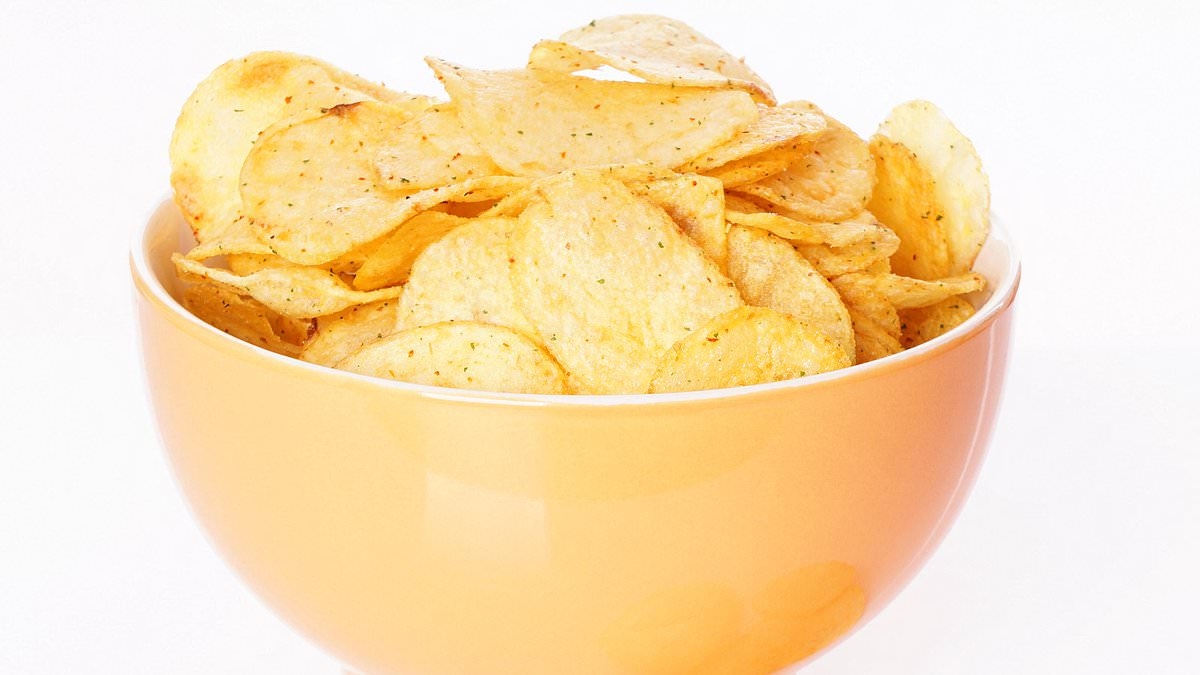
When picking a snack, consumers considered convenience and price first. Crisps are one of the most popular snack options
'Snacking itself isn't the issue, it's the poor quality of what people are eating. Our research shows that snacking the right way can be highly beneficial for your gut microbiome and overall health.'
The time of day that people snack is also important - with those regularly grazing after 9pm tending to have the worse health outcomes, Zoe research found.
The company has also shown that faster eaters ate on average 120 calories more per day than slow eaters, and that reducing eating speed by about 20 per cent can lead to a cut in energy intake of around 15 per cent.

Daily Mail