
I've treated so many cocaine users. This is the sign that makes it so obvious someone has a problem - and the truly nasty little-known side-effect that anyone tempted to use it to stay up for World Cup MUST know: DR MAX PEMBERTON
Published: | Updated:
In the early hours of Monday morning, much of the country will still be in the pub.
England's World Cup tie against Mexico doesn't kick off until 1am, because it's being played over in Mexico, and the Government has waved through a special 5am licence so we can all stay out and watch it.
Good luck to anyone hoping for a productive Monday. I've no quarrel with a late night and a few pints for the football. It's one of those rare things the whole country does together.
What worries me is the other thing that will be keeping a lot of people upright as the small hours drag on. Because for thousands of them, it won't just be lager.
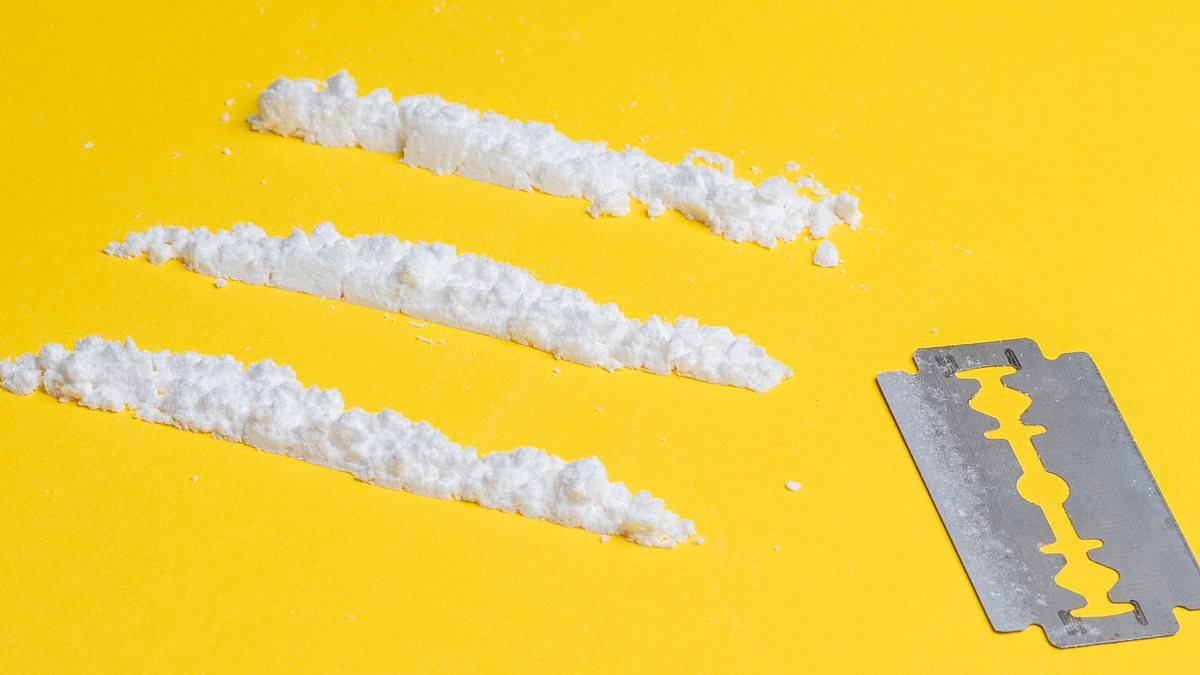
Cocaine has become the great enabler of the British night out. It's now the second most used drug in the country after cannabis, taken in the last year by around 1 in 50 adults, and rather more of the young. Its selling point, the reason it slots so neatly into a night like Sunday, is simple.
It lets you keep drinking. It flips the ‘off’ switch that tiredness and alcohol would normally throw. Six pints in, when you'd usually be slumped and slurring, a quick trip to the toilets and suddenly you're sharp again, up for another round, convinced you're the wittiest person in the room. You're not, but that's a separate issue.
But there’s something that few doing it on Sunday will know.
The danger isn't just the cocaine, and it isn't just the drink. It's the two together. When cocaine and alcohol are in your body at the same time, your liver does something it does with no other combination. Instead of breaking the cocaine down and clearing it away, it fuses the two into an entirely new compound called cocaethylene. As far as we know, it's the only drug the human body manufactures itself. And it's considerably nastier than either of its parents.
Cocaethylene lingers far longer than cocaine, so the strain on you lasts longer. It's harder on the heart. Research suggests that when it's present, the risk of sudden death runs something like 18 to 25 times higher than with cocaine alone.
Cocaine has been called the perfect heart attack drug, for the way it clamps down on the arteries and forces the heart to gallop.
Cocaethylene does the same, only for longer. And the people it fells aren't always lifelong addicts. Sometimes they're perfectly ordinary young men and women who had a big night and never woke up from it.
In the early hours of Monday morning, much of the country will still be in the pub. England's World Cup tie against Mexico doesn't kick off until 1am
Cocaine has become the great enabler of the British night out. It's now the second most used drug in the country after cannabis, taken in the last year by around 1 in 50 adults
The cruel joke is in the very thing people want it for. That marvellous feeling of being able to drink all night? That's the cocaine hiding the booze from you, muffling the drowsiness and the queasiness that would normally tell you you've had enough. So you don't stop. You drink to a level you'd never reach sober, all the time blissfully unaware that you’re brewing a poison that's straining your heart. Foolish is putting it kindly.
Then there's what it does to the mood in the room. Cocaine and alcohol together are linked with greater aggression, and this is where football stops being an innocent bystander. We've long known domestic abuse rises around England games.
Lancaster University found reports jumped 38 per cent when England lost, and 26 per cent even when they won, while Warwick researchers found the spike was specifically in alcohol-related cases. Football causes none of this. But drink, high emotion and a stimulant that shortens the fuse make a grim thing to take home.
There’s one other thing that causes doctors serious concern. The number of people using cocaine hasn't been rising.
The official surveys have it broadly flat for years, and among the young it's actually down on a decade ago. And yet, shockingly, the death rates from it keeps climbing. Deaths involving cocaine reached 1,279 in 2024, up more than 14 per cent in a single year, eleven times the number in 2011, and higher every single year for 13 years running. More than three quarters were men. So why, if no more of us are taking it, are so many more of us dying from it?

Because the drug itself has changed. Street cocaine is now more than twice as strong as it was a decade ago. The National Crime Agency put average purity at around a third back in 2013.
Today it's routinely over 80 per cent. So the same little line that once gave a modest lift now delivers close to double the hit, and nobody chopping it out on Sunday has the faintest idea which they've got. A stronger, more unpredictable drug, taken by heavier users, on a night made for washing it down with lager. That's why there’s a rising death toll. Most cocaine deaths involve more than one drug, and alcohol is very often in the mix.
I spent years working in substance misuse services, and the thing that stays with me isn't the people who fell apart. It's the ones who were certain they never would. The ones who'd tell me, with total conviction, that they had it under control. It was just weekends. Just the football. Just a bit of fun.
Cocaine is very good at letting people believe exactly that, right up until the moment it stops being true.
So stay up on Sunday. Roar England on, have your pints, enjoy one of those rare nights the whole country shares.
Just don't reach for the thing that promises to keep you going. It offers you a few more hours but asks for a great deal more than that in return.
Whatever happens out in Mexico, the worst result of the night won't be on the pitch. It'll be the ones who mixed it with a skinful and didn't wake up. Don't be one of them.

Daily Mail