Record 17million private parking tickets will be issued this year, RAC says
Updated:
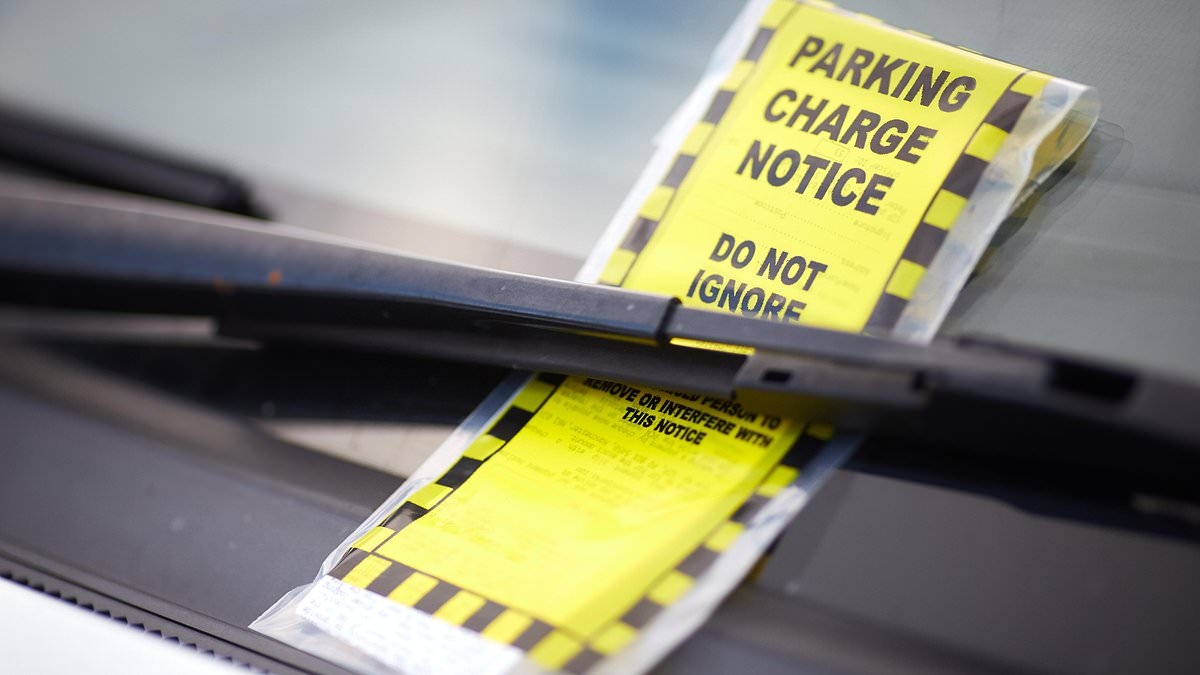
Some 17 million private parking charge notices (PCNs) will be issued to drivers in the year to the end of March, the RAC says.
This is three million more parking tickets than were issued in the 2024–25 financial year, setting a new record.
The Government is set to publish the final figures next month, when it is expected that last year's record of 14.4 million will be surpassed.
In the first nine months of the financial year, private parking companies have sent out more than 13 million PCNs. That's an average of 4.3 million tickets a quarter, tracking far higher than last year.
The RAC says the surge in drivers being ticketed by private parking operators should set alarm bells ringing in Parliament.
Policy spokesman Simon Williams said: 'This record figure suggests something must be going badly awry, which is why the outcome of the Government's latest Private Parking Code of Practice consultation cannot come soon enough.
'Drivers need to know they're being treated fairly whenever they use a private car park.'
RAC predicts number of private parking tickets issued in a year is set to rise by 3 million to a record 17 million
In the year to the end of September 2025, a record 15.9 million parking tickets were handed out by private businesses, up 17 per cent on the same period the year before.
While the RAC accepts that part of the rise may be due to more car parks being privately managed, the figures show 48,000 tickets per day were issued between June and September last year — an ominously high figure, considering most people do not set out to be fined.
It turns out that half of drivers do not even realise there are major differences between public parking fines and private parking charge notices, as they are named so similarly, new RAC research found.
Despite both often being referred to by the same ‘PCN’ acronym and looking almost identical when fixed to a driver’s windscreen, penalty charge notices are very different from parking charge notices.
While 44 per cent of people surveyed said they thought there were differences between a penalty charge notice issued by a council for a parking violation and a parking charge notice sent out by a private car park management company for an alleged infringement, 50 per cent were confused because both are regularly referred to as PCNs.
Of these, nearly four in 10 (37 per cent) were unsure of the differences, and 13 per cent did not think there were any. A further five per cent had not heard of either.

A penalty charge notice is issued to drivers by local councils and Transport for London after an offence is committed by parking on public land.
It is a fine that drivers must pay and is backed by law.
Drivers can appeal to the independently run Traffic Penalty Tribunal (England and Wales) or London Tribunals for contraventions committed in London boroughs.
A parking charge notice is issued to drivers by private parking companies when they believe motorists have breached the terms and conditions of parking on private land.
In reality, it is not a fine but an invoice for an alleged breach of contract.
Drivers can appeal to either of the bodies set up by the two private parking trade associations — Parking on Private Land Appeals (POPLA) or the Independent Appeals Service (IAS).
The two types of PCN are causing confusion: nine in 10 (91 per cent) of drivers surveyed by the RAC felt the term “parking charge notice” is confusing because it shares the same “PCN” acronym.
With a view to making the difference between ‘PCNs’ clearer, the RAC asked drivers who were confused by the acronym what a parking charge notice issued by private parking operators should be renamed.
Three in 10 felt it should be called a private parking charge (a PPC); 19 per cent a private car park charge (a PCPC); 19 per cent a charge for private parking (a CPP); 14 per cent an invoice for private parking (an IPP); and 16 per cent were not sure.

This İs Money