

Labour have killed buy-to-let - but you can still make HUGE profits renting out a holiday home. TOBY WALNE'S step-by-step guide to the best areas, how much to charge - and the simple feature guests pay 40% more for
Updated:
Summer has finally arrived this Bank Holiday weekend and staycations are booming.
The great British holiday has staged a comeback this year – demand for domestic vacations is up 15 per cent.
Holiday homes are hot property, and savvy investors are cashing in on the boom. Renting out a holiday let is also becoming more attractive to traditional landlords wishing to escape the new red tape surrounding buy-to-lets in the form of the Renters’ Rights rules.
The right holiday home could net you a tidy profit, but prospective buyers must choose their property, location and rents carefully if they want to succeed.
Here’s our step-by-step guide to setting up a holiday let.
A holiday home’s location will be a key factor in determining how successful it will be.
The regions where holidaymakers are willing to pay the most – and the property is most likely to be booked up – include the Cotswolds, Cumbria and Lake District, the Scottish Highlands and Islands, the Peak District, North Wales and Cornwall.
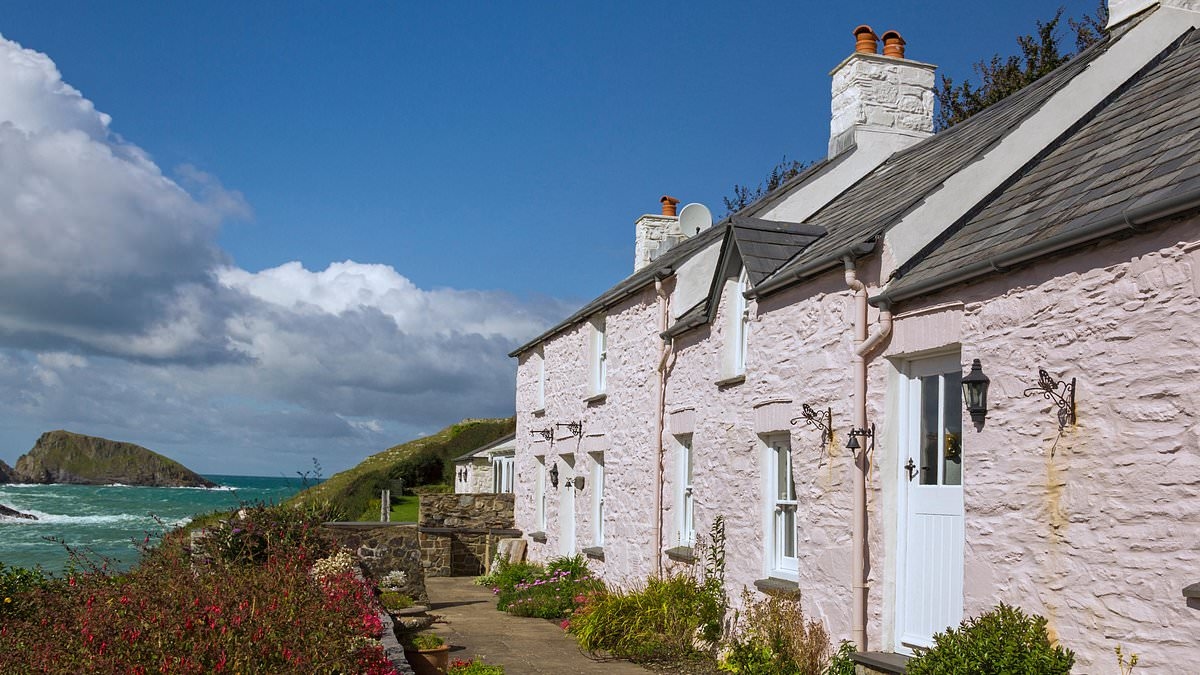
The right holiday home could net you a tidy profit, but buyers must choose property, location and rents carefully [Pictured: holiday cottages in Abercastle, Pembrokeshire]
Homes in these locations typically make more than £30,000 a year, according to a new report published by holiday let platform Sykes Holiday Cottages.
The average holiday let in Britain makes £25,600 a year, it found.
The top earning location is Grasmere, where holiday homes make an average annual income of £45,900, followed by Stow-on-the-Wold at £41,600 and Castleton in the Peak District, earning £38,200.
Other hot spots to consider include London, Bath, York and Edinburgh.
Ross Armstrong of Sykes says: ‘You want to consider somewhere that offers all-year-round-appeal to increase the number of bookings.’
Properties currently on sale include a one-bedroom apartment in a converted mill in Settle in North Yorkshire at an asking price of £122,500. An investor could make £140 a night during peak season and £60 off-season. Based on a 70 per cent occupancy rate throughout the year, you could make a gross yield of 18.2 per cent, according to letting website Property Investments UK.
Similarly, a three-bedroom cottage on the edge of the Lake District in Cumbria, for sale at £270,000, could make a yield of 14 per cent, the site calculated. This is based on a 70 per cent occupancy rate and charging holidaymakers £150 a night during peak season and £70 off-season.
You should also consider the practicality of managing the property yourself. Paying someone else to manage it will cost you at least 20 per cent of the income you make.
The biggest appeal of a holiday let is the yield you can make on it, as it can be more than double that of a traditional buy-to-let home. This is the size of the annual income you make compared to the cost of buying the property.
Robert Jones, the founder of Property Investments UK, says: ‘Yields for holiday lets are usually much higher than long-term lets – in some cases more than double.’ For example, if you buy a one-bedroom flat for £200,000 and you can rent it out long-term as a landlord for £1,000 a month – or £12,000 a year – you would make a yield of 6 per cent, before tax.
But turned into a holiday let, the same apartment could be rented out for perhaps £107 a night. Based on a typical 70 per cent occupancy rate, this works out at £2,250 a month – or £27,000 over a year. This provides a 13.5 per cent yield on your initial investment.
Jones says it’s important to factor in the cost of maintaining and cleaning the property, which can be higher than for traditional buy-to-lets. That said, you are still likely to make more money on a holiday let, he adds.
When shopping for holiday lets, smaller properties can be a better choice. For example, he says that a two-bedroom apartment (the most sought-after holiday let size) can generate a higher yield than a more expensive property, such as a £500,000 detached four-bedroom property in the same location.
Ard Neakie promontory on Loch Eriboll in the Scottish Highlands – the regions where holidaymakers are willing to pay the most include the Cotswolds and the Highlands
He says: ‘Remember, you are not buying a place for you to live in but a holiday rental investment.’
When it comes to working out how much to charge per night, you should set out a price plan for the most expensive peak times of year and the cheaper lower season.
Explore websites such as Airbnb and Booking.com to see what people are willing to pay in that area for a similar-sized property, he suggests.
He adds: ‘Look at dynamic pricing, as offered by Sykes Cottages, where algorithms are used to work out charges based on how long you might stay and when.’
Dynamic pricing should raise your income by 27 per cent, according to Sykes. The platform has a ‘holiday let income calculator’ online, where you can enter your details for a charge estimate.
A two-bedroom detached home is one of the most sought- after types of properties, as it appeals to couples, families or even friends travelling together.
But it’s important to add extra appeal to beat the competition and secure more bookings.
Consider adding extras such as a hot tub, a wood-burning stove, large outdoor barbecue spaces and free off-road parking.
These facilities enable you to stand out from the pack, but also mean you can charge more. Properties with hot tubs, for example, can charge 40 per cent more than other holiday lets, according to the Holiday Letting Outlook Report.
They can be a great investment despite being relatively expensive to buy and maintain – a typical hot tub costs about £5,000 to buy and install and requires regular checks and cleaning, costing £350 a year. You can also earn around 16 per cent more if you are willing to let pets into the property – though be prepared to foot the cost of any wear-and-tear and cleaning bills.
Up-to-date heating is also appealing, but if you fit a heating system that can be controlled remotely it can keep a lid on any excessive bills. But you should also enable guests to control it.
Armstrong says: ‘A welcoming trick that works in cold weather is automatically turning on the heating for when guests arrive.’
Hayley Bretherton, of holiday let provider Kate and Tom’s, says: ‘It is vital to put yourself in the holidaymakers’ shoes – thinking about what they want rather than what’s best for you.
‘You may not like dogs, but those with pets wanting to holiday in Britain will not simply put them into kennels.’
You should also ‘future-proof’ the home with a fast wi-fi connection and a smart TV that guests can use to log in to Netflix or BBC iPlayer to watch films, stream shows or listen to music.
To encourage five-star reviews, you also want to make sure the holidaymakers feel you are going that extra mile. You can start by ensuring that all the basics, such as tea, coffee, milk and sugar, are there upon arrival.
As a special treat, a welcome pack, which might include a bottle of bubbly, locally sourced cake or biscuits, could do wonders for those all-important reviews.
Activities and things to do locally should be detailed in a binder, along with details such as how to operate machines in the property.
Bretherton says: ‘Have things to do and any instructions printed out. Not being able to work out the TV remote or coffee machine because there are no instructions makes people fume.’
List beaches, walks, artistic and historic places to visit, along with local pub, restaurant and shop recommendations.
Buying a holiday let comes with a 5 per cent stamp duty land tax (SDLT) on top of the standard rates. It means that you pay 5 per cent up to £125,000 – where there would be no charge for a primary residential property – then 7 per cent for the next £125,000 up to £250,000, 10 per cent up to £925,000 and 15 per cent for properties costing £925,000 to £1.5million.
You can claim a refund on this 5 per cent surcharge if you sell your main residence within 36 months and move into the holiday home.
You will also have to pay either council tax or business rates on your income, depending on how many nights your property is available to let each year and how many nights it was actually let.
If the property is available to let for less than 140 days and is actually let for fewer than 70 days over a 12-month period, you may pay council tax. In England, this may be the full council tax – as there are typically no reductions for it being a second home – while in Wales you could end up paying three times the usual council tax rate, as councils penalise second-home owners renting out their property to holidaymakers.
If the home is available to let for more than 140 days and booked out for more than 70 days in a year you may have to pay business rates on your income.
Business rates are calculated by taking the property’s ‘rateable value’, which is its open market rental value, based on its type, size, location, quality and how much income you’re likely to make from letting it.
Ross Armstrong of Sykes says people should 'consider somewhere that offers all-year-round-appeal to increase the number of bookings’
Your local council then calculates your business rates bill using this value and adding a ‘multiplier’ – which is typically 48p. Check out gov.uk for more information.
For example, if a small studio has a rateable value of £15,000 a year and we use the typical multiplier, £7,200 (£15,000 x 0.48) would be due. If you only let one property in England and its rateable value is less than £15,000, you may be eligible for small business rate relief.
If you will incur business rates, you should set up a limited company on the register, Companies House, and inform HM Revenue and Customs. It can be helpful to get support from an accountant to guide you through the process – and calculate how much tax you owe. Expect to pay perhaps £300 for an accountant to help set up your company.
Using a limited company you can deduct expenses, such as maintenance costs, rental advertising fees, cleaning, utility bills and insurance, to lower your tax bill.
Most investors will take out a mortgage when purchasing a holiday let. Specialist holiday let mortgages typically require you to hand over a hefty deposit of 25 to 40 per cent of the property value.
They will want to see calculations that show you expect to bring in as much as 150 per cent of the mortgage payments from projected income. This is because they are aware of other costs, such as maintenance, that will eat into your profits – and that there is no guarantee of you being successful.
You also have to pay a mortgage rate up to a couple of percentage points higher than the standard residential home loan rate because of additional risk.
Specialist providers offering both fixed and variable deals include building societies Principality, Cumberland, Leeds, Furness, Scottish and Monmouthshire.
Holiday lets tend to be in sought- after locations where the price of goods and services may be higher.
Maintenance costs are also likely to be higher because guests may not treat the property as carefully as if it were their own home.
You could spend up to £5,000 a year in ensuring furnishings and decorations are kept up to scratch.
Cleaning, checking in and out and dealing with complaints is time-consuming and more expensive than you might imagine – claiming as much as 20 per cent of your annual income. You will make savings if you are able to do all this work yourself.
There are also going to be periods when no one is renting – and income stops coming in. The typical holiday let is rented out for 40 weeks in a year.
And there are health and safety expenses, such as gas safety checks, smoke alarm testing and electrical installation checks.
The cost of running a holiday let is typically £11,500 a year, according to Property Investments UK.
These days a ‘vacancy’ sign in the window cuts no mustard – you need an online presence. Major platforms to consider include Airbnb, Sykes Holiday Cottages Booking.com and Vacation Rentals by Owner (Vrbo).

Airbnb charges 15.5 per cent commission on bookings and often focuses on short-term lets of a couple of days or so.
The perk is that 90 million people use its service in Britain. And it is a great platform if you want to vet your potential guests before allowing them to book.
Sykes Holiday Cottages demands up to 22 per cent and has three million holidaymakers using its service each year.
Booking.com typically charges 15 per cent commission and has greater international appeal.
Smartphone app Vrbo charges 8 per cent, with more than half its customers aged under 35.
Converted mill one-bedroom apartment, £140 a night during peak season and £60 off-season
Estimated gross yield: 18.2 per cent
Bridge End Mill, Settle in North Yorkshire: £122,500
Two-bedroom apartment close to beach, £180 a night during peak season and £60 in off-season
Estimated gross yield: 14 per cent
The Swell, Rhosneigr in Anglesey: £270,000
Three-bedroom cottage on the edge of the Lake District, £150 a night during peak season and £70 off-season
Estimated gross yield: 14 per cent
Eden Grove, Appleby in Cumbria: £270,000

This İs Money


