Britain too weak to start putting up interest rates now, warns Bailey as Bank of England votes to hold
Updated:
Bank of England governor Andrew Bailey warned the economy is too weak for interest rates to start going up yet – as they were left on hold yesterday.
The Bank’s Monetary Policy Committee (MPC) voted by a 7-2 majority to maintain its benchmark rate at 3.75 per cent despite fears of rising inflation caused by the Iran war choking off energy supplies.
Inflation, at 2.8 per cent, is above the Bank’s 2 per cent target, and is expected to rise further this year.
But Bailey argued rate-setters should not try to force it down too quickly, and in doing so, cause ‘undesirable volatility’ in economic output.
He said that given the ‘softness in the real economy’ and uncertainty about the impact of the energy shock, ‘tolerating temporarily above-target inflation’ may be appropriate.
It came as, separately, official figures painted a grim picture of the UK jobs market with hiring falling and private sector pay growth slowing.
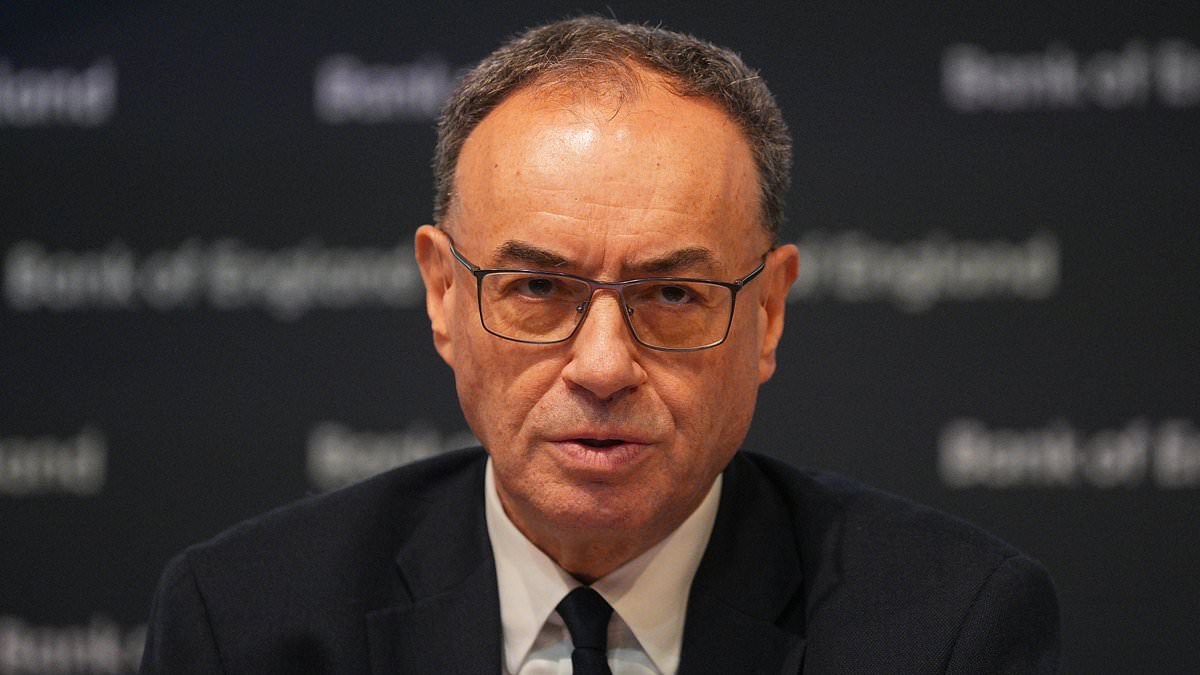
Cautious: Bank of England governor Andrew Bailey argued that rate-setters should not try to force it down too quickly in a way that will cause ‘undesirable volatility’
The Bank’s decision yesterday was dominated by the war in the Middle East. Hopes were high before it broke out that inflation would soon come down to 2 per cent.
A surge in oil prices since fighting started put paid to those hopes. But a peace deal between the US and Iran has resulted in prices falling and oil starting to flow again.
Bailey said that was ‘encouraging’ but added: ‘Whatever happens in the future, the higher energy prices of the past four months mean there’s already some inflationary pressure in the pipeline.
‘The Bank’s job is to make sure that doesn’t turn into sustained inflation above our 2per cent target.’
While Bailey remained cautious about the inflation threat and signalled he would be ready to put up rates if there were signs of extended inflation pressures, he resisted the arguments of two MPC ‘hawks’, Huw Pill and Megan Greene, who voted for a quarter-point hike.
And the Bank is less worried about inflation, predicting it will rise only to around 3.25 per cent by the end of this year.
Officials believe the economy remains sluggish, growing around 0.2 per cent a quarter.
Fading inflation pressures mean markets now only expect one rate hike this year.
Some economists even believe the next move will be down. Berenberg economist Andrew Wishart said: ‘Take away the energy price shock and this is a central bank closer to a cut than a hike.’

This İs Money