
Bailey sounds the alarm over pace of AI jobs destruction as march of the machines threatens world of work
Updated:
Andrew Bailey yesterday warned that artificial intelligence (AI) could ‘destroy jobs’ far faster than anyone expects.
As fears mount over the changing world of work, the Bank of England Governor said dramatic technological advances are ‘moving very quickly’ as firms turn to automation and machines.
The warning was echoed by the boss of HSBC who said AI ‘will destroy certain jobs and create new jobs’ – and urged staff not to ‘fight’ change.
It came as Standard Chartered chief executive Bill Winters faced a backlash after warning new technology would replace the bank’s ‘lower-value human capital’ as he announced close to 8,000 job cuts.
Halimah Yacob, the former president of Singapore, a hub for the bank’s global operations, said the comment was ‘disturbing’. And James Reed, head of recruiter, Reed, said: ‘Who would want to hear their children or themselves described as low-value human capital?
‘Lots of workers, particularly the next generation, are feeling threatened by the march of AI. Business needs to proceed with more care and responsibility towards their workforces.’
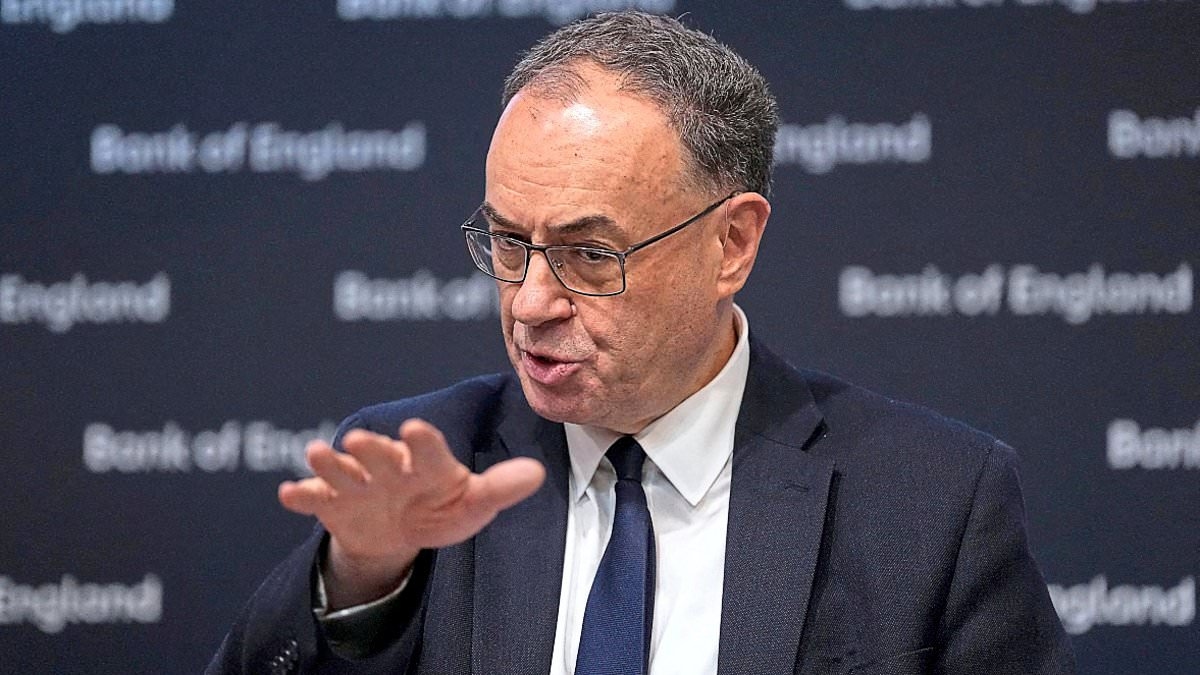
AI revolution: Bank of England governor Andrew Bailey, pictured, said dramatic technological advances are ‘moving very quickly’ as firms turn to automation and machines
Facing MPs on the Treasury select committee, Bailey warned that major changes caused by AI could emerge faster than expected.
‘It can destroy jobs – in other words remove jobs,’ he said, highlighting the impact of chatbots on customer service roles.
But he added that ‘it can create jobs’ too – such as data scientists. Comparing AI to other breakthroughs in the past such as electricity, steam engines and the internet, Bailey noted that change can take decades.
He added: ‘It may come through quicker this time – because it’s obviously moving very quickly, as we’ve seen in other parts of the world.’
Morgan Stanley has predicted more than 200,000 banking jobs across Europe are under threat from AI in the next five years.
And John Waldron, chief operating officer at Goldman Sachs, last week described the bank’s back-office jobs as ‘a human assembly line’ that will ‘become more digitised’.
HSBC boss Georges Elhedery joined the chorus, saying: ‘We all know generative AI will destroy certain jobs and create new jobs.’
He urged staff to ensure they were ‘not fighting us, not disenfranchised, not anxious, overwhelmed, and resisting the change’ – and added that AI could make them ‘more productive’.
The predictions are the clearest sign yet about the upheaval from a technology that can do tasks previously done by people.
But Standard Chartered’s Winters was on the back foot, after saying on Tuesday ‘lower-value human capital’ jobs would be replaced. In a memo to staff yesterday, he said that was taken out of context.
‘Many of you will have seen media coverage following the investor event, particularly the reporting around automation, AI and workforce changes,’ he wrote.
‘I know this may be unsettling when reduced to simple headlines or a quote out of context… I was clear that where roles do fall away, it reflects changes in the work, not the value of our people.’

This İs Money