
'InteleTravel destroyed my life and friendships, and made me just £25 a month': It promises desperate jobseekers the ultimate dream - luxury holidays and WFH anywhere in the world. But the reality is VERY different
Updated:
The woman lounged on a hammock overlooking the turquoise Caribbean. It was an Instagram picture posted by travel agent Charlie Harris, with the implicit message that she could help send her followers on a similarly idyllic holiday.
But little behind this – and the stream of holiday photos posted by Charlie to promote her business – was as it seemed.
From the outside, it looked like Charlie had an envy-inducing job. She was making a living selling people their dream holidays for travel agency InteleTravel. She had flexibility over her hours and could work from home. And she received discounts on her own holiday bookings.
But what Charlie’s Instagram post didn’t mention was that her main form of income while working for InteleTravel wasn’t actually from selling holidays at all, but from recruiting other agents to sell holidays with InteleTravel. That was through a second operation called PlanNet Marketing, a multi-level marketing (MLM) company, in which sales reps earn by recruiting others into the business.
Even the Instagram picture itself had more to it than first appeared. The woman in it was not one of Charlie’s clients at all, but was in fact her mother – a frequent traveller whose photos she used to promote her business. But in the 15 months Charlie sold holidays for InteleTravel, her mother resolutely refused to book trips through her daughter.
‘She knew how to get the best deals,’ says Charlie. ‘I could never compete with what she was getting through Tui.’
For every agent Charlie recruited to InteleTravel, she was paid. For every new recruit those new people recruited, she received an additional fee. ‘At one point I had a team of more than 20 people,’ says Charlie, 35, from Derby.
Yet the success and income she’d been implicitly promised never materialised. It was an operation, she now says, that offered little more than ‘smoke and mirrors’.
In 15 months, Charlie made just £1,470.25 from InteleTravel and PlanNet Marketing: £218.49 in commission for ten travel bookings, and £1,251.76 for recruitment. ‘And I was in the top three per cent of earners,’ she laughs wryly. ‘I was making a tiny bit of profit, but everyone below me was losing’
In 15 months, Charlie made just £1,470.25 from InteleTravel and PlanNet Marketing: £218.49 in commission for ten travel bookings, and £1,251.76 for recruitment.
After discounting the £156 joining fee she’d paid both companies to sign up, a mandatory £46 monthly fee to InteleTravel, and hundreds more spent on training events and her own website, her profit was £383.85 – a paltry average of £25.59 per month.
‘And I was in the top three per cent of earners,’ she laughs wryly. ‘I was making a tiny bit of profit, but everyone below me was losing.’
Working 60-hour weeks, she would search for flights and hotels for clients. ‘I could spend all day putting together a quote,’ she says.
Effectively toiling for nothing – or a single penny an hour – the ramifications on her mental health were profound and she even ended up self-harming.
Five years on, Charlie has completed an Open University degree in psychology and counselling, which has helped her to understand how the scheme worked. ‘The manipulation started to make sense,’ she says. ‘At first I thought I was a perpetrator. But I’d been brainwashed.’
When Charlie joined InteleTravel shortly after its 2019 launch in the UK, it had around 4,000 agents. Co-founded by its American CEO James Ferrara in 1991, it now has more than 38,000 agents in the UK and Ireland. Chances are you’ll have seen its social media pictures promoting holidays on your social media feed, which are all the more alluring as summer gets underway.
Of course, there’s nothing wrong with travel agents earning commission when booking holidays. InteleTravel is a regulated host travel agency with Air Travel Organisers' Licensing (ATOL), and is a member of the industry body, the Association of British Travel Agents (ABTA). But what makes it controversial is its 11-year partnership with PlanNet Marketing, a company founded by American father-of-four Donald Bradley, 57.
Bradley has said his ‘passion’ for the business stems from his desire to lift people out of poverty. His net worth isn’t known, but given he declared in 2023 that his ambition was to increase the number of sales reps paying his company $40 (£29.88) a month from 82,000 worldwide to one million by 2028, it’s safe to say he’s a multi-millionaire.
Critics of MLMs such as his point out that the vast majority of sales reps are women needing flexible work. They are often required to make a payment to enter the company and risk straining relationships with family and friends who are bombarded with their sales pitches on social media.
Most are passionate about their MLM. When I investigate these companies, I’m inundated with stories about their life-changing powers, and warned against criticising them. ‘The psychology of cults and MLMs are on a par,’ says Charlie.
A few people might earn a good living from them. But the vast majority will make little. Indeed, according to PlanNet Marketing’s Income Disclosure Statement, 83.96 per cent of its reps earned nothing last year, while average earnings for all reps was just $961.51 (£718.45).
InteleTravel is at pains to insist it is separate from its ‘enrolment partner’ PlanNet Marketing, and not an MLM. A spokesman says there’s ‘categorically no financial connection between the two... nor are they connected in any way’.
But InteleTravel is the only company mentioned as a partner on PlanNet Marketing’s website, and you can’t join InteleTravel without being recruited through PlanNet Marketing.
It was shortly after Charlie lost her job as a finance advisor for a bank in September 2019 that an InteleTravel agent, whom we’ll call Rachel, messaged her. Selling travel would be a ‘perfect career’, insisted Rachel, offering her the freedom to work from home. Charlie has Ehlers-Danlos syndrome, a disorder that can lead to mobility problems and chronic pain. She now says: ‘They found my weak points – what they call your “why?” I was naive and vulnerable. I was sold.’
It was only after she’d been added to various InteleTravel Facebook groups and heard high earners talking vaguely about their six-figure salaries that Charlie was told there was a £156 joining fee and a £46-a-month fee – seemingly spread across PlanNet Marketing and InteleTravel.
Charlie, who could set her own hours, worked 60-hour weeks for InteleTravel, searching for flights and hotels for clients. ‘I could spend all day putting together a quote,’ she says
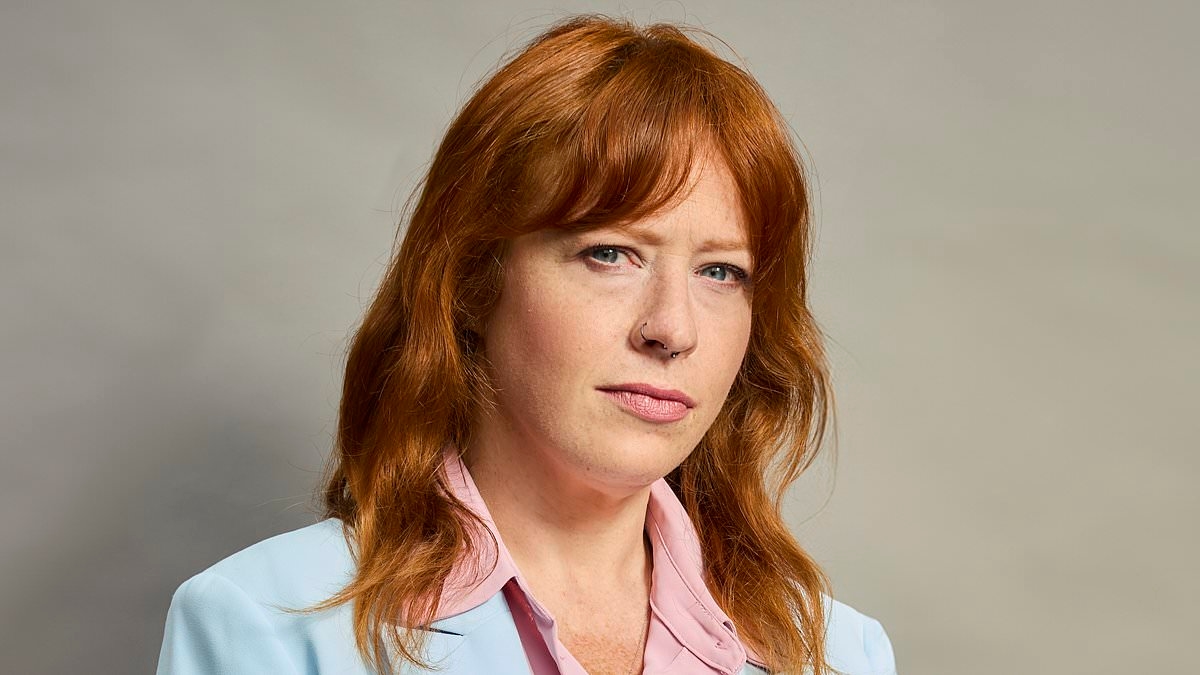
Charlie, 35, from Derby, has Ehlers-Danlos syndrome, a disorder that can lead to mobility problems and chronic pain. The InteleTravel agent that recruited her said that selling travel would be the 'perfect career' for her, as it would let her work from home
A spokesman for InteleTravel says its joining fees ‘cover regulatory licensing, mandatory training and the use of booking systems to enable travel advisors to make travel bookings for consumers in accordance with the UK travel regulatory requirements’.
Charlie assumed PlanNet Marketing was part of InteleTravel, and was told she was getting a bargain because ‘any other business she set up would cost a lot more in overheads’.
Within a week of joining, her sister Ellie, 25, and best friend, Kat, 35 – intrigued by her new role – signed up, too. A delighted Charlie was told she’d get a £25 bonus for bringing them into the business.
Existing agents taught her the art of ‘attraction’ marketing – posting social media pictures of exotic locations. That’s where her mum’s frequent holidays came in handy – plus one luxury trip Charlie had been on herself.
‘I milked that,’ she says. ‘I wouldn’t say I was on holiday, but if you looked at my Instagram it would look like I was.’
It was imperative she didn’t leave PlanNet Marketing within 30 days, she later realised, or the agents in her ‘upline’ – Rachel and the agent who recruited Rachel, and so on – would lose the cut from her sign-on bonus.
‘As I got higher up in the ranks, I was taught to "love bomb" new people for 30 days so they don’t cancel.’
Only after 30 days was it fully explained to her that there were actually two distinct businesses – InteleTravel and PlanNet Marketing – and that the real money came from introducing her ‘opportunity’ to others via PlanNet Marketing.
In response to this article Amanda Restivo, the vice president for compliance at PlanNet Marketing, stressed that PlanNet Marketing and InteleTravel are separate companies. ‘Only PlanNet Marketing reps (our members) sell travel websites where agents can book travel; only InteleTravel and its advisors (agents) can book travel. Once this person chose to join both companies they would deal directly with InteleTravel to book and sell travel,' she said.
‘The PlanNet rep was aggressive about recruitment because that is their role – that’s what they do. Reps do not sell travel, nor do they support travel advisors/agents – that is the role of InteleTravel and its team. It seems this person misunderstood the separation of our two businesses.’
Charlie wasn’t put off by this new explanation of the business model, however. It was the opposite, in fact. Charlie says: ‘A woman above me said she got very little money from travel, but £25,000 a month from recruiting. I thought, “I can see how this is going to work.” I was lulled into a false sense of security.’
She was added to more social media groups – this time for PlanNet Marketing – and underwent incessant recruitment training.
‘I’d go on three calls a day purely about building a downline [the term for people she’d recruit beneath her].’ She went to a recruitment event in Birmingham. ‘They got the top PlanNet Marketing earners to tell us their success stories, to brainwash us more.’
Charlie was told her social media accounts could no longer be 'social'. ‘Everything we posted, whether a selfie or a picture of a dog, had to relate back to the business somehow.’ Reps on her upline warned that people might level allegations that theirs was a pyramid scheme, an illegal business model where participants make money entirely by recruiting, and advised her how to respond. ‘They said “We’re MLM, we have a product, and our product is travel”.’
Although she sold ten holidays between September 2019 and March 2020 – mid-range to high-end packages, four of them abroad and the rest in the rural UK – she was unconvinced she was offering anyone a good deal.
One of the perks of being an InteleTravel agent is not having to pay for the commission on your own holiday – but this was a false promise, believes Charlie, because the holidays were more expensive to begin with. ‘Nothing was ever cheaper,’ she says.
A spokesman for InteleTravel said: ‘Pricing challenges are not unique to InteleTravel’, and as a host travel agency ‘prices are set by suppliers and not InteleTravel’.
Charlie did sell several affordable UK ‘staycations’ to friends.
‘As I’d lost my job people were happy to book through me. I figured if I sold one hot-tub lodge a month that would cover my monthly fee and anything else was profit.’
Her sales commission was paid into a mandatory online ‘wallet’ that cost her £5 a month. As she only received the money after the holiday was taken, she could be waiting 16 months to see any income. 'Obviously you’d only get paid if that travel went ahead,’ she says.
A spokesman for InteleTravel said it is ‘common travel industry practice’ for commissions to be paid after travel, and if agents leave the company and stop paying their monthly fee they are still entitled to their commission.
Charlie was reassured the wealth from recruitment and selling holidays would eventually materialise. ‘We got told "Your hard work will come back with a compound effect and you’ll get paid a lot".’
When the pandemic hit, in March 2020, and travel was cancelled, she was told by her upline to focus even more on recruitment. ‘I worked so hard. I was always on my phone and laptop, from the moment I woke until I went to bed, messaging people constantly. They teach you to find people’s weak spots, and explain how this opportunity could help them,’ says Charlie, who decided to approach others with Ehlers-Danlos syndrome, suggesting the additional income could help them pay for better medical care. ‘Now I realise how manipulative and awful that is, but at the time I genuinely thought I was helping people.’
InteleTravel says ‘many’ of its travel advisors have disabilities and ‘find that the homeworking travel agency model gives them the freedom and flexibility to run their own business’.
Friends became fed up with her trying to flog them holidays. ‘Lots unfollowed or removed me from social media. Some people had a go,’ she says. ‘No one took me seriously.’
Once Charlie had recruited nine agents, the fee she received per recruit rose to around £47. ‘And when my downline recruited someone, I’d get half of that,’ says Charlie. But ‘every time I would recruit somebody, I’d lose somebody and I was stuck on eight for about a year’.
Then she recruited an agent who quickly recruited ten other agents. Charlie had apparently reached ‘Gold Builder’ status, with ‘the ability to earn £88,000 per month’, as one of her upline wrote in a congratulatory social media post. In fact, she says, ‘you need almost 20,000 in your team to earn that’.
By September 2020 her downline was complaining they weren’t getting the payments they’d been expecting from travel sales. ‘Or they left because they didn’t have the freedom they’d been promised,’ says Charlie. ‘I felt bad. They weren’t getting what I’d sold.’
Then her sister, Ellie, and best friend, Kat, quit. ‘Kat said “I feel you’re only friends with me because you want me to earn money for you",’ recalls Charlie. ‘I was disgusted she thought that. We fell out.’ In part, Charlie agreed with her upline, who said leavers lacked ‘the vision’ for success.
But she also felt she’d invested too much to leave. ‘I’d spent so much money and time on this,’ she says.
Existing agents taught Charlie the art of ‘attraction’ marketing – posting social media pictures of exotic locations. That’s where her mum’s frequent holidays came in handy – plus one luxury trip Charlie had been on herself (stock image)
Naively, Charlie hadn’t looked at her online wallet, which contained payments from her travel sales. When she finally checked it in late 2020 she was devastated. She had been expecting ten per cent commission on her sales, ‘but actually you don’t get all of that’, she says. ‘I was told no one earns off anyone else’s commissions. This was a lie. I didn’t realise until I looked at my wallet and thought, “Where’s all the money going?”’
When I put it to InteleTravel that some of Charlie’s travel sales commission was going to her PlanNet Marketing upline, a spokesman said InteleTravel had no upline structure ‘whatsoever’ and that it made clear ‘the commission value applies after the deductions of mandatory taxes and charges such as credit card fees and VAT’.
‘The commission payment process is fully explained in the training manual and other mandatory training materials which independent travel advisors must read as part of their comprehensive induction.’
Nonetheless, Charlie says, ‘I felt sick. I felt really stupid’. She adds that when she voiced her concerns to her upline she was 'gaslit', saying: 'I was told no one else had ever had a problem.’
By January 2021, a cancelled holiday she had booked for someone prior to the pandemic had still not been refunded. Charlie, mortified, posted about the problem in her InteleTravel Facebook group. She says the director deleted the post and blocked her from the group. She doesn’t know if the customer was ever refunded.
She was then kicked out of all InteleTravel and PlanNet Marketing social media groups.
‘I hadn’t even quit at this point,’ she says.
When she criticised both companies on social media, several in her upline sent her abusive messages, calling her nasty, unprofessional and bitter. ‘Hopefully you can find some peace… and there’s no bad energy that follows you,’ read one. ‘Just remember that actions come with consequences.’ Charlie was distraught. ‘I thought these people were friends for life. But they made my life a living hell.’

Shortly afterwards, Charlie was contacted by the Department for Work and Pensions, which said someone had reported her for benefits fraud and taking a bungalow from someone who needed it. She says the department informed her it wasn't investigating as it had seen her medical details that proved her entitlement, but that it had to let her know someone had accused her.
The TikTok accounts on which she criticised InteleTravel and PlanNet Marketing were wrongly reported for nudity.
‘I was scared,’ says Charlie. ‘I deactivated my social media. I felt so alone. I didn’t dare leave the house.’ She grew suicidal. ‘I didn’t want to exist,’ she says.
Fortunately, her family rallied round. ‘They said they’d seen how hard I worked and it was so sad [my upline had] done this.’
A spokesman for InteleTravel said the company was ‘truly saddened’ to hear of Charlie’s experience and ‘the impact this had on her mental health’, but stressed, repeatedly, that InteleTravel was ‘entirely independent’ of PlanNet Marketing – and concerns about MLMs should be put to that company instead.
Many readers may wonder why InteleTravel continues to use PlanNet Marketing to recruit when it is so keen to distance itself. And whether, without each other’s input, either company would be anywhere near as successful.
Five years on, Charlie still struggles to make friends, saying: ‘I think people have an ulterior motive.’ But she’s determined to warn others about the travel company and its MLM partner that, she says, ‘destroyed [her] life’.
For confidential support call the Samaritans on 116 123 or visit a local Samaritans branch. See samaritans.org for details

This İs Money