US Iran war live: Peace deal would see Strait of Hormuz opened 'largely agreed'
A ceasefire has held since April 7.
But Iran’s decision to effectively close the Strait of Hormuz for ships carrying regional oil, natural gas and other critical supplies has caused huge tensions and financial strain globally.
It remains a key point of contention going forward as talks advance.

Vessels anchored in the Strait of Hormuz, off the port city of Khasab on Oman's northern Musandam Peninsula (file image)(Image: AFP via Getty Images)
Earlier on Saturday, a regional official with direct knowledge of the Pakistan-led mediation efforts said the US and Iran were closing in on a deal to end the war.
The official, speaking on condition of anonymity to discuss closed-door deliberations, cautioned that “last-minute disputes” could blow up the efforts.
Iran state TV earlier quoted Foreign Ministry spokesperson Esmail Baghaei as describing the draft as a “framework agreement” and adding: “We want this to include the main issues required for ending the imposed war and other issues of essential importance to us. Then, over a reasonable time span, between 30 to 60 days, details are discussed and ultimately a final agreement is reached.”
He said the Strait of Hormuz is among the topics discussed.
But Baghaei told Iran’s official IRNA news agency that nuclear issues are not part of current negotiations.
“Our focus at this stage is on ending the war on all fronts, including Lebanon,” he said, adding that lifting sanctions on Tehran “has explicitly been included in the text and remains our fixed position.”
Donald Trump's claim that the Strait of Hormuz will reopen as part of a peace agreement is "far from reality", Iran's semi-official Fars news agency reports.
"Based on the latest exchanged text, if a possible agreement is reached, the Strait of Hormuz will still be under Iran’s management," it said. "Although Iran has agreed to allow the number of passing ships to return to the level before the war, this does not at all mean 'free passage' to the pre-war situation."
The new agency added: "The management of the strait, determining the route, time, manner of passage, and issuing permits will remain exclusively under the control and discretion of the Islamic Republic of Iran. Therefore, Trump’s claim in this regard is incomplete and does not correspond to reality."
Earlier, Donald Trump said he would be meeting with negotiators to discuss Iran's latest proposal - with a decision on whether to resume the war to come on Sunday.
Issuing an ultimatum today, Trump said he and Vice President JD Vance would meet with Steve Witkoff and Jared Kushner to discuss the deal. He described the situation as a "solid 50/50" - saying he could either secure a "good" agreement with Tehran or "blow them to kingdom come."
"I think one of two things will happen: either I hit them harder than they have ever been hit, or we are going to sign a deal that is good," Trump told Axios.

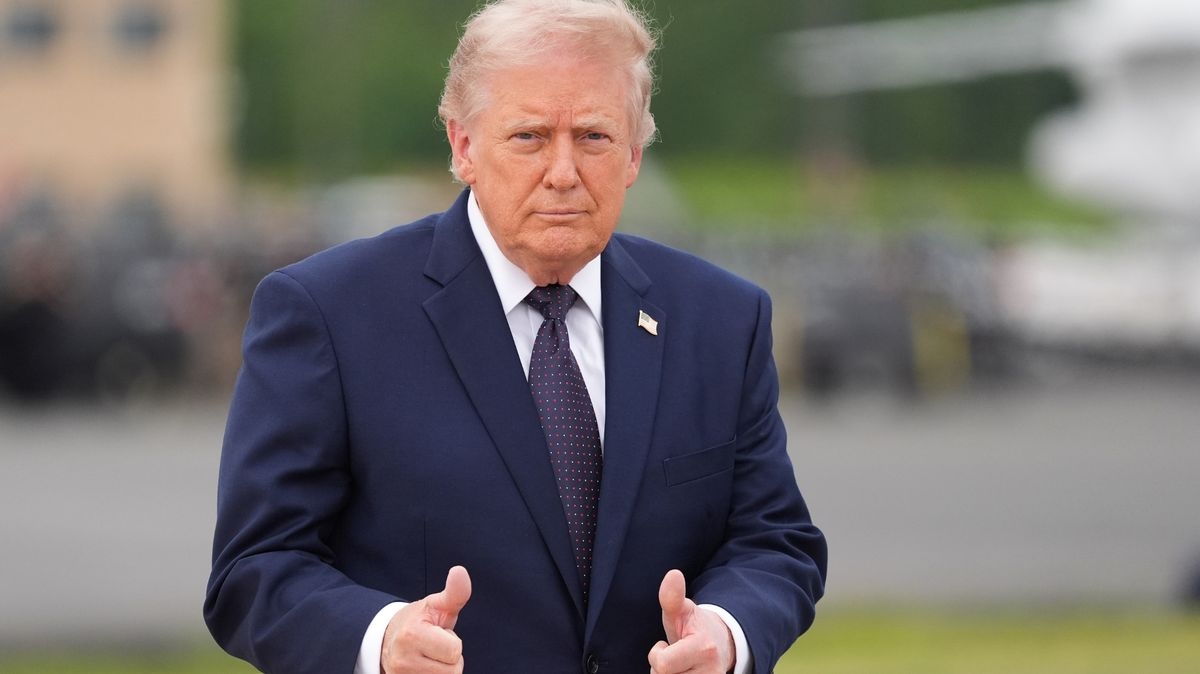
Trump issued another threat to Iran today(Image: AFP via Getty Images)
A number of key sticking points were still being ironed out in the negotiations as officials moved closer to a US-Iran peace agreement.
Iran has called for an end to fighting on all fronts and is adamant that a deal must include Lebanon, which has been subject to repeated Israeli airstrikes in recent weeks. Iran also wants an end to assassinations, a guarantee against future US-Israeli attacks, and war reparations.
Iran has demanded its sovereignty of the Strait of Hormuz be recognised and said it will re-open the shipping route if the US ends its naval blockade.
The US has called for a 20-year suspension of uranium enrichment and the transfer of Iran's highly enriched uranium. Trump previously said Iran should never be able to build a nuclear weapon and must limit the range and number of ballistic missiles it has.
Trump said the "final aspects and details" of the peace deal are currently being discussed, and will be announced shortly."
He added: "In addition to many other elements of the agreement, the Strait of Hormuz will be opened."
Donald Trump says he had a "very good" call with leaders from Pakistan and a number of countries in the Middle East regarding Iran, "and all things related to a Memorandum of Understanding pertaining to peace".
The US president said an agreement has been largely negotiated, subject to finalisation between the US, Iran, and the other countries.
The call was attended by leaders from Saudi Arabia, the UAE, Qatar, Pakistan, Turkiye, Egypt, Jordan and Bahrain.
Iran's ambassador to Pakistan, Reza Amiri Moghadam, says a "positive stride" is taking shape if the US is "adequately committed" to ending the war.
Moghadam said: "With conservative optimism, we can hope that - if the other side is adequately committed - a positive stride is taking shape which is the result of the positions of the Islamic Republic of Iran based on dignity, the steadfastness of the courageous armed forces, and the resistance of the brave Iranian nation, as well as the initiative and dedicated endeavours of the Pakistani mediator."
Earlier on Saturday, President Trump said chances of a deal was "solid 50/50" on agreeing to end the war with Iran or blowing the country to "kingdom come."
"I think one of two things will happen: either I hit them harder than they have ever been hit, or we are going to sign a deal that is good," Trump told Axios.
It is understood that United States Air Force General Dan Caine also returned to Washington this afternoon.

United States Air Force General Dan Caine(Image: Andrew Thomas - CNP/Shutterstock)
Top negotiators, including Iranian Parliament Speaker Mohammad Bagher Qalifbaf, Vice President JD Vance, special envoy Steve Witkoff and President Trump’s son-in-law Jared Kushner, have approved the draft.
The agreement would turn the existing six-week ceasefire into a permanent peace deal.
It is understood that Vice President JD Vance has returned to Washington amid peace talks

Vice President JD Vance(Image: AFP via Getty Images)
Iran and Pakistan have submitted a revised proposal to the United States to end the war and reopen the Strait of Hormuz, two Pakistani sources familiar with the negotiations told Reuters on Saturday.
A US response to the proposal is expected by Sunday, the sources said.
The US and Iran are reportedly set to unveil a draft peace agreement within the next 24 hours.
Senior officials from both nations are said to have signed off on the proposal, with final approval now pending from national leaders.
The deal would seek to turn the current six-week ceasefire into a long-term peace agreement.

mirror.