5,000-year-old carbonized barley grains found in Van
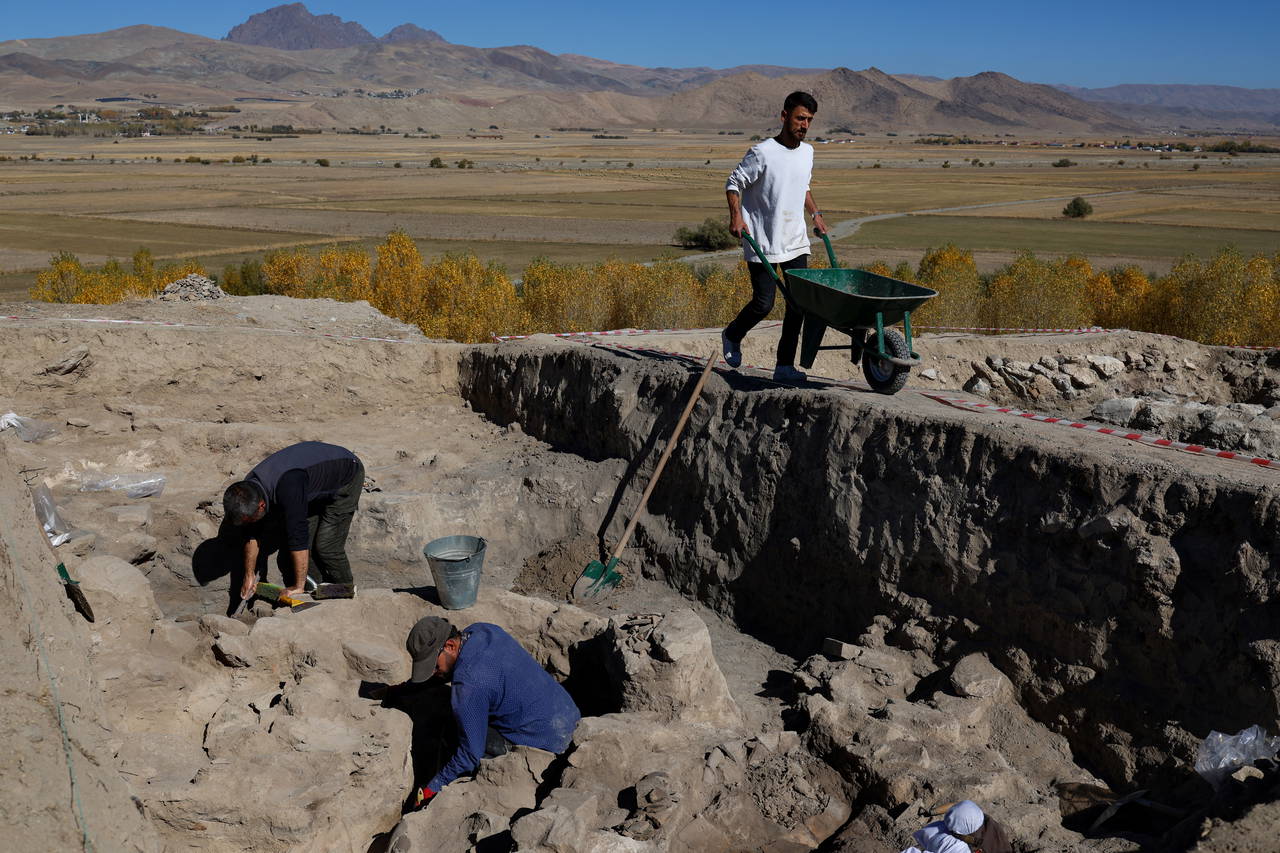
Excavations at the mound in the Otbiçer District, which began in 2020 with the permission of the Ministry of Culture and Tourism's General Directorate of Cultural Heritage and Museums, continue.
A team of 15 people, including archaeologists, anthropologists, and art historians, is involved in the studies carried out under the scientific responsibility of Prof. Dr. Hanifi Biber, a faculty member at the Archaeology Department of the Faculty of Letters at Yüzüncü Yıl University (YYU), under the chairmanship of the Van Museum.
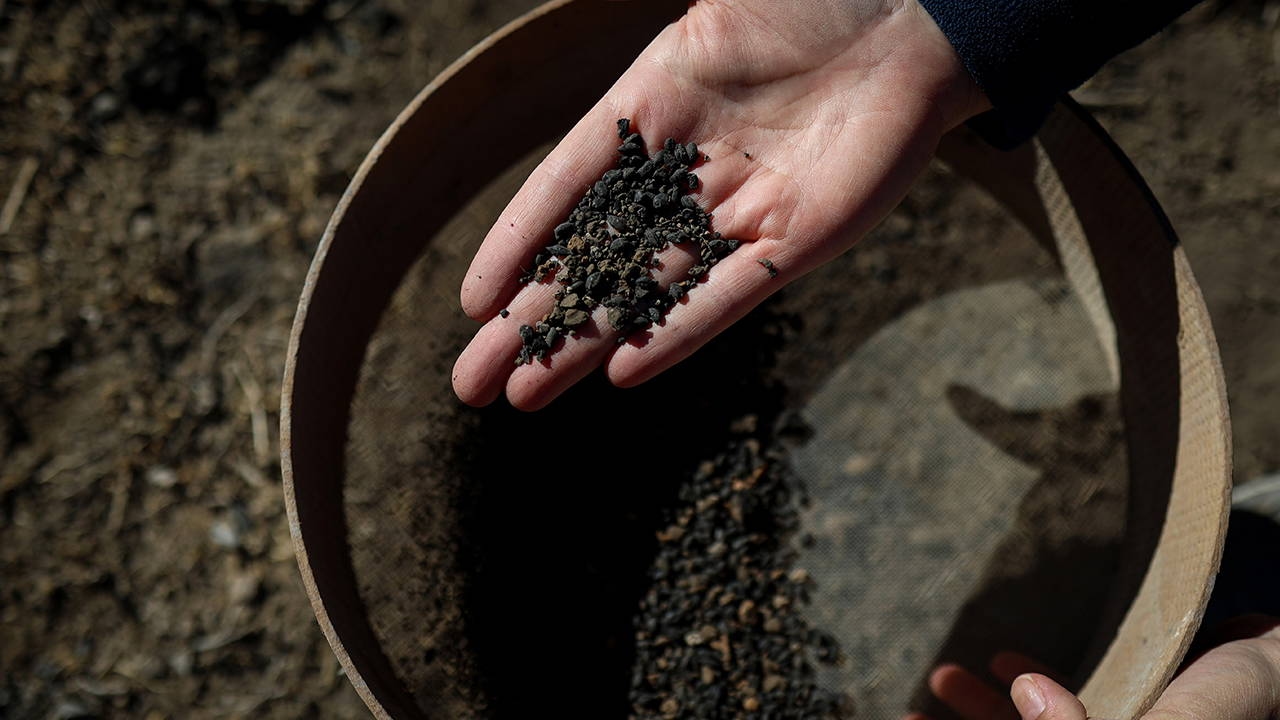
The excavation team, which identified the Early Bronze Age storage area in previous years, unearthed the kitchen section with ovens and pottery, lower and upper grinding stones in this section, small animal bones, and barley grains estimated to be 5,000 years old in and around a broken jar.
Carbonized barley grains from the Early Bronze Age, which were preserved by sifting, will be examined in a laboratory environment.
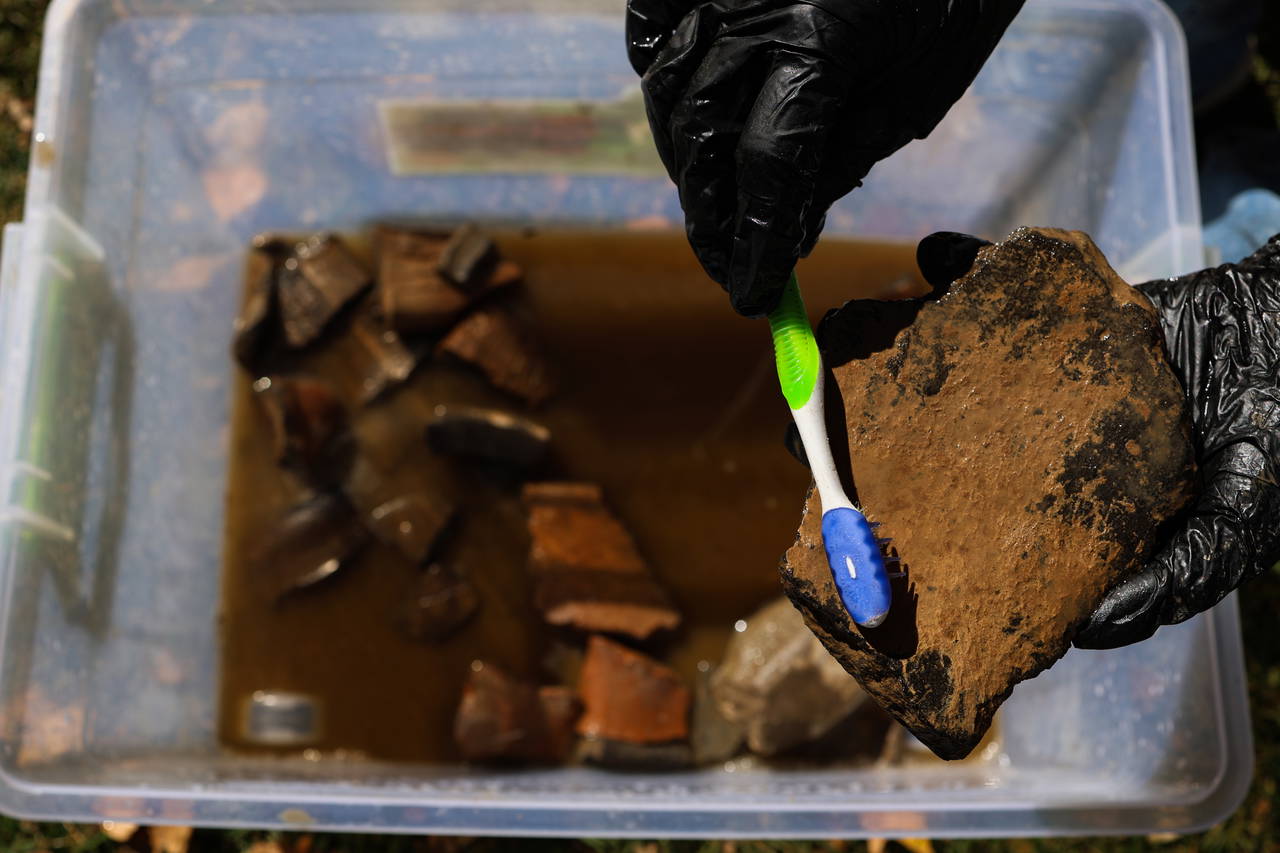
Prof. Dr. Biber said that the mound, where they have encountered eight layers from different periods so far, is the oldest settlement whose excavations are still ongoing in the region.
Stating that the main layers of the mound constitute the living space of the culture called Karaz (the culture of the Early Bronze Age in the geography extending from Eastern Anatolia to the South Caucasus) or Early Transcaucasian, Biber said:
"During the environmental cleaning of the storage area we opened in 2023 this year, we discovered an oven and pottery adjacent to the north wall of the area. This is very important for us because it was preserved in situ (the discovery of an archaeological find where it was used in daily life). During the cleaning and drilling excavation carried out in the area next to the kitchen section, which had previously been opened by unauthorized excavations, we went a little deeper. In the drilling section, we also discovered a wall continued with adobe bricks on a stone foundation. Ceramic sherds that can probably be dated to the Late Chalcolithic Age were unearthed in this area. This is also very important for us."
Biber, noting that new findings are coming to light as excavations continue, said, "In another trench near the cone of İremir Mound, we found the remains of what we believe was a storage area. Large jars, shattered in place, were found inside. I believe this is the storage area belonging to the latest layer of the mound. Next to the storage areas, we found lower and upper grinding stones, obsidian (glass rock) cutting and drilling tools, and bone tools. These findings indicate that İremir Mound was a much more important center than we had anticipated. The findings we have obtained are very important because they provide information that will shed light on the deep history of the Lake Van region in general and the Gürpınar Plain in particular."
Explaining that the findings also offer information about the social lives of civilizations, Biber said, "In 2020, we found carbonized wheat at the edge of the pit where illegal excavations were conducted. This year, in our work, barley was unearthed next to the shattered jar. In addition to these findings, the large jars we unearthed in our most recent excavation show us that this place was an important agricultural center."
Biber thanked the General Directorate of Cultural Heritage and Museums, the Van Governorship, the Van University Rectorate, and the Gürpınar and Edremit district governorships for their support of the excavations.
"THE EARLIEST SETTLEMENT IN THIS REGION IS BEING EXCAVATED HERE"Van YYU Archaeology Department Faculty Member Assoc. Prof. Dr. Hakan Yılmaz stated that the bones unearthed during the excavation provided important information about pre-Urartu agriculture and animal husbandry.
Yılmaz, emphasizing that the mound is the oldest settlement in the region still undergoing excavation, said, "There was an extreme degree of small livestock farming. We found traces of a small number of cattle. Regarding wild animals, we have identified fragments of a wild goat, a red deer, and a bear. The bear may have been hunted for its skin. We are evaluating the pottery, grinding stones, and barley found in each layer. We will determine the density of these artefacts by delving deeper into the layers. Urartian castles and necropolises (cemeteries) are generally excavated in the region, but the earliest settlement in this region is being excavated here."

Cumhuriyet