In Kyiv, they came for Zelensky's "wallet." Commentary by Georgy Bovt
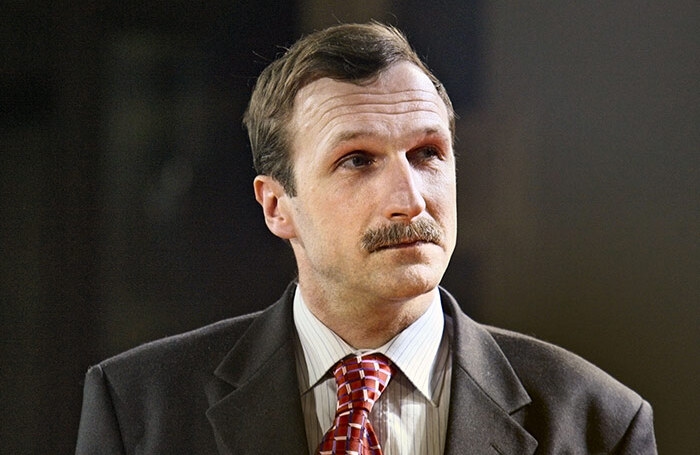
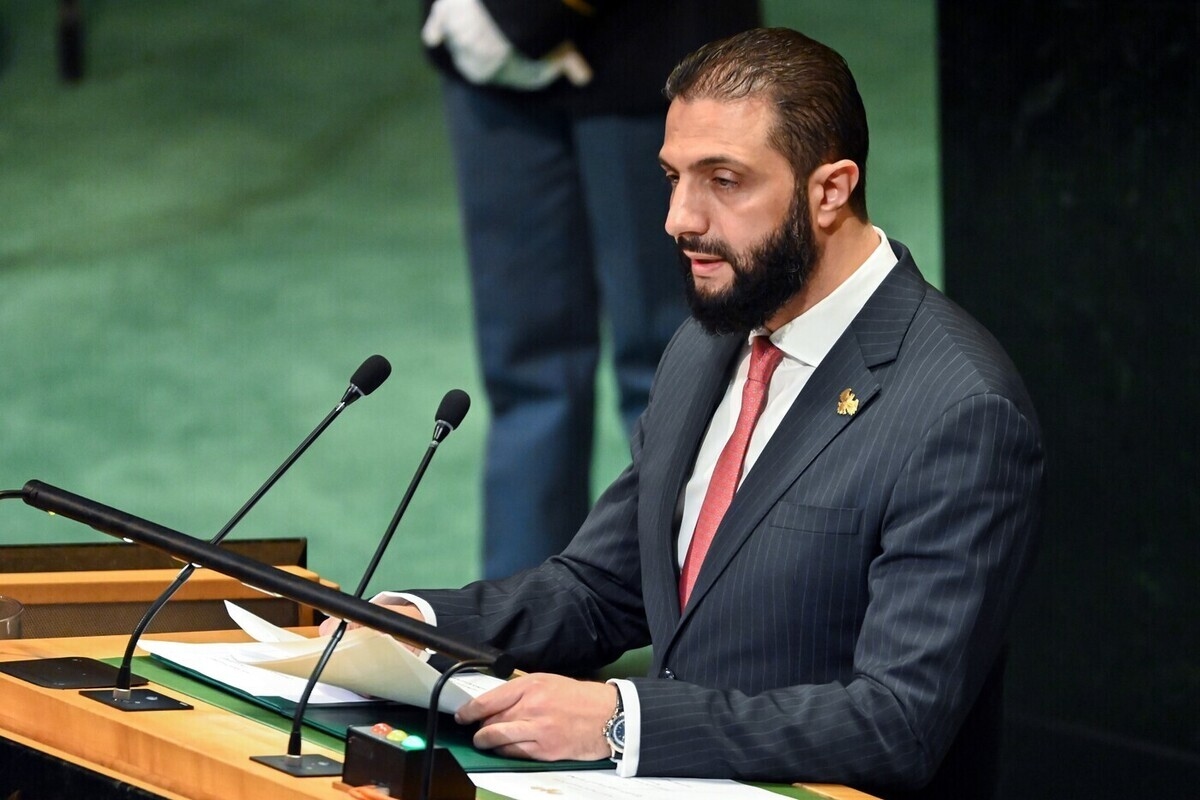
The Anti-Corruption Bureau of Ukraine, created with the support of the US Democratic Party, has uncovered a criminal scheme to influence strategic public sector enterprises in Ukraine. The investigation lasted over a year, and searches included the residence of Zelenskyy's partner in Kvartal 95, Timur Mindych. Does this mean Zelenskyy's power is weakening, and what will the EU's response be?
The National Anti-Corruption Bureau of Ukraine (NABU) conducted searches in connection with a case of large-scale corruption in the energy sector. The investigation uncovered the activities of a "high-level criminal organization" whose members "constructed a large-scale corruption scheme to influence strategic public sector enterprises," specifically Energoatom. The investigation lasted 15 months, collecting and publishing 1,000 hours of audio recordings. Searches also included the home of businessman Timur Mindich, who is close to Zelenskyy. Mindich himself left Ukraine the night before. What are the potential consequences?
The NABU operation didn't come as a complete surprise to those familiar with Ukrainian politics. Furthermore, in recent days, Ukrainian media outlets have reported that the American FBI has taken an interest in high-level corruption. Mindych's name surfaced in the summer, when Zelenskyy attempted to gain control of the anti-corruption bodies established at the initiative of the US Democratic administration and intended to remain independent from the Ukrainian government. One of the main motives for Zelenskyy's attack on these agencies may have been the fact that NABU had begun to investigate Mindych, a close associate of his. Mindych, who had also fled the country at the time, was also caught in the crossfire. These actions, however, were met with widespread protests within the country. And, more importantly, they didn't please Brussels. After a mild but persistent rebuke from the EU, Zelenskyy backed down. He even held a "reconciliatory" meeting with NABU leadership. Apparently, some sort of "secret non-aggression pact" failed to materialize, and the investigation continued.
Timur Mindich is a longtime business partner of Volodymyr Zelenskyy and co-owner of his production company, Kvartal 95. According to one theory, Mindich, who enjoys enormous influence in government circles, is under investigation not only for his connection to the energy corruption investigation but also for his alleged ties to drone manufacturer Firepoint. He signed billion-dollar contracts with little-known companies for both drone production and Flamingo long-range missiles, despite the company having no previous connection to drone production or military equipment. According to other reports, the National Anti-Corruption Bureau of Ukraine (NABU) is investigating Mindich for embezzling $48 million from the Odesa Port Plant, a fertilizer producer. Ukrainian media reports indicate that NABU and the Special Anti-Corruption Prosecutor's Office (SAPO) mentioned Mindich in their inquiries sent to the United States, which is conducting its own investigation into corruption in Ukraine. Alexander Gorbunenko, a participant in corruption schemes at the Odessa Port Plant, who was arrested in the United States, could have testified against Mindich.
The corruption scandal has erupted at an inopportune time for Kyiv. The European Commission recently reprimanded the Ukrainian authorities, urging them to avoid curtailing anti-corruption efforts if they want to maintain their EU accession path. Even more unfortunate for Kyiv, the EU has still not decided on a financing scheme for Kyiv, providing a loan guaranteed by frozen Russian assets worth between €140 billion and €185 billion. And Ukraine could run out of money as early as this spring.
Belgium, where the majority of frozen Russian assets are held in the Euroclear depository, is resisting their actual confiscation, although it is not formally discussed, for fear of becoming the target of Russian lawsuits. The Belgian government is demanding that all EU member states assume subsidiary liability in such a case. However, obtaining legally binding guarantees from all member states is currently unrealistic. Furthermore, accusations of theft by Kyiv, including from military supplies, are growing louder in the EU, not to mention the US.
Against this backdrop, the European Commission came up with an equally bold idea: to use the Norwegian Sovereign Wealth Fund as a guarantor for a loan to Ukraine. The idea is that of the $1.7 trillion it holds, over $ 100 billion would not be a burden for Norwegians. Norway is not an EU member, but a member of the European Economic Area. The idea has been supported by five of the nine parliamentary parties, but they are opposition parties. The government of Labour Prime Minister Jonas Gahr Støre has not yet supported this proposal, which was first put forward, interestingly, by Denmark, which criticized Oslo for insufficient aid to Ukraine, given the billions earned by Norway from increased gas and oil sales.
The idea was then picked up by former NATO Secretary General Anders Fogh Rasmussen. Norwegian Finance Minister and another former NATO Secretary General, Jens Stoltenberg, will discuss the proposal with European Commissioners and colleagues from other EU countries on November 11 in Brussels. The volume of external financial assistance (excluding arms supplies, funds for their procurement, and investments in Ukraine's military-industrial complex) from November 1, 2024, to November of this year amounted to $52 billion, of which $22.9 billion was interest on frozen Russian assets. It is estimated that €140 billion will be enough for Kyiv to continue waging the war for another two years, taking into account additional bilateral assistance from the so-called "coalition of the willing." However, high-profile corruption revelations could significantly taint the information picture surrounding this issue. Until now, the West has turned a blind eye to potential theft, as the priority of confronting Russia is more important. However, the new high-profile media scandal could impact voter sentiment, leading to even greater support for far-right parties opposed to aid to Kyiv. Furthermore, current events could signal growing opposition to Zelenskyy within Ukraine itself.

bfm.ru