The integral veil and the limits of democratic pluralism.
The decision by the Portuguese Parliament to restrict the wearing of face-covering garments, such as the burqa and niqab , in public spaces has generated the usual chorus of accusations: intolerance, Islamophobia, political opportunism.
But beyond the rhetoric, there is a deeper—and more important—question at stake: to what extent can, and should, a democratic society define the cultural boundaries that underpin its common life?
The real debate is not about faces, but about rules of coexistence — about a community's right to negotiate, within its traditions, the ways of "living together."
All of society rests on a set of unwritten understandings—a “silent contract” that guides how we present ourselves and interact. These are habits established over centuries that form the invisible grammar of social life.
As immigration transforms the European landscape, this contract is put to the test.
Sociologist Christian Joppke describes these moments as efforts by liberal democracies to “reaffirm their boundaries”—not out of fear of the other, but to preserve the internal coherence that makes diversity possible. The new Portuguese law should be read in this context: not as a rejection, but as a reaffirmation of a common code. Pluralism is an achievement, but it is not infinite. It depends on shared practices that make difference legible.
Studies on “civic integration” show that European democracies are increasingly asking newcomers not only to respect the laws, but also to understand the customs that structure daily life. This requirement is not exclusion; it is cohesion.
To deny a society the right to define these expectations is to empty the very idea of democracy. A free community must be able to say—calmly— this is how we live together here.
Debating "visibility" would mean missing its deeper dimension. The essential issue is cultural: how to maintain a sense of belonging when habits and symbols come into conflict? Portuguese public life—Mediterranean, relational, egalitarian—values proximity and reciprocity. The discomfort with the full veil does not stem from religious suspicion, but from the instinct to protect this social language of encounter.
Other countries have faced similar dilemmas. France and Belgium invoked "living together"; Austria and Denmark restricted the veil in civic spaces; Germany and Norway limited it to public functions.
Different paths, the same goal: to preserve the public sphere as a space for contact, not separation.
Immigration brings new sensitivities and some friction—but this discomfort is a sign of democratic vitality. The conflict is not with people, but with practices: with the degree to which individual expression can deviate from the collective rhythm without breaking the common fabric.
I know this balance firsthand. As an immigrant, I learned that integration requires generosity from both sides. Those who arrive must understand that being welcomed implies accepting the local customs; and those who receive must do so without losing faith in their own references. This is how pluralism becomes lasting.
Across Europe, the debate over the veil has become a reflection on identity. In France and Belgium, secularism is invoked; in the North, transparency and civic equality; in Switzerland, the referendum on face coverings was an exercise of popular sovereignty.
Portugal enters this conversation with its own tone — more moderate, but aware that diversity requires visible boundaries.
The philosopher Charles Taylor reminds us that democracies depend on shared “horizons of meaning.” These horizons are changing, but they cannot disappear. If we want diversity to flourish, we must allow societies to retain the right to say who they are.
Viewed in this context, the new Portuguese law is not a gesture of rejection, but a quiet reaffirmation of identity. Hospitality is not synonymous with cultural amnesia.
The strength of a democracy lies not in hesitating to define itself, but in the courage to do so without losing its openness. Portugal has taken a step in that direction: to clarify, calmly, the social boundaries of belonging.
Living together remains the greatest exercise in freedom — and also the most demanding.
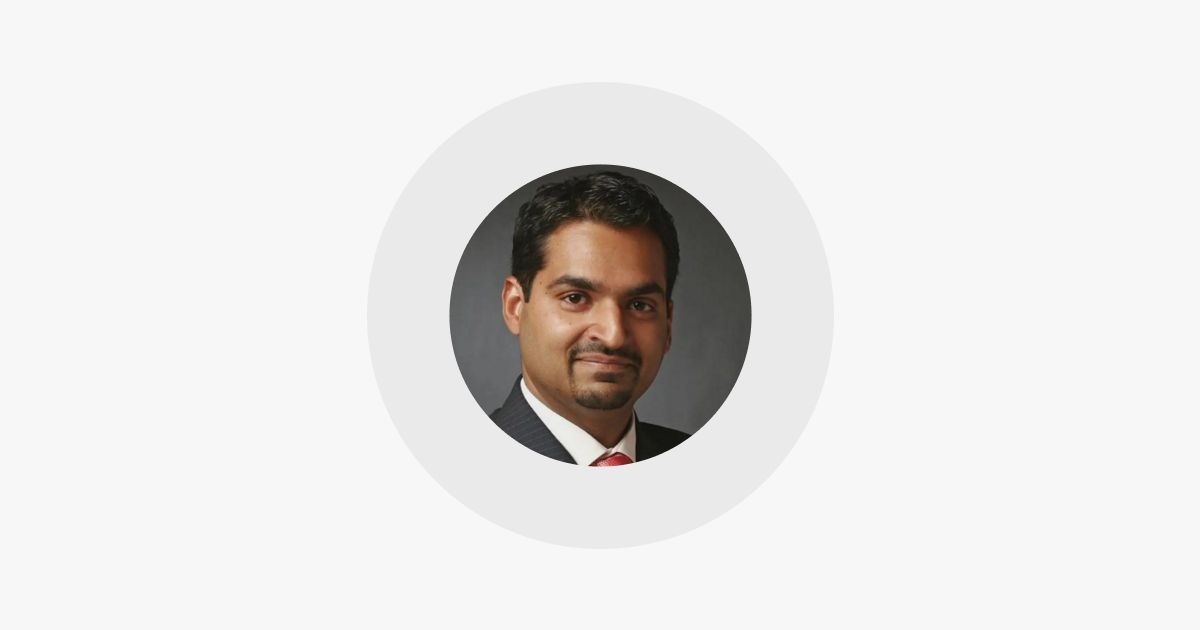
Rahool S Pai Panandiker is a naturalized Portuguese citizen. He lived in Portugal between 1998 and 2012 and currently resides and works in India. He holds a PhD in Chemical Engineering and Petroleum Refining from the Colorado School of Mines, a post-doctorate from the Faculty of Sciences of the University of Lisbon, and an MBA from the Catholic University of Portugal. He is a member of the Portuguese Diaspora Council.

observador