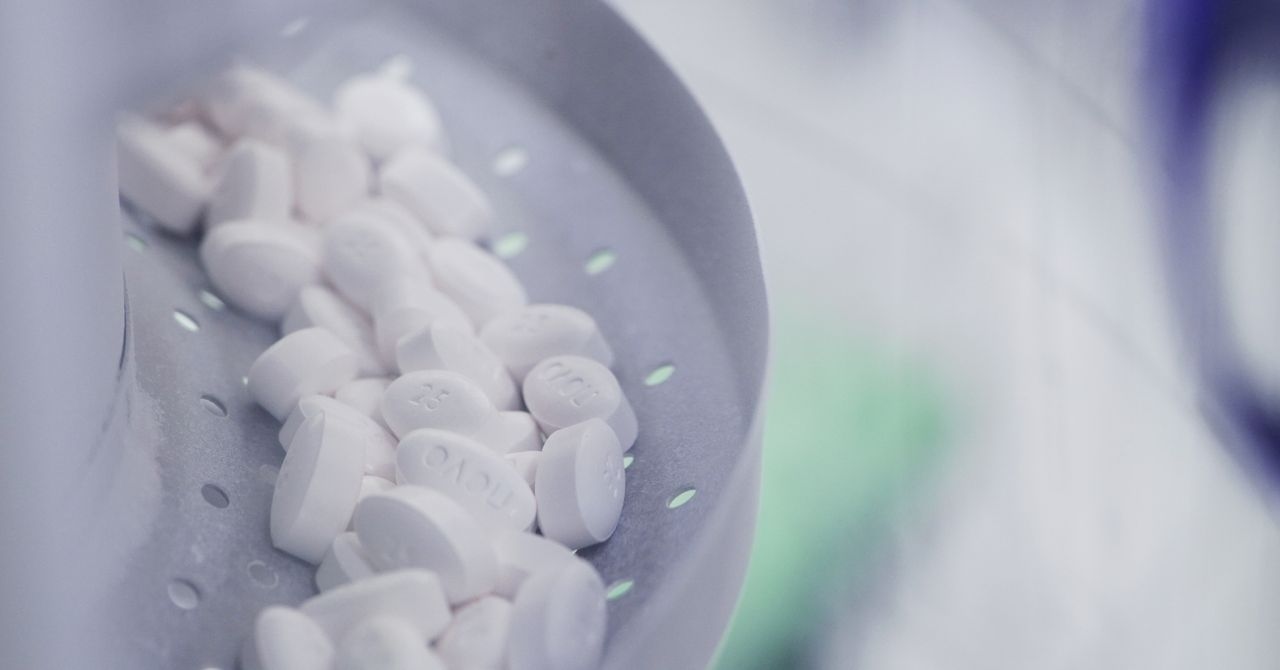
20% of medical errors in hospitals are the result of mistakes. "Barcodes save lives"

- During the Open Stage of the 21st Health Market Forum, Dr. Anna Gawrońska spoke about barcodes that save lives - automatic identification supporting patient safety and the comfort of nursing staff.
- 20% of medical errors that occur in hospitals are related to the incorrect administration of a drug or the incorrect use of a medical device - she reminded
- The scanning process should be treated as a shield against errors. We have excellent tools for this: wristbands with codes, and codes on medications and medical devices. The goal here isn't to blame, but to reduce errors," she argued.

![Hunting for contractors: why the doctor salary cap is not a reform, but populism? [COLUMN]](https://pliki.rynekzdrowia.pl/i/23/27/64/232764_r0_300.jpg)
"Results of studies conducted in the US in the 1990s showed that of all medical errors occurring in medical facilities, as many as 20% are related to the incorrect administration of a medication or the improper use of a medical device ," said Dr. Anna Gawrońska , an innovation specialist at the Center for Innovation and Artificial Intelligence at the Institute of Mother and Child in Warsaw. During the 21st Health Market Forum, she delivered a lecture entitled "Barcodes That Save Lives - How Does Automatic Identification Support Patient Safety and Nursing Staff Comfort?"
"According to data from the UK, as many as 850,000 admissions involve incidents that threaten patient safety, and according to data from New Zealand, this figure accounts for 13% of all hospital admissions. Unfortunately, in Poland, we lack reliable data on this subject . According to information provided to the OECD, we are one of the countries where postoperative foreign bodies remain in the patient's body. Scandinavian countries, however, are among the leading countries where this occurs, which is obviously due to the fact that such errors are very reliably reported there," she explained.
She added that in Poland, we learn about such errors from the media, and the outcome is usually tragic, with the patient dying. There are also many errors that, fortunately, don't result in the patient's death because they are caught in time by the nursing staff.
"We're increasingly starting to talk in our country about the phenomenon of the so-called second victim of medical error, i.e., nursing or pharmaceutical staff who, for some reason, cause such a mistake. For some reason – because no one does it on purpose. Most often, the cause is excessive bureaucratic or manual workload . The costs of these errors are, of course, primarily personnel costs, but also financial ones, related to extended hospitalizations and insurance costs," the expert noted.
"We all know the patient's rights to safe pharmacotherapy, defined last century in the United States. They clearly show us what principles should be followed. The problem is that while accreditation standards include proper storage of medications and recording their administration, they lack guidelines on how to do it effectively and efficiently . Therefore, it's worth remembering barcodes, which everyone has been hearing about for years – the first barcode was scanned 51 years ago in the USA," said Dr. Gawrońska.
"What is automatic identification? It's a system that "thinks for us" in critical moments, relieving us of bureaucratic and manual tasks. Why is it worth considering implementing such a solution? Research conducted in the 1970s showed that when manually entering data into a computer system, there is a risk of making one error per 100 characters entered, whereas when using automatic identification, such as barcode scanning, the risk is one error per 10 million characters entered ," she argued.
"Some people emphasize that today we have radio tags. Yes, but we also have a whole layer of legislation – the Pharmaceutical Law, the Anti-False Products Directive, and the Medical Devices Regulation. Barcodes are mandatory everywhere, although scanning is not required, which I strongly encourage," she pointed out.
"The scanning process should be treated as a shield against errors. We have excellent tools for this: wristbands with codes, and codes on medications and medical devices. The goal here isn't to blame, but to reduce errors ," she emphasized.
Dr. Gawrońska made no secret of the fact that hospitals often complain that these solutions are unfriendly or fail to meet real needs. There are also cases where the time taken to complete various tasks is extended, not shortened.
"Therefore, it's important to ensure that these solutions are implemented in the background so that medical staff don't feel like they're performing an additional task, but rather feel relieved of the burden of bureaucratic and manual tasks. Research shows that the burden of these activities can be reduced by up to 80% by freeing up time for patient care," the expert added.
Copyrighted material - reprint rules are specified in the regulations .

rynekzdrowia