

Doctors in Białystok have performed a miracle. The son of a communist-era prime minister and a rally driver can walk again.
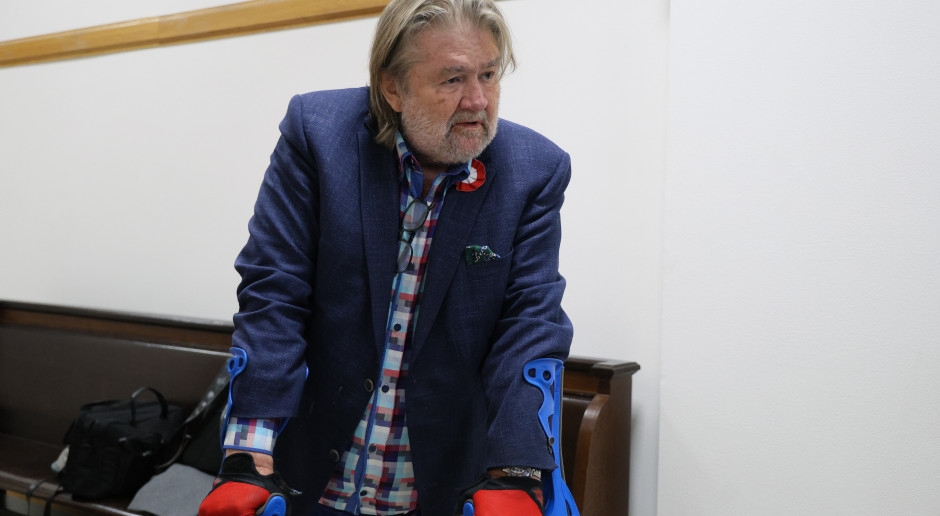
- The famous Polish rally driver Andrzej Jaroszewicz, son of the Prime Minister of the Polish People's Republic, Piotr Jaroszewicz, was taken to a German district hospital with an open leg fracture after an accident during a rally in the GDR.
- Doctors wanted to amputate the limb immediately above the knee. Thanks to the intervention of the Polish consul, Jaroszewicz was able to return to Poland and avoid disability.
- The patient underwent a total of six surgeries at different hospitals. He struggled with increasing pain, adhesions, and complications from previous procedures. After one of the surgeries, he developed a staph infection. Doctors were unable to find an effective treatment, and the knee was placed in a brace.
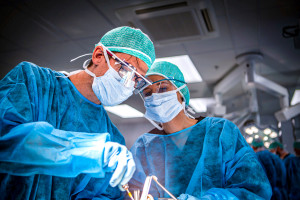
- A team of orthopedists from the University Clinical Hospital in Białystok decided to perform a complex procedure that no one else had previously been willing to attempt. The operation lasted over four hours and required extreme precision.
- Doctors removed the adhesions and fitted a suitable prosthesis. Today, the knee bends to 90 degrees, and the former rally driver has been discharged.
"He searched for help all over Poland. He visited dozens of doctors, who were helpless. He underwent six surgeries. Only the Białystok orthopedists from the Orthopedic Clinic of the University Clinical Hospital (USK) took the risk. After a more than four-hour operation, Andrzej Jaroszewicz's leg is functional," we read on the Białystok University Clinical Hospital website.
Andrzej Jaroszewicz , a famous Polish rally driver and son of the Polish People's Republic Prime Minister Piotr Jaroszewicz, suffered a leg injury 52 years ago during the Tulip Rally in the GDR.
As Jaroszewicz recounts, on one section of the entire East German tour, he switched places with the co-driver – he fell asleep, and the co-driver steered. However, he didn't know the co-driver was diabetic – he fell asleep, and the car hit a tree. The driver escaped the accident almost unscathed, while Jaroszewicz was taken to the nearest district hospital with a broken leg.
The doctors decided surgery was necessary, but the patient didn't speak German, so he didn't know exactly what he was signing the consent for. Just before the surgery, the consul arrived at the hospital and realized it was a consent for an above-the-knee amputation.
Jaroszewicz was transported to Poland, and the operation was performed by Prof. Donat Tylman , a renowned orthopedist at the time.
"Your leg is done, you've got 15 years of peace. What will happen next, I don't know, but an artificial knee joint will definitely be invented," Professor Tylman reportedly said after the surgery.

For many years, the leg, though painful, functioned. Over time, however, the pain worsened. The patient began a "trip" through Warsaw hospitals. In one of them, he was scheduled for knee replacement surgery. The surgery was performed, but he also contracted a nosocomial strain of staphylococcus.
- No antibiotics worked, so after a few months, doctors removed the knee endoprosthesis and inserted a "spacer", i.e. an endoprosthesis made of a material other than metal and additionally saturated with antibiotics - describes the University Clinical Hospital in Białystok.
The staph infection couldn't be cured, so Jaroszewicz consulted several other Warsaw hospitals and also saw doctors in Krakow and Wrocław. When he arrived in Otwock, the doctor suggested removing the spacer, inserting a wire, and completely immobilizing the knee.
For two years, the patient walked with a stiff leg, which made life very difficult. He was unable to drive or fly.
A friend recommended the University of Applied Sciences in Białystok to Jaroszewicz, claiming that "they work miracles there."
First, doctors operated on his left leg, which had degenerative changes and had never been operated on before, and then qualified him for a second operation on his right knee.
"The patient was unable to walk, complained of pain, and had gait biomechanical abnormalities," says Dr. Jan Kiryluk , head of the Orthopedics Clinic at the University Clinical Hospital . After analyzing the case and identifying potential complications, the patient agreed to surgery, including possible leg amputation, because he felt it was better than walking with his knee straight.
During a 4-hour operation, doctors removed the nail and scar tissue and fitted a special prosthesis suitable for the patient.
"The biggest challenge in this procedure was removing the nail," adds Dr. Thomas Wenta , who assisted Dr. Kiryluk. Rehabilitation is now necessary because the knee is stiffened by the stretched tissue. However, it bends to almost 90 degrees. The patient is walking, and gait biomechanics testing showed the surgery was successful.
Dr. Kiryluk admits that such surgeries are rarely performed in Poland. In Białystok, it was the first of its kind. Mobilizing a stiff knee after three years is a significant challenge, as the muscles atrophy after such a long time. The surgeries are very risky. "We had to remove the nail, excise the diseased tissue, and cut the marginal bony spurs to gain the appropriate range of motion. Removing the nail and simultaneously performing a total knee replacement is a difficult and risky procedure, but when it works, it's a resounding success. Importantly, we inserted a primary prosthesis (the one that will be inserted the first time), not a revision one (which is inserted during a subsequent surgery). And that's also difficult. Such procedures can always end in infection and the need for amputation," describes Dr. Kiryluk.
"The improvement is significant," says Andrzej Jaroszewicz, revealing that he plans to race his friends in a car again. On November 7th, the patient was discharged from the hospital.
At the University Hospital (USK) this year, orthopedists have already performed 900 knee and hip replacement surgeries and 100 upper limb replacements. Over 200 revision surgeries (surgeries involving the repair or replacement of worn or damaged joint replacements) have also been performed, about half of which were on patients previously operated on at hospitals other than the USK. Jaroszewicz was among them.
Andrzej Jaroszewicz was born on October 7, 1946, in Warsaw. In the 1970s, he was the director of the FSO Research and Development Center and the general director of the Motoimpex Internal Export Center.
He won the Warsaw Rally in 1975 and the 36th Rally Poland in 1976, with co-driver Ryszard Żyszkowski. He was awarded the Bronze, Silver, and Gold Medals "For Outstanding Sporting Achievements," the "Meritorious Master of Sports" Badge, the Bronze Medal "For Merit to National Defense," the Silver Cross of Merit, and the Knight's Cross of the Order of Polonia Restituta.

Copyrighted material - reprint rules are specified in the regulations .

rynekzdrowia


