

The specter of a stock market crash looms. Dark clouds gather over Trump.
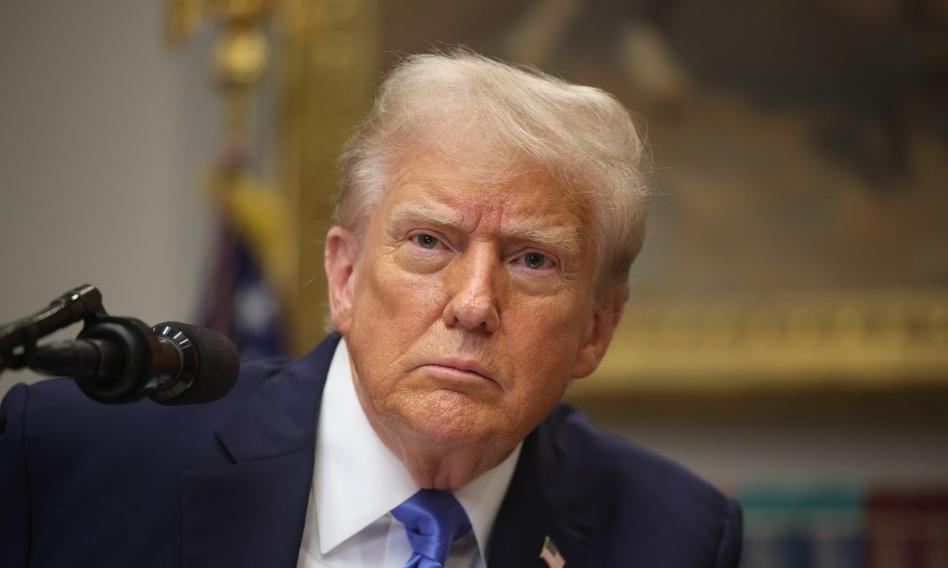
Dark clouds are gathering over US President Donald Trump, including recent Democratic victories, poll results, the specter of a stock market crash, and even the first signs of disloyalty from his political guard, writes Adam Roberts, editor of the online Economist, announcing the new issue of the weekly.
Roberts points out that Democrats won important votes in the regional and local elections on November 4th, and analysis of their results has yielded numerous data points that are not favorable to the Trump administration. Democratic candidates won the gubernatorial elections in Virginia and New Jersey, and the mayoral election in New York City.
Not only do polls show that Americans are dissatisfied with the president's second term because they are concerned about the state of the economy, but consumer confidence is also falling dramatically and the labor market is deteriorating.
Polls and analyses conducted after the Democrats' victory in the closely watched elections in Virginia and New Jersey show that groups such as Latinos and people under 30 who supported him in the presidential election are turning away from Trump, the author emphasizes.
The Democrats were favored by turnout, which indicates a large mobilization of the liberal electorate; moreover, the Economist's analysis indicates that a certain portion of Republican voters voted for them, writes Roberts.
The weekly's latest poll also showed that, a year before the midterm congressional elections, Democrats have a 3 percentage point advantage.
An even more serious problem for the Trump administration could be a deep stock market correction, which seems increasingly likely. Last week, AI companies' stocks plummeted by $800 billion in market valuation, and "there's every reason to expect more damage," Roberts writes.
He adds that this would particularly undermine the president, who has always boasted that rising stock prices are a measure of his success. Furthermore, Trump would be greatly disadvantaged if the market crash affected ordinary voters, given that some $42 trillion (20% of total American wealth) is held in US stock market assets.
The strangest signal of Trump's potential problems is the position of Republican Congresswoman Marjorie Taylor Greene, the author believes.
While she has previously been one of the president's staunchest supporters, she has now distanced herself from Trump and denied his claims that inflation is falling. Of course, one can dismiss her opinions as a far-right conspiracy theorist, but it's important to remember that she is a skilled "political operator," Roberts writes.
He further explains that if Taylor Greene makes it clear that she is distancing herself from Trump, it sends a signal to other Republican congressmen.
Therefore, it shouldn't be assumed that the Democratic Party is in a state of collapse, even though in the last presidential election, for the first time in two decades, it lost not only in the electoral votes, but also in the electoral votes. The results of the November 4 vote "give it reason to celebrate." (PAP)
fit/ kar/

bankier.pl


