

His kettle has been in HEMA for 14 years, but designer Tim now bakes sandwiches

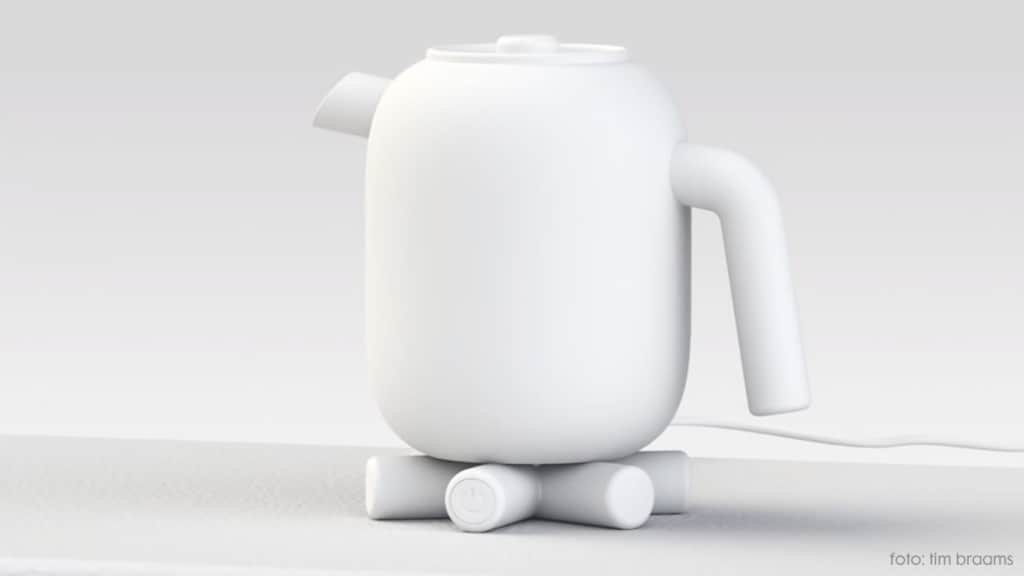
He didn't officially win the HEMA design competition in 2012. For his "Ketelbinkie," the chunky kettle designed like a kettle on a stove, Tim Braams only received an honorable mention. His design didn't meet all the requirements for the assignment.
Nevertheless, HEMA put the kettle into production. "As an Industrial Design student at Delft University of Technology, that's the best thing that could happen," Braams, now 37, reflects. His design was intended as a contemporary successor to the 1990 winner: the Le Lapin kettle by Nicolaï Carels.
Officially, the jury didn't select a winner in 2012, as no design met the precise requirements. Only second and third prizes, and audience awards were given. That year, for example, the Smul won a prize: a collapsible basket that can be used as a tray or tiered stand. And the Strik Strak: a tablecloth made of biodegradable plastic that can be used as a garbage bag.
Not all the (winning) designs entered in the competition were actually put into production. Tim Braams' Ketelbinkie is one of the exceptions in that regard.
Fourteen years later, the kettle is still available at HEMA. But Braams hasn't yet pursued his career as an industrial designer. After graduating, he worked for a while on his own watch brand and earned some extra money with his twin brother Max at a pizzeria.
Career changeThen one day, the owner let them use the pizza oven during the day. The brothers started baking their own bread in it. The place became a sandwich shop during the day and pizzas in the evening. "The watch brand was a long process, and it became difficult to manage my time," says Braams.
Be the first to know the latest news
The sandwiches proved to be a more lucrative option: business was so good that sharing the space with the pizzeria was no longer viable. "We opened our own business, BUN, in 2021, in our own corner building in Rotterdam-West. It's still growing from there."
What helps: good reviews from bread testers on YouTube and other videos posted by enthusiastic customers on TikTok. This led to days where the bread was sold out by 1:30 PM. Now, with the purchase of a bakery down the road, they can make more bread.
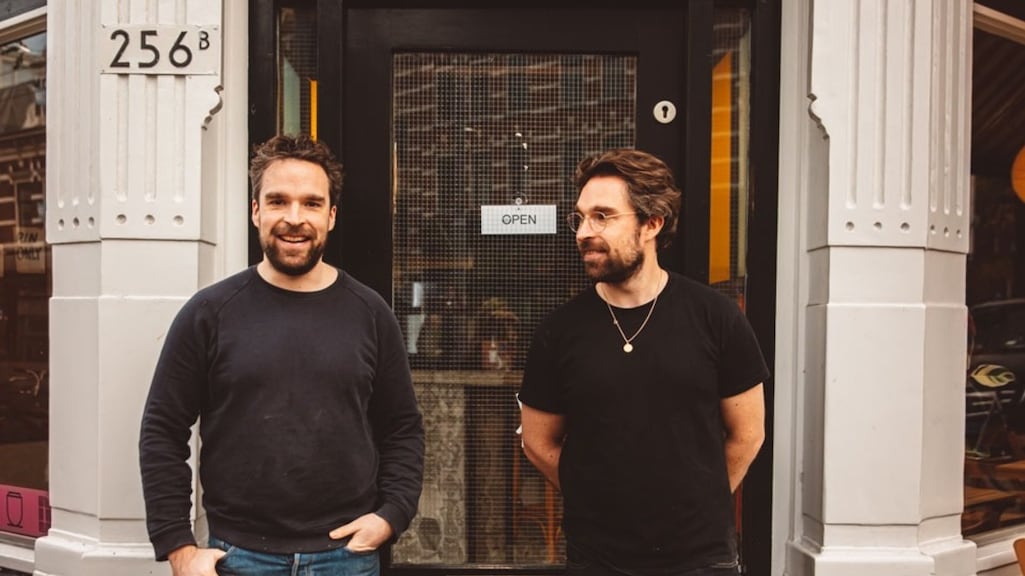
From working for BUN, Braams learned that quality is paramount. "Because then it sells itself. And you have to be willing to ask for it. I'm perhaps a bit too modest for that. Our sandwiches were initially far too cheap: I saw an old menu listing €4.50 for a chicken sandwich. People told us: 'You're not charging enough for the craftsmanship you put into it.'"
He doesn't think BUN needs to become a franchise. With the new bakery, they can bake enough bread for a potential second location, he says. "But if I earn enough to support my family, I don't need much more."
Watch dreamBraams would love to work more behind the scenes in the future, and for things to go so well that he'll have time for other things. He hasn't given up on his watch dream just yet. "I still love watches, so that still excites me. It's the ultimate men's jewelry. It's a challenge to create something distinctive in that. But that watch is still to come."
The design competition, which HEMA has organized since 1983, aims to show students what they should consider as designers, for example, when choosing materials. The retail chain is looking for a product under €50 that offers a solution to an everyday problem and is "truly HEMA."
Registrations are open until December 31st. A selected group will then spend a whole day behind the scenes at HEMA in February. The winner will be announced next October at Dutch Design Week in Eindhoven. They will receive a €2,500 prize and the opportunity to join the HEMA design team for an internship or traineeship.


