Stubborn Starmer's refusal to budge from his bunker reduces Westminster to farce
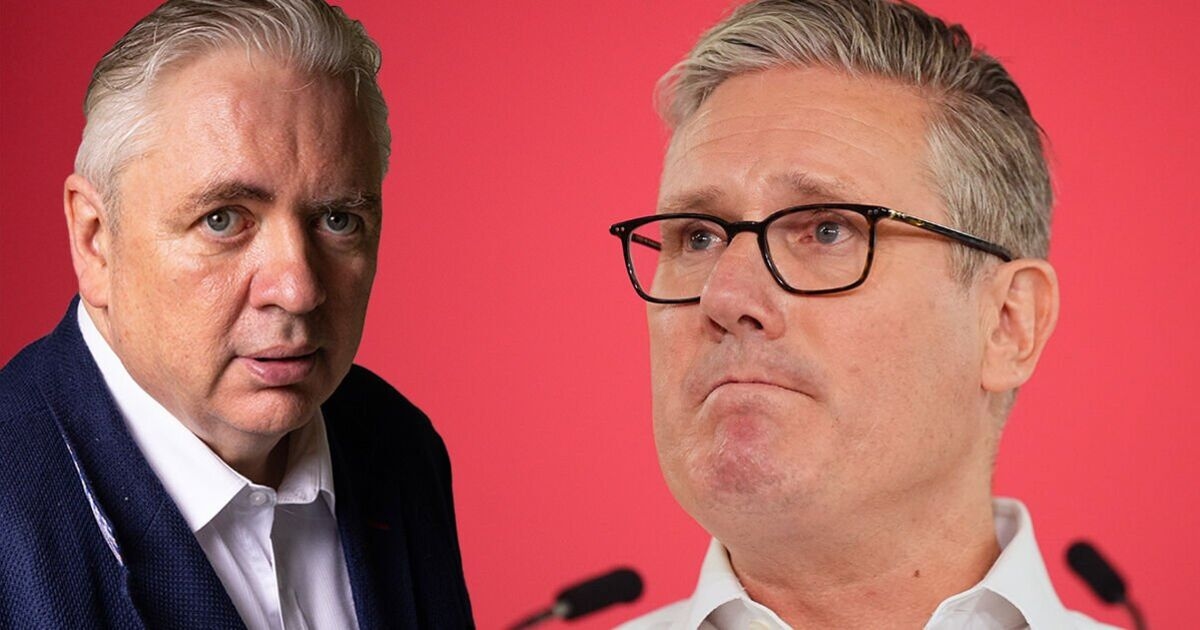

The speed of the collapse in the Prime Minister’s authority has been remarkable. After his landslide triumph at the last General Election in July 2024, Sir Keir Starmer commanded the British political landscape. Yet his dominance proved fleeting, his popularity an illusion. In less than two years, the victor of electoral glory has become the victim of public fury. According to opinion polls, he is more despised than any previous Prime Minister in history – a level of contempt that was reflected in the dire local election results for Labour which triggered the current turmoil in his party.
As Labour’s internal crisis deepens, Ministerial resignations and MPs’ expressions of no confidence in Starmer’s beleaguered leadership continue to mount. But he refuses to budge from his bunker. His stubbornness is turning Westminster into a farce and is making proper management impossible. Starmer and his acolytes claim that this is no time for a change of national leader, given the delicate international situation, the vulnerability of the global economy and the US war with Iran.
But that argument will not wash. In May 1940 Neville Chamberlain tried to deflect calls to resign by maintaining that Nazi Germany’s invasion of France necessitated his continued tenure in Downing Street, but he had lost too much credibility by then. As a lawyer, Starmer is often accused of having an overly legalistic approach to politics.

Typically, he now takes refuge in the party's rulebook – telling his critics that he has no intention of resigning because Labour’s procedures stipulate that a leadership contest requires a challenger to come forward with nominations from at least a fifth of Labour MPs. No colleague has thus far taken that step.
So, barricaded into Downing Street, Starmer remains in post, using process as a kind of human shield. He is helped by Labour’s ingrained sentimentality, which is in stark contrast to the clinical ruthlessness of the Tories. Indeed in the century since the first Labour Government was formed in 1924, there has never been a direct challenge to a sitting Labour Prime Minister.
There have been plenty of plots, like David Miliband’s abortive attempt to oust Gordon Brown in 2008, but all of them fizzled out through loss of nerve. When Labour has been in opposition, however, leadership challenges have occurred regularly. In 2016, soft-left moderate Owen Smith ran against the quasi-revolutionary incumbent Jeremy Corbyn, only to be soundly beaten.
A much bigger thrashing was experienced by Tony Benn when he took on the incumbent Neil Kinnock in 1988 while, at the beginning of the 1960s, the centre-right leader Hugh Gaitskell twice saw off challenges from the left, the first by the slippery opportunist Harold Wilson and the second by the lightweight Tony Greenwood, a supporter of the Campaign for Nuclear Disarmament.
After Labour’s heavy defeat in the 1935 General Election, Clement Attlee – who had only been in post for a few months – was challenged by the heavyweight Herbert Morrison, Labour’s municipal boss in London and, incidentally, the grandfather of Peter Mandelson. Diffident, uncharismatic and a dry speaker, Attlee seemed to have little chance, but the Parliamentary party found Morrison too pushy.

“A wretched and disheartening result. A little mouse shall lead them,” wrote one Labour grandee in his diary. Attlee was to remain in charge for 20 years.
In the long saga of Labour, just one leadership challenge was ever successful, when in 1922 Ramsay MacDonald defeated the modest J.R. Clynes, a former trade unionist who began work in a cotton mill aged just 10. Flamboyant, romantic and eloquent, MacDonald was a far bigger, more controversial figure, though he destroyed his reputation forever with Labour by forming the National Government with the Tories in 1931.
Starmer will never reach the heights of MacDonald’s grandeur or the depths of his perceived political apostasy. There is little sense of purpose about Sir Keir’s premiership, which has been littered with U-turns, retreats and errors of judgement, like the withdrawal of the winter fuel allowance for most pensioners, and the imposition of the National Insurance hike, which has undermined job creation and inhibited growth.

Defence has been grievously neglected, epitomised by Britain’s inability to deploy a meaningful naval force to the Mediterranean in support of our national interests at the start of the recent US attacks on Iran.
National pride seems to count for far less to Starmer’s Cabinet than blind obedience to arbitrary international rules, an attitude that led to the humiliation of the Chagos surrender and the failure to fulfil the pledge to “smash the gangs” of people smugglers across the English Channel. Indeed, this week saw the grim milestone of 200,000 illegal migrants having reached our shores since 2018, a total that is testimony to institutional negligence and disdain for our borders.
Starmer’s government represents the triumph of dogma over pragmatism, virtue-signalling over competence. Borrowing costs have soared as welfare bills explode. The obsession with net zero has helped make our energy the most expensive in the developed world. The unprecedented anti-Labour vote at the local elections was driven by a profound feeling of betrayal from decent, tolerant British people who now feel like second-class citizens in their own land, forking out billions of pounds for new arrivals who have never contributed to our economy and often show little respect for our culture or values.
Yet still Starmer does not get it. A progressive lawyer all his adult life, he has no connection with the British public, no real grasp of the mood across the country. His initial response to the disastrous loss of more than 1,400 councillors in the local elections was to go backwards by appointing those progressive retreads from the past, Harriet Harman and Gordon Brown, as his new Downing Street advisers.
It was a bizarre move from a leader who urgently needed to project a positive vision for the future. Equally absurd was his pledge of ever closer ties with the EU, a theme that showed no recognition of how far the pro-Brexit Reform Party had wiped out Labour in its traditional heartlands of the so-called “Red Wall”.
Starmer and his team also showed an almost laughable faith in the power of his oratory as they billed his set-piece speech on Monday morning as the moment that would inspire the public and redeem his leadership. It was a ridiculous prospect, given that among Starmer’s greatest defects is his weakness as a communicator, whether on the platform or behind the microphone. With its banal content and wooden delivery, Starmer’s speech on Monday lived right down to expectations.

The truth is that Starmer is political mediocrity, hopelessly unsuited to the job of Prime Minister. Integrity and competence were meant to be his big assets, exemplified by his work as Director of Public Prosecutions before he entered Downing Street. Yet he has presided over an increasingly dysfunctional regime littered with scandals like the appointment of Mandelson as US Ambassador or the exploitation of freebies from Labour donor Lord Ali.
In the febrile atmosphere of No.10, the turnover of staff has been phenomenal. In his first 18 months in power, he lost seven advisers, a Cabinet Secretary, two Chiefs of Staff and five Directors of Communications. Those who have worked with him complain that he has no real political instincts or intellectual curiosity. “He is a complete absence of a man. You just don’t get anything. There’s just nothing.”
With Starmer still at the helm, the stench of decay hangs over Labour. “We’ve reached an existential crisis. Labour lies on its deathbed,” wrote the MP for Durham, Mary Kelly Foy, yesterday. The party has been in crises before, such as after the landslide defeats of 1931 and 1983.
Under Gaitskell the leadership even considered changing the party’s name after a hammering in the 1959 election, believing that the term “Labour” smacked of outdated class struggles. The name they suggested? The Reform Party.
But this time, the party’s future looks more bleak, trapped in a pincer movement between the Greens on the left and Reform on the right. Labour has long been a coalition of the working-class and urban professionals but that alliance has crumbled away completely, since what the traditional heartlands want – stronger borders, welfare crackdowns, respect for our national identity – is literally the opposite of the progressive agenda, with its emphasis on diversity and globalism.
Labour’s future looks even more troubled because all the potential successors seem so flawed. Andy Burnham’s record of achievement is thin and he badly failed in his two previous leadership bids in 2010 and 2015. Besides he does not have a Parliamentary seat and, with Labour so unpopular, there will be no easy route back to Westminster through a by-election.
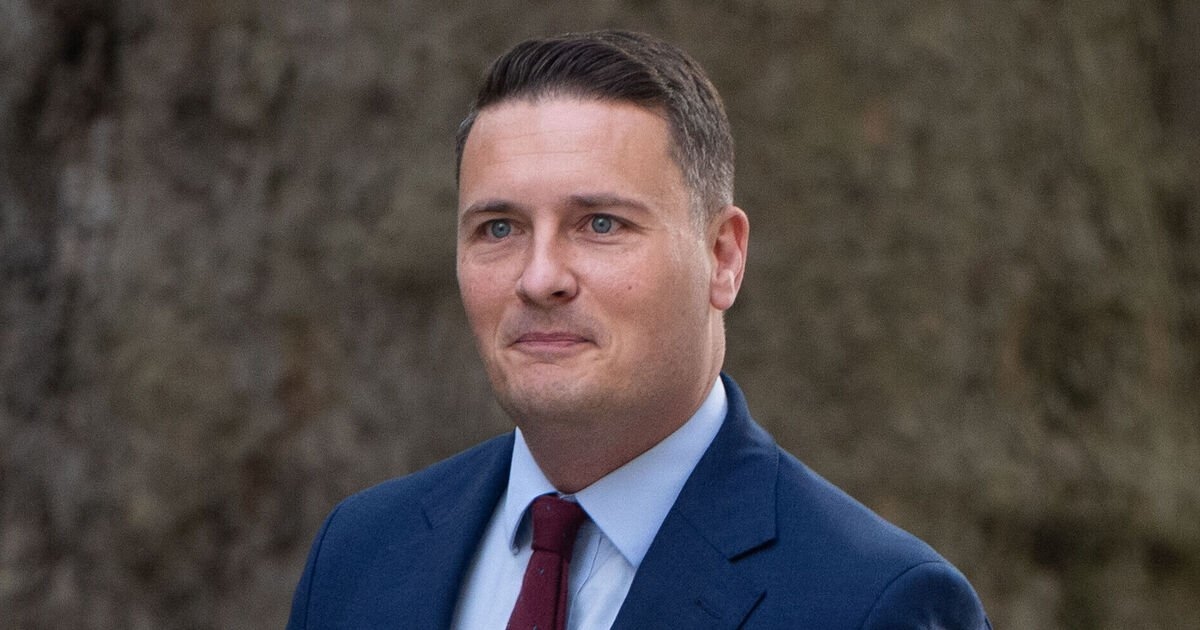
Angela Rayner is too left-wing and weighed down with personal baggage while Wes Streeting is seen as too Blairite by the activists and has failed to deliver on the NHS so far. The party could find that they get rid of Starmer only to sink even deeper in the mire of unpopularity.

express.co.uk