

The 9 best health books of 2025 to help you feel your best self in the new year
By LEAF ARBUTHNOT
Published: | Updated:
The Brain at Rest is available now from the Mail Bookshop
When neuroscientist Dr Jebelli was young, his father – formerly an engaging, passionate man – had a breakdown after working himself to the bone.
Here, Jebelli explores the considerable body of research that now shows how vital rest is for both our physical and mental wellbeing.
We should all, Jebelli argues, indulge more in what the Dutch call ‘niksen’ – the act of doing nothing.
You can get down to some health-conferring ‘nothing-ing’ by sitting and doing nothing, standing and doing nothing – or lying down and doing nothing (Netflix, alas, doesn’t count, as our brain enters an excitable state of what psychologists call ‘hard fascination’).
Jebelli also advocates doing less socially, and recommends the ‘black marker test’, in which you jot down what you plan to do over the coming week, and cross out every one that can be postponed, or better still, cancelled. Bliss.
The Lonely Planet writer Waters has had about as full and travelled a life as one can imagine, but when he was 41, he received a shocking diagnosis: early-onset Parkinson’s Disease.
Soon after that, he learned that his three-year-old daughter had a degenerative neurological disease that doctors couldn’t cure.
Waters and his then wife felt hounded by misfortune; then their marriage fell apart after Waters had an affair.
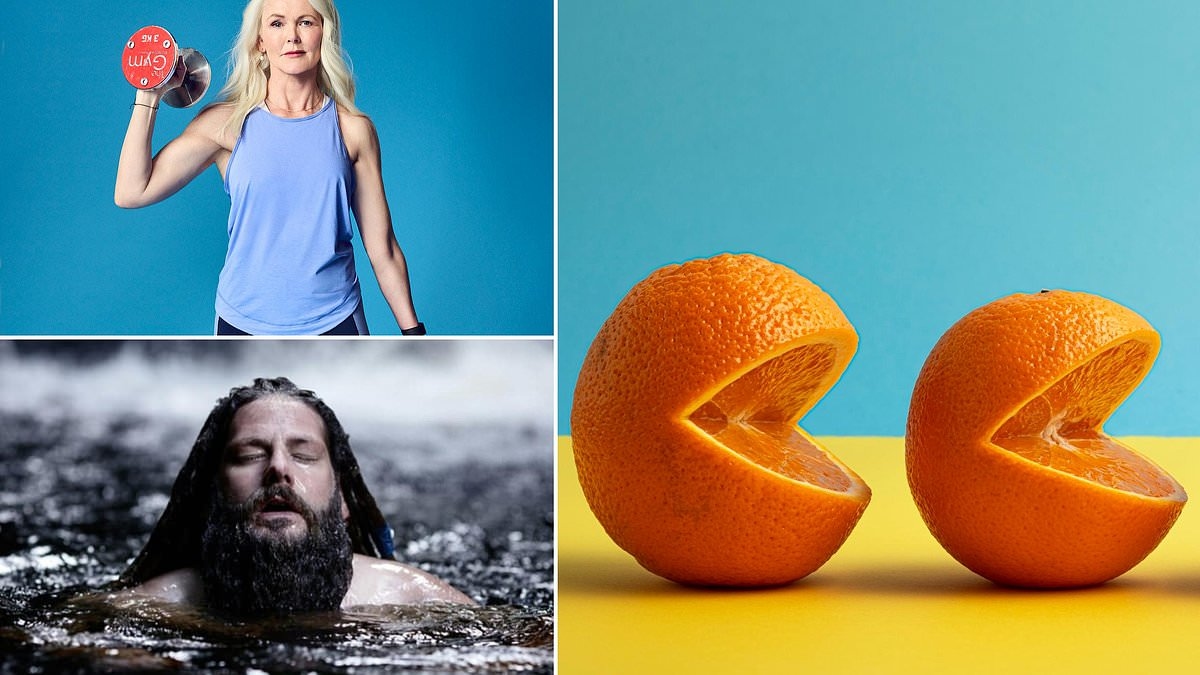
Here, he explores how plunging into the freezing waters of Skye with the titular Viking, Matt Rhodes, helped relieve his Parkinson’s and ease his mind.
The book will leave you yearning to visit Skye, and inspired by the author’s refusal to allow ‘Parky’ to boss him about. Ill health and death come for us all, Waters observes with admirable zen, but if we can accept that we are in a constant state of flux, ‘our days will be happier and freer’.
No More Normal is available now from the Mail Bookshop
In 2015, a survey conducted by the National Union of Students found that 78 per cent of students had experienced a mental health problem over the past year.
As neuropsychiatrist Santhouse argues in this perceptive book, many people who would once have been considered normal now have a mental health diagnosis, or believe they’d be given one if only the NHS waiting lists would clear to allow them to be tested.
The medicalisation of normal is proving big business for pharmaceutical companies, as well as start-ups launching apps in the booming mental health sector.
In general conversation, we blithely dish out diagnoses without a second thought: X is a narcissist, Y probably has borderline personality disorder, Z isn’t managing their ADHD well.
But as Santhouse argues, our tendency to medicalise ordinary feelings such as unhappiness and worry can be damaging, trapping us in a state of mind that feels like an indelible part of who we are.
The biomedical researcher Professor Tregoning found himself seriously contemplating his own mortality in December 2022, when he saw a grey hair on his chest and plucked it out.
In this engaging book, he takes a scientist’s look at the main things that kill us – heart disease, strokes, lung disease, cancer and so on – and puts various diets and health interventions to the test, from eating beetroot to having his genes sequenced.
His conclusions aren’t earth- shattering, he cheerfully admits: in order to live longer, we should exercise daily, drink less (ideally not at all), not smoke or vape, and eat healthily, preferably food cooked from scratch containing plenty of fibre.
It’s also important, he observes, to stay (or become) sociable – in so-called ‘blue zones’ famed for their inhabitants’ long lives, people tend to have thriving social lives as well as healthy diets.
The Dose Effect is available now from the Mail Bookshop
Modern life might be wonderfully comfortable, with its Ubers, washing machines and antidepressants, but we didn’t evolve to live like this.
In Power’s peppy book, he sets out small adjustments we can all make to improve our chances of being happy and healthy, focusing on dopamine, oxytocin, serotonin and endorphins (DOSE). Power’s reflections on how to combat phone addiction are particularly useful, and come from someone with a hefty social media presence who knows about being umbilically linked to your phone.
Rather than go cold-turkey, he recommends imposing three social media ‘moments’ in a day in which you are allowed to scroll.
He also suggests charging your phone outside the bedroom, so it’s not the first thing you see when you wake up, and using a stopwatch to keep yourself accountable when you are supposed to be concentrating.
Until journalist Parsons had a back injury in her mid-40s, she’d been living hard, smoking, drinking and pushing herself to the limit at work.
But in order to recover from her slipped disc, she started doing Pilates, and gradually, she made her health a priority.
It proved transformative: now in her early 60s, Parsons has the biological age of a 20-year-old. In Age Less she offers frank, realistic advice about how to turn back the clock, however unhealthy you find yourself currently.
There are three cornerstones: eating less (but only, thankfully, by about 10 per cent), moving more (there are helpful exercises), and resting more deeply.
As she sets out the latest research on all three areas, she also considers achievable tweaks for a healthier life, such as regular tooth-flossing and ditching stressful TV before bed.
Self Defence is available now from the Mail Bookshop
As renowned immunologist Davis argues, the immune system is extremely complicated and widely misunderstood.
While we may neck vitamin C tablets hoping they’ll stave off a cold, the evidence doesn’t actually suggest they will.
It’s far from clear, either, that supermarket yoghurts that loudly claim to be good for immune health really are. And while we may feel more stressed than ever, our ancestors contended with this, too: cortisol levels measured in hair recovered from bodies in Peru that were up to 1,500 years old revealed those poor souls had been stressed, too – just probably not about their forthcoming work review.
This isn’t a book for people seeking cheap tips about what to eat to boost your immune system – something Davis explains we don’t always want to do anyway, as an overly proactive immune system can be dangerous – but it offers an illuminating picture of a fascinating area of science.
dream scientist Carr has spent hundreds of nights in laboratories all over the world, watching people sleep and waking them up at just the right moment, to ask them what they were dreaming of.
In this enriching book, she explores why it is that we dream, what we dream of and how our dreams can turn against us.
Common dreams, she writes, include being chased or falling and finding secret passageways at home; and, often, scraps from our daytime lives slip into our dreams (‘day residue’).
Themes repeat, sometimes over years: many of us have recurring dreams that accompany us through our entire lives.
‘White dreams’ refer to the experience of waking up with the sense of having had a dream, but with no memory of it.
Thrillingly, Carr also explores how we can learn to take control of our dreams and shake off our nightmares, and she confirms that we really do sleep worse than usual when we are somewhere new. This is the so-called ‘first- night effect’, and it’s thought that it might be because the brain is monitoring its unfamiliar environment more closely than usual.
Adventures in Fermentation is available now from the Mail Bookshop
The exquisitely named Dr Drain hated chemistry at university, but he has devoted his professional life to understanding how fermentation works and its awesome force can be harnessed.
He sets out the science behind fermentation and explores how critical it is for life. Much attention has been given in recent years to foods such as kefir, miso and kimchi, but fermentation is key, too, he explains, to basics such as chocolate, coffee and bread.
It’s also critical in industry, and is saving lives: since 1982, the world’s insulin has been brewed like beer using yeast; before that, making enough to treat one diabetic patient for a year required the pancreases of around 50 pigs.
The book is full of recipes, too, ranging from the simple (focaccia and butter) to the more adventurous (smoked quinoa miso and 30-ingredient gut-boosting kraut).

Daily Mail


