November 11th in Biarritz: Pierre Lamberti recounted the fates of the 545 Biarritz residents who died in combat
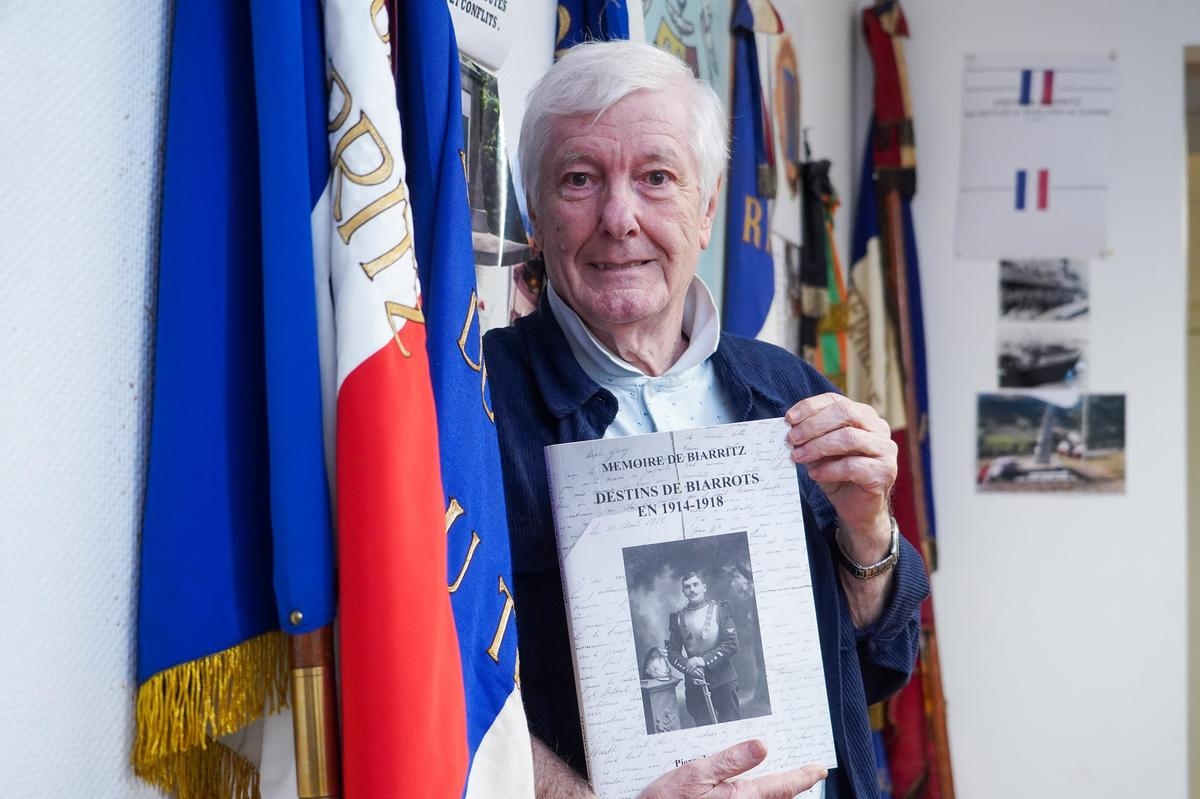
The president of the local Algeria-Morocco-Tunisia Veterans Association self-published his book "Destins de Biarrots" (Destinies of Biarritz Residents) in 2018, on the occasion of the Armistice centenary. Starting from the early days of the internet, Pierre Lamberti also did extensive fieldwork: visiting cemeteries, searching through the archives of Pau and Bayonne, and interviewing descendants.
“I had some wonderful encounters. People were happy to know that we were going to talk about their grandfather or their father.” One young woman even entrusted him with her grandfather’s medals: “It’s quite a special possession, I was extremely touched. It’s stories like that that motivate you to do research.”
Broken destiniesFrom this work emerged a veritable goldmine, where personal stories and major historical events intertwine: 545 shattered lives, to which Pierre Lamberti dedicated some of his time. For some, he found only a few lines. For others, he was able to reconstruct an entire journey, sometimes a heroic one. None were forgotten.
For example, we learn about the tragic end of the Congoste siblings. "Madame Congoste had lost three sons and a son-in-law. She was the one who laid the first stone of the war memorial, in front of a huge crowd," he reveals. A photograph of this moment is also included in the book.
The author also mentions players from Biarritz Olympique. The bravery of Martin Léonard Landalle, chosen for the cover, is highlighted. "Why him? First, because he looked very handsome in his uniform, and second, because he received the most decorations and citations." There is also François Latournerie, the first war casualty of the 18th Infantry Regiment. He died on August 11, 1914, "from heatstroke, without ever having seen the front lines, the trenches, or heard a single shot."
The mystery of the mermaidPierre Lamberti then shared a few lighter anecdotes. When it was built, the war memorial was topped with a bare-breasted female sculpture. "People called it the mermaid," he explained. "Father Gaston Larre said it was a soup tureen lid." In 1920, the bare breasts caused a stir. "There were huge petitions and demands to remove the mermaid." In the 1950s, the town council, tired of the complaints, decided to take it down. "But it's a story whose ending I don't know," the amateur historian continued. "Because the mermaid disappeared..."

SudOuest